







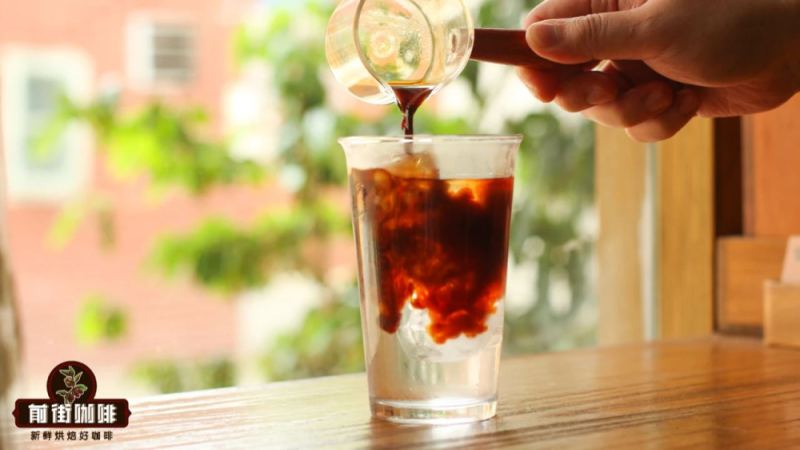
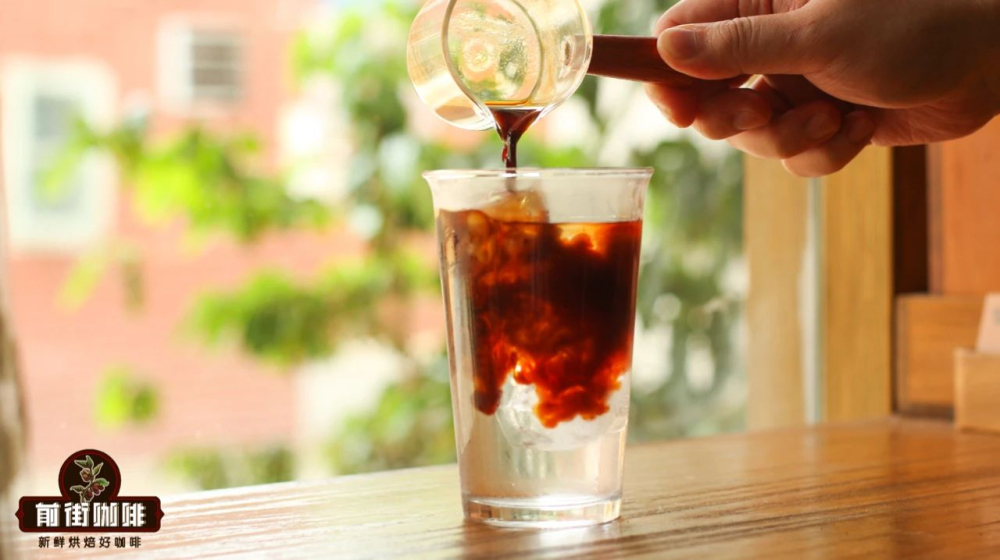
This article is Front Street Coffee's Americano brewing tutorial. Before the article begins, let me first explain what espresso is, what Americano is, what pour-over is, and what black coffee is.
Espresso refers to the concentrated liquid extracted by an espresso machine. In most cases, the espresso concentrate is not used for direct serving. Of course, sometimes some customers, for the sake of refreshment and a strong taste, will order espresso, but this situation is uncommon. Espresso concentrate is brewed at a ratio of 1:2, so its strength and flavor can be imagined.

Adding water to espresso concentrate gives what is commonly called Americano. Adding different amounts of milk or milk foam gives a latte or a cappuccino, which is what is commonly called milk coffee. Both Americano and pour-over are called black coffee. The difference is that Americano is directly made by adding water to espresso concentrate, while pour-over is brewed from coffee grounds using pour-over equipment, without the need for an espresso machine and without the process of dilution with water. Below, let's talk specifically about Americano.
With Front Street Coffee's sharing, we know that coffee has so far gone through three waves. The first wave was represented by instant coffee, the second wave by espresso coffee, and the third wave is the specialty coffee that is popular today. Although we are in the third wave of specialty coffee, and there may even be talk of a fourth wave, espresso coffee is still important. The skill of making espresso coffee is a required skill for every barista, and almost every coffee shop serves espresso coffee. What we commonly call espresso coffee is a series of coffee drinks made with espresso as the base, including Americano, latte, cappuccino, and so on.

How do you make Americano?
Americano can be said to be the simplest espresso coffee, because Americano consists of only two parts, espresso and water, while iced Americano has the addition of ice cubes. However, don't relax just because Americano is simple. The simplest part is also the part that tests technique the most. Americano is often the espresso coffee that best tests a barista's espresso extraction skill.
Compared with milk coffees such as latte, Americano, because it lacks the influence of milk on the coffee's flavor, is the best way to perceive the flavor of the coffee beans themselves. Many barista friends choose Americano when they go to other coffee shops. First, it is convenient and quick; second, it lets them know the level of the shop's output.

Back to the point. We just said that Americano is simple to make, with only water and espresso as its two parts, so you only need to pour the espresso into the water. The espresso part needs to be extracted according to the characteristics of the beans, and different beans have different extraction parameters. For example, Front Street Coffee's store uses a Warm Sun blend—70% sherry barrel coffee beans mixed with 30% sun-dried Yirgacheffe. Every day the barista has to make adjustments according to the condition of the beans. In order to highlight the flavor of the sherry barrel, they chose an extraction plan of 20 grams of coffee beans extracting 40 grams of coffee liquid, with a time of 27 to 28 seconds.
When making hot Americano, you need to preheat the cup with hot water, then pour in hot water, and finally pour in the extracted espresso. The ratio for Americano is generally between 1:6 and 1:8, and after many adjustments, Front Street Coffee chose a ratio of 1:6, that is, 40 grams of coffee liquid mixed with 240 grams of hot water.

Similarly, when making iced Americano, pre-chill the cup with ice cubes, then pour in water, and finally pour in the espresso. Because ice cubes need to be added, Front Street Coffee's iced Americano uses a ratio of 1:7, with 40 grams of coffee liquid mixed with 280 grams of ice-water mixture, of which 180 grams are ice cubes and 100 grams are water.
The difference in taste between hot Americano and iced Americano
Making Americano is actually very simple. You only need to mix the extracted espresso with a certain proportion of water. Apart from differences in preference, the choice between hot and iced Americano may, like pour-over coffee, offer different experiences at different temperatures. Human senses perceive flavor differently at different temperatures, so the advantage of hot coffee is that you can perceive the changes in the coffee's flavor from high temperature to low temperature. At low temperatures, the human tongue's perception of bitterness and sweetness decreases, while its sensitivity to acidity increases. At the same time, quinic acid in the coffee degrades into quinic acid lactone, so coffee after it cools becomes more acidic.
After comparison by Front Street, hot Americano has obvious aromas of dark cocoa and cream. Because it is hot, the aroma is more active in the air and easier for us to perceive; while iced Americano tastes more refreshing, leaning overall toward the flavor of dark cocoa, with refreshing acidity, balanced and rich.
Why is Americano bitter?
Many customers also report that they drink bitter Americano, so is Americano bitter? In fact, besides bitterness, coffee also has acidity and sweetness. Through taste, we can perceive coffee's sourness, sweetness, bitterness, and saltiness, and factors such as different varieties and processing methods affect the proportions of these flavors, making it easier for us to perceive one or several of them. For example, Panama Geisha coffee has relatively low bitterness, while the SL28 and SL34 varieties that have adapted to Kenya's high-phosphoric-acid soil show extremely high acidity and aroma.

But if excessive bitterness appears in Americano, what could be the reason?
Reason one:The flavor of the coffee beans themselves
Black coffee like Americano is mainly influenced by the flavor of the coffee beans themselves, so the first reason Americano is bitter may be that the espresso beans chosen themselves have a flavor that is mainly rich and heavy.
The rich flavor of espresso beans comes from the robust flavor of their producing region and a relatively dark roast level. For example, Front Street Coffee's Front Street Specialty Blend combines washed Colombian coffee beans with Brazilian coffee beans. The Colombian coffee beans give this blend its main tone of dark chocolate, while Brazil provides nutty notes and higher body. Front Street Coffee's roaster roasts this blend to a medium-dark roast level, giving it a wonderful sense of balance, with medium-low acidity and medium bitterness.

Front Street Coffee's store used this Front Street Specialty Blend for many years, and only at the end of 2019 did it switch to the Warm Sun Blend. Compared with the Front Street Specialty Blend, the Warm Sun Blend coffee beans reduce bitterness and increase acidity, with a flavor leaning toward liqueur chocolate. This is an example of how bean selection affects the taste of Americano.
Reason two: over-extraction
In addition to bean selection, the bitterness of Americano also comes from mistakes during extraction, such as uneven extraction caused by channeling, or over-extraction caused by grinding too fine.

Front Street Coffee often shares that, calculated by the weight of the coffee beans, only about 30% of the coffee beans can be extracted, and this 30% is not better the more it is extracted. According to the range recommended by the Golden Cup standard, extraction of about 18% to 22% is most appropriate. Below 18% we call it under-extraction, and the signs of under-extraction are sharp acidity and a weak taste, while extraction above 22% we call over-extraction, which is what we often call over-extracted, and the signs of over-extraction are usually rich bitterness and astringency.
In order to ensure the stability of the coffee and keep the taste within the ideal range every day, Front Street Coffee's baristas need to adjust the espresso parameters before opening for business every day, making adjustments according to the daily condition of the coffee beans. For example, today the barista at Front Street Coffee's store adjusted the parameters to 20 grams of coffee grounds extracting 35 grams of coffee liquid, with an extraction time of 25 seconds. Compared with the previous 20 grams of coffee grounds extracting 40 grams of coffee liquid, today's parameters reduce bitterness by reducing the tail end, achieving a more balanced taste.
Pour-over coffee vs Americano
What is pour-over coffee? Pour-over coffee is a brewing method that uses a dripper. During brewing, water is poured while filtration takes place, so the extraction mode of pour-over coffee is also classified as drip extraction. The characteristics of pour-over coffee vary according to the dripper, and at the same time the brewer or barista can also adjust the pouring speed or the amount of agitation to change the taste of the pour-over coffee.
Front Street Coffee's offerings are inseparable from pour-over coffee. When serving pour-over coffee, Front Street Coffee's baristas choose a V60 or Kono dripper depending on the beans. Taking the most classic V60 dripper as an example, each brewing session uses 15 grams of coffee beans, with a coffee-to-water ratio of 1:15, a grind size of medium-fine, that is, an 80% pass rate through a 0.85 mm standard sieve, and a water temperature of 90°C.

The entire brewing process is divided into three pours. The first pour is 30 grams of water, which we call blooming. The purpose of blooming is to properly release carbon dioxide, and the blooming time is 30 seconds. The second pour goes up to 125 grams, with a 10-second interval, and the final pour goes up to 225 grams. The extraction time is about 2 minutes. Once 2 minutes is up, the coffee liquid has almost finished dripping. Remove the dripper to end extraction. After brewing, gently swirl to fully mix the coffee liquid and it is ready to enjoy.
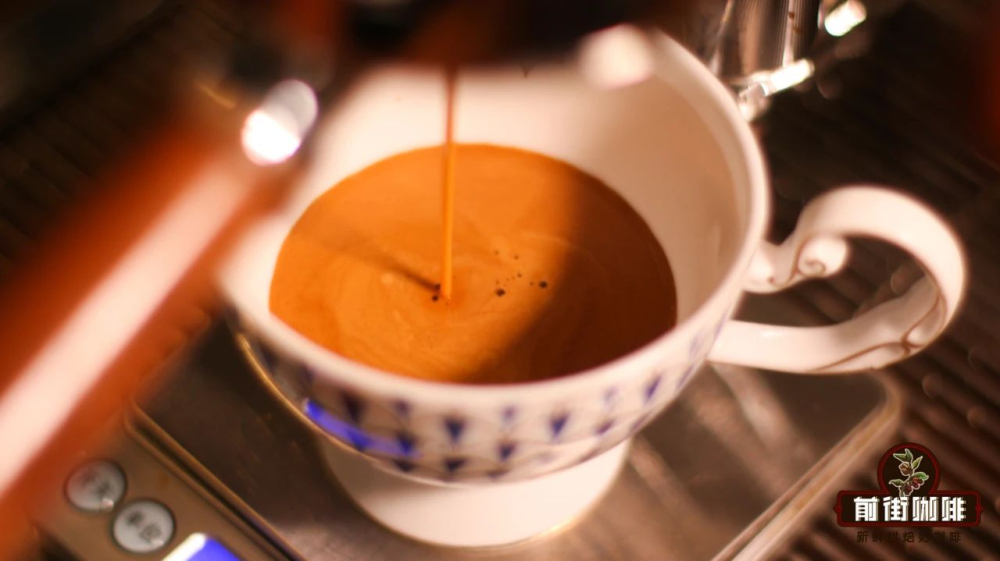
Americano and pour-over coffee, however, are completely different brewing methods and extraction modes. Americano is a coffee drink made by adding water to espresso to dilute it. When serving Americano, Front Street Coffee first needs to extract espresso. Before business every day, the barista needs to adjust the espresso extraction parameters to bring the output to its best state. For example, today's espresso extraction parameters are 20 grams of coffee grounds, extracting 40 grams of coffee liquid, with an extraction time of 26 seconds.

Finally, add six times the amount of water relative to the espresso, and the Americano is ready. The taste of Americano is basically determined by the base tone of the espresso.
So what difference in taste would there be if the same beans were used to make Americano and pour-over coffee respectively? For this purpose, the barista at Front Street Coffee's store used a Costa Rican Mozart as a demonstration, brewing Mozart pour-over coffee and making an Americano with Mozart coffee beans as an SOE.
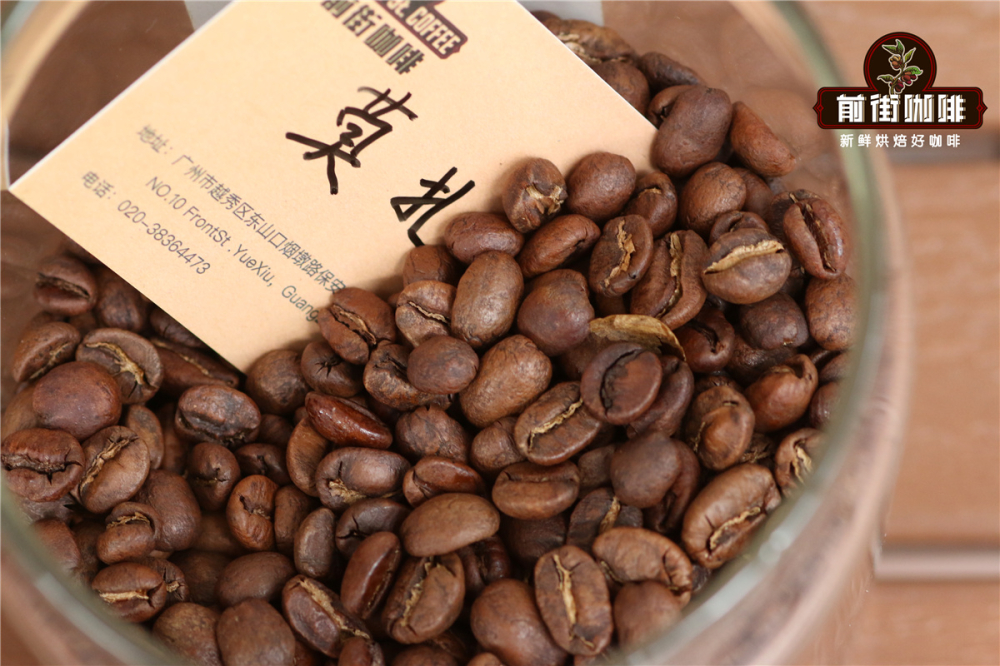
There is no need to say much about making pour-over coffee with Costa Rican Mozart coffee beans; the brewing method has already been shared earlier in the article. In terms of taste, it has an obvious fermented quality, medium raisin and citrus notes, and a relatively balanced mouthfeel. At the same time, because the filter paper filters out most of the oils, the mouthfeel is clean. In contrast, the Americano made with Mozart SOE not only retains the oils, but the high-pressure extraction environment of the coffee makes the oils even more obvious and rich, giving a fuller body, yet the flavor is diluted by water and lacks intensity. We can still identify the fermentation and raisin notes of the Mozart coffee beans.
Americano coffee bean recommendations
What is the core of Americano? It is espresso. Most of the flavor of espresso coffee comes from its espresso portion. Latte, Americano, and others are all coffee drinks greatly influenced by the flavor of espresso. The flavor of espresso comes first from the choice of espresso coffee beans, and only after that is it affected by extraction, so choosing good espresso coffee beans is very important. If you want to easily make an Americano as delicious as the ones in coffee shops, Front Street suggests using an espresso blend.
The main purpose of blending is to create a stable flavor, that is, to produce a delicious and balanced taste. The several espresso coffee beans currently sold by Front Street Coffee are all blends, namely Front Street Dark Cocoa Blend, Front Street Specialty Blend, Front Street Commercial Blend, Front Street Classic Espresso Blend, Front Street Sunflower Warm Sun Espresso Blend, and Front Street Strawberry Candy Geisha Blend coffee beans, six in total.
Front Street Specialty Blend coffee beans
Front Street Specialty Blend coffee beans are an espresso coffee bean that has accompanied Front Street Coffee's store for many years. To blend an espresso coffee bean with stable performance, one should start from coffee-producing countries that are balanced and high-yielding, so when Front Street's roaster formulated this Front Street Specialty Blend, they chose two countries with the highest and most stable Arabica coffee bean production worldwide—Colombia and Brazil.
Washed Colombian coffee beans give this Front Street Specialty Blend soft fruit acidity, dark cocoa, and caramel notes, while the Brazilian coffee beans are responsible for providing this coffee's full body and rich roasted nut aroma. Therefore, when this espresso coffee bean is made into espresso, it carries a very obvious dark chocolate flavor, a solid and full body, and a nutty finish.

This espresso blend's balance and obvious dark chocolate flavor make it very suitable whether as black coffee or milk coffee, so Front Street Coffee chose this blend as a store offering for more than 6 years.
Front Street Dark Cocoa Blend coffee beans
Front Street Specialty Blend is a very stable and high-quality espresso blend, very suitable for many independent coffee shops as a daily offering, while Front Street Dark Cocoa Blend is the second option provided by Front Street Coffee—high cost-effectiveness. The operation of a coffee shop cannot do without cost, and one should provide stable coffee output while keeping costs as low as possible.
Front Street Coffee's Front Street Dark Cocoa Blend coffee beans are a more cost-effective coffee bean, originating from the choice to blend Brazilian and Yunnan coffee beans, in a ratio of 70% Brazil and 30% Yunnan coffee beans. Coffee beans from both Yunnan and Brazil tend toward nutty notes, and at the same time the Brazilian coffee beans give Front Street Dark Cocoa Blend a more solid body and rich oils.

Warm Sun Blend coffee beans
In addition to Front Street Specialty Blend and Front Street Dark Cocoa Blend, Front Street Coffee provides an espresso recipe with a more unique flavor. Front Street's roaster blended Honduras sherry barrel coffee beans with sun-dried Yirgacheffe Red Cherry Project coffee beans. In order to bring the aroma to the extreme, they also separately formulated roasting curves for them again, presenting a brand-new high-quality blend through post-roast blending, named "Warm Sun Blend."
As specialty coffee gradually became popular and developed, Front Street Coffee's baristas found in store operations that many customers were no longer satisfied with the stability brought by Front Street Specialty Blend. Front Street Coffee reconsidered, and perhaps it was time to bring in more fresh blends to enliven the store's offerings. In 2019, after many adjustments, this Warm Sun Blend finally entered Front Street Coffee's bean list, and the store's Front Street Specialty Blend was replaced with Warm Sun Blend coffee beans.

Front Street Coffee's baristas believe that among these three blends, Front Street Specialty Blend is the choice for pursuing stability, Front Street Dark Cocoa Blend is the choice for high cost-effectiveness, and Warm Sun Blend is the choice for flavor. The three have different goals, so the customers they suit are naturally different.
The unique flavor of Warm Sun Blend comes from its Honduras sherry barrel coffee beans. After the coffee cherries undergo part of the washed processing steps, they are placed into sherry barrels for low-temperature fermentation, and finally dried. This processing method gives the sherry coffee beans an obvious wine aroma, and Front Street Coffee's roaster blended in sun-dried Yirgacheffe coffee beans to provide more acidity to the Warm Sun Blend coffee beans and increase the layering of the entire blend.
Front Street Coffee's store adjusts parameters every day according to the condition of the beans, such as extracting 40 grams of coffee liquid from 20 grams of coffee grounds. The extraction time will be between 26 and 28 seconds. The espresso made with these parameters will have medium acidity, medium bitterness, and medium body, balanced, with a flavor of obvious dark cocoa and citrus, and a finish of fermented wine aroma.
Made into Americano, it will have obvious winey chocolate and citrus acidity; made into latte, it will have flavors such as vanilla cream and liqueur chocolate.

Front Street Commercial Blend coffee beans
Front Street Commercial Blend is different from the other three blends. Front Street Commercial Blend is intended for opening a shop. The main base tones of Front Street Commercial Blend coffee beans are Colombia and Brazil. On this basis, Front Street Coffee also added Robusta coffee beans.
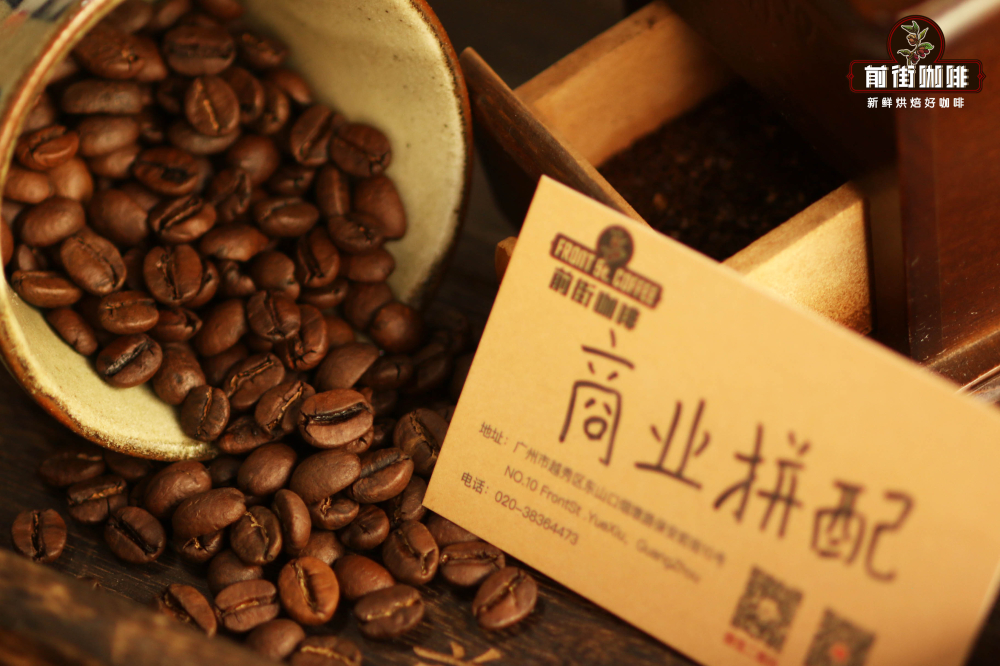
The purpose of doing this is to add more oils to the coffee, not only making the Americano taste richer but also leaving almost no acidity, and baristas can also handle latte art with ease when making lattes. Although it is not 100% Arabica, mixing in a small amount of Robusta can increase the coffee beans' body, oils, and rich coffee flavor, making it the best choice for businesses opening a shop.
The above content is compiled by CoffeeHunters, a coffee news website.

