








As autumn turns to winter and the weather gradually cools, Front Street created the Front Street Sunflower Warm Sun espresso blend long ago for espresso. Following this line of thinking, Front Street also wanted to create a blended coffee bean suitable for autumn drinking and usable for pour-over coffee. Front Street Coffee (FrontStreet Coffee) hopes this blended coffee bean can express a clean and clear flavor and mouthfeel, a soft yet changing acidity on entry, and a medium-to-high sweetness in the finish.
Blended coffee beans are generally thought of as being used to makeespresso coffee beans. Socan espresso coffee beans be used for pour-over? Front Street believes any coffee bean can be used as a pour-over coffee bean; it is only a matter of whether it is suitable or not. But espresso coffee beans generally use 2 to 5 kinds of beans blended together before roasting or after roasting separately, so that the strengths and weaknesses of each bean complement one another, making the coffee full-bodied and aromatic. Therefore, they also lose the characteristic of single-origin coffee beans, which is to express the flavor of coffee beans from a single origin. Taking several of Front Street Coffee's (FrontStreet Coffee) existing Front Street espresso blend coffee beans, if used for pour-over coffee, because the roast level is darker, the flavor will show a higher body, but there will be some burnt aroma, and the sweet aftertaste will be very obvious.
Among its existing beans, Front Street Coffee (FrontStreet Coffee) selected several beans that would be considered for inclusion in the blend, namely: Front Street Yirgacheffe washed, Front Street Costa Rica SHB Caturra washed, Front Street sun-dried Yirga Red Cherry, Front Street Yunnan Huaguoshan Typica washed, and Front Street Gesha Village sun-dried Geisha. For these beans, all cupping scores are around or above the specialty line. Front Street currently has four espresso coffee beans: Front Street Commercial Blend, Front Street Black Cocoa Blend, Front Street Specialty Blend, and Front Street Sunflower Warm Sun Blend. Do you know how Front Street Coffee's (FrontStreet Coffee) blend recipes came about? So let Front Street use a pour-over blend coffee recipe to guide everyone through understanding the thinking behind making blended coffee!
【Blending Approach】
At the beginning of development, Front Street needed to determine what flavor the autumn theme should express: its mouthfeel does not need to be too heavy, it must have the fruit flavors of the autumn harvest, and it must be sweet! Front Street Coffee's (FrontStreet Coffee) consensus was to choose one main bean plus 1–2 supporting beans to harmonize the flavor; if too many beans are used, the main theme will be lost, and the flavor will be too messy and hard to balance.

【Determining the Main Flavor Coffee Bean】
The main bean used in the recipe must be inclusive, high in sweetness, have body, and be sufficiently stable in quality. To meet these requirements, everyone searched back and forth through the database—for each coffee we have at least 3 roast curves and cupping scores. By comparing their evaluations and strengths and weaknesses, we finally selected our Yunnan coffee bean Typica from among dozens of beans.
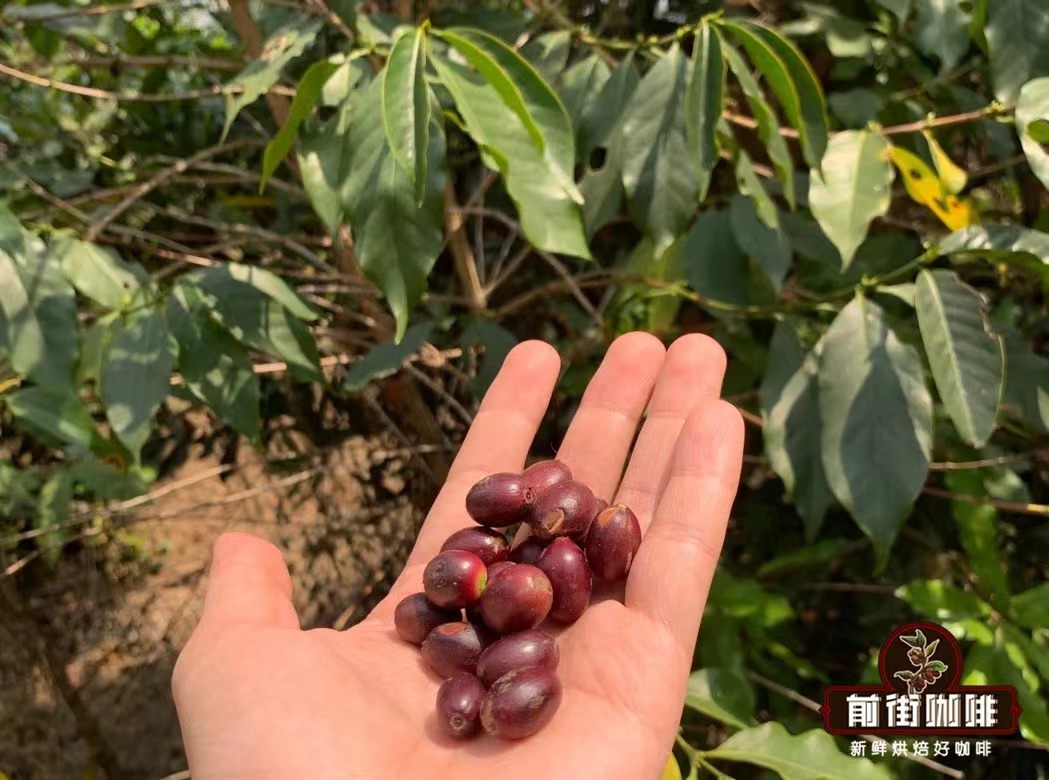
Front Street believes that [Front Street Yunnan Huaguoshan] is our local coffee, and source-level quality control can be well managed, and it is a bean that combines mouthfeel and flavor, with a balanced body and a long sweet aftertaste, suitable as a blending base—but Huaguoshan is slightly lacking in the uniqueness of its acidity and flavor. In terms of flavor, the first choice is of course Ethiopian beans—Ethiopian coffee is also called the "coffee gene pool." Ethiopia itself has more than 2,000 known coffee varieties, so in terms of flavor it is absolutely complex enough! So among the many Ethiopian beans, which one should be chosen? Thus came our next work... Candlelight, Huakui, Aricha, Kochere, Worka... varieties with all kinds of floral, berry, and citrus notes were dazzling to the eye
【Finalizing the Supporting Bean】
Generally speaking, single-origin Arabica coffee is enough to make a very good cup of coffee; a fresh aroma, soft mouthfeel, and sweet aftertaste. "Blending" means combining coffees from different origins, each with its own unique taste, aroma, and mouthfeel. By mixing and blending according to the flavor you like, you can make your own exclusive coffee.

First round of pour-over blend testing: what was relatively satisfying was 7:3, Front Street Yunnan Huaguoshan : Front Street Yirgacheffe Kochere, with gentle citrus acidity, chocolate at the end, and slightly weaker sweetness. After cupping comparison and research into coffee tonality, we chose Front Street washed Yirgacheffe Kochere—it shares with Front Street Yunnan Huaguoshan a black tea finish, and its citric acidity and orange flavor can increase the recipe's layering and brightness, adding to Yunnan.
【Raw blend or roasted blend?】
If we roasted separately according to the roast level best suited to these 2 beans, it clearly would not work. Front Street Yunnan Huaguoshan uses a medium-dark roast, while Front Street Yirga Kochere is a light roast. When making pour-over, Yunnan would be over-extracted while Kochere would be under-extracted.
The result would cause the flavor of the entire cup of coffee to collapse, so we resolutely decided to blend raw!

【Roasting Approach and Adjustments】
In terms of moisture content, the 2 beans, both washed, are relatively close, and in terms of bean quality, Typica is softer, but Yunnan, which has relatively large beans, is also close to the harder but small-beaned Kochere in heat conduction, so roasting these 2 beans together is not likely to cause uneven roasting; and we adopted a stepwise heat-reduction roasting method, giving a longer Maillard reaction time after dehydration and homogenization so that the 2 beans tended to develop more synchronously. In determining the roast level, we also adopted "taking the middle value." This development time and drop temperature effectively removed the sourness and excessive herbal notes that appear when Yunnan coffee is roasted too light, while also well preserving Yirga's floral and fruity aromas.
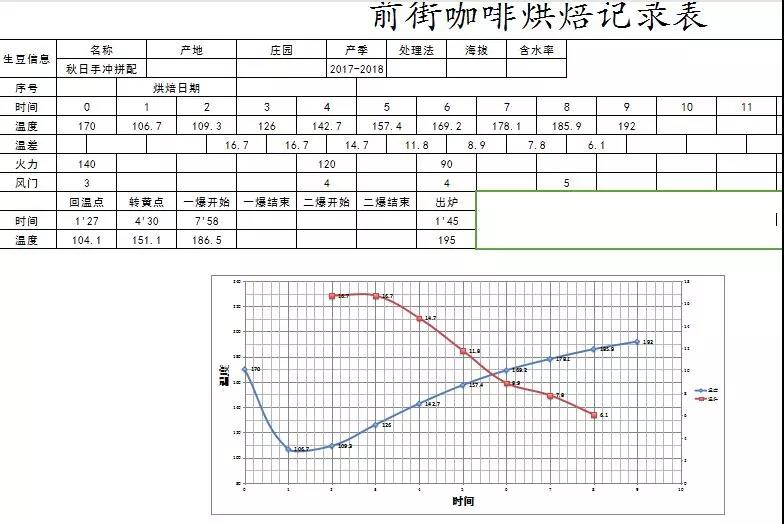
Charge 300 grams, charge temperature 170°C, charge with the heat off. After 30 seconds, turn on the heat to 140, airflow 3. When bean temperature reaches 140, lower the heat to 120, open airflow to 4. At 4 minutes 30 seconds, dehydration turns to yellow; at 168°C, lower the heat again to 90. First crack begins at about 8 minutes, open airflow to 5, develop first crack for 1 minute 45 seconds, drop at 195°C.
In terms of ratio, we first chose Front Street Yunnan Huaguoshan : Front Street Yirga Kochere—a 6:4 ratio. Cupping result: good cleanliness, fresh sweetness, apple aroma, plum acidity, and an orange aroma in the aftertaste. The overall impression was that the mouthfeel was good, but the flavor was slightly thin. So after cupping discussion, everyone decided to add a bean to enhance the flavor—[Front Street Gesha Village Red Label Sun-Dried Geisha]. This time the ratio used was Front Street Yunnan Huaguoshan : Front Street Yirga Kochere : Front Street Gesha Village Estate—6:3:1.
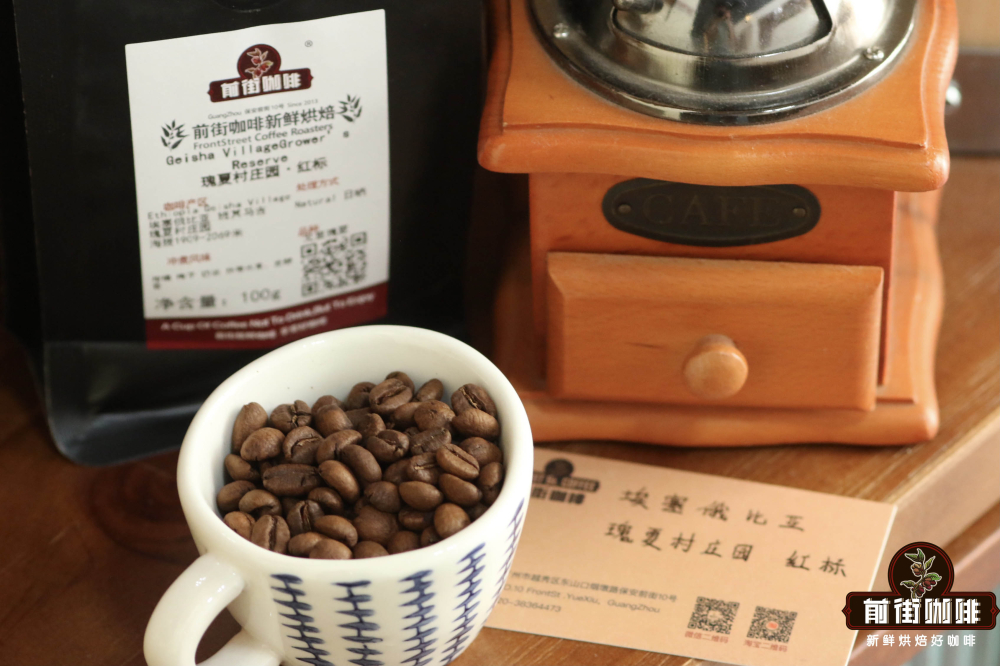
Lowering the proportion of Kochere made the acidity of the whole bean softer than before, and 10% Gesha Village brought more fruity flavor notes and also enhanced the floral aroma and the tea aroma in the finish. In roasting, in order to preserve more floral and fruity aromas, the drop temperature would be a little lower; the time from dehydration to first crack was slightly shortened, preserving more reactive substances, and the first crack development time was increased to develop flavor.
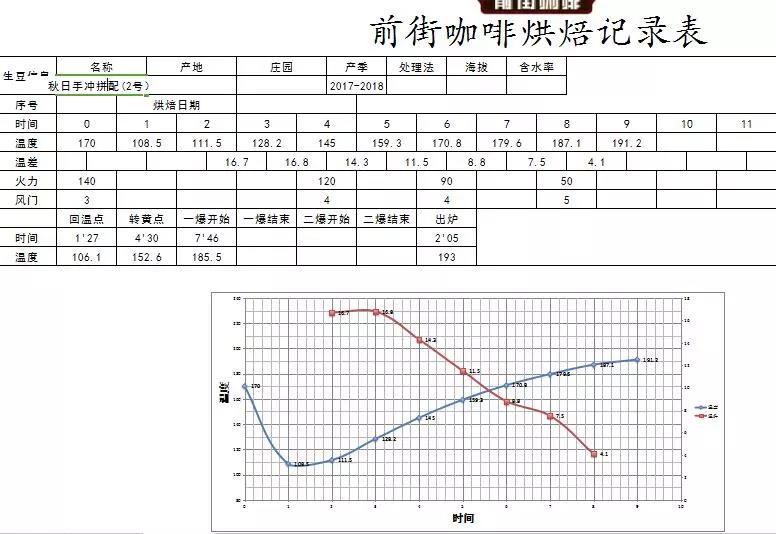
Roaster Yangjia 600g
Charge 300 grams, charge temperature 170°C, charge with the heat off. After 30 seconds, turn on the heat to 140, airflow 3. At 140°C, lower the heat to 120, open airflow to 4; at 4 minutes 30 seconds, dehydration turns to yellow; at 168°C, lower the heat again to 90. First crack begins at 7 minutes 46 seconds, open airflow to 5; at 188°C lower the heat to 50 to extend development, roast to 2 minutes 05 seconds, drop at 193°C.
This roast increased the first crack time to develop flavor, while also making the development levels of the 3 beans tend toward evenness, and a slightly lower drop temperature can preserve Gesha's floral and fruity aromas. The roast level for the raw blend was set at a slightly lighter medium roast, with Yunnan Typica making up a large proportion. Because this Yunnan bean can show an obvious brown sugar aroma at a light-medium roast, and also has black tea and a bit of cream flavor, with a clean expression in the cup and high sweetness.
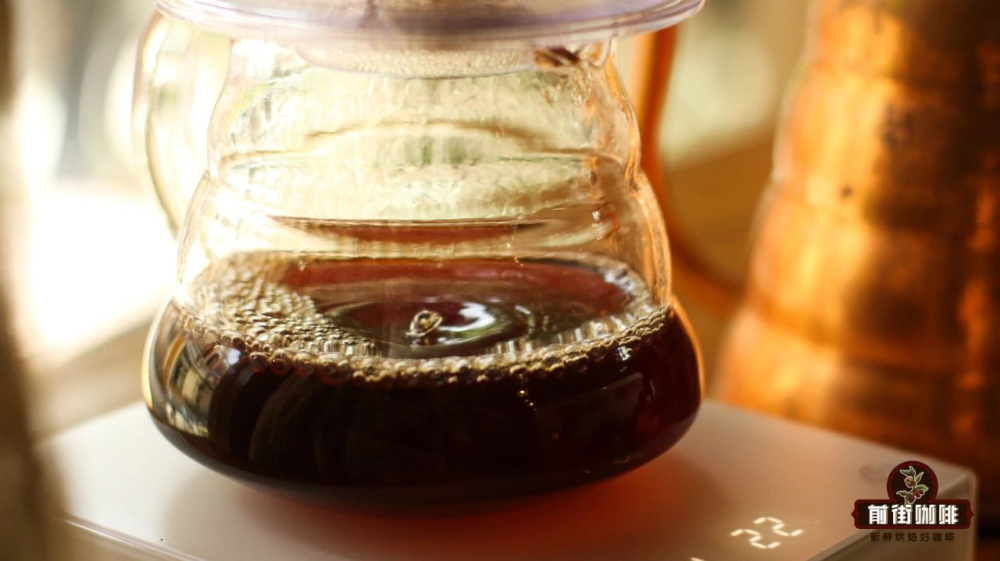
Because the three beans all have relatively high moisture content and hardness, although they are different varieties, fortunately the screen sizes are not very different, so being a raw blend does not add much roasting difficulty. After several rounds of pour-over, after pour-over and cupping, the taste of this raw blend met Front Street's expectations. But it is worth noting that pour-over certainly cannot follow theespresso extraction standard. On entry the acidity is soft and has some variation; the acidity begins to gradually connect with sweetness in the middle, and the sweet aftertaste is lasting and long. There is a feeling of fresh green plants, and aromas of black tea, cocoa, caramel, jackfruit, orange, and nuts. The taste is transparent and clean, with medium body and a slightly sparkling mouthfeel.
At this point Front Street had a preliminarily determined [Autumn Pour-Over Blend]. This coffee, which combines the characteristics of Asian and African beans, basically conforms to the theme and flavor characteristics, and everyone was relatively satisfied with the cupping and actual brewing results.

So do you know why many espresso coffees need to be composed of two or more coffees? In the earliest days, the quality of espresso coffee was not very good, so the most important thing was to improve the quality of lower-priced coffee. High-quality Arabica coffee beans have a clean coffee flavor, very good coffee aroma, and a smooth finish, but they are expensive. If high-quality coffee is mixed with lower-quality coffee, then to a certain extent most of the quality of Arabica coffee can be retained, and the price is relatively low.

Now, due to the broader coffee environment, the quality of coffee beans has generally improved quite a bit. Espresso blends are usually intended to achieve a balanced effect, ensuring that this benefits the quality of the espresso. Most espresso beans are a combination of high-quality Brazilian coffee beans and African coffee beans or Central American coffee, similar to Front Street Coffee's (FrontStreet Coffee) Front Street Specialty Coffee Blend. Later Front Street also added Robusta coffee to produce "Crema" and increase the body of the espresso, which is Front Street Commercial Espresso Blend Coffee. Not only that, the main reason for blending coffee is to keep the taste consistent. Everyone knows that coffee is an agricultural crop; when grown under slightly different conditions, the taste of a particular coffee species will also differ. Blending coffee will keep the coffee's flavor as consistent as possible.
But Front Street believes that not only espresso coffee can be blended; actually, pour-over coffee can be too. The purpose of drinking single-origin coffee is to taste a single terroir characteristic. But Front Street believes that in today's coffee market everything can be inclusive, so many people have begun exploring pour-over coffee in search of balanced coffee flavors.
Professional coffee knowledge exchange For more coffee bean information please follow Coffee Workshop (WeChat public account cafe_style )
For more specialty coffee beans, please add the private WeChat Front Street Coffee (FrontStreet Coffee), WeChat ID: kaixinguoguo0925
The above content is compiled by CoffeeHunters, a coffee news website.

