







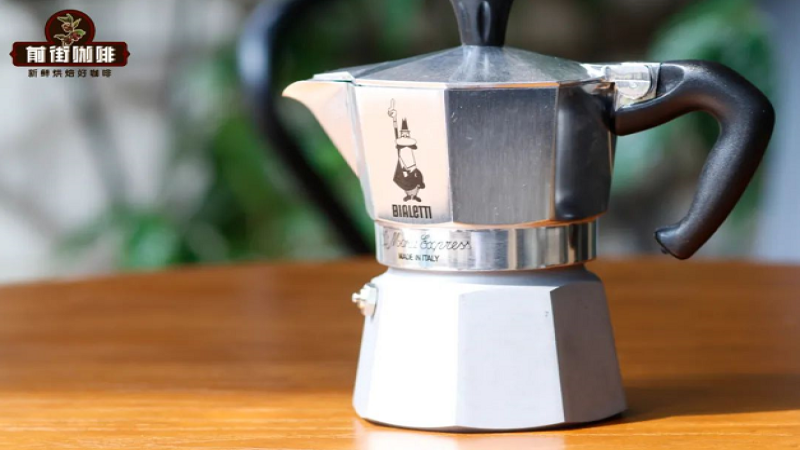
If you want to recreate a café-level rich flavor at home with a moka pot, adjusting the coffee grind size is a key step. Starting from the story of the Bialetti moka pot's origins and its extraction principle, this article systematically explains the standard operating procedure for a moka pot, and, for the difficult point of crema extraction, deeply analyzes the three major influencing factors: coffee bean freshness, roast level, and grind particle size. The article also provides specific recommendations for Front Street Coffee beans, as well as practical methods for judging whether the grind size is appropriate, helping you, while ensuring safety, consistently produce a cup of moka pot coffee with intense aroma and a full-bodied taste.
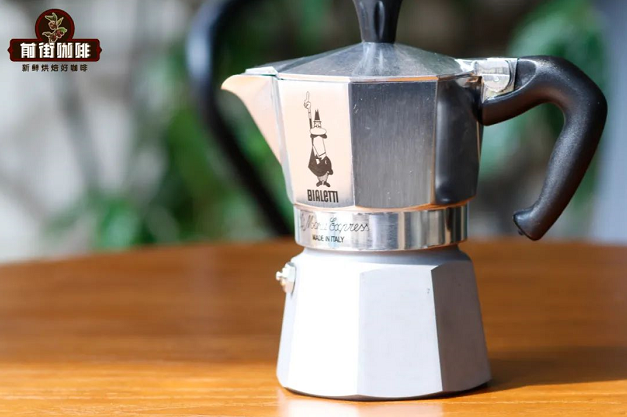
After getting used to the taste produced by commercial espresso machines, trying to replicate the same flavor at home is actually not easy. Limited by budget and kitchen space, many people choose to use a moka pot to brew that rich cup of coffee they are satisfied with. But once the tool has been bought, the new question becomes just how coarse or fine the coffee should be ground to make the final result satisfying.
To figure out how to use a moka pot to brew good coffee, it helps to first understand its origins and working principle.
In the 1920s, the Italian Alfonso Bialetti drew inspiration from the structure of washing machines at the time—he saw that in the center of the washing machine there was a metal tube connecting the upper and lower layers, and the heated soapy water surged upward through the tube and sprinkled onto the clothes. Inspired by this, Alfonso experimented repeatedly and finally, in the 1930s, made the world's first moka pot.
The moka pot operates in a way quite similar to that washing machine: a certain amount of hot water is poured into the lower chamber, the middle funnel is filled with coffee grounds, and after assembly it is placed on a heat source. After the water in the lower chamber heats to boiling, it produces a large amount of steam, which forces the hot water through the metal tube and through the more tightly packed layer of coffee grounds in the middle, continuing to surge upward, and finally the coffee liquid gathers in the upper chamber.
It is easy to operate, takes up little space, and, with its rather modern appearance, looked very fashionable at the time, so it became increasingly favored by the Italian public. Later, Alfonso's son pushed the moka pot into mass production and invested a great deal of effort in styling design and advertising, making this product deeply integrated into the daily lives of Italians.
As more coffee lovers learned about the convenience of the moka pot, many people posted online about the rich crema and full-bodied coffee they brewed with a moka pot. Seeing these shares made those who had not yet bought one itch with desire, while those who had already bought one wanted to know exactly how to operate it. Below, Front Street will first teach everyone how to use a moka pot.
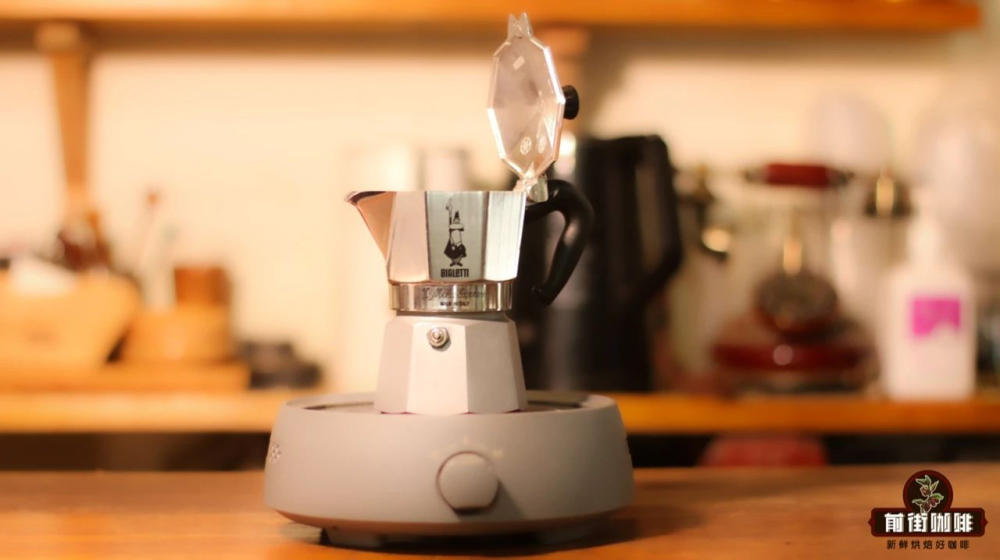
First, pour hot water into the lower chamber, filling it to 0.5 centimeters below the pressure relief valve. Next, put the ground coffee into the middle funnel, tapping and patting it gently from side to side so that the coffee layer is evenly and levelly distributed. Place the funnel into the lower chamber, then screw the upper chamber and lower chamber tightly together. Finally, place the entire moka pot on a heating device to heat.
When the moka pot heats up to a certain point, it will make a sound similar to a "woo-woo" noise. At this time, lower the heating power and lift the lid of the upper chamber to observe. Soon the coffee liquid will surge out from the upper chamber; then remove the moka pot and turn off the heat source. In this way, you can get a cup of coffee with a rich aroma and a strong, full-bodied taste.

Some friends hope to use a moka pot to brew the kind of crema-topped effect produced by an espresso machine, so they come to ask Front Street: how should the parameters be adjusted to achieve this delightful result?
In fact, the crema on the surface of espresso is made up of countless carbon dioxide bubbles. When the coffee is ground finer, the contact area between the hot water and the surface of the coffee particles increases, and gas is released more violently, thus forming that layer of delicate golden crema.
Therefore, if you want the moka pot to brew coffee liquid with abundant crema, you can start from three directions: the freshness of the coffee beans, the choice of a medium-dark roast, and the grind size of the coffee. Front Street Coffee beans are all freshly roasted within 5 days, and by the time they arrive they have already gone through a 4 to 7 day resting period,正好 at the stage when the flavor is at its best. So everyone can start adjusting from the other two aspects.
First, choose coffee beans roasted to a medium level or darker. However, to avoid excessive bitterness and sourness, it is recommended to prioritize medium-dark roast; if you want a more balanced taste, you might as well use espresso blend beans as the raw material, which not only makes it easier to drink rich coffee with crema, but also makes the extracted flavor more stable.
If you value cost-effectiveness, you can buy the espresso coffee beans recommended by many baristas at Front Street—Front Street Black Cocoa Espresso Blend Coffee Beans. This blend combines Yunnan small-batch beans and Brazil Cerrado, with aromas of nuts, chocolate, and plum. The overall taste is mild, and the price is affordable, making it a great home choice; because of its high compatibility, it is also often used as the first choice for opening a coffee shop.
The other one is Queen's Farm's natural yellow bourbon. Naturally processed beans are already superior to washed beans in aroma and sweetness, and with the addition of the yellow bourbon variety, the sweetness of this Brazil Queen's Farm bean is even more prominent. After brewing, it presents rich nutty and creamy notes, with a full-bodied taste and overall balance.
Second, grind the coffee beans finer. Front Street suggests that the particle size used for a moka pot should be between 0.3 and 0.55 millimeters, which simply means a little coarser than the grind size for an espresso machine.
Because the particle size is extremely fine, it is difficult to judge with the naked eye, so Front Street provides two methods for determining the grind size. The first is to buy a particle size ruler, or use moka-specific grounds as a reference for comparison. The second is to confirm through repeated adjustment: if the coffee liquid gushes out like a fountain, it means the grind is too coarse and the water flow resistance is too low; if you hear the "woo-woo" sound but the coffee liquid does not rise for a long time, immediately remove the moka pot from the heat source and take safety precautions.
Front Street wants to remind everyone that when making coffee with a moka pot, you must pay attention to safety. If you observe the lower chamber carefully, you will find a small protruding hole on it, which is the pressure relief valve. Its function is to prevent certain situations (such as coffee grounds being too fine) from causing excessive pressure inside the pot and triggering an explosion. Once the water level covers the valve, the pressure relief valve loses its pressure-relief function, and the risk of explosion increases accordingly.
After reading this, making a cup of rich, full-bodied coffee with beautiful crema using a moka pot should not be too difficult, right? Hurry up and try making a cup!
The above content is compiled by CoffeeHunters, a coffee news website.


