







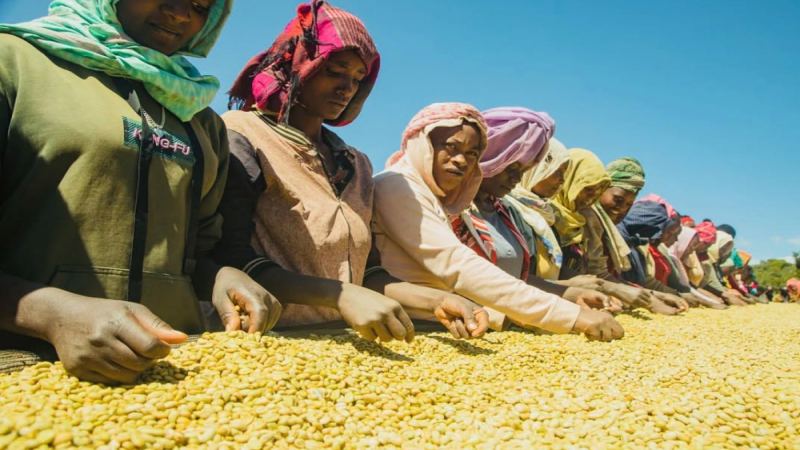
Ethiopia is widely recognized as the birthplace of coffee. Its name means "land of people scorched by the sun" in ancient Greek, and the English word "coffee" is said to come from the Ethiopian place name "Kaffa." Legend has it that around 900 AD, a shepherd noticed his flock became unusually lively after eating red berries, thus beginning the story of coffee cultivation. As a pilgrimage site for specialty coffee, Ethiopia produces beans with bright acidity, honey-like sweetness, and a clean mouthfeel, and Yirgacheffe is a household name. In this article, Front Street Coffee will take you into the world of Ethiopian coffee and introduce six must-drink specialty pour-over beans one by one, covering washed Yirgacheffe, Gotiti, sun-dried Red Cherry, sun-dried Huakui, Hamasho, and Kaffa Forest.
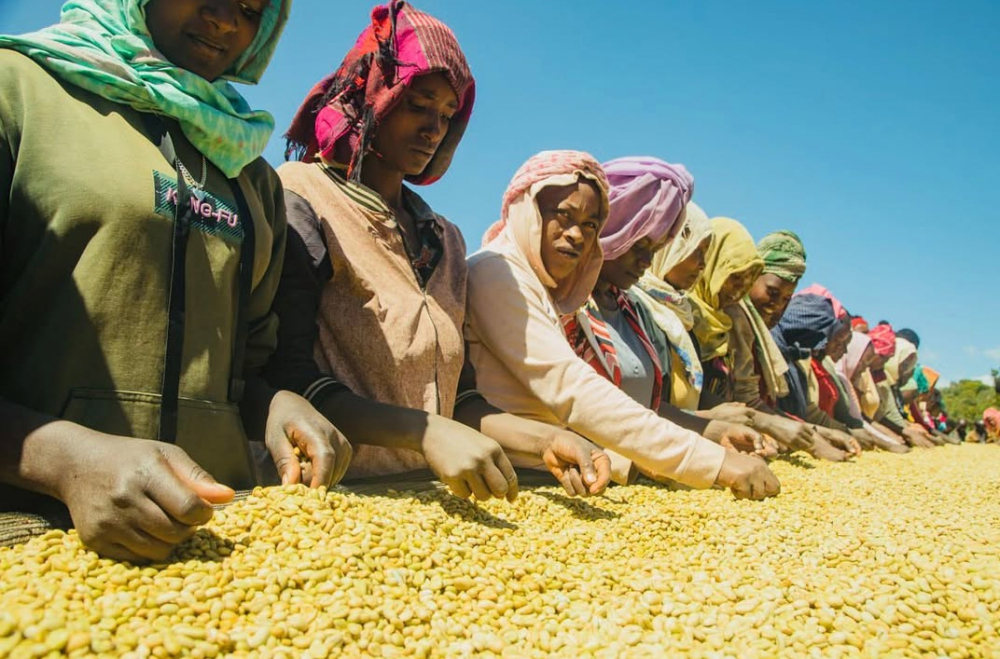
Located in East Africa, Ethiopia is called in ancient Greek "land of people scorched by the sun." It has a distinctive cultural heritage, magnificent scenery, a comfortable climate, diverse flora and fauna, and many important historical sites. Together with the warmth and hospitality of the locals, this makes Ethiopia one of Africa's popular travel destinations.
The English word coffee comes from Ethiopia's kaffa
Have you ever thought that coffee's "roots" are planted in Ethiopia? One theory holds that the English word for coffee comes from the Ethiopian place name "Kaffa." Legend has it that around 900 AD, a shepherd in the Kaffa region was grazing his flock in the mountains when he saw the sheep fighting over a kind of red berry. After eating them, the sheep became unusually excited and jumped around energetically. The shepherd worried that the sheep had eaten something poisonous and was uneasy all night. But the next day, the flock was completely fine. This accidental discovery led the shepherd to gather the wild berries, boil them, and drink the liquid. He found the liquid fragrant and rich, and after drinking it he felt especially energized. So he began planting this plant, and large-scale coffee cultivation started from there. The name of coffee also gradually evolved from Kaffa. After that, coffee spread from Ethiopia to the rest of the world.
As the birthplace of coffee, Ethiopia has always been a pilgrimage site in the hearts of many coffee professionals. Many friends who come to Front Street Coffee ask as soon as they walk in whether there are Ethiopian beans, or whether there are Yirgacheffe beans. Indeed, whether they are newcomers just getting into coffee or seasoned connoisseurs, everyone loves the bright acidity, honey-like sweetness, and clean, fresh mouthfeel of Ethiopian coffee beans. In this article, Front Street will talk about Ethiopia, this coffee-producing country.
Six must-drink Ethiopian specialty pour-over coffees:
1. Front Street Washed Yirgacheffe
Yirgacheffe is a small town in Ethiopia at an altitude of 1,700 to 2,100 meters. It is one of the highest coffee-producing regions in the world and also a synonym for Ethiopian specialty coffee. Lake Turkana, Lake Abaya, and Lake Chamo bring abundant moisture here. In the rift valley area represented by the Misty Valley, fog lingers year-round, the seasons are like spring, a gentle breeze blows, and the climate is cool and humid. Thousands of kinds of coffee trees grow lushly here, creating Yirgacheffe's unique terroir with intertwined floral and fruity aromas and endless variations. Multiple key factors work together to give Front Street Yirgacheffe rich citrus and lemon acidity, intense jasmine fragrance, and a light, elegant mouthfeel with a tea-like quality. It drinks like a refreshing, clean glass of lemon tea.
2. Front Street Gotiti Cooperative
Gotiti Cooperative is located in the Worka production area at the southeastern end of Yirgacheffe. It was originally part of the Worka Cooperative under the Yirgacheffe Coffee Farmers Cooperative Union YCFCU. Later, as people's demands for traceability of green coffee continued to rise, independent "single-origin" lots were discovered one after another by coffee hunters around the world. So in 2012, Gotiti, with about 300 farmers, became independent as "Gotiti Cooperative." Because the pulp is removed before drying, the inherent aroma of Front Street Gotiti coffee is expressed more clearly and thoroughly, showing citrus and lemon notes as well as elegant white floral aromas, with an overall bright and delicate flavor.
3. Front Street Sun-Dried Red Cherry
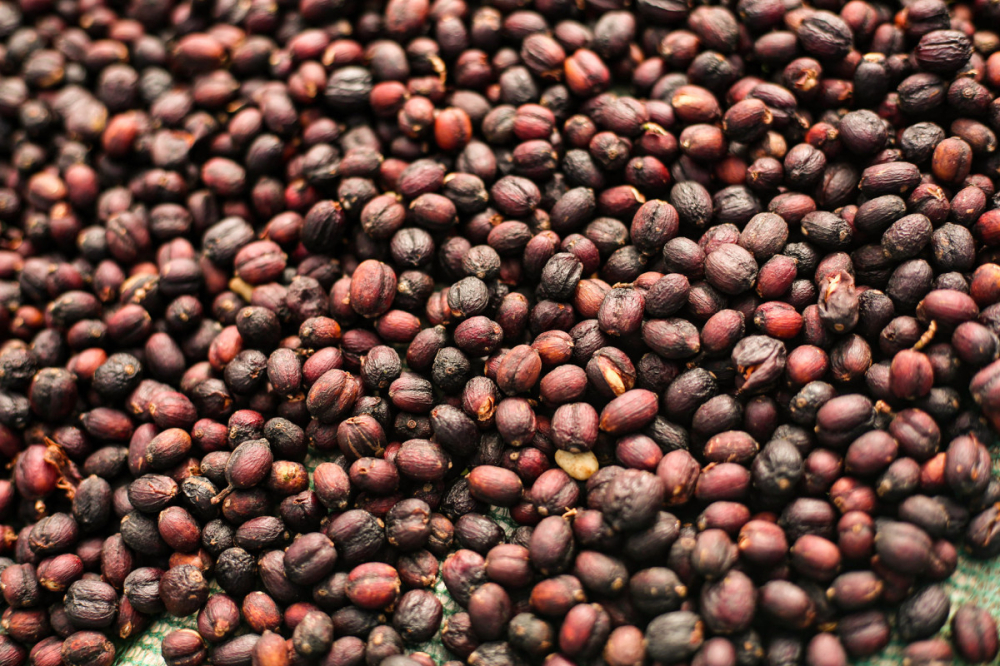
Unlike washed processing, sun-dried coffee first removes damaged or moldy fruits. After drying in the sun for two weeks, when the sugar and essence of the pulp have fully penetrated the coffee beans and the moisture content has dropped to 12%, the hardened pulp, pectin layer, and pod are scraped clean with a hulling machine. The extracted coffee beans still need density and bean-color testing to eliminate defective beans, and then workers visually remove any flawed beans that slipped through, with layer after layer of quality control screening. Therefore, every resulting coffee bean is specialty grade, ensuring its clean, refined quality with rich, alluring fruity aromas. Front Street Yirgacheffe Red Cherry sun-dried coffee bean flavor description: peach, cocoa, honey, lemon. It is suitable for pour-over, cold brew, French press, moka pot, and home coffee machines.
4. Front Street Sun-Dried Huakui
Sidamo is located in southern Ethiopia. In the past, Sidamo coffee beans also included Yirgacheffe coffee and Guji coffee. However, the ECX trading system has already separated Yirgacheffe and Guji from Sidamo. Sidamo coffee has rich fruit acidity and a strong aroma, and in terms of aroma it is in no way inferior to Yirgacheffe. It is very suitable for people who like strong flavors but do not like tastes that are too heavy, achieving a good balance and harmony between aroma and mouthfeel. Front Street Sun-Dried Huakui is a typical representative, with pleasant berry and citrus aromas and sweet mango flavors combining to create a black-tea-like charm.
5. Front Street Hamasho
Also belonging to the Sidamo production area, Hamasho Station, with its excellent quality and unique flavor, has become a frequent name on the winning lists of Ethiopian green bean competitions and has also attracted the attention of many coffee lovers. The coffee produced by Hamasho Station is mainly based on the 74 series disease-resistant varieties released by JARC (Jimma Agricultural Research Center). 74158 has relatively small beans and prominent floral and fruity aromas. Front Street Hamasho 74158 has an alluring aroma, with some sweet notes resembling perfume lemon, strawberry, and star fruit. On the palate, there are very obvious sweet aromas of strawberry, star fruit, and green grape, followed by a faint floral aroma gradually emerging.
6. Front Street Kaffa Forest
Unlike our impression of rural cultivation, where farmers plant coffee trees in their own backyards, Kaffa Forest is most representative for producing wild coffee. The coffee trees all grow in shaded environments at altitudes of 1,400 to 2,100 meters. Favorable conditions such as an original ecological setting, microclimate, red soil, and abundant rainfall provide an excellent growing environment for the coffee trees. Front Street Kaffa Forest coffee beans are medium-light roasted. After grinding, they have an obvious white floral aroma. On the palate, there is bright citric acidity, with sweet orange and bergamot flavors, and a finish with slight melon and nut aromas, with a mouthfeel like green tea.
The above content is compiled by CoffeeHunters, a coffee news website.


