







As the world's largest producer of Arabica coffee, Brazil is known for its low acidity, nutty and chocolatey notes, and full-bodied mouthfeel, making it widely used in espresso blends. This article systematically reviews the history of coffee cultivation in Brazil, the terroir differences between its main producing regions (Sul de Minas and Cerrado), the characteristics of Red Bourbon and Yellow Bourbon varieties, and the semi-washed processing method that arose in response to the local climate. At the same time, Front Street Coffee will share roasting ideas for Brazilian coffee and the three-stage brewing parameters for the KONO dripper, giving you a comprehensive understanding of this balanced yet understated coffee powerhouse.
When people mention Brazilian coffee, many first encounter it through espresso blend beans. As the country with the highest output of Arabica coffee in the world, Brazilian beans are widely used in espresso bean formulas thanks to their balanced flavor, relatively low acidity, rounded and full body, and clear cost advantages.
Brazilian Coffee Cultivation
Brazil's coffee cultivation history can be traced back to the 1720s. At that time, a Portuguese captain named Francisco de Melo Palheta, whose family origins were in Brazil, managed to win the favor of the wife of the governor of Cayenne in French Guiana, and thereby successfully introduced coffee seeds from French Guiana into Brazil. Coffee has since taken root in this land.
At first, coffee did not develop into large-scale production in Brazil and mainly satisfied domestic consumption. Later, with the outbreak of the American Revolutionary War, Washington advocated a dietary habit of replacing tea with coffee, and U.S. demand for coffee imports surged, which also greatly promoted the expansion of coffee cultivation in Brazil. As coffee cultivation became increasingly economically profitable, it gradually became an important export agricultural product of Brazil. By 1850, coffee accounted for nearly half of Brazil's total exports.
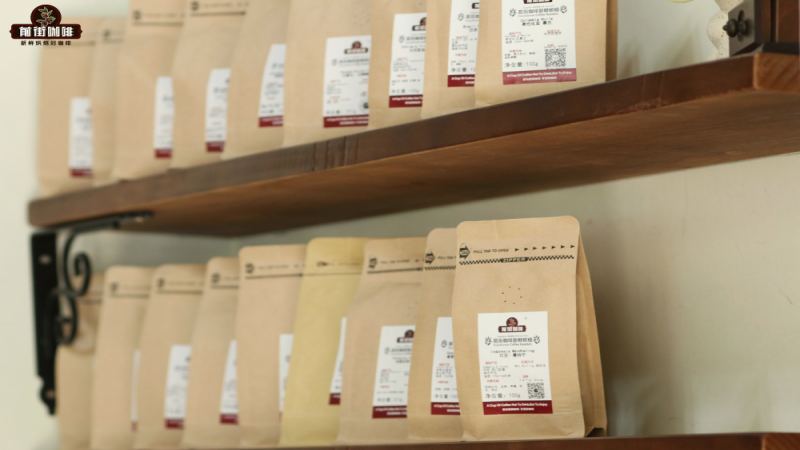
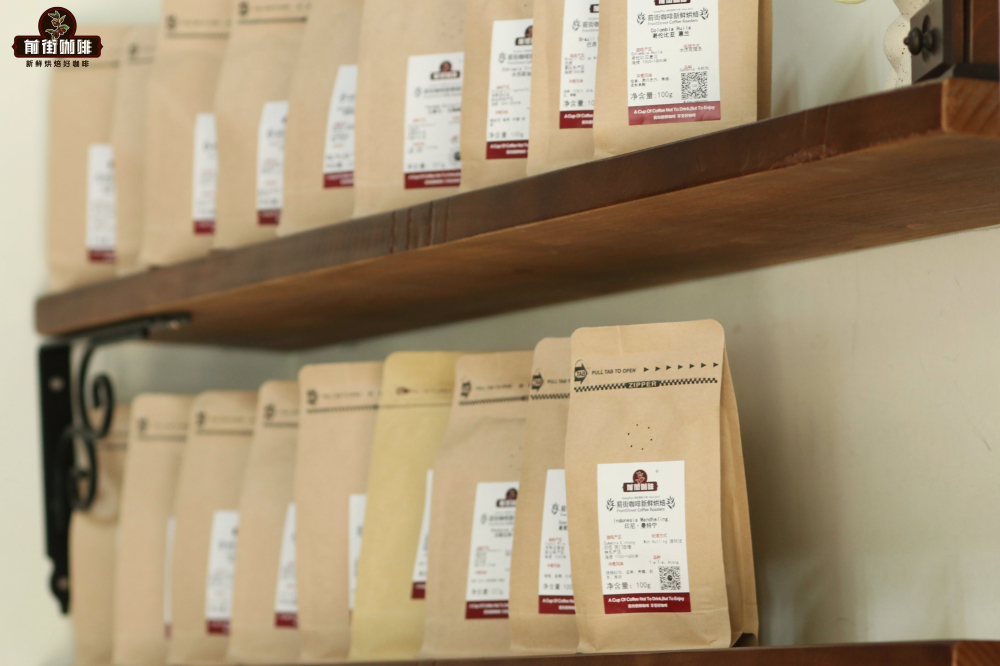
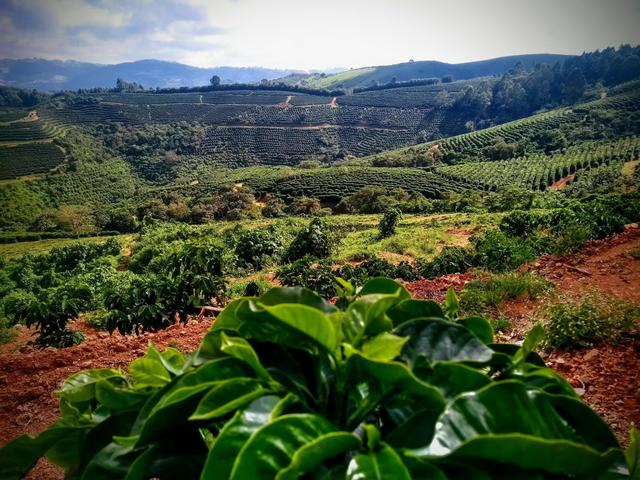
Brazil's terrain is relatively flat, and the overall altitude is not high, making it difficult to form unique microclimates. Local growers usually do not shade coffee trees, that is, they adopt sun-exposed cultivation. Coffee gradually adapted to these terroir conditions, thereby shaping the soft-bean style unique to Brazilian coffee: low acidity, nutty and chocolatey notes, good body, but relatively lacking in floral and fruity aromas. Because of this balanced rather than overly prominent flavor, Brazilian beans are often used in espresso blends to play a dark-roast blending role. For example, on Front Street's bean list, three espresso beans use Brazilian coffee, and it has the highest proportion, which fully shows the strong market demand for Brazilian coffee.
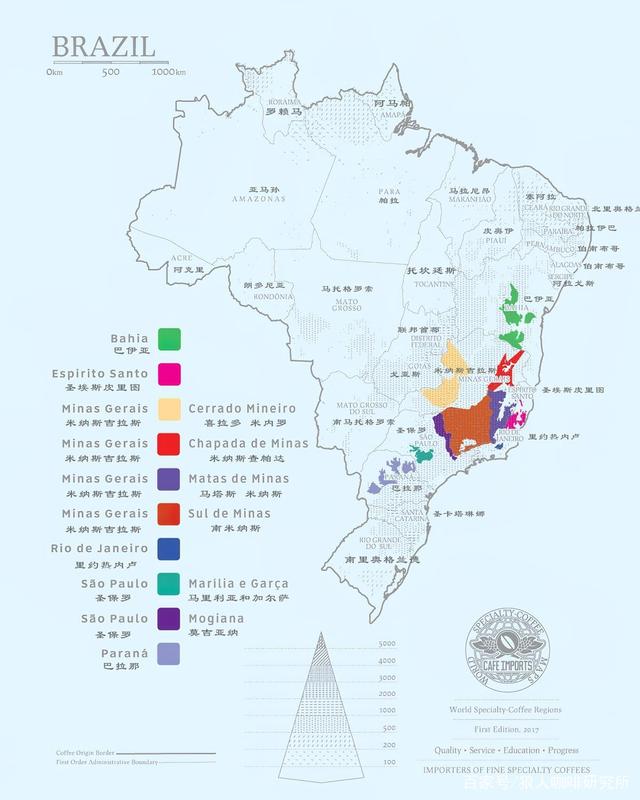
In a vast coffee country like Brazil, large-scale coffee cultivation areas are distributed in the central and southern regions, spanning 7 states and about 14 coffee-producing regions. Among them, Sul de Minas Sul de Minas and Cerrado Cerrado attract the most attention because their higher altitudes produce more specialty batches.
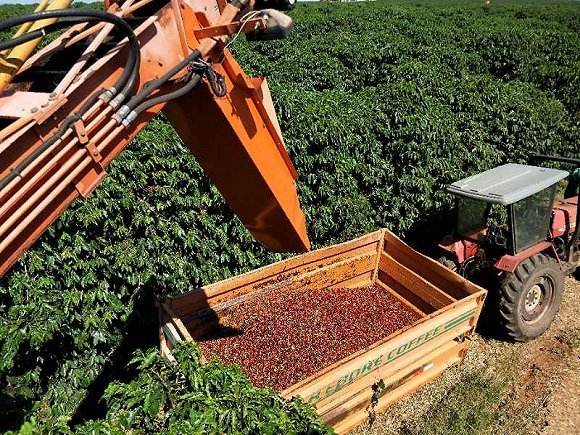
The Sul de Minas producing region has an altitude of between 700 and 1,200 meters, with hilly terrain as the main feature, and is Brazil's earliest coffee-producing area. To save labor, local coffee harvesting is mostly done by machinery. This is also the earliest area for coffee commercialization, and many well-known large Brazilian exporters have established farms here. Sul de Minas has varied terrain and landforms, and areas above 1,100 meters can form relatively unique microclimates, making them very suitable for the growth of high-quality Arabica varieties.
The Cerrado producing region is located in the northwest of Minas Gerais State. Because high-quality coffee received attention, Cerrado became Brazil's first producing region to obtain a designation of origin in the specialty coffee field. This producing region is located on the Cerrado savanna in central Brazil, mainly consisting of flat plateaus, with distinct seasons, and coffee cherries ripen relatively uniformly, making uniform harvesting easier. Here, Front Street needs to clarify that the Cerrado producing region refers to the coffee-growing area in the central-western part of Minas State, located on the savanna and above 1,000 meters in altitude. The altitude here is relatively high and the soil is fertile, and the coffee beans produced have ample aroma and high body. In addition, through cupping comparisons, Front Street found that compared with other Brazilian producing regions, Cerrado's coffee flavor is cleaner and sweeter, without off-flavors. Therefore, Front Street takes coffee beans from the Cerrado producing region as the face of Brazilian coffee and adds them to the daily ration bean series, allowing everyone to taste the flavor characteristics of single-origin Brazilian coffee at an ultra-low price.
Brazilian Coffee Varieties
Front Street's regular bean list keeps two single-origin Brazilian coffee beans: one Cerrado Red Bourbon and one Queen Farm Yellow Bourbon.
Bourbon is one of the ancient Arabica varieties, naturally mutated from Typica. It was first planted on Reunion Island in Brazil, which was also called Bourbon Island (le Bourbon) before 1789, and the variety name comes from this. Bourbon has broad leaves and can be planted densely, with a yield about 30% higher than the equally delicate Typica. When brewing Bourbon coffee beans, Front Street noticed that Bourbon beans are shorter and rounder in shape, plump and substantial in body, smooth on the palate, with obvious sweet aroma.
Bourbon coffee trees flower and then bear fruit. When the fruit ripens, it appears dark red, so it is called Red Bourbon, with a bright, acidic aroma. Red Bourbon is praised by many growers for its high yield and excellent quality, and it is currently the most widely planted coffee variety in Brazil.
Unlike Red Bourbon, Yellow Bourbon, whose fruit turns orange-yellow when ripe, is a genetic mutation of Bourbon and a Bourbon variant unique to Sao Paulo State in Brazil. Usually, Yellow Bourbon is planted at higher altitudes, so its flavor expression is better. The Brazilian Queen Farm Yellow Bourbon coffee on Front Street's bean list has rich chocolate and roasted nut aromas, balanced and smooth sweetness and acidity, weak bitterness, and an obvious sweet aftertaste.
Semi-Washed Processing Method
Friends familiar with Front Street's daily ration beans must know that most of Front Street's daily ration bean series use washed processing, because the washing step removes the coffee bean's pulp and mucilage layer and carries out fermentation, presenting a cleaner flavor. Front Street has also mentioned in previous articles that coffee flavor is usually related to variety, growing climate environment, and processing method, and Brazil's green bean processing method precisely originates from the local climate characteristics.
Brazil has a dry climate, which in theory is very suitable for the traditional natural method, but Brazilian coffee has extremely large single-batch yields, and rough natural drying easily gives coffee negative flavors such as earthiness. The washed method is also more costly, so Brazilians invented a processing method between natural and washed according to local conditions—the semi-washed processing method (also called semi-wet processing). After harvesting, the ripe coffee fruit has its skin and pulp removed. Because the skin of unripe green fruit is not easy to peel off, this step can screen out defective beans again, keeping the coffee fruit at a consistent degree of ripeness.
Finally, the parchment beans are spread flat on the drying yard to dry, and once the moisture content is suitable, they can be sent for hulling and packaging. Front Street believes that this processing method takes less time than the traditional natural method and also saves considerable water compared with traditional washed processing.
Flavor Characteristics of Brewed Brazilian Coffee Beans
Taking into account the characteristics of Brazilian coffee, Front Street's roaster chooses a medium-dark roast degree because the beans have lower density, softer texture, and Brazilian coffee mainly presents nutty flavor notes.
Moving on to the brewing stage, Front Street Coffee (FrontStreet Coffee) has always adhered to the principle of freshly roasted good coffee, hoping that every guest can taste the complete aroma of coffee when the beans are at their best flavor. After choosing fresh coffee beans, Front Street formulates brewing parameters according to the characteristics of Brazilian coffee. Brazilian coffee's flavor focuses on high body and rich mouthfeel. Here, Front Street will use the KONO dripper with "immersion-style" extraction. Its ribs extend only halfway up the dripper, allowing the filter paper to fit tightly against the edge of the dripper, so water can only drip down from below, increasing the extraction between coffee grounds and hot water, increasing concentration, and making the coffee fuller in body.
Pour-over parameters: KONO dripper, 88°C water temperature, coffee-to-water ratio 1:15, 15 grams of coffee, grind size (75% passing through China's No. 20 standard sieve).
Here, Front Street uses three-stage extraction. Wet the KONO dripper, place the filter paper so it fits the coffee dripper more closely, pour out the water in the sharing pitcher while adding 15g of coffee grounds, bloom with 30g of water for 30s, then begin pouring in a small stream in circles from the center until 125g, then start the staged pour. Wait until the coffee bed drops to half the height of the dripper, then begin the second stage with the same pouring technique until 225g. After all dripping is complete, remove the dripper.
This Brazilian Cerrado already gives off rich roasted nuts and peanuts when the coffee beans are ground. When drunk, it has a smooth, rounded mouthfeel of dark chocolate and creamy peanuts, with an obvious sweet aftertaste at the end.
For professional coffee knowledge exchange and more coffee bean information, please follow Coffee Workshop (WeChat public account cafe_style).
For more specialty coffee beans, please add the private WeChat of Front Street Coffee (FrontStreet Coffee), WeChat ID: qjcoffeex
The above content is compiled by CoffeeHunters, a coffee news website.


