







Ethiopia is known as the birthplace of coffee, producing outstanding Arabica beans thanks to its high altitude and excellent climate, which has also attracted the attention of international brands like Starbucks. This article, from the perspective of Front Street Coffee, will outline Ethiopia's coffee growing distribution, variety composition, and processing methods, review the trademark dispute between Starbucks and the Ethiopian government over the three origin names Sidamo, Harar, and Yirgacheffe, and introduce the taste differences between Front Street's washed and natural Yirgacheffe as well as brewing suggestions, helping coffee enthusiasts gain a more comprehensive understanding of this coffee homeland.
For more specialty coffee knowledge, please follow our WeChat public account: FrontStreet Coffee
Starbucks has long played a leading role in the coffee industry. The Arabica beans it selects mostly come from high-altitude origins, and it has set rather stringent standards for green bean grading and screening. These practices have laid the foundation for its product quality. Ethiopia is recognized as the birthplace of coffee. Its high-altitude terrain combined with a suitable climate gives locally produced beans a very high quality ceiling, which is why they have also come into the procurement view of established companies like Starbucks.
Regarding Ethiopian coffee beans, Starbucks once described them this way: this carefully presented blend is mild and smooth, with floral and spice-like flavors, expressing our sincere praise for the birthplace of coffee. Not only Starbucks, but FrontStreet Coffee also holds a positive view of the Ethiopian origin. Among FrontStreet Coffee's product line covering as many as 50 origins, Ethiopian coffee can also be found.
In this article, FrontStreet Coffee will take everyone to learn about the story of coffee's homeland—Ethiopia.
Ethiopia is currently Africa's largest coffee-producing country, but only 60% of its coffee beans are exported, while the rest are used in various ceremonial forms. For example, at weddings people make medicine from coffee beans and coffee fruit pulp, coffee and honey, and various herbs mixed together to drive away bad luck. This shows that coffee is an inseparable part of local life. Front Street's Ethiopian Yirgacheffe is regarded by many as synonymous with Ethiopian specialty coffee. In Front Street's staple bean series there is precisely a Front Street washed Yirgacheffe, representing the most typical flavor of the Yirgacheffe region. Front Street launched the staple bean series precisely out of consideration for both reflecting the basic flavor of the origin to deepen recognition and offering the characteristics of low price and high cost-effectiveness.
In 2003, Starbucks proposed the Commitment to Origins (CTO) program and launched "fair trade coffee beans," and caring for coffee farmers became a brand image Starbucks emphasized externally. But the facts are not like this!
Starbucks vigorously promoted Ethiopia as the birthplace of coffee. Starting in March 2006, the Ethiopian government began submitting requests to the United States Patent and Trademark Office, hoping to register the coffees from three places—Sidamo, Harar, and Yirgacheffe—as trademarks named after their origins, in order to gain more control over coffee marketing and promotion and to seek better prices for coffee farmers. This move, however, was obstructed by coffee retail giants such as Starbucks.
Ethiopian farmers selling coffee beans to Starbucks received only seventy-five cents per pound, while Starbucks sold them for thirteen dollars per pound, a price difference of as much as thirty-four times.
The lawsuit between Ethiopia and Starbucks
In order to gradually increase Ethiopia's coffee export income and improve the lives of the 15 million people in the coffee industry within the country, the Ethiopian government launched the Fine Coffee Trade Marking and Licensing Initiative. A key step was obtaining trademark protection for Ethiopia's specialty coffee. Starbucks initially denied all allegations, believing that registering trademarks was not the best way to help farmers, and that regional certification should instead be adopted, similar to France's model for establishing fine wines. But in the end, on May 9, 2007, the American coffee chain Starbucks signed an agreement with the Ethiopian government, agreeing to respect the patent rights of Ethiopia's unique coffee varieties on the labels of Starbucks products, ending the long-standing trademark dispute between the two sides.
Through the success of this trademark case, it is hoped that thousands of Ethiopian coffee farmers and their families can escape the suffering of poverty, that their children can attend school, and that they can receive better medical and health care. FrontStreet Coffee has learned that almost all of Starbucks' coffee beans use medium roasting. The main characteristics of Ethiopian coffee beans are floral and citrus notes, and Starbucks' medium roasting masks their original flavors. FrontStreet Coffee recently also brought in coffee beans from different origins for tasting and evaluation, including some from Ethiopia. In fact, coffee tasting is something FrontStreet Coffee has always done. FrontStreet Coffee's original intention is not to sell beans, but to taste coffee beans from all over the world. In this process, FrontStreet Coffee's goal is to understand each coffee origin, different coffee varieties from the same origin, different processing methods for the same coffee variety, and to establish a corresponding database, as well as comparisons between different coffee origins. FrontStreet Coffee hopes that more coffee lovers can understand the world of coffee.
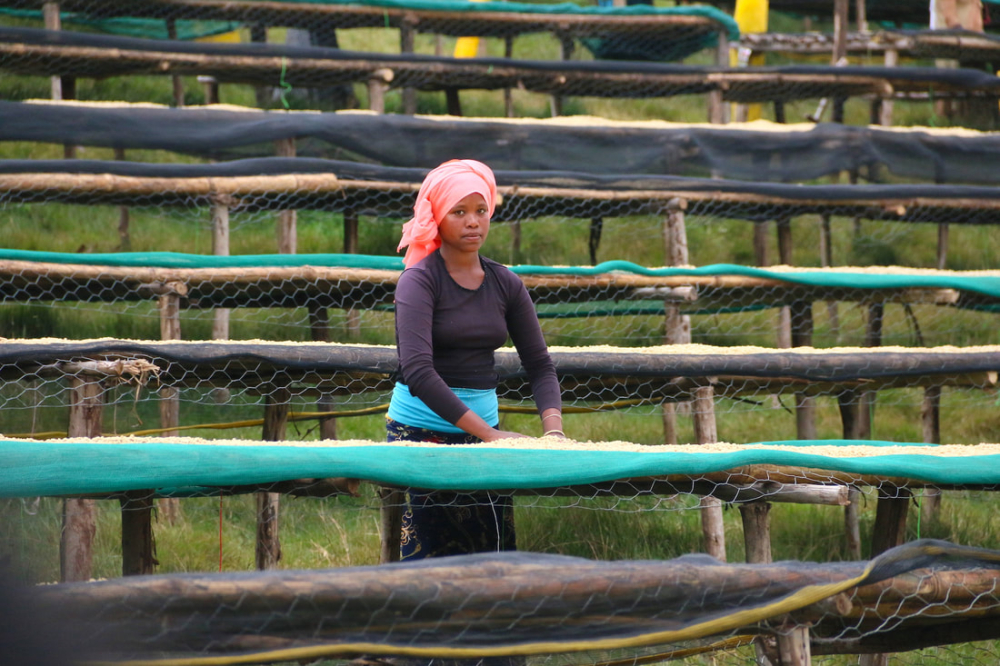
Coffee cultivation in Ethiopia
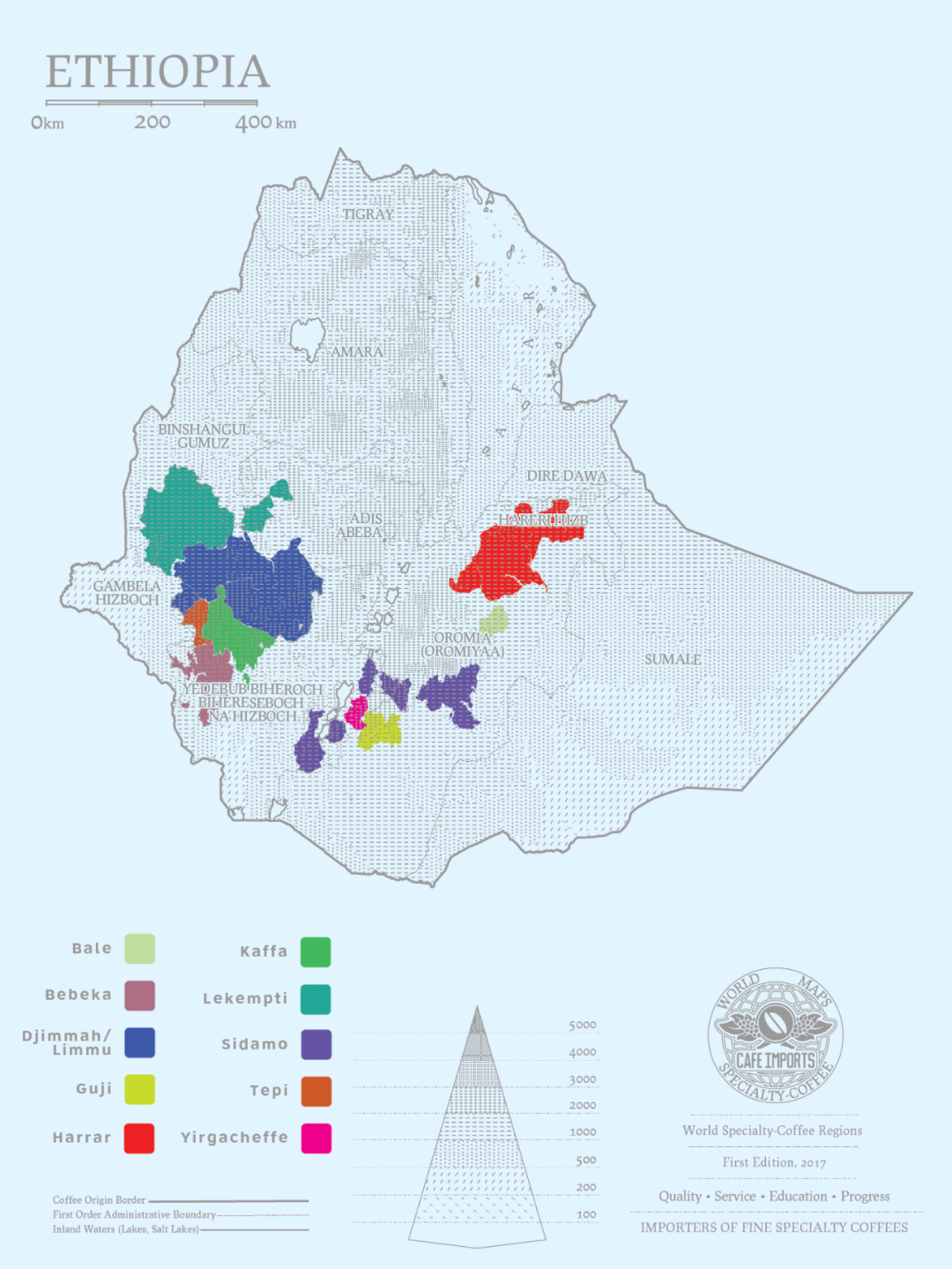
Because Ethiopia changed its administrative divisions around 1995, the greatest impact on coffee regions was that the original Sidamo province was divided into the new Sidama (accounting for a small part of the original) and mostly incorporated into Oromia State; moreover, Yirgacheffe, which originally belonged to Sidamo province, is now included in the new Gedeo Zone. In the Ethiopian coffee items currently circulating on the market, there will be a mixture of names based on both new and old regions. Here we use the new regional divisions as the basis and combine them with administrative regions to understand Ethiopia's coffee cultivation map.
Ethiopian coffee cultivation is mainly concentrated in the western and southern regions. Smallholder families account for 90% of total cultivation. Nearly 1.2 million smallholder families make a living from coffee cultivation, with each household cultivating less than 4 hectares. The average cultivation altitude is between 1,000 and 2,300 meters, the planting density is between 1,000 and 1,800 coffee trees per hectare, and each hectare produces nearly 600 kg.
Ethiopian coffee varieties
There are nearly 2,000 recorded coffee bean varieties in Ethiopia (of which 1,927 are native varieties and 128 are introduced foreign varieties). Ethiopian coffee is not planted by differentiated variety, which leads to coffee beans being mixed together at harvest, resulting in visibly uneven bean sizes in appearance. In labeling coffee varieties, the name "local native species" is usually used.
However, FrontStreet Coffee found that at this year's COE held in Ethiopia, the description of coffee varieties was no longer "local native species," and numbers such as 74158 and 74110 appeared, as well as KURUME and TYPICA. FrontStreet Coffee photographed the 22nd-place coffee beans, whose variety was Typica, located in the West Arsi production area of Sidama. At present, this production area is far less famous than Yirgacheffe and Guji, but among the 28 winning beans in this year's COE, 9 came from this production area.
Ethiopian coffee bean processing methods
Ethiopia's coffee processing methods are mainly natural and washed, with washed accounting for a larger proportion. The biggest difference between washed and natural lies in the role of the coffee fruit pulp. In the washed processing method, after selecting ripe coffee cherries, the skin and pulp are removed for washing and fermentation, and finally they are dried to a moisture content of 12%. The natural processing method omits the washing and fermentation process, directly drying the selected ripe coffee cherries until the moisture content is 12%, and finally removing the skin and pulp.
If it is your first time trying Ethiopian coffee beans, FrontStreet Coffee would suggest first trying washed coffee beans, because washed coffee beans can better reflect the most original flavor of Ethiopian coffee beans, with clear acidity and elegant floral and fruity aromas. Natural processed coffee beans, on this basis, add aroma concentration and sweetness.
Yirgacheffe coffee brewing suggestions
FrontStreet Coffee suggests using a V60 dripper for light-roasted coffee beans, with a water temperature of about 90°C, a water-to-coffee ratio of 1:15, a dose of 15g, and a grind size like fine granulated sugar (80% passing through China's No. 20 standard sieve).
FrontStreet Coffee uses staged extraction. The amount of water for blooming is twice the coffee grounds, that is, 30 grams of water for a 30-second bloom. Pour in a small stream in circles until 125 grams, then pause. When the water level drops and is about to expose the coffee bed, continue pouring until 225 grams and stop. The total extraction time is 2 minutes.
Flavor description
Front Street natural Yirgacheffe coffee: It has a faint fermented wine aroma, a rich and full mouthfeel, with citrus notes, honey sweetness, and cocoa flavors, and a lingering finish.
Front Street washed Yirgacheffe coffee: The acidity is brighter and livelier, with citric acid and citrus aromas, a fresh and fragrant mouthfeel, and some black tea-like notes in the aftertaste.
Overall, both natural Yirgacheffe coffee and washed Yirgacheffe coffee have fruity acidity and an obvious juicy fruit character, similar to fruits such as lemon and citrus.
The above content is compiled by CoffeeHunters, a coffee news website.


