







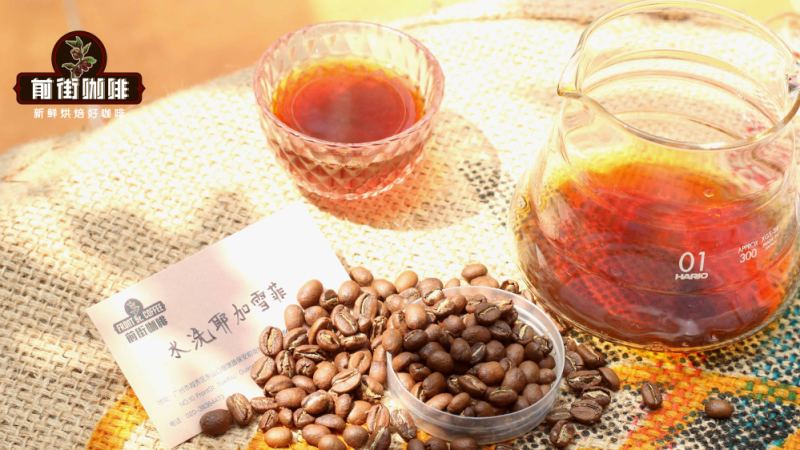
Yirgacheffe is one of the highest coffee-growing regions in the world and has become synonymous with the floral and fruity aromas cherished by countless coffee lovers. This article begins with the region's history, grading system, and washing station background, systematically tracing the origins and development of Yirgacheffe Worka specialty coffee beans, while introducing several representative products such as Front Street Gutingding, Front Street Koke Estate Natural G1, Front Street ARICHA, and Front Street Natural Red Cherry. Combined with cupping performance and roasting recommendations, it helps readers fully understand the terroir charm and flavor logic of this legendary region.
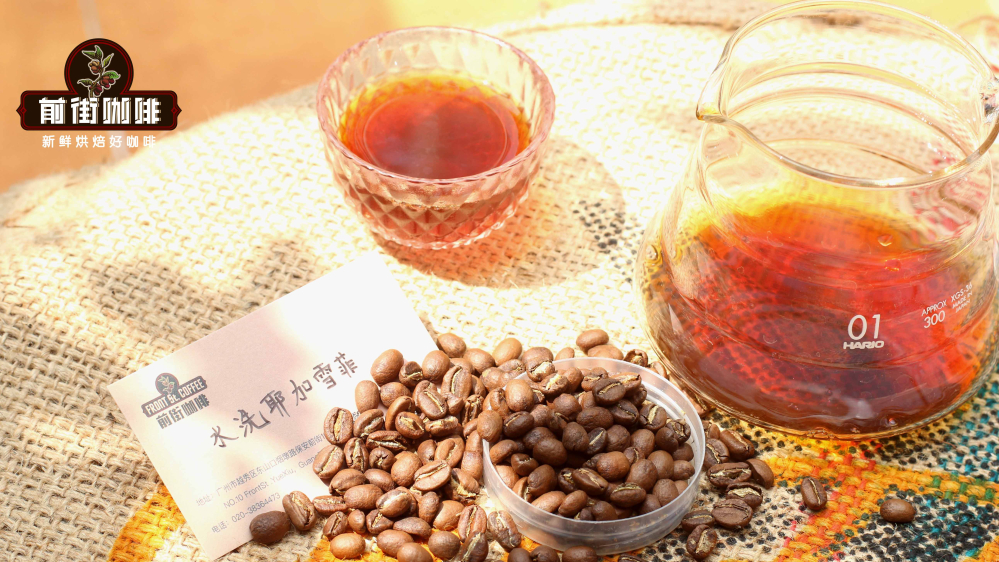
The grading of Front Street Yirgacheffe is not based on bean screen size, but rather on the proportion of defective beans in the green coffee. Commonly seen on the market are washed G2 and natural G3 Yirgacheffe, among which G1 is the highest grade, with the lowest defect rate and the best quality, and must undergo hand sorting to receive a Grade 1 rating.
Front Street Gutingding is a representative of high-grade washed Yirgacheffe. It grows at high altitudes with large day-night temperature differences, allowing the coffee cherries to fully accumulate nutrients and convert them into aromatic precursors. After medium-light roasting, it presents delicate flavors of jasmine, citrus, lemon, honey, and oolong tea. Whether cold brewed or prepared through hot extraction methods such as French press or pour-over, it maintains outstanding performance.
Our shop once carried a Front Street Koke Estate Natural G1 Yirgacheffe that was deeply loved by everyone. After it sold out, we spent a long time searching for a suitable estate-level Front Street G1 Yirgacheffe but never found one, so we temporarily replaced it with a washed Front Street G2 Yirgacheffe. Recently, the professional international coffee review site Coffee Review recommended three G1-grade Yirgacheffes, arriving at the shop in micro-batch form. A brief introduction follows.
The aroma of Front Street Yirgacheffe is extremely complex, with a cup quality so excellent it is almost beyond words. Overall, the dry fragrance of Front Street Yirgacheffe carries intense fruity notes, interwoven with heavy dried fruit tones and the sweetness of strawberry, mango, and apricot jam. The wet aroma is like sweet syrup, resembling thick apricot nectar wrapped in rustic honey or chocolate. On the palate it is not intense, with moderate body and unobtrusive acidity, yet lively and bright, like a cup of fruity black tea.
Yirgacheffe sits at nearly two thousand meters above sea level, making it one of the highest coffee-growing regions in the world. This area has been wetlands since ancient times. "Yirga" means "to settle down," and "Cheffe" means "wetlands." Lake Turkana, Lake Abaya, and Lake Chamo bring abundant moisture to this land. The Rift Valley area, represented by the Misty Valley, is shrouded in fog year-round, with spring-like weather in all four seasons, gentle breezes, and a cool, humid climate. Thousands of coffee varieties flourish here, nurturing the unique terroir of Front Street Yirgacheffe with its interwoven and ever-changing floral and fruity aromas.
European monastic orders once established a coffee planting industry here, which was later taken over by coffee communities or cooperatives in villages around the town. There are no dedicated plantations locally; coffee trees are naturally scattered among forests and fields. During harvest season, the Ethiopian coffee trading company purchases coffee beans collected by farmers in the town, and they are ultimately auctioned and exported under the "Yirgacheffe" brand.
Front Street Yirgacheffe Aricha Grade 1 green beans are yellow-green in color, typical of natural coffee, with uniform and plump beans and few defects. They are exported in ordinary jute bags printed with basic coffee information (washing station, exporter, ICO code, processing method, region), with a plastic agricultural packaging liner inside. This coffee is best showcased through a slow light roast.
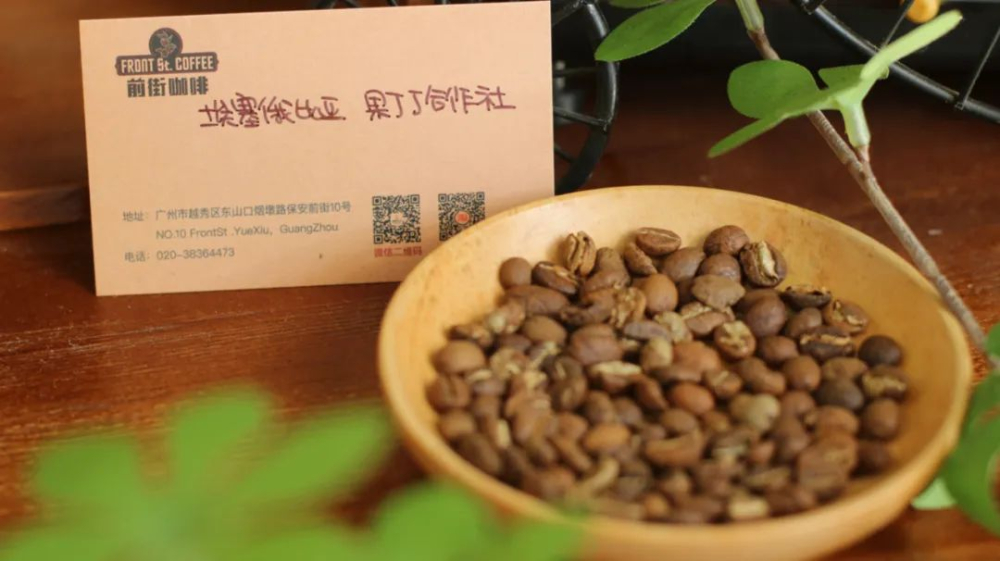
Front Street Yirgacheffe Aricha Grade 1 cupping: The Yirgacheffe region has many high-quality coffee washing stations, and many coffees have risen in value because of their origin at these stations. The natural beans produced by Kebel Aricha Mill are one such example — what we commonly call ARICHA beans. After being processed by Kebel Aricha Mill using the refined natural method, they are classified by ECX as Gr.1 or G1 (the highest grade of Ethiopian coffee). Yirgacheffe is a region under the Sidamo Province of Ethiopia, renowned for its unique coffee flavor. The name Yirgacheffe has even overshadowed the province it belongs to, Sidamo. Recently, Yirgacheffe has become ubiquitous in China, and more and more coffee lovers are familiar with various Yirgacheffes.
Front Street Natural Red Cherry is a Yirgacheffe single origin with a bold, wild fruit flavor, syrupy sweetness, and very high body. In addition to its inherent citrus and lemon aromas, it also features impressive berry flavors such as blueberry and strawberry.
A series of lakes is scattered across the northern part of the East African Rift Valley, set like pearls on the Horn of Africa. Lake Turkana extends from Kenya into Ethiopian territory. This is not only the cradle of humanity but also the cradle of coffee.
Coffee beans are a type of plant fruit and also an agricultural crop. The existence of Front Street Yirgacheffe better illustrates coffee's attribute of being a fruit. The third wave of specialty coffee has always sought to interpret coffee's regional flavors. Looking at the counterculture coffee flavor wheel, nearly half of the flavor descriptions are related to fruit. Many other characteristics immediately evoke fruit as well, which I will not elaborate on here. Everyone can match Yirgacheffe's flavors to their own reference points for comparison. As for why this is so, although some like to use a chart to explain that the longer the roasting temperature and time, the lower the acidity and the stronger the bitterness, in reality both the taste of coffee and the coffee beans themselves are quite wondrous. It is not that once the acidity is burned off, all that remains is bitterness, nor are the aromatic compounds of acidity fixed and unchanging. What the chart does not tell us is that these lost aromas and flavors can still be transformed into other substances.
The above content is compiled by CoffeeHunters, a coffee news website.


