








No need to doubt it—when we see Aussie White,馥芮白,澳瑞白,醇艺白 in coffee shops, they all refer to the same coffee drink: Flat White. It's also a milk coffee, so why is this drink so popular? Below, Front Street Coffee will chat about this popular milk coffee.
Flat whiteWas it originally from New Zealand or Australia?
RegardingFlat white's origin, both Australians and New Zealanders insist it comes from their respective countries, and this debate has never been settled. Before the 1970s, coffee shops in Australia used French presses and manual drip methods to brew black coffee. In the early 1970s, Italians brought espresso machines to Australia, officially kicking off a new wave of coffee culture. Compared to traditional lattes, Australians pursued a milk drink with thinner milk foam and a stronger coffee flavor. Starting in the 1980s, Australians began listing Flat White on regular menus, and it soon spread to cafes in Europe and America.

Regardless of whether this drink was invented in Australia or New Zealand, one thing is certain: since then, it has become very popular around the world. Flat White became a popular hit in China when Starbucks introduced it in 2015 and named it "馥芮白" as one of its flagship drinks, which meant this milk coffee had already become mainstream.
Why is Flat White so popular?
The original intention behind Flat White was for everyone to enjoy the perfect combination of milk foam and the coffee-milk beneath with every sip. Only when the milk foam is very dense, on the thinner side, and the milk coffee is served at a slightly lower temperature can you get milk foam in every sip and quickly finish it before the foam separates. Therefore, Flat White is very particular about the quality of coffee beans and milk frothing. If low-quality beans are used, or the espresso doesn't achieve ideal extraction, or the milk foam is frothed too coarsely, the small volume of a Flat White easily exposes these flaws.

With the arrival of the specialty coffee era, people began applying more and more single-origin coffees to espresso extraction, which is what we often hear as SOE (Single Origin Espresso), meaning espresso made from coffee beans of a single origin. Compared to large lattes and cappuccinos with thick foam, Flat White is better suited to expressing the regional flavors of the coffee beans themselves. Out of the pursuit for richer coffee aromas and mouthfeel, people naturally prefer the small, intense Flat White.
What's the difference between Flat White and Latte?
Both are made from just milk and espresso, but Flat White and Latte have clear differences in preparation and taste. Caffe Latte means "milk" in Italian, and Latte emphasizes a balance between coffee and milk—you can taste the coffee and the sweet, mellow milk, with the two complementing each other without masking each other's flavors. Flat White, on the other hand, uses milk to highlight the coffee's flavor; coffee is the star, and milk is just a supporting role. Therefore, 馥芮白 has a fuller coffee flavor and is more intense in taste.

New Zealand baristas serve Flat White in a smaller cup than a latte (about 150ml) and consistently use a double shot of espresso as the base. This reduces the amount of milk, increases the coffee ratio, and naturally makes the coffee flavor more intense. Melbourne baristas even replace the base with a double Ristretto, incorporating milk foam of a thickness comparable to a latte into a 150ml cup. Ristretto refers to extracting less liquid volume from the same dose of coffee grounds; it can be described as a缩小版 of espresso, more concentrated in the early and middle stages of extraction, with a richer mouthfeel, and thus demands higher quality coffee beans.
However, in Australia, baristas believe it's enough to maintain a thinner milk foam than a latte. When they serve Aussie White, they use the same cup size as a latte, emphasizing more the difference in foam thickness. Compared to milk coffees like lattes and cappuccinos, 馥芮白 has the thinnest milk foam, generally 0.3–0.5cm. The foam must be thin enough to be level with the cup rim, not puffed up above it, so that every sip of the strong coffee liquor comes with a dense layer of foam.

Can you make Flat White at home?
Many friends, out of their love for espresso, have equipped their homes with pressurized espresso machines and grinding equipment, hoping to make a rich, delicious Flat White at home, and then they consult Front Street Coffee for the parameters to make Flat White.
Front Street believes that the derivation of Flat White stems from everyone's pursuit of the flavor and mouthfeel of specialty coffee beans. Therefore, each coffee shop presents a unique Flat White style based on the beans they use and their own understanding. For example, the espresso blend used by Front Street is their own roasted "Sunflower Warm Sun Blend," composed of 70% Honduras Sherry coffee and 30% Yirgacheffe sun-dried Red Cherry coffee. The whiskey, vanilla, and cream flavors of the Sherry pair with the tropical fruit and fermented notes of the Red Cherry, making the coffee in the cup rich and soft.

For the coffee base, Front Street Coffee chooses a double Ristretto, where 20 grams of coffee grounds extract 30 grams of coffee liquid, with an extraction time of 22–24 seconds. But Front Street Coffee needs to remind you that each coffee bean's extraction plan will have slight differences. This extraction plan is the parameter adjusted by the barista before opening each day, based on the Warm Sun Blend used in the store.
Pour the extracted coffee liquid into a pre-prepared cup, then pour 150ml of milk into a milk pitcher to froth. The milk should be frothed with less air intake than for a latte, with a thinner and denser foam layer, and the temperature is best controlled at 55–60°C, making it easier to drink. Finally, pour the frothed milk into the coffee; latte art is optional. Since the thin milk foam doesn't bring the liquid level even with the cup rim, its appearance looks rather flat, hence another name: Flat White.
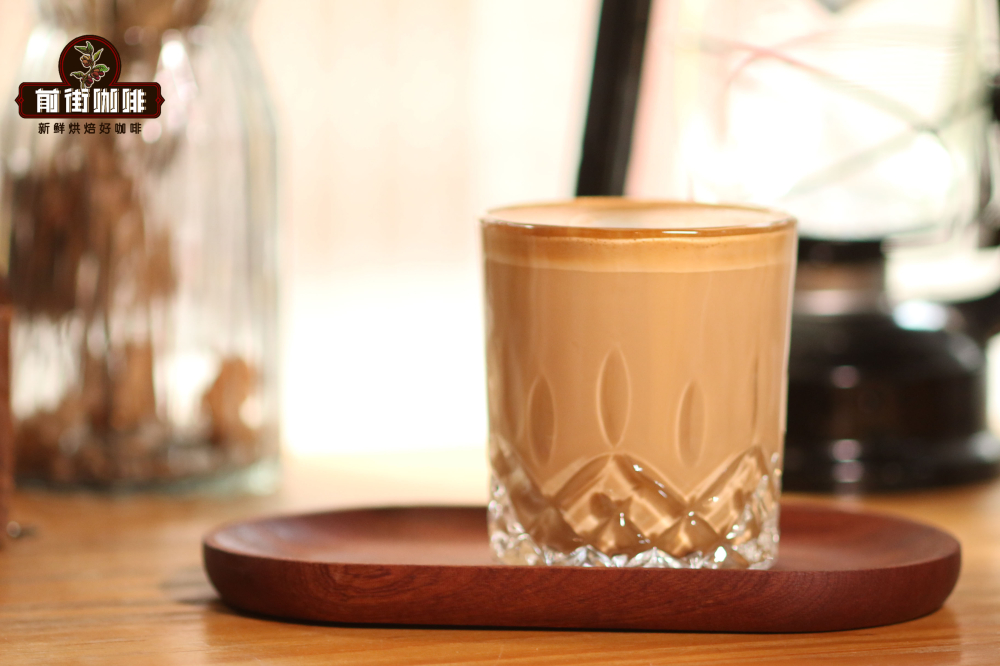
Front Street's Flat White presentsa taste of chocolate milk and whiskey-filled chocolate, with the sweet-tartness of berries, smooth and mellow on the palate, and a very long finish.
Of course, if you don't like any sourness in your coffee and prefer the bitter, roasty taste of dark-roasted coffee, we recommend using Front Street's Classic Espresso Blend to make 馥芮白. This coffee combines beans from three major regions—Brazil, Indonesia, and Vietnam—and is produced by roasting first and blending afterward, allowing the essence of each bean to be better expressed and perfectly integrated in the cup.
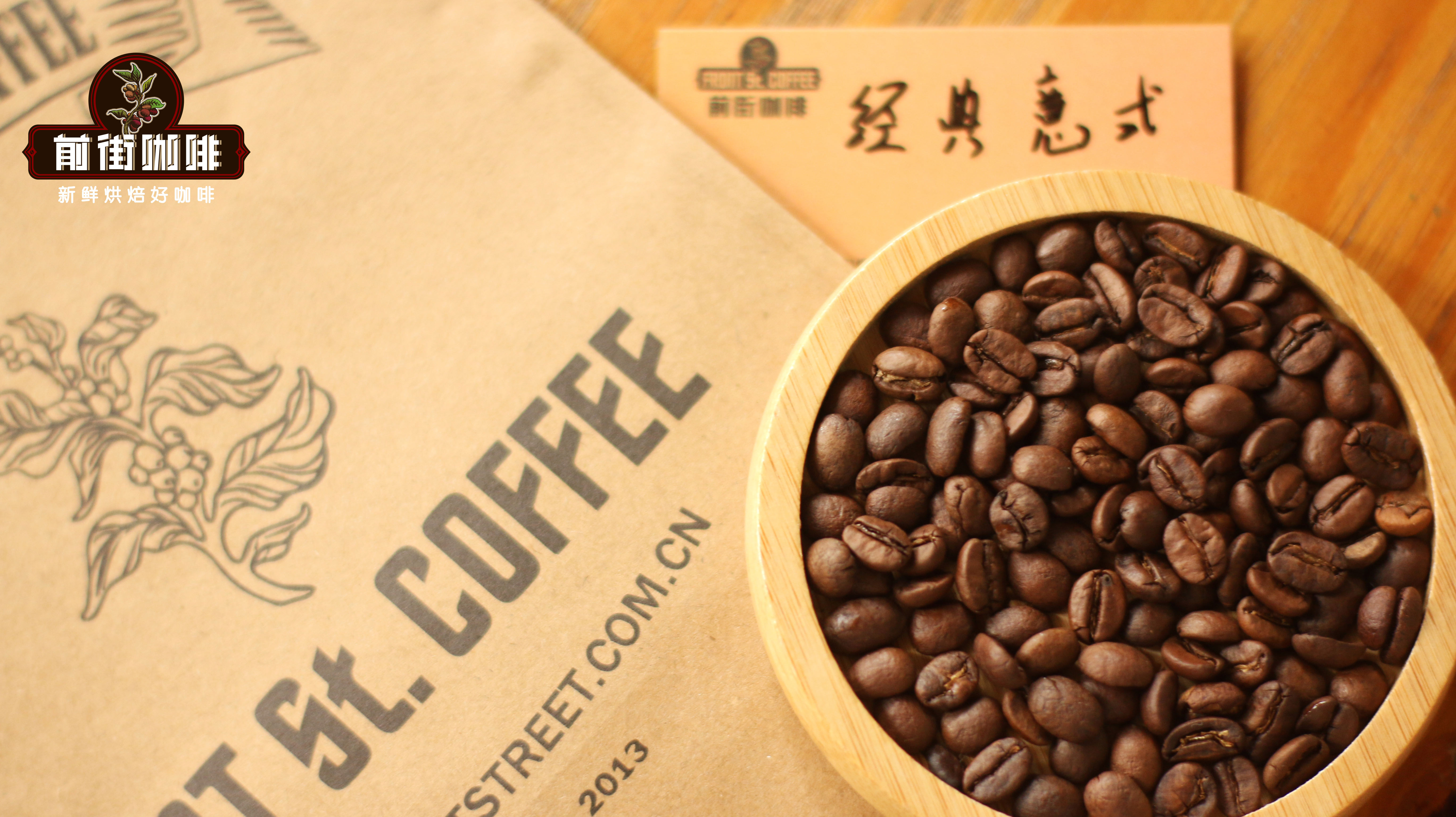
When using Front Street's Classic Espresso Blend to make Aussie White coffee, we use a double espresso as the base, that is, a 1:2 coffee-to-liquid ratio, extracting 40g of coffee liquid from 20g of coffee grounds, with an extraction time of 28–32 seconds. Then, 150g of fresh milk frothed with thin foam is fused with the dense crema, and a nice little pattern is poured, completing a rich, sweet, and toasty Aussie White coffee.

The above content is compiled by CoffeeHunters, a coffee news website.


