








In making a cup ofFlat White, Front Street will briefly introduce its definition and characteristics.
Flat White
Also called Australian White Coffee, Little White Coffee, Fu Rui Bai Coffee, etc., it originated in Melbourne, Australia. In the 1980s, after Italians brought espresso to Australia, it was a milk coffee drink modified to suit local tastes. Because the thin milk foam is level with the rim of the cup, it was named Flat White.

Like latte and cappuccino, Flat White is also made only from espresso and fresh milk, and it is a very popular espresso drink in recent years. Compared with the balanced taste of latte, Flat White pays more attention to the rich aroma of coffee itself and highlights the coffee flavor more in its preparation; compared with the abundant milk foam of cappuccino, Flat White's milk foam layer is light and delicate, with a smooth mouthfeel, making it easier to drink the coffee liquid.
Where did Flat White come from?
Regarding the invention of the Flat White, Australians and New Zealanders each hold their own views, insisting that this drink originated in their country, and the recipes used by baristas in the two countries to make Flat White are also different. Although we indeed cannot determine which country the Flat White came from, what is certain is that this drink originated from everyone's pursuit of higher-quality coffee.
Before the 1970s, coffee shops in Australia used French presses, manual pour-over, and other methods to brew black coffee. In the early 1970s, Italians brought espresso machines to Australia, officially starting a new wave of coffee trends. Compared with traditional latte and cappuccino, Australians pursued a milk drink with thinner milk foam and a stronger coffee flavor. As a result, milk coffee began to be continuously "improved" in Australia, New Zealand, and other regions. When the milk foam on milk coffee became flatter and flatter, until it became a very thin layer completely level with the rim of the cup, it was named Flat White. Flat means "level," and White refers to the white coffee with milk added.
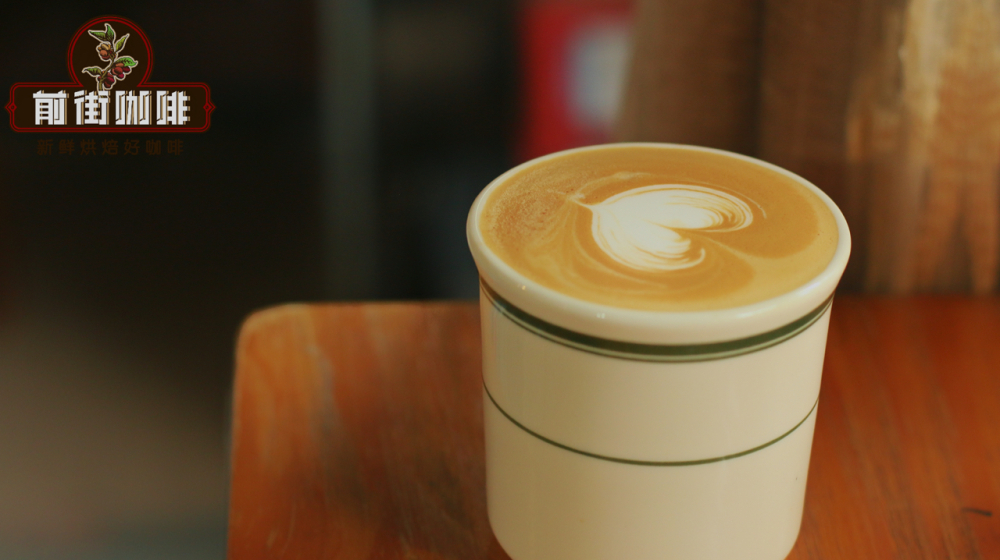
Starting in the 1980s, Australians put Flat White on regular menus, and not long after, it spread to coffee shops in Europe, America, and other countries. The reason Flat White became a popular hot product in China is that Starbucks introduced it in 2015 and named it "Fu Rui Bai" as one of its signature drinks, which also means that this milk coffee has already become mainstream.
Returning to the drink itself, Flat White highlights the flavor of coffee by adding milk. Coffee is the protagonist, and milk is only an assistant. Therefore, in terms of taste, the coffee flavor is fuller and richer. In addition, the upper layer of milk foam is light and thin, so that every sip of the strong coffee liquid carries a velvety dense foam layer. The moderate temperature and relatively small cup size allow it to be drunk quickly before the milk foam separates. Besides the differences in cup size and the thickness of the milk foam, some baristas, in order to more perfectly express the better aroma of the coffee beans, replace the base with a double Ristretto, blending milk foam of a thickness comparable to that of a latte into a 150 ml cup.

The ratio parameters of Flat White
In order to present a richer coffee flavor, Flat White needs to start from three aspects: milk foam, milk ratio, and espresso base.
1. Milk foam
The "Flat" in Flat White means flat, which is to say that a properly made Flat White must be thin enough to be level with the rim of the cup, and the milk foam layer must not bulge. Usually, the milk foam of a latte will form a dome of about 1 cm, while the milk foam of a Flat White can only be about 0.5 cm; otherwise, it is difficult to achieve a "flat" liquid surface. As for the specific thickness of the milk foam, every coffee shop is different. Some baristas, in order to let customers taste the upper layer of coffee crema to the greatest extent, will not steam the milk foam at all, but directly heat the milk and pour it into the espresso.
2. Espresso base
The espresso base used in Flat White is not the common Espresso, but the richer-tasting Ristretto. Australians believe that the latter part of Espresso will "dilute" the coffee flavor, so only its middle and front sections are taken, "restricting" the extraction of the latter part, and therefore it is called Ristretto. The middle and front sections of Espresso reduce the extraction amount of large-molecule carbohydrates, more prominently highlighting the coffee's acidity and roasting aroma.

For example, the Espresso produced by Front Street uses 20 grams of coffee powder to extract 40 grams of coffee liquid as the base, while Ristretto uses the same 20 grams of powder to extract 28–30 grams of coffee liquid, "discarding" the latter part of the extraction.
3. Milk ratio
Flat White, which pursues a rich mouthfeel, adds a smaller proportion of milk to the espresso. The specific amount of milk depends on the cup size served by the shop. Imagine that if the same milk ratio as latte were used, the overall taste would be more like coffee-flavored milk. For example, the ceramic cup used by Front Street shops to serve Flat White is 200 ml, and with two Ristrettos totaling 30 grams as the base, 170 grams of hot milk needs to be added in order to present a richer and fuller coffee flavor.

Making a cup of Flat White
Now that we understand the several major characteristics of Flat White, next Front Street will make a cup of Flat White according to the shop's serving process.
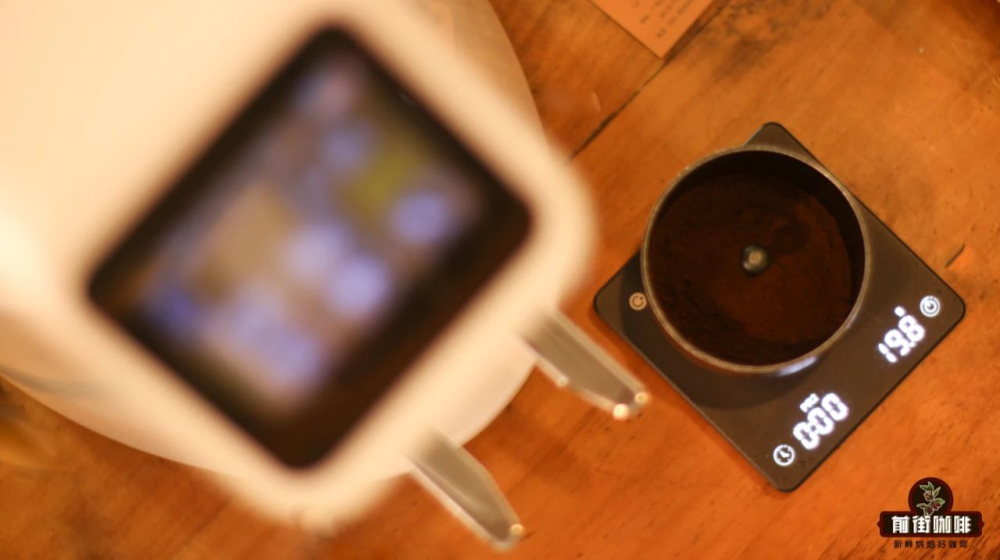
First, wipe the portafilter basket dry with a clean towel, turn on the grinder to grind 20 grams of coffee powder into the basket, and tap it gently to level it.
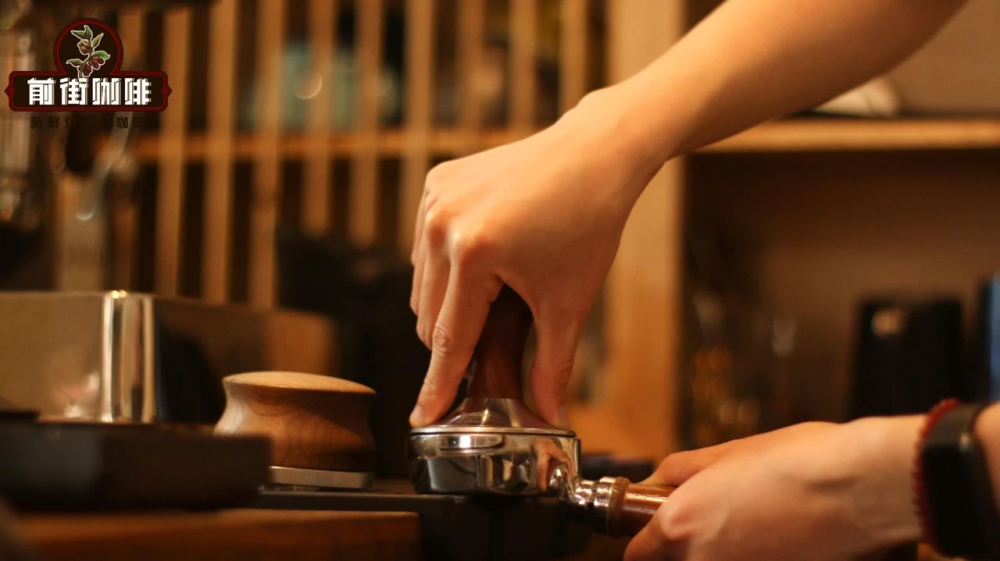
Use a distribution tool to level the coffee powder layer, then use a tamper to press it evenly into a firm puck.
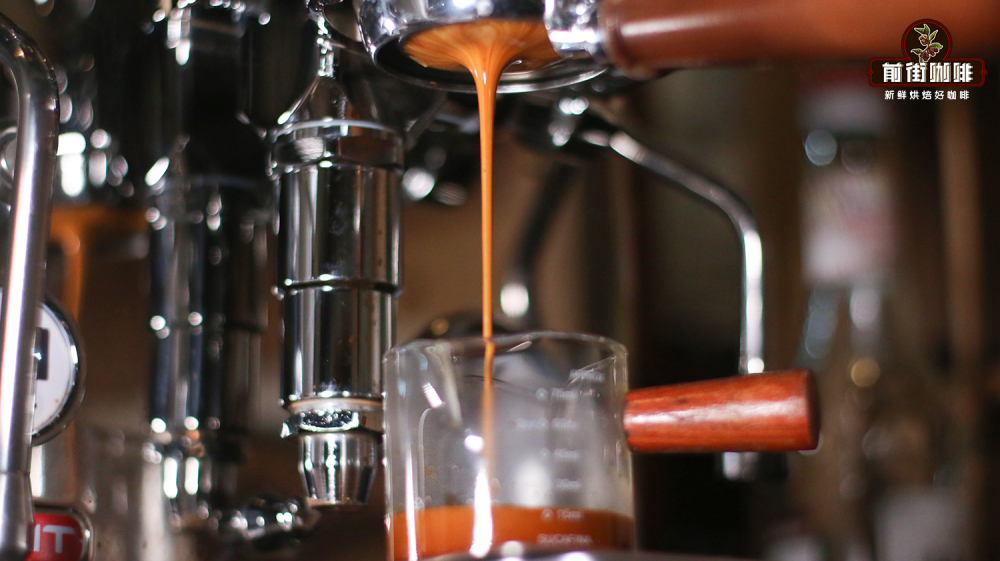
Turn on the extraction switch to release water, wetting the group head while washing away the coffee grounds stuck on it. Gently lock the portafilter onto the group head and start the extraction. Pay attention to the weight and time of the extracted coffee liquid. When the electronic scale shows that 28–30 grams of coffee liquid has been extracted and the time is about 27–28 seconds, the extraction switch can be turned off. Pour the two Ristrettos into a preheated Flat White cup.
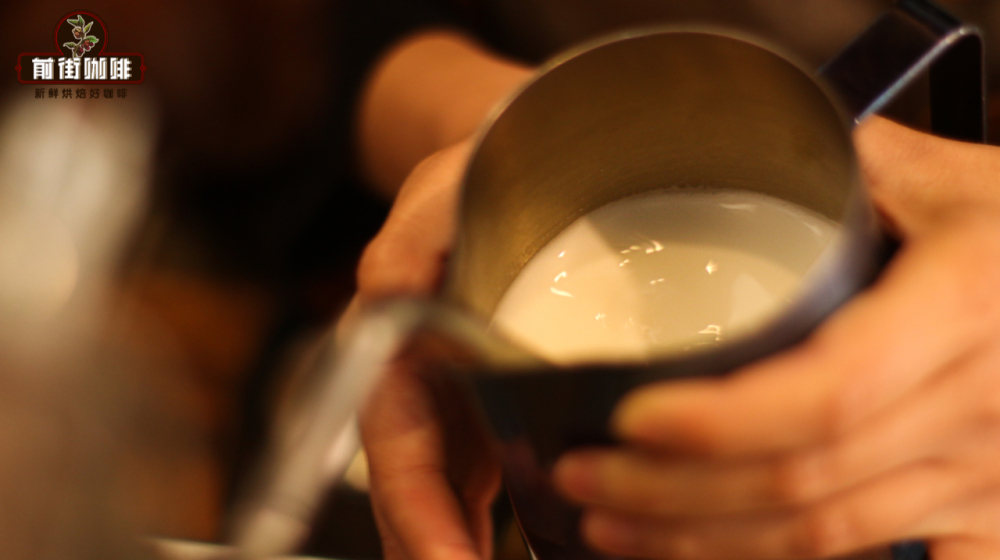
Pour 170 ml of fresh milk into the milk pitcher. After steaming, the dense milk foam will be about 5 mm. Gently swirl the Ristretto base in the cup, and fully and evenly integrate the steamed hot milk.
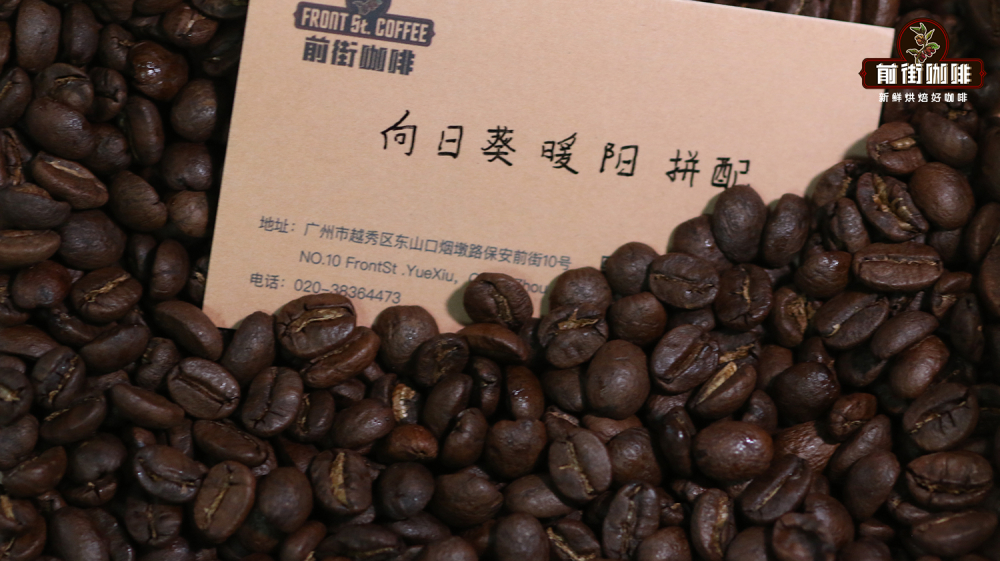
The flavor performance of Flat White is based on the coffee beans used by each shop. The espresso served by Front Street shops uses "Front Street Sunflower Warm Sun Blend Coffee Beans," roasted in-house by Front Street. The extracted Espresso presents whiskey aroma, vanilla, cream, and berry-like acidity. After blending with milk, the Flat White presents the mouthfeel of chocolate milk and whiskey liqueur chocolate, with a smooth, fragrant, and mellow entry and a very long finish.
For professional coffee knowledge exchange and more coffee bean information, please follow Coffee Workshop (WeChat public account: cafe_style)
For more specialty coffee beans, please add the private WeChat of Front Street Coffee (FrontStreet Coffee), WeChat ID: qjcoffeex
The above content is compiled by CoffeeHunters, a coffee news website.


