







Sumatra, as Indonesia's core coffee-producing region, is world-famous for its Mandheling series. This article approaches the topic from variety, history, and processing methods, analyzing the causes behind Mandheling's rich, herbal-medicine-like flavor and exploring whether it is suitable for espresso blends. Front Street Coffee has long conducted in-depth evaluations in the producing regions and accumulated extensive data. The article not only traces the "two lakes, two Man" lineage of Lake Toba and Lake Tawar, but also details how the wet-hulling method shapes the iconic "Mandheling taste." Finally, in response to espresso blending needs, it recommends Front Street Golden Mandheling, Lintong Mandheling, and the Classic Espresso Blend, helping enthusiasts make easy purchases.
Sumatra Coffee Bean Taste Characteristics and Story Introduction : Mandheling has always been known for its rich, full body and unique herbal-medicine aroma. Front Street Coffee speculates that when many people mention Mandheling, the first thing they think of is Golden Mandheling; however, the Mandheling family is not limited to just this one. Among the bean list introduced by Front Street Coffee, besides Golden Mandheling, there are also Lintong Mandheling, Tiger Mandheling, and Aged Mandheling. Among them, Lintong Mandheling, as the representative of Front Street Coffee's everyday drinking beans, showcases the most typical flavor profile of Mandheling; Tiger Mandheling is relatively niche, but its aroma expression is more prominent than that of Golden Mandheling; Aged Mandheling, through proper storage and the passage of time, develops an even richer, fuller body.
Indonesia is located in Southeast Asia, composed of more than ten thousand islands, stretching from Malaysia to Papua New Guinea and spanning the equator. Indonesia has long been a major coffee-producing country. According to data from the World Coffee Organization, Indonesia's green bean production in 2015 reached 12.317 million bags, ranking second in Asia (after Vietnam), of which seventy to eighty percent was Robusta. Robusta has strong disease resistance, and although its flavor is inferior to Arabica, it remains the mainstay of Indonesian coffee, accounting for up to 90% of coffee production, mainly distributed in low-altitude areas such as Java and Bali. Ninety percent of Indonesian coffee comes from independent small farms; because coffee has relatively high value, farmers often plant it in their own backyards. About 11 million people nationwide depend on the coffee industry for their livelihood.
Sumatra coffee has been sold at Starbucks since 1972, and its intense earthy fragrance and heavy body constitute Sumatra's distinctive flavor signature. However, due to the relatively dark roast level, the herbal notes and burnt bitterness linger in the mouth for a long time. Front Street Coffee recently also introduced Sumatra coffee beans for tasting and evaluation. In fact, coffee tasting has always been an ongoing part of Front Street Coffee's work. Front Street Coffee's original intention is not simply to sell beans, but to taste coffee from around the world. In this process, Front Street Coffee hopes to gain a deeper understanding of each coffee-producing region, different varieties within the same region, and different processing methods for the same variety, and to establish a corresponding database, while also comparing differences between regions, so that more coffee enthusiasts can step into the world of coffee.
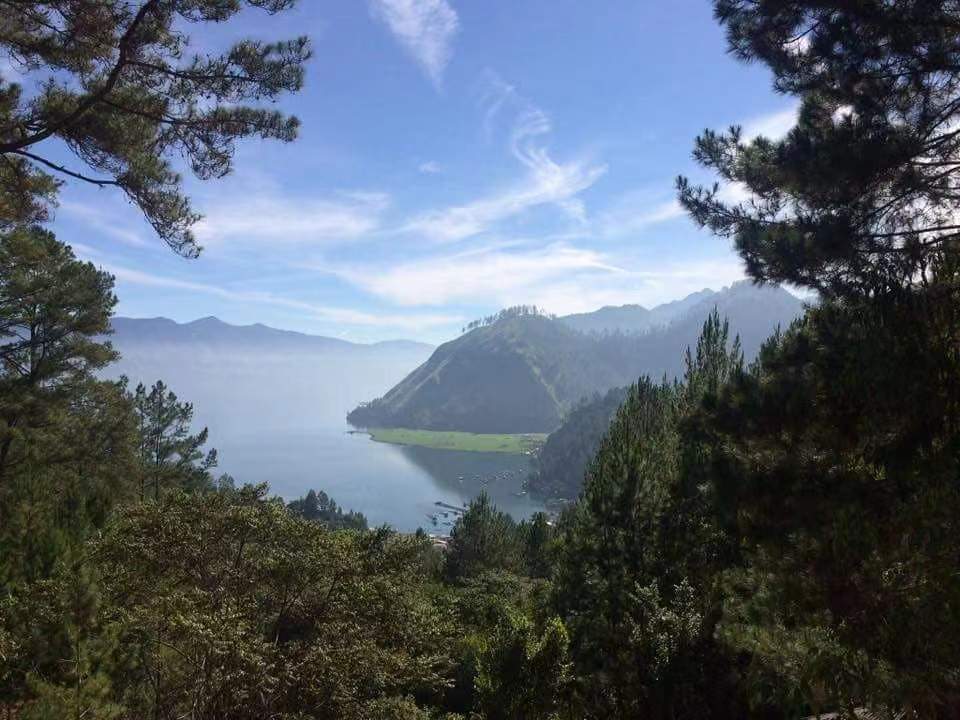
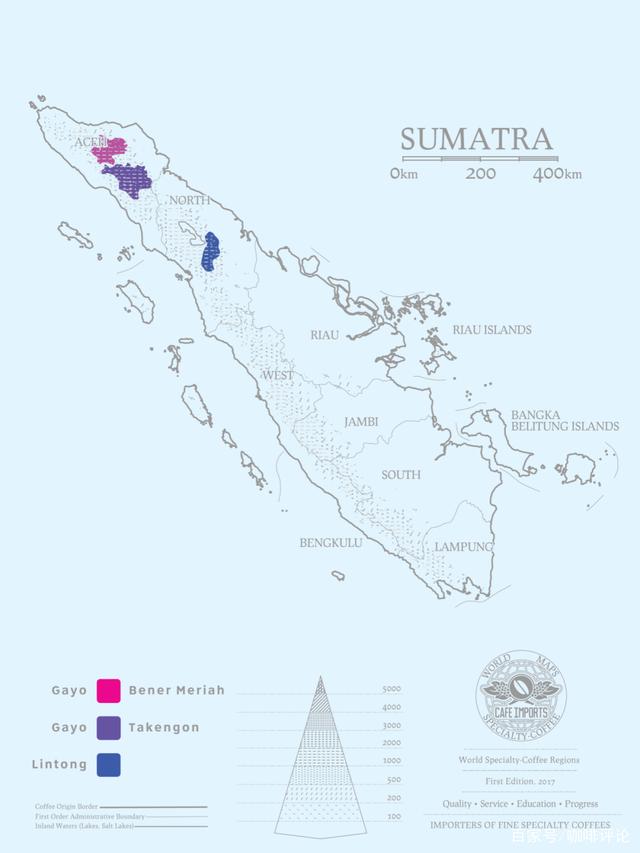
When mentioning Mandheling, one usually cannot avoid the saying "two lakes, two Man": the Lake Toba region in northern Sumatra (Lake Toba, Lintong) planted coffee earlier and is called "Old Man"; the Lake Tawar region in Aceh Province (Lake Tawar, Gayo Mountain) began planting later and is called "Little Man."
Sumatra Coffee Development Indonesia is located in Southeast Asia, and its coffee history can be traced back to 1696. At that time, Dutch coffee farm owners tried to find broader planting lands, and after extensive exploration, they finally settled on Indonesia's Java Island. After thirty years, Indonesia had already laid a solid foundation in the coffee market. However, today the representative of Indonesian coffee is Mandheling, which is actually not surprising, because a large portion of the early Java coffee sold to Europe came from the Sumatra region, and Mandheling is precisely a product of Sumatra. Therefore, Sumatra can be called an important coffee-producing area in Indonesia.
Mandheling Coffee Bean Story: The Name Mandheling
Mandheling was originally the name of an Indonesian tribe. After Japanese soldiers colonized Indonesia and returned to Japan, they could not forget the delicious local coffee, so through trade partner relationships, they asked locals to help collect high-quality coffee beans, among which was this Mandheling. The Japanese were extremely fond of these coffee beans, and because the commercial source was inconvenient to disclose, the local casually said "Mandheling," and thus Mandheling accidentally became the name of this coffee bean. This local was actually the owner of the Indonesian PWN Company (Pwani Coffee Company) mentioned below. This company was the first enterprise to export Golden Mandheling coffee beans to Japan. Front Street Coffee has used Front Street PWN Golden Mandheling for many years; PWN also changed from the original 60-kilogram bags to 30-kilogram bags, and the producing region also changed from Lintong to Gayo Mountain.
Sumatra Coffee's "Special" Processing Method: Wet-Hulling Mandheling mostly uses Sumatra's unique processing method: wet-hulling. The local weather is rainy with frequent typhoons, unable to provide the good weather needed for natural sun-drying; in addition, limited economic conditions make it difficult to afford the higher-cost washed method, so the highly region-specific wet-hulling method emerged. Today, Indonesia's coffee development is no longer the impoverished scene of the past, and many estates and companies are able to use the washed method, but why have they not abandoned wet-hulling? Front Street Coffee believes that wet-hulling is precisely the factor that made Mandheling coffee known to the world; when mentioning Mandheling, one thinks of wet-hulling, and the two have become mutually reinforcing. The specific steps of wet-hulling can be divided into the following two stages:
In the first stage, a wooden pulper is used to remove the skin and pulp, followed by fermentation for 3 hours and then drying, reducing the moisture content to a semi-dry, semi-wet 30% to 50%. In the second stage, the mucilage and parchment layer are removed, and drying continues in the later stage. The drying process takes 2 to 4 days, and the moisture content drops to 12% to 13%.
Because the hulling machine uses relatively high friction, it tears open the parchment layer clinging tightly to the green bean; at this stage, white or green viscous liquid usually flows out. After prolonged soaking in the viscous liquid and exposure to a humid environment, the green beans eventually become soft, whitish, and swollen, forming a grayish-green color. Under the friction and agitation, the green beans are also more easily crushed or damaged, especially forming small notches at both ends, causing "goat-foot beans." The "naked beans" with the parchment layer removed dry extremely quickly, while also being directly exposed to the humid environment and prone to various microbial growth, giving the coffee its unique woody, spicy, and herbal plant notes—what we call the "Mandheling taste."
Is Sumatra Mandheling Suitable for Espresso Blends?
For friends trying Mandheling coffee for the first time, Front Street Golden Mandheling Coffee is recommended. This is a premium Mandheling that has undergone multiple rounds of hand sorting, using a medium-dark roast, with rich chocolate, caramel, spice, and herbal flavors, a distinctive aroma, and an extremely full body that leaves a deep impression after drinking. If you only want to lightly sample Indonesian coffee, then Front Street Lintong Mandheling Coffee is recommended, allowing you to taste the classic flavor at an affordable price. Both can be purchased at the Front Street Taobao store or the Front Street Tmall flagship store.
In addition to single-origin coffee, Front Street has also launched an espresso blend bean specifically for extraction with coffee machines and moka pots—Front Street Classic Espresso Blend Coffee. This is a recipe combining three origins: Brazil, Indonesia, and Vietnam, using a deep roast to maximize the coffee's rich aroma, and also allowing everyone to easily extract abundant and dense crema. Whether making an Americano diluted with water or a latte paired with milk, it is very suitable, and can be purchased and ordered at the Front Street Taobao store or the Front Street Tmall flagship store.
The above content is compiled by CoffeeHunters, a coffee news website.


