







What makes Hambella an heirloom arabica bean worth brewing cold?
Hambella is a sun-dried arabica bean from the Sidamo region of Ethiopia, grown from local heirloom varieties that the government does not classify individually. Whole cherries dry in the sun, so the bean takes on layered passion fruit, strawberry, and cream notes. A medium-light roast keeps that floral and fruity acidity intact instead of flattening it.
For cold brew, use a coarse grind and a ratio near one to eight, steep for twelve to sixteen hours in the refrigerator, then filter. The low-temperature extraction softens acidity while holding the fruit sweetness. Anyone browsing an arabica coffee store for Sidamo lots should look for the Hambella name and a recent roast date for the fullest aroma.
Originating from the Sidamo region of Ethiopia, Hambella coffee is a sun-dried Arabica bean that has gained much attention in recent years, known for its rich floral and fruity aroma and full-bodied sweetness. Front Street Coffee uses a medium-light roast, striving to showcase its layers of passion fruit, strawberry, and cream. This article will break down the flavor code and practical extraction plan of this bean one by one, from the concept of heirloom varieties, the principles of sun-drying, the background of the Hambella producing area, the origin of the name Hambella, to specific cold brew parameters and operational steps, suitable for enthusiasts who want to deeply understand Sidamo coffee or replicate café-style cold brew at home.
For more specialty coffee knowledge, welcome to follow our WeChat public account: Front Street Coffee (FrontStreet Coffee).
Hambella coffee is an Arabica bean that has rapidly gained popularity in recent years, produced in the Sidamo region of Ethiopia, Africa, belonging to local heirloom varieties, and has attracted attention for its rich floral and fruity aroma. It is a sun-dried coffee bean. When roasting its own Hambella, Front Street Coffee (FrontStreet Coffee) chooses a medium-light roast, aiming to retain more floral and fruity acidity, making the flavor expression fuller.
Are heirloom varieties Arabica?
Ethiopia is the birthplace of coffee, and it preserves a vast number of Arabica heirloom varieties within its borders, truly a natural coffee gene bank. Local coffee is mainly grown by smallholder farmers, with each farmer cultivating their own, and during the harvest season, processing stations purchase coffee cherries from surrounding farmers and then process them centrally.
Because the varieties themselves are extremely diverse, identification is very difficult, and the Ethiopian government, for protection reasons, is unwilling to disclose specific variety information, so these coffees are collectively called "heirloom/Heirloom." As a crop, coffee's flavor is inseparable from the innate conditions of variety and terroir. Front Street believes that the reason Ethiopian coffee has fascinating aromas and fruity notes is largely due to the superior local growing environment and the excellent genes of heirloom varieties.
What is sun-dried coffee?
Sun-drying is one of the most traditional green bean processing methods in Ethiopia. After the coffee fruit is picked, it is directly placed in the sun to dry. This is especially common in areas with abundant sunlight or scarce water resources, and nearly 70% of coffee in Ethiopia is sun-dried. Front Street believes that compared with washed processing, sun-dried coffee has lower acidity, higher sweetness, and a clearer mouthfeel, but slightly weaker cleanliness. In terms of flavor, it often carries more berry-like notes, and the layers are more complex. The classic Sidamo style is precisely a representative of sun-dried processing, known for being mellow and rich, with complex sweetness, a viscous and smooth mouthfeel, intertwined spices, flowers, and fruity aromas, accompanied by a bright sweet aftertaste.
The fermentation time of sun-dried processing is longer than that of washed processing, and the reaction degree between microorganisms and fruit pulp is also higher. During fruit fermentation, microorganisms produce more volatile compounds, especially esters. Although most sugars are destroyed during the roasting stage, these compounds can be transformed into other aromatic substances through caramelization reactions. It is these aromatic components that give roasted beans more floral and tropical fruit fermentation notes, such as furan compounds, making the flavor spectrum of sun-dried coffee broader and making it taste sweeter. The Sidamo Hambella 8.0 coffee beans on Front Street's bean list are also selected from sun-dried lots, produced in Hambella.
Hambella is also called "Hambella" coffee
After consulting materials, Front Street learned that Hambella is located at the junction of the Sidamo and Guji producing areas, administratively managed under the Guji producing area, facing Yirgacheffe's Kochere across the mountains, with the mountain range in between reaching an altitude of 3,200 meters, making it the highest-altitude sub-producing area in Ethiopia. It should be noted that the Guji producing area once belonged to Sidamo, and in 2010, due to the outstanding flavor of its coffee beans, it was designated as an independent producing area by the Ethiopia Commodity Exchange (ECX).
The terrain and landforms here are diverse, the black soil is fertile, and the soil layer can reach up to two meters deep, allowing plant roots to grow deeper. The average altitude is above 1,800 meters, and the temperature difference between day and night is large. These conditions are all conducive to Guji producing high-quality coffee. Coffee cultivation almost requires no chemical fertilizers. The fallen leaves, decaying matter, plant residues around the trees, and organic matter in the soil can provide sufficient nutrients, allowing coffee trees to grow vigorously.
At present, the names of the two producing areas, Sidamo and Guji, still often appear simultaneously, which is mainly related to Ethiopia's administrative divisions. Local administration is divided into four levels, from largest to smallest: Region, Zone, woreda, kebele, and the naming of most green coffee beans also follows this rule. Taking Hambella as an example, it is located southeast of Yirgacheffe in the Sidamo producing area, and administratively belongs to Oromia Region→Guji Zone Guji→Shakisso woreda Shakiso→Hambella Hambella.
This Hambella coffee first came to the market after being submitted by DW Company in 2017 to that year's TOH (Ethiopia National Taste of Harvest competition) and winning the championship. The English name of Hambella is Hambella, which is the name of the Hambella producing area. Hambella coffee comes from the Buku Abel processing plant in Guji, which purchases coffee cherries from different areas around the farm, then processes and sells them.
Every year during the coffee harvest season (December to January), the Buku processing plant organizes farmers to pick fully red coffee cherries, and the Brix value must reach above 30. After screening, the fruit is spread on African raised beds to dry. Because the local temperature difference between day and night is extremely large, coffee farmers shade the sunlight at noon to avoid excessive fermentation caused by overly high temperatures; at night, to prevent sudden rainfall, they wrap it with plastic sheets. It is turned continuously throughout the day, which not only allows the fruit to dry evenly but also prevents sunburn or unpleasant fermentation flavors. After about 18 days of sun-drying, the moisture content of the green coffee beans drops to about 13%, and then the outer shell can be removed by machine.
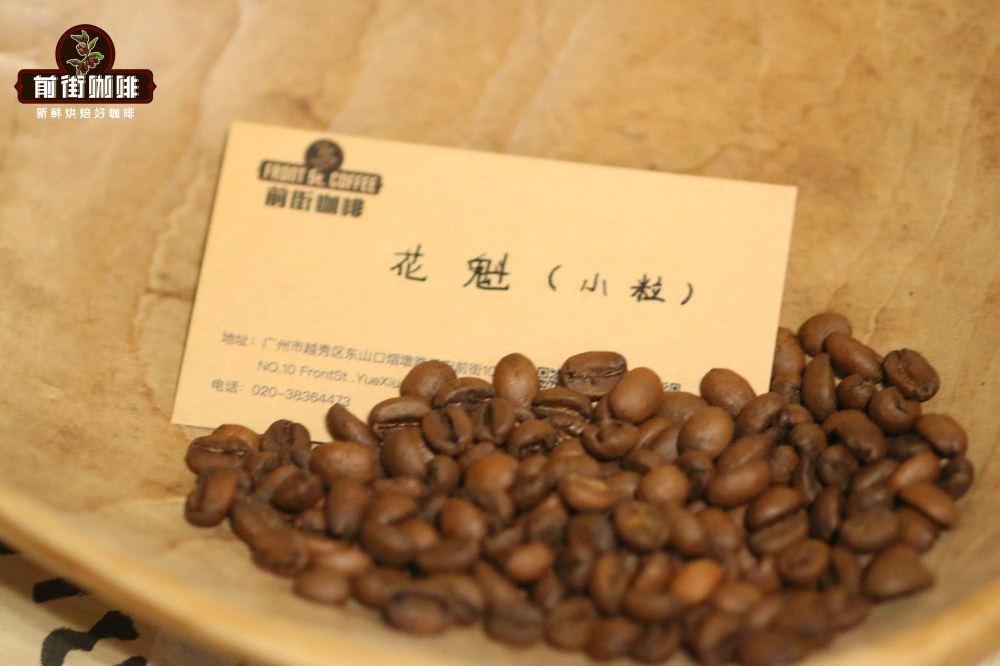
Front Street hopes to present the full fruity flavor of Hambella, so it uses a medium-light roast. Through cupping, the dry aroma of sun-dried Sidamo Hambella carries nuts, honey, berries, and a faint fermentation note. On the palate, it is full-bodied sweet and sour like passion fruit, cream, and strawberry, with a thick body and a cocoa finish.
How to make cold brew with Sidamo Hambella coffee?
Compared with other freshly ground coffees, cold brew only requires grinding and adding water the night before to soak, sealing it and putting it in the refrigerator, then taking out the filter the next day, and the coffee can be put into a cup and taken to work. It can be called one of the most time-saving and labor-saving home coffees, and it is also a café-style drink that can be easily replicated at home. Moreover, making it with coffee beans you like, low-temperature cold brewing will also bring a different fermentation flavor. Below, Front Street will use today's protagonist Hambella as an example to demonstrate the specific operation.
Coffee beans: Sidamo·Hambella 8.0
Dose: 50g Coffee-to-water ratio: 1:12 (600ml room-temperature water) Grind size: fine granulated sugar (sift powder with a No. 20 sieve bowl to 80%)
Steeping time: 8–12 hours
The method is very simple: first pour the ground coffee powder into the built-in filter mesh of the cold brew pot, and add room-temperature direct drinking water. Then tighten the lid and put it in the refrigerator to chill for 8 hours. (Note: refrigerate, not freeze!) After soaking, take out the coffee and filter it through a dripper and filter paper to remove grounds, and the taste will be cleaner. For the cold brew regularly produced in stores, Front Street will, after filtering out the grounds, place it in the refrigerator sealed and chilled for 3–4 hours before selling, so the fermentation flavor will be richer.
The brewed Hambella cold brew can be drunk directly. It has a rich aroma of dark berries and black tea, and the mouthfeel is clean, smooth, and solid. At this point, Front Street will add 1–2 ice cubes, which can slightly dilute the concentration and also bring a chilled coolness, making the coffee more like a refreshing fruit tea. Generally speaking, for the sake of flavor and health safety, for all low-temperature extraction methods such as ice drip, cold brew, and cold steep coffee, Front Street recommends drinking it within 5 days (counting from the production date).
The above content is compiled by CoffeeHunters, a coffee news website.


