








For most coffee people, the first encounter withFlat whitethis beverage was in 2015, when Starbucks launched it under the name "Fu Rui Bai" and added it to its permanent menu. Later, various coffee brands also launched Flat White one after another, giving this drink from the Southern Hemisphere a variety of names: Starbucks' Fu Rui Bai, Costa's Hun Yi Bai, and the newly emerging chain coffee brand luckincoffee's Ao Rui Bai. But the baristas at Front Street Coffee like to call it Australian White Coffee.
Ao Rui BaiComes from the Australian country in the Southern Hemisphere
If you want to drink milk coffee, in Italy you would order a latte, while in Australia the barista will make you an Australian White, because here milk coffee is called Flat White. In the 1980s, Italians who immigrated to Australia brought espresso machines to New Zealand, Australia, Melbourne, and other countries. At that time, traditional fancy coffees were mainly lattes and cappuccinos, but Australians preferred a stronger coffee flavor and thinner milk foam, so the Flat White came into being. Flat means "flat," and White refers to white coffee with milk added. Before long, the Australian White appeared on the fixed menus of countries in Europe and America, becoming a standard beverage in major coffee shops.

Friends who often drink milk coffee should know that the focus of a latte is the milk, so the cup volume is often large, usually above 250ml. For example, a hot latte produced by Front Street is served in a 300ml coffee cup, with a double espresso of about 40g as the base, and then 260ml of fresh milk added, so after drinking it you always feel very full.

Compared with a latte, the Australian White highlights the flavor of coffee by adding milk. Coffee is the protagonist, and milk is only an assistant. Therefore, in terms of taste, the Australian White has a fuller and richer coffee flavor. In addition, the upper layer of milk foam is light and thin, so that every sip of the strong coffee liquid carries a velvety dense foam layer. The moderate temperature and relatively small cup volume allow it to be drunk quickly before the milk foam separates. New Zealand baristas present the Australian White in a small cup volume. The amount of coffee remains unchanged, the amount of milk decreases accordingly, the proportion of coffee increases, and the coffee flavor naturally becomes richer.
Ao Rui BaiWhat are the differences from a latte?
According to the characteristics of Australian White Coffee, like cappuccino and latte, it is made from espresso, hot milk, and milk foam. The difference lies in the different proportions of milk and the thickness of the milk foam.

Usually, cappuccino is made with a cup of espresso and thick milk foam, generally forming a 1-2cm thick "hamburger shape." Before drinking the coffee liquid, you must first take a big sip of the foam. The milk foam of a latte is a bit thinner, about 0.5cm thick, while the milk foam of a Flat White is the thinnest and must be controlled within 0.3cm, otherwise it is difficult to achieve a "flat" liquid surface. As for the specific thickness of the milk foam, every coffee shop differs somewhat. Some baristas, in order to let customers taste the upper layer of coffee oils to the greatest extent, do not froth the milk at all and directly heat the milk and pour it into the espresso. But Front Street hopes that the texture customers taste in a Flat White is creamy and smooth without being too "watery," so it retains a 0.3cm milk foam layer.
When we make latte, the coffee shop will have its own ratio of coffee to milk, while the Australian White usually determines the amount of milk according to the cup volume of the finished product. In order to present a richer coffee flavor, New Zealand baristas present the Australian White in a small cup volume of 150-180ml. The amount of coffee remains unchanged, the amount of milk decreases accordingly, the proportion of coffee increases, and the coffee flavor naturally becomes richer. Therefore, the Australian White is also called a "small latte."

In addition, with the arrival of the specialty coffee era, people have begun to apply more and more single-origin coffees to espresso extraction, which is what we often hear called SOE (Single Origin Espresso). Compared with large-cup lattes and thick-foam cappuccinos, Flat White is more suitable for expressing the origin flavor of the coffee beans themselves. In coffee shops in Melbourne, baristas replace the espresso base with a double Ristretto and blend it in a 150ml cup with milk foam of a thickness comparable to that of a latte.
Ristretto means "restricted" in Italian. Espresso can be seen as a "restricted" version of espresso, that is, taking only the front and middle sections of the Espresso. Since Ristretto only takes the front and middle sections of the espresso, its concentration is higher than that of Espresso, the coffee taste is stronger, the flavor is more concentrated, and when mixed with milk it presents a thicker mouthfeel. Here Front Street needs to remind you that the extraction plan for each coffee bean will differ slightly. This extraction plan is the extraction parameter adjusted by the barista every day before opening, based on the Warm Sun blend used in the store.
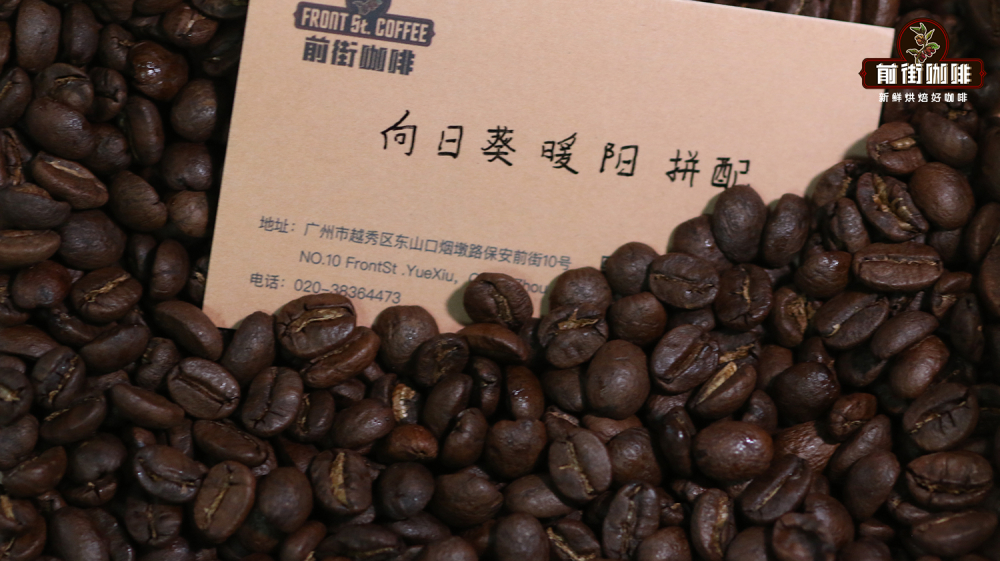
Front StreetAo Rui Baiproduction recipe
Front Street believes that the derivation of the Australian White stems from everyone's pursuit of the flavor and mouthfeel of specialty coffee beans, so there are many ways to make it, depending on the coffee beans used by the coffee shop and also on the barista's understanding of the Australian White. Generally speaking, baristas start from several aspects—small cup volume, thin milk foam, and a refined espresso base—to present the unique mouthfeel of the Australian White.
The espresso blend used by Front Street is its own roasted "Sunflower Warm Sun Blend," composed of 70% Honduras Sherry coffee and 30% Yirgacheffe sun-dried Red Cherry coffee. Sherry's whiskey, vanilla, and cream flavors combine with Red Cherry's tropical fruit and fermented notes, making the coffee in the cup rich in aroma and soft in mouthfeel.

For the coffee base, Front Street Coffee chooses a double Ristretto. A 20g dose of coffee grounds extracts 30g of coffee liquid, with an extraction time of 22-24 seconds. However, Front Street Coffee needs to remind you that the extraction plan for each coffee bean will differ slightly. This extraction plan is the extraction parameter adjusted by the barista every day before opening, based on the Warm Sun blend used in the store.
Pour the extracted coffee liquid into a pre-prepared cup, and pour 150ml of milk into a milk pitcher to froth. The milk should be frothed with less air intake than for a latte, and the foam layer should be thinner and denser. The temperature is best controlled at 55-60 degrees Celsius, making it easier to drink. Finally, pour the frothed milk into the coffee. Latte art is optional. Because the thin milk foam does not make the liquid surface level with the coffee cup, its appearance looks somewhat flat.
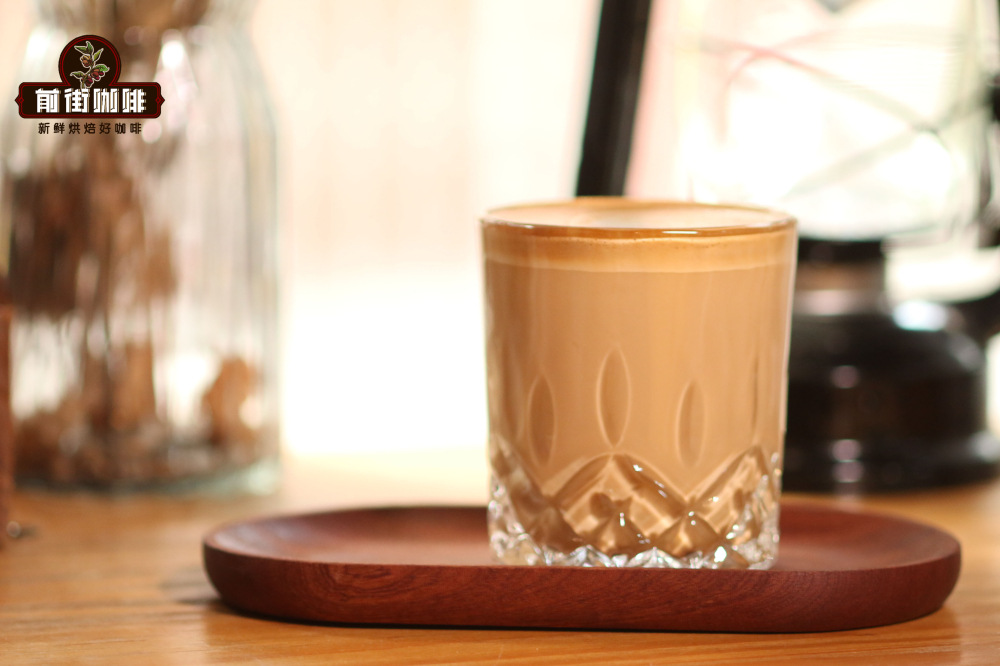
Front Street's Australian White Coffee presents the aromas of vanilla, chocolate milk, and whiskey cordial chocolate, as well as the sweet-and-sour notes of berries. It is smooth, fragrant, and mellow on entry, with a very long-lasting aftertaste.
For professional coffee knowledge exchange and more coffee bean information, please follow Coffee Workshop (WeChat public account cafe_style)
For more specialty coffee beans, please add the private WeChat Front Street Coffee, WeChat ID: qjcoffeex
The above content is compiled by CoffeeHunters, a coffee news website.


