









When it comes to coffee, milk coffee also comes to many people's minds. People are used to going to Starbucks, or any café, and blurting out: "A latte, please." In recent years, friends who visit Front Street stores also say: "A flat white, please." Actually, flat white is the English name for Australian white coffee.
It is called Australian white coffee because this coffee was born in Australia. However, the origin of Australian-style white coffee is full of controversy across the ocean in Oceania—Australians claim that flat white was their invention, while its neighboring country New Zealand claims that the birthplace of flat white should be New Zealand.
As early as the 1960s, the term "flat white" appeared in a British film titledDanger by My Side, but in the film, flat white was used to refer to coffee that was as thin and weak as water.
It was not until the 1980s that written records of the modern beverage flat white appeared.
[Australia]
In May 1983, a review about a fine café mentioned "flat white";
In April 1984, an article in a Sydney newspaper satirized the then-popular latte, using "flat white" to describe it;
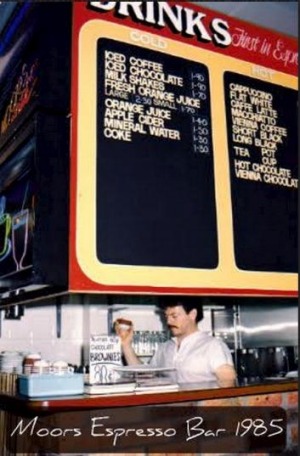
In 1985, a café in Sydney named Moors Espresso had "flat white" on its menu, and the café owner said that the drink "white coffee-flat" was something he brought to Sydney from Queensland;
In 1985, the menu at the Parliament House restaurant in Canberra listed "flat white only."
[New Zealand]
A café located in Auckland, New Zealand, DKD, invented flat white to replace latte;
In 1989, a barista at Bar Bodega in Wellington used skim milk to froth milk for a cappuccino. Because the milk foam was too thin, it failed, but instead became a cup of flat white.
Whether the birthplace of Flat White is Australia or New Zealand is a highly controversial topic. Setting aside the place of origin, Australian white coffee, with its rich coffee flavor and delicate mouthfeel, has attracted the attention of many coffee lovers and won praise from many milk coffee enthusiasts.

What is even more interesting is that although the coffee is also called flat white, the preparation standards in Australia and New Zealand are different. Australians prefer to use a single shot of espresso, while New Zealanders prefer to use a double shot of ristretto. Speaking of this, some friends may ask Front Street: What kind of coffee is ristretto?
Ristretto has similarities with the espresso we often drink, but also differences. The similarity is that both are concentrated coffee liquid extracted using the same brewing principle. The difference is that ristretto, as its name suggests, has a more intense and concentrated coffee flavor.
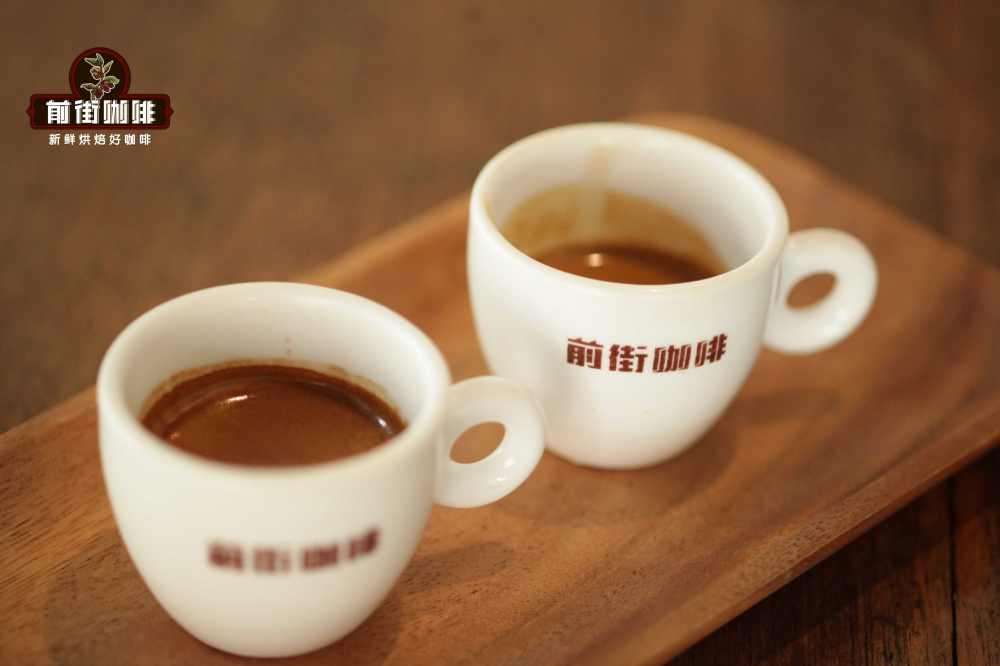
During the extraction of espresso, the coffee liquid that first drips out is dark in color and viscous in texture; as the extraction time extends, the later-stage coffee liquid becomes lighter and lighter in color and thinner and thinner in texture.
The extraction of ristretto, however, takes the first and middle stages of espresso, so compared with espresso, ristretto has a more intense coffee flavor and a thicker mouthfeel.
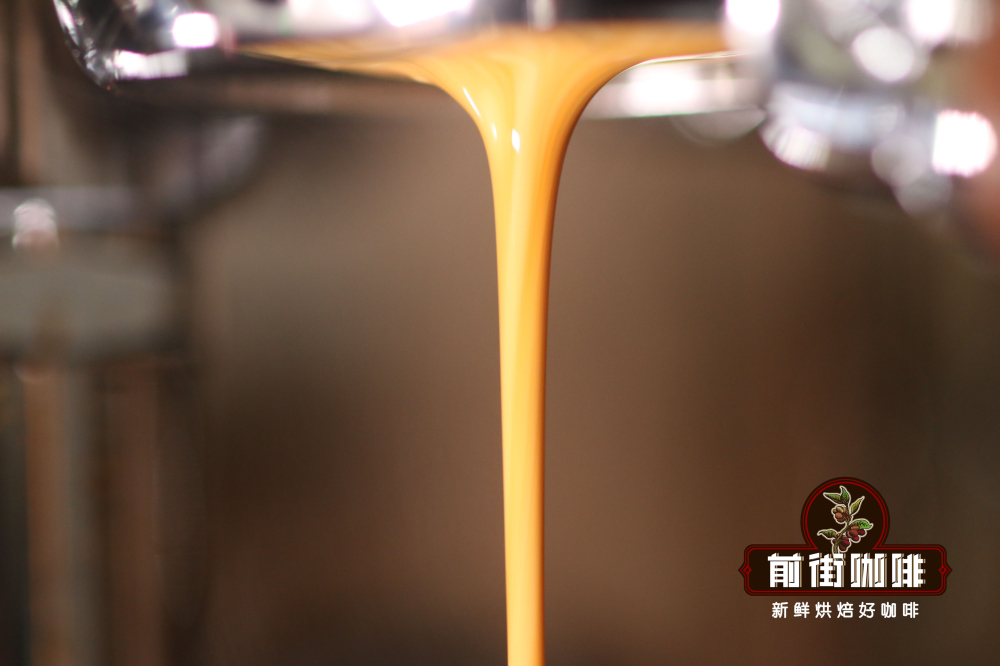
Although Front Street Coffee's menu does not list "Australian white coffee" as a coffee product, when friends request this product, Front Street stores will still make it. And when Front Street Coffee's baristas make Australian white coffee, they use a double shot of espresso as the base.
Front Street Coffee's method for making Australian white coffee
Front Street's standard for making espresso is to extract 40 grams of espresso liquid from 20 grams of coffee grounds, with an extraction time of 28 seconds.
When Front Street makes Australian white coffee, it uses a cup with a capacity of about 240 milliliters. Because the milk foam of Australian white coffee is very thin, when frothing the milk, Front Street suggests first letting the milk enter a rotating state, then incorporating a small amount of air, and finally entering the stage of frothing the milk foam until it is fine and dense.
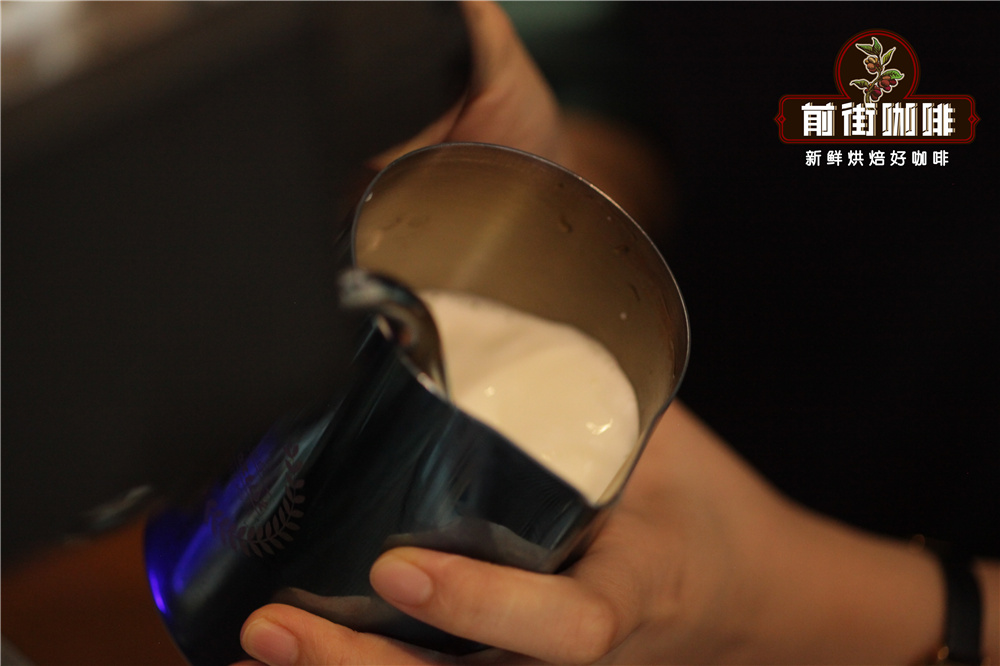
After the integration is complete, because the milk foam is very thin, subsequent latte art is difficult to form. Front Street suggests pouring from a fixed point in the center to form a small dot, or drawing a heart.
The Australian white coffee made by Front Street has a rich vanilla and cream flavor on the palate, as well as a clear whiskey barrel aroma. If drunk in cold winter, it feels warm. This is because Front Street stores use Sunflower Warm Sun blend coffee beans to make espresso. This espresso blend uses 70% HondurasSherry coffee beansand 30% Ethiopian natural Red Cherry coffee beans.
Sherry coffee beansare fermented at low temperature in sherry whiskey barrels for 30 to 40 days, so the flavor of sherry whiskey is infused into the green coffee beans. Sherry whiskey has a rich vanilla and cream flavor, with an explosive sweetness, and thisSherry coffeebean also has a flavor similar to sherry barrel whiskey.
ThisHonduras coffee bean varietyis Caturra, Catuai, and Pacas. With the support of Bourbon genes, the sweetness of Sherry coffee beans is more pronounced. At the same time, Sherry coffee beans havethe characteristics of Honduras coffee beans, are balanced overall, and do not have overly prominent acidity.

What are the differences among Australian white coffee, latte, and cappuccino?
If you have tasted Australian white coffee, latte, and cappuccino, you will find that latte has a stronger milk taste, cappuccino has a clear coffee flavor and a denser mouthfeel, while Australian white coffee highlights the coffee flavor more and weakens the presence of milk.

Comparing the ratio of milk to coffee liquid, latte has the largest proportion of milk among the three, while Australian white coffee uses a smaller proportion of milk, so in terms of flavor, latte has a stronger milk taste, while Australian white coffee has a richer flavor.
The simplest way to distinguish the three should be by the thickness of their milk foam. When Front Street makes these three milk coffees, Australian white coffee has the thinnest frothed milk foam, latte has a medium milk foam thickness, and cappuccino has the thickest milk foam among the three.
For more coffee bean information, please follow Coffee Workshop (WeChat public account: cafe_style)
For professional coffee knowledge exchange, please add WeChat ID: kaixinguoguo0925
The above content is compiled by CoffeeHunters, a coffee news website.


