







Tanzania is an important representative of East African specialty coffee. Its Kilimanjaro coffee is famous for its soft and gentle acidity, rich red wine aroma, and sweet fragrance, and is known as the "coffee gentleman." This article systematically reviews the geographical and harvesting characteristics of Tanzania's three major producing regions, Kilimanjaro, Ruvuma, and Mbeya, traces the history of the introduction of Bourbon and Kent varieties, explains in detail the size-based grading system and washed processing flow that are the same as Kenya's, and includes the roasting curve, cupping report, and V60 brewing parameters of Front Street Coffee's Kilimanjaro AA coffee, comprehensively presenting the flavor code of this East African coffee.
For more specialty coffee knowledge, please follow the WeChat public account: Front Street Coffee (FrontStreet Coffee)
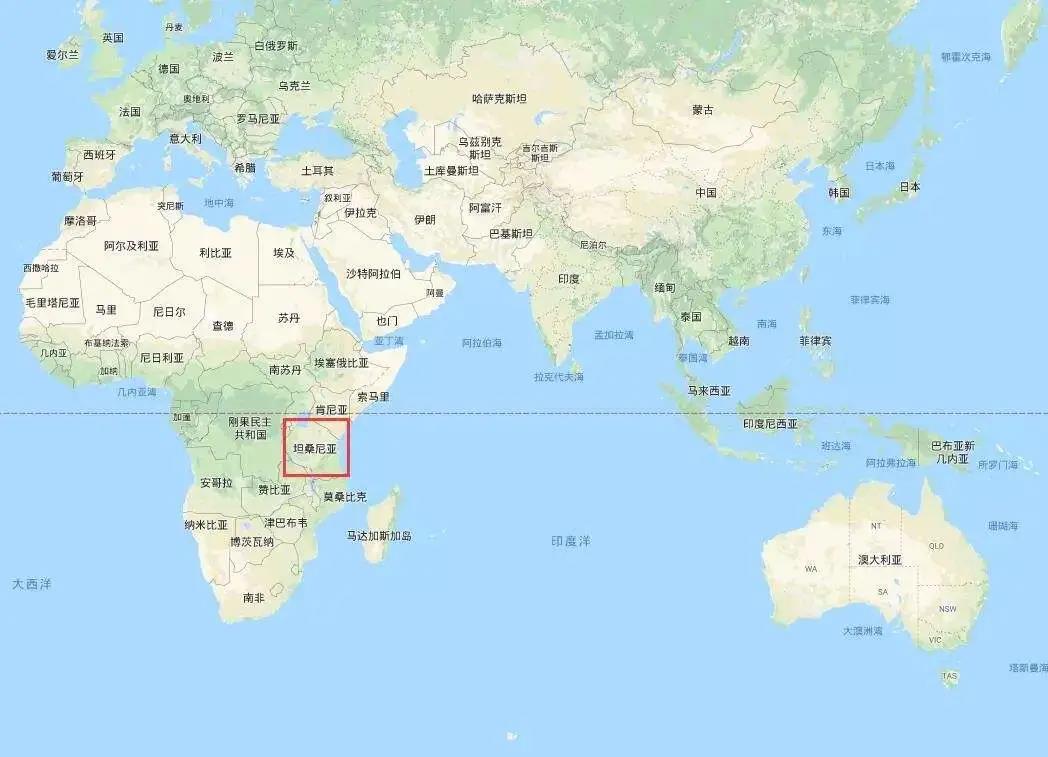
Tanzania is located in East Africa. Front Street Coffee (FrontStreet Coffee) has noticed that many enthusiasts are accustomed to comparing the coffee beans it produces with those of neighboring Kenya. In the view of Front Street Coffee (FrontStreet Coffee), when placed alongside Kenya's outstanding-quality coffee beans, Tanzanian beans lack that sharp, bright acidity and instead present a softer, gentler stance, with a more prominent sweet aroma. Among Tanzania's many coffees, the best known is undoubtedly the Kilimanjaro coffee beans produced in the northeast. So what differences actually exist between the coffee beans produced in northeastern and southern Tanzania?
Tanzania is located in east-central Africa. Its specialty coffee is a typical representative of the washed processing method, with bright and pleasant acidity as a prominent hallmark. Neighboring Kenya is a recognized important producer in the specialty coffee field. Because Tanzania's geological conditions are extremely close to Kenya's, the coffee flavors of the two countries also share many similarities. Tanzania's coffee cultivation is mainly concentrated in the north and south of the country. The excellent altitude and climate conditions give these coffees enormous quality potential, and coffee from the southern producing regions also carries the traditional flavor characteristics of Tanzanian coffee.
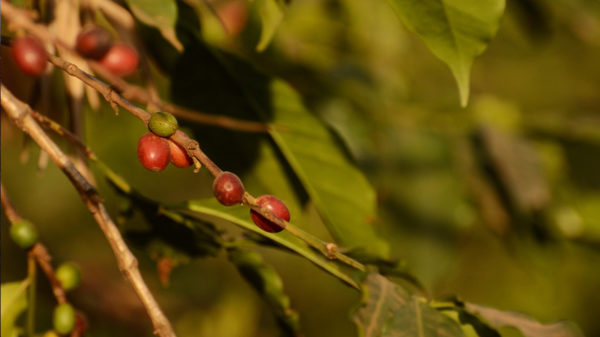
The origin of Tanzanian coffee beans: In 1898, Bourbon coffee was introduced into Tanzania's Kilimanjaro region by Catholic missionaries. Then in 1920, the Kent variety was also introduced. Therefore, to this day, Tanzanian coffee beans are still mainly based on the two varieties Bourbon and Kent. Bourbon coffee cherries are small and round, and the pulp and seeds are quite dense. Bourbon coffee usually exhibits high sweetness and bright acidity. Its yield is 20% to 30% higher than Typica, but it is still classified as a low-yield bean variety and is likewise susceptible to coffee leaf rust. Kent, on the other hand, is a Typica hybrid variety discovered in India, with the advantages of high yield and strong disease resistance.
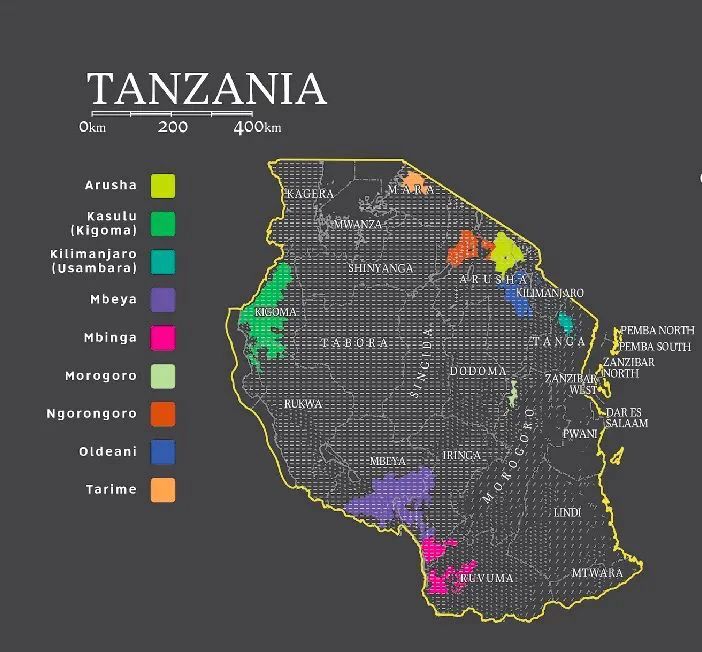
Tanzanian producing regions: Kilimanjaro, Ruvuma, Mbeya
Kilimanjaro This is Tanzania's oldest Arabica coffee producing region, and it is no exaggeration to say that it has had the longest time to accumulate international reputation. A long history in the coffee industry has left the infrastructure here relatively complete, but many coffee trees are quite old, resulting in low yields. In recent years, other crops have gradually been replacing coffee's position in cultivation. Altitude: 1,050-2,500 meters. Harvest period: July-December. Ruvuma This region is located at the southernmost tip of Tanzania, and its name comes from the Ruvuma River. Coffee cultivation is mainly concentrated in the Mbingo area, and it is regarded as a potential producing region capable of yielding high-quality coffee. Altitude: 1,200-1,800 meters. Harvest period: June-October. Mbeya Located around Mbeya city in southern Tanzania, this region is an important production area for high-value export crops such as coffee, tea, cocoa, and spices. In recent years it has attracted the attention of many certification groups and non-governmental organizations, with the aim of improving the region's poorly regarded coffee quality. Altitude: 1,200-2,000 meters. Harvest period: June-October.
Kenyan coffee grading system Tanzanian coffee is graded in the same way as Kenyan coffee, both based on bean size. During screening, green coffee beans are passed through screens with holes of fixed sizes. The larger the screen number, the larger the green coffee beans.
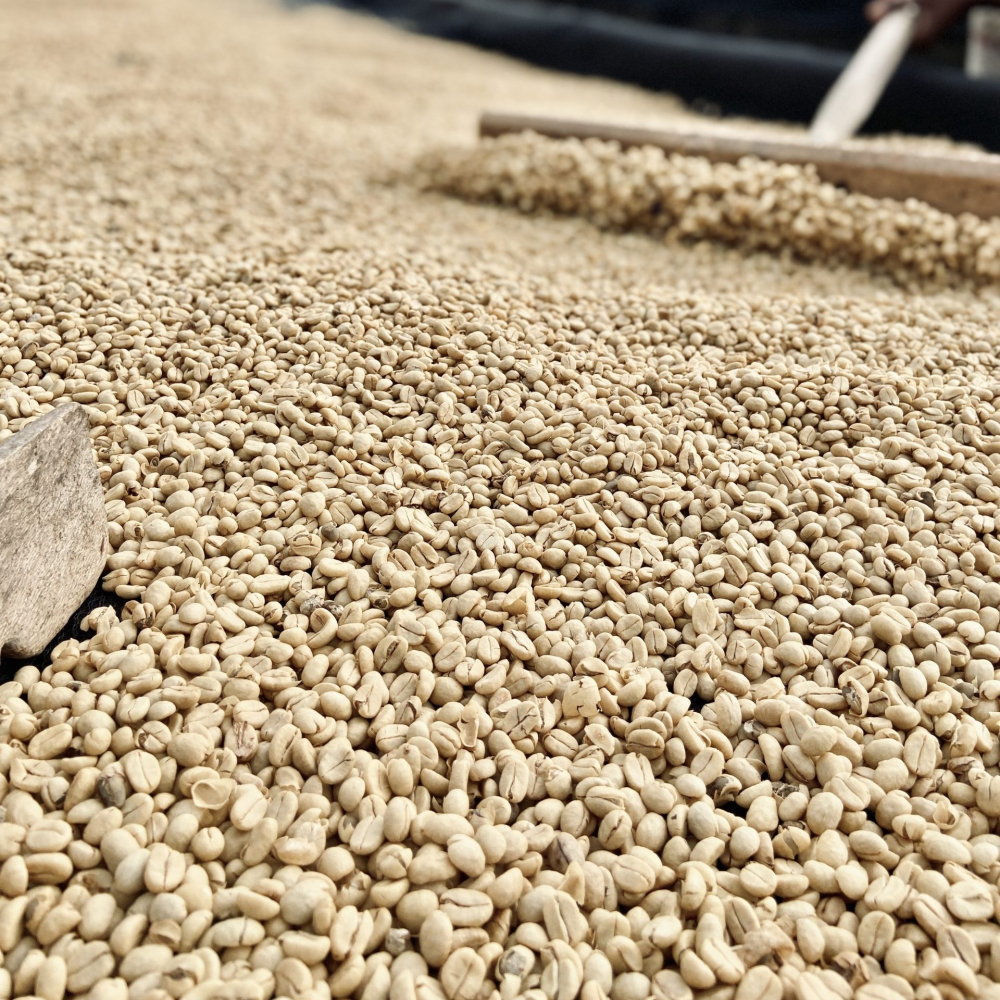
AA grade: Screen Size between 17 and 18 (7.20 mm screen) AB grade: Screen Size between 15 and 16 (6.8 mm~6.2 mm screen) PB grade: round green beans, accounting for about 10% of all coffee beans C grade: Screen Size between 12 and 14 (4.8 mm~5.6 mm screen) Washed processing method Tanzanian coffee is mostly processed by the washed method. After picking, coffee farmers send the coffee cherries to the nearest processing station for processing.
Steps of the washed processing method: 1. Screen out and remove impurities mixed in with the coffee cherries. 2. Remove the coffee pulp and outer skin. 3. Send them into fermentation tanks and remove the pectin layer adhering to the parchment through fermentation. 4. After washing clean, carry out drying.
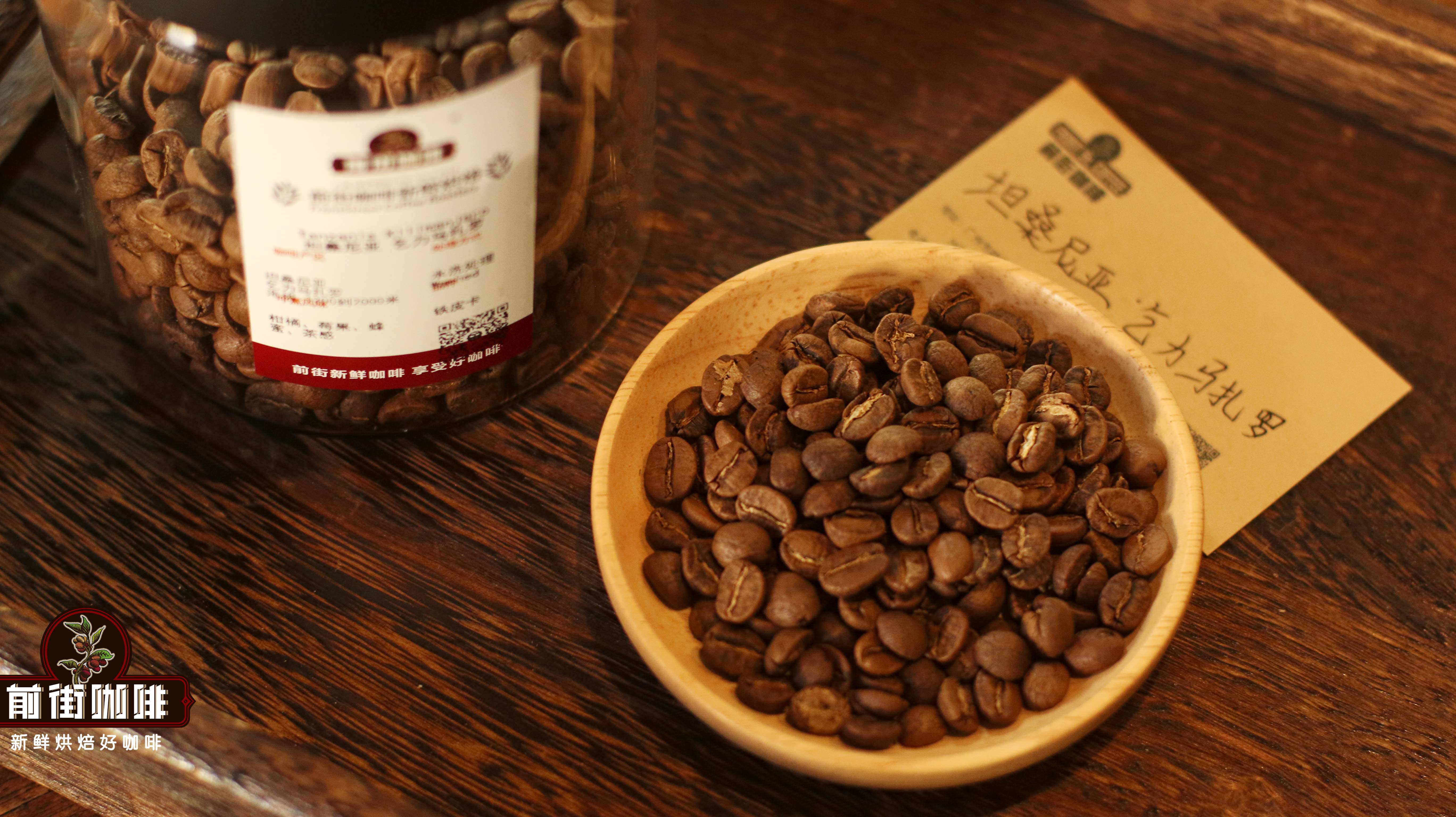
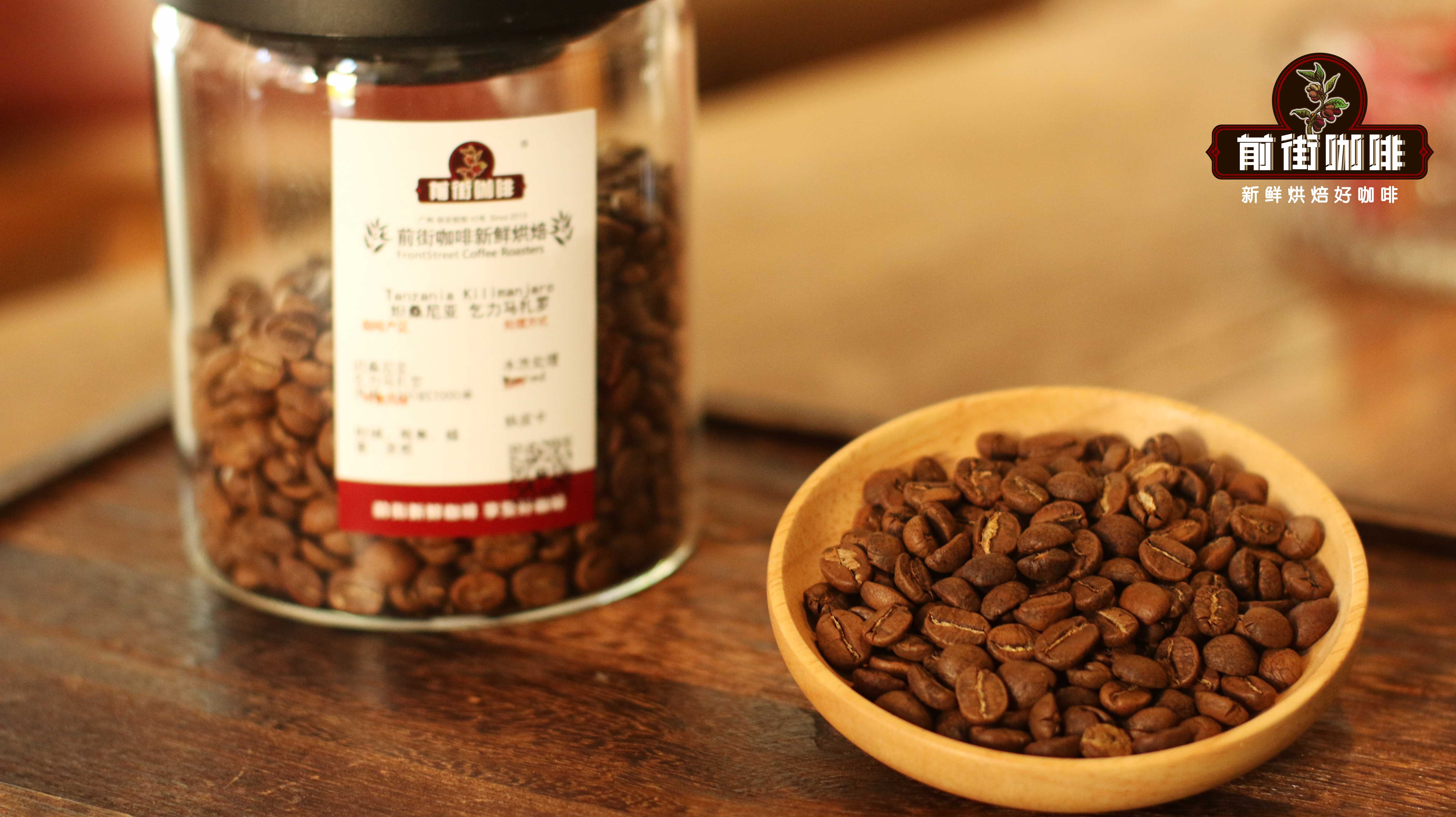
Front Street Coffee (FrontStreet Coffee): Tanzanian Kilimanjaro coffee beans Processing method: washed Grade: AA Producing region: northern highlands, Kilimanjaro volcanic area Variety: Bourbon Altitude: 1,300-2,000 m
Tanzania is a typical East African country, bordering Kenya and Uganda to the north, Malawi, Mozambique, and Zambia to the south, and Rwanda and Burundi to the west. When Tanzanian coffee is mentioned, the first thing that comes to many coffee professionals' minds is Kilimanjaro coffee. Yes, this is a unique "Kilimanjaro taste." It has a full body, just-right acidity, and a rich aroma, and is known as the "coffee gentleman." Front Street Coffee (FrontStreet Coffee) compares Tanzanian coffee with its neighbor Kenya's. Compared with Kenya's high-quality coffee beans, Tanzanian coffee has less of that sharp, bright acidity, showing more of a soft and gentle beauty, with a more prominent sweet aroma. Its rich red wine character is also a major feature of Tanzania.
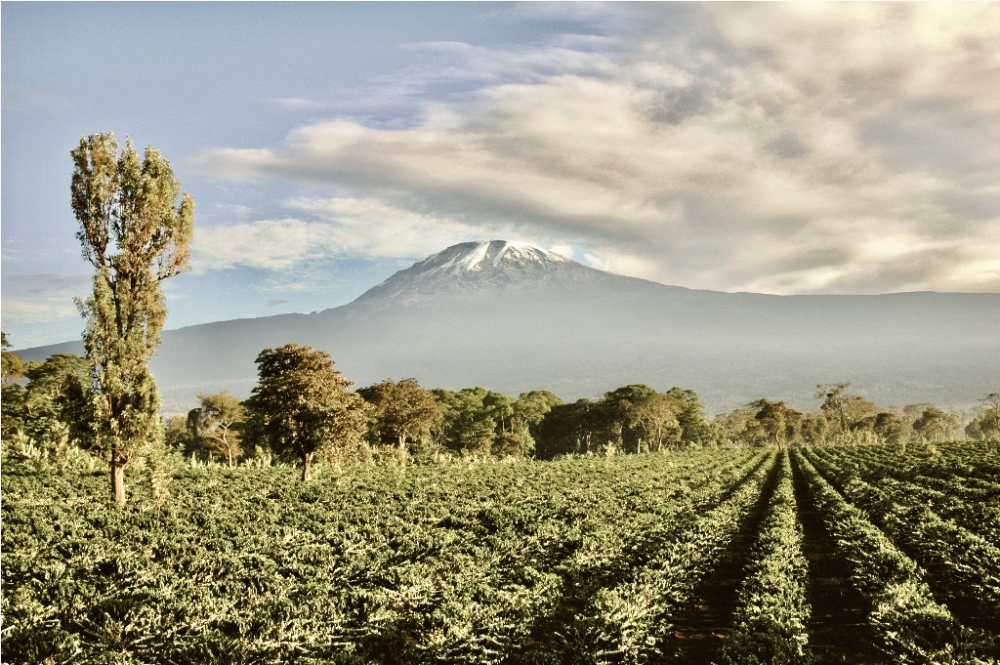
Kilimanjaro Kilimanjaro is Tanzania's largest coffee producing region, and Kilimanjaro coffee is also an important pillar of Tanzania's economy. Kilimanjaro coffee comes from Mount Kilimanjaro, Africa's highest mountain range, in northeastern Tanzania. Local smallholder coffee farmers cultivate it at altitudes between 1,300 and 2,000 m. Nurtured by volcanic ash and combined with the high-altitude growing environment, the coffee beans produced are of excellent quality.
Front Street Coffee (FrontStreet Coffee) roasting
Kilimanjaro coffee consists of large, evenly sized beans with a gray-green color, accompanied by relatively strong acidity and a sweet fragrance, with an excellent flavor. After medium-light roasting, it gives off sweetness and a light acidity.
Front Street believes that the attributes of this bean are very similar to Kenyan coffee, and using a medium-light roast can highlight a bright and substantial acidity.
Front Street Coffee (FrontStreet Coffee) cupping report Dry aroma: caramel Wet aroma: berry Cupping result: citrus on the palate, berry, tea-like
Front Street Coffee (FrontStreet Coffee) brewing parameters Dripper: V60
Dose: 15 g Coffee-to-water ratio: 1:15 Water temperature: 91°C Grind size: 80% passing a No. 20 standard sieve
Front Street Coffee (FrontStreet Coffee) brewing method 30 g - 125 g - 225 g. Bloom with 30 g of water for 30 seconds. After the bloom, pour in a circular motion to 125 g. When the water level drops to half, continue pouring in a circular motion to 225 g.
Front Street Coffee (FrontStreet Coffee) flavor description
Honey, berry, tea-like, citrus.
Front Street Coffee (FrontStreet Coffee) roasting curve
In order to highlight the flavor of coffee from the southern region, the roaster at Front Street Coffee (FrontStreet Coffee) used a medium-light roast.
Front Street Coffee (FrontStreet Coffee) cupping report
Dry aroma: berry, fermented
Wet aroma: berry, floral
Cupping: citrus, caramel, nut, fermented aroma
Front Street Coffee (FrontStreet Coffee) brewing parameters Dripper: V60 Water temperature: 91C Water-to-coffee ratio: 1:15 Grind size: 80% passing a No. 20 sieve Front Street Coffee (FrontStreet Coffee) brewing method Bloom with 30 g for 30 seconds. After the bloom, pour in a circular motion to 125 g. After the water level drops by half, continue pouring in a circular motion to 225 g. Total extraction time 2 minutes.
Front Street Coffee (FrontStreet Coffee) flavor description Floral, berry, citrus, nut
The above content is compiled by CoffeeHunters, a coffee news website.


