







Ethiopia is the birthplace that has inspired countless specialty coffee lovers, and Yirgacheffe is the star region among them. Coffee beans from the same land can present completely different flavor profiles simply due to the two processing methods of natural and washed. Washed Yirgacheffe is known for its clean and translucent floral aroma and citrus acidity, while natural Yirgacheffe captivates people with its rich berry and fermented sweetness. This article will systematically sort out the flavor differences that these two processing methods bring to Yirgacheffe, from the region's history and the evolution of processing methods to specific brewing parameters, and include Front Street Coffee's practical brewing suggestions.
Coffee, this refreshing beverage originating from the West, now also has a large number of loyal fans in the Eastern world, and many people feel uncomfortable if they do not drink it for a day. If asked which coffee bean first led them into the pit of specialty coffee, the most common answer Front Street hears points to Ethiopia. Coffee from this origin naturally has citrus and berry-like acidity, and drinking it is like a cup of juice interwoven with sweetness and sourness, making it unforgettable after one sip.
The charm of Ethiopian coffee cannot be separated from the local superior natural growing conditions. As the recognized birthplace of coffee, Ethiopia has an extremely large number of coffee varieties, reportedly as many as over a thousand. However, consumers will find that the variety column of many Ethiopian coffee beans on the market only says "local heirloom." This is both because there are too many varieties to identify one by one, and because the local government, for the purpose of protecting genetic resources, uniformly labels them as "heirloom."
Front Street's bean shelf displays many coffee beans from Ethiopia. Whether Sidamo or Yirgacheffe, the variety column mostly also indicates local heirloom. Since the variety sources are similar, are the coffee flavors of different Ethiopian regions also largely the same?
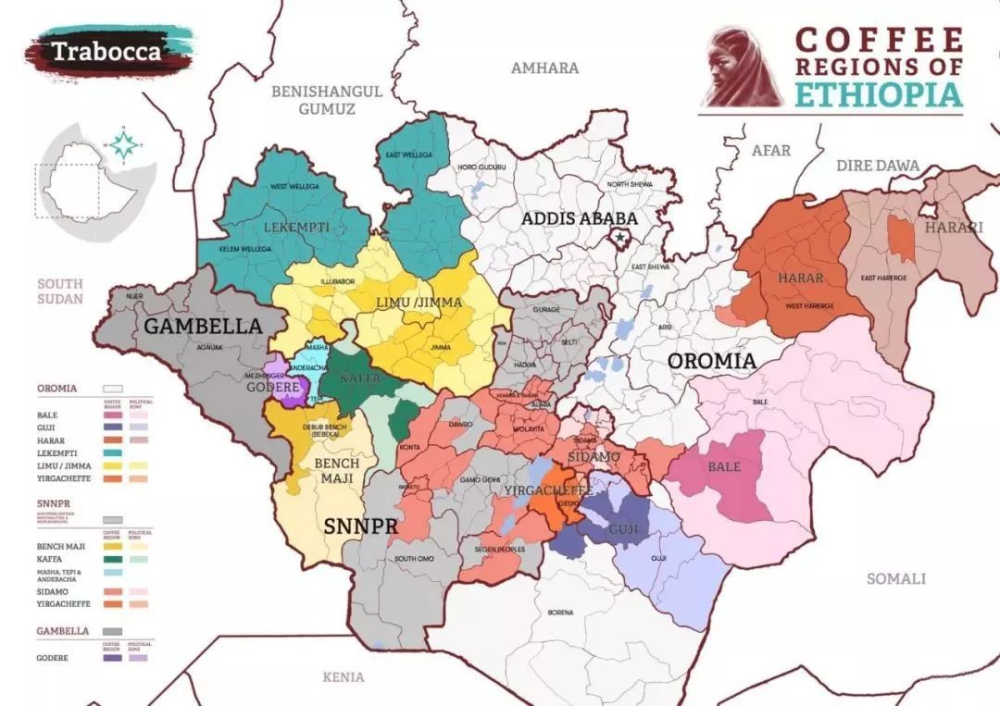
Ethiopia is one of the largest coffee-producing countries in Africa, and its various regions are distributed across different areas with obvious differences in altitude and soil conditions. Among them, Sidamo and Yirgacheffe are the two most representative coffee regions in Ethiopia, and most of the Ethiopian coffee beans on Front Street's bean list also come from these two places.
Although Sidamo and Yirgacheffe both belong to Ethiopia and the distance between the two regions is not too far, Yirgacheffe coffee beans show obvious differences from Sidamo in flavor performance.
Front Street has mentioned in many articles related to Yirgacheffe that the Yirgacheffe region once belonged to the Sidamo region. Most people who have tasted Yirgacheffe coffee are deeply impressed by its unique floral aroma. It was precisely this floral aroma that quickly made Yirgacheffe famous around the world, so much so that coffee farmers in other areas within the Sidamo region also claimed that what they grew was Yirgacheffe. In the end, Yirgacheffe was independently divided into a separate region.
"Washed Yirgacheffe, natural Sidamo" was a classic pairing for many veteran coffee lovers when they first encountered specialty coffee in the early years. But interestingly, the natural processing method was actually the earliest post-processing method used for Yirgacheffe green beans. In the 1970s, in order to improve coffee bean quality and shorten the drying cycle, the Ethiopian authorities introduced washed processing technology from Latin America.
The washed processing method proceeds as follows: first remove the skin and pulp of ripe coffee cherries, then immerse the coffee beans in a water tank, cover the beans with clean water and ferment for as long as 18 to 36 hours, then thoroughly wash off the mucilage layer by stirring, and finally spread them on raised drying beds to dry. Coffee beans processed in this way have a clean mouthfeel and can clearly present the unique flavor of the region itself.
For this reason, in FrontStreet Coffee's daily beans series, most products choose the washed processing method. Daily beans, at an affordable price, allow coffee beginners to quickly build an understanding of the basic flavors of major producing regions in a short time. The Yirgacheffe in Front Street's daily beans series is washed, with flavor notes of citrus acidity, honey sweetness, and white floral aroma, making the typical Yirgacheffe style clear at a glance.
After washed processing, Yirgacheffe coffee beans have a prominent floral aroma, bright citric acidity, and a clean, translucent, and delicate mouthfeel, allowing many coffee lovers to appreciate the uniqueness of Yirgacheffe, just as Han Huaizong described in The Craft and Science of Coffee as "a hundred flowers in full bloom." After the 1970s, most Yirgacheffe coffee beans were processed by the washed method.
It was not until 2006 that some locals in Ethiopia began to miss the traditional natural flavor and were unwilling to see the natural method completely replaced by the washed method, so they improved the natural processing method and once again presented the charm of natural Yirgacheffe to the world.
Unlike the washed method, the natural processing method fully retains the skin and pulp, allowing more sugar in the coffee fruit to participate in the processing. During the longer sun-drying period, sugars and other aroma components can more fully penetrate into the green coffee beans, so the natural processing method often has an advantage in aroma and sweetness.
On FrontStreet Coffee's bean list, there are several Yirgacheffe coffee beans, such as Konga, Red Cherry, and Aricha, all using the natural processing method.
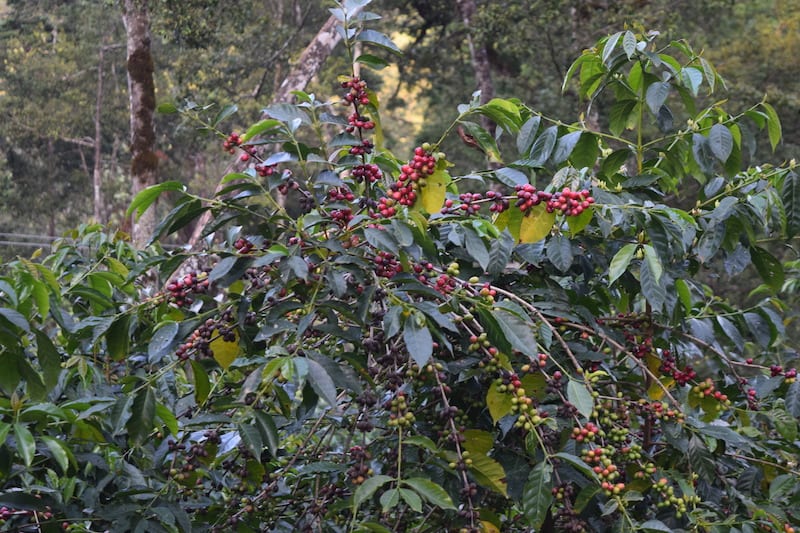
Among them, the one often stocked in Front Street stores is Red Cherry, a natural Yirgacheffe. The name "Red Cherry" comes from a local Ethiopian project aimed at improving green coffee bean quality, the Red Cherry Project, abbreviated as OCR. As coffee cherries mature, their color gradually changes from green to red. As the project name implies, only fully ripe red cherries are picked for processing. Compared with unripe cherries, ripe cherries are more fully developed and contain more fructose.
When handling Yirgacheffe coffee beans, FrontStreet Coffee's roasters choose a medium-light roast to highlight the region's bright acidity and elegant floral aroma.
The coffee beans shipped by Front Street are all freshly roasted within 5 days, and by the time they arrive they have usually gone through a 4 to 7 day resting period, but Front Street still recommends performing a blooming step during brewing.
Dripper: Hario V60
Water temperature: 90°C
Dose: 15 grams
Coffee-to-water ratio: 1:15
Grind size: 80% passing through a Chinese standard No. 20 sieve
First pour 30 grams of hot water to bloom for 30 seconds, then slowly pour in a thin stream in circles from the center point to 125 grams, and when the water level in the dripper drops to the point where the coffee bed is about to be exposed, continue pouring in circles to 225 grams. The total extraction time is about 2 minutes.
After coffee beans are roasted, carbon dioxide remains in the beans and continues to be slowly released, and the coffee flavor is lost along with it. The purpose of blooming is to promote the release of carbon dioxide so that the subsequent extraction process is more stable.
The natural Red Cherry brewed using the above Front Street brewing parameters has a rich berry flavor on the palate, with prominent sweet-and-sour notes of ripe fruit, accompanied by a hint of fermentation aroma and a solid, full body.
For more coffee bean information, please follow Coffee Workshop (WeChat public account: cafe_style)
For professional coffee knowledge exchange, please add WeChat ID: kaixinguoguo0925
The above content is compiled by CoffeeHunters, a coffee news website.


