







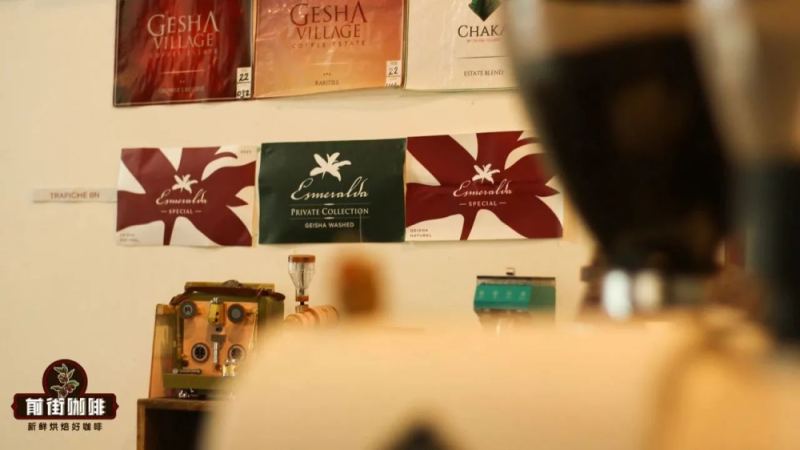
Panama coffee is world-famous for the Geisha variety, and its elegant floral and fruity aromas with citrus notes are highly sought after. This article systematically reviews the characteristics of Panama's coffee-producing regions—from Boquete and Volcan to Renacimiento—and explains in detail the grade classifications and plot differences of Hacienda La Esmeralda's Red Label, Green Label, and Blue Label Geisha. It also introduces the flavor profiles of Front Street selected Panama coffee beans such as Butterfly, Elida, and Hartmann, and includes the complete parameters and three-pour extraction steps for Front Street Geisha pour-over, taking you from origin to cup for a comprehensive understanding of the charm of Panama Geisha.
For more specialty coffee knowledge, please follow the WeChat public account: Front Street Coffee (FrontStreet Coffee)
When talking about Panama coffee, Geisha coffee beans are inevitably an unavoidable topic. The elegant flavor of this variety was first discovered by Panama's Hacienda La Esmeralda. In 2004, Hacienda La Esmeralda won first place in a Panama green bean competition precisely with Geisha, making Geisha famous ever since. Front Street Coffee (FrontStreet Coffee) has successively launched multiple Front Street Panama Geisha coffee beans. Some people cannot help but wonder: isn't Geisha just that flavor? Why launch so many beans of the same type?
In fact, before Front Street Coffee (FrontStreet Coffee) launches each bean, it does a great deal of preparation—collecting origin information, repeatedly adjusting roasting curves, cupping and brewing tastings, and so on, so that Front Street has a thorough understanding of each coffee bean's background. The key criterion for deciding whether to launch a bean is whether the bean's regional flavor is distinctive enough and whether it has a standout memorable point. Geisha coffee does indeed have common flavor characteristics: rich floral and fruity aromas, prominent fruit notes, and quite high acidity and complexity. However, the several Front Street Panama Geisha coffee beans selected by Front Street Coffee (FrontStreet Coffee) each extend beyond the signature Geisha flavor, so that each Geisha has both commonalities and unique individuality.
Panama is located at the southern end of Central America, adjacent to Colombia. It lies in the isthmus connecting the North and South American continents and has held important strategic significance since the time of Columbus in the sixteenth century. In the early nineteenth century, Panama leaned more toward the south politically and once formed Gran Colombia together with Colombia, Ecuador, and Venezuela. In 1903, Panama broke away from the union with the help of the United States; from the moment the canal was excavated, the fate of this country became closely tied to the United States. The Panama Canal runs across Central America, connecting the Pacific Ocean, the Caribbean Sea, and the Atlantic Ocean. It not only promoted shipping trade but also brought a large amount of agricultural technical knowledge from the United States and Europe. Many North American retirees chose to settle in Panama because of its mild climate and lower cost of living, which objectively also promoted the development of the local coffee industry.
Panama coffee has a smooth mouthfeel and balanced acidity, and high-quality coffee beans have a pure flavor with strong recognizability. The first batch of exported coffee each year is shipped in November.
In 1780, Europeans first introduced the Typica variety to Panama. At the end of the twentieth century, the construction of the Panama Canal attracted a large number of elites to move south, driving the growth of the coffee industry. However, early Panama coffee was not famous, and production was limited. With the advancement of the third wave of specialty coffee, Panama's awareness of specialty coffee has matured day by day. Especially after the popularity of Geisha flavor in 2004, Panama has long occupied a position on top coffee lists.
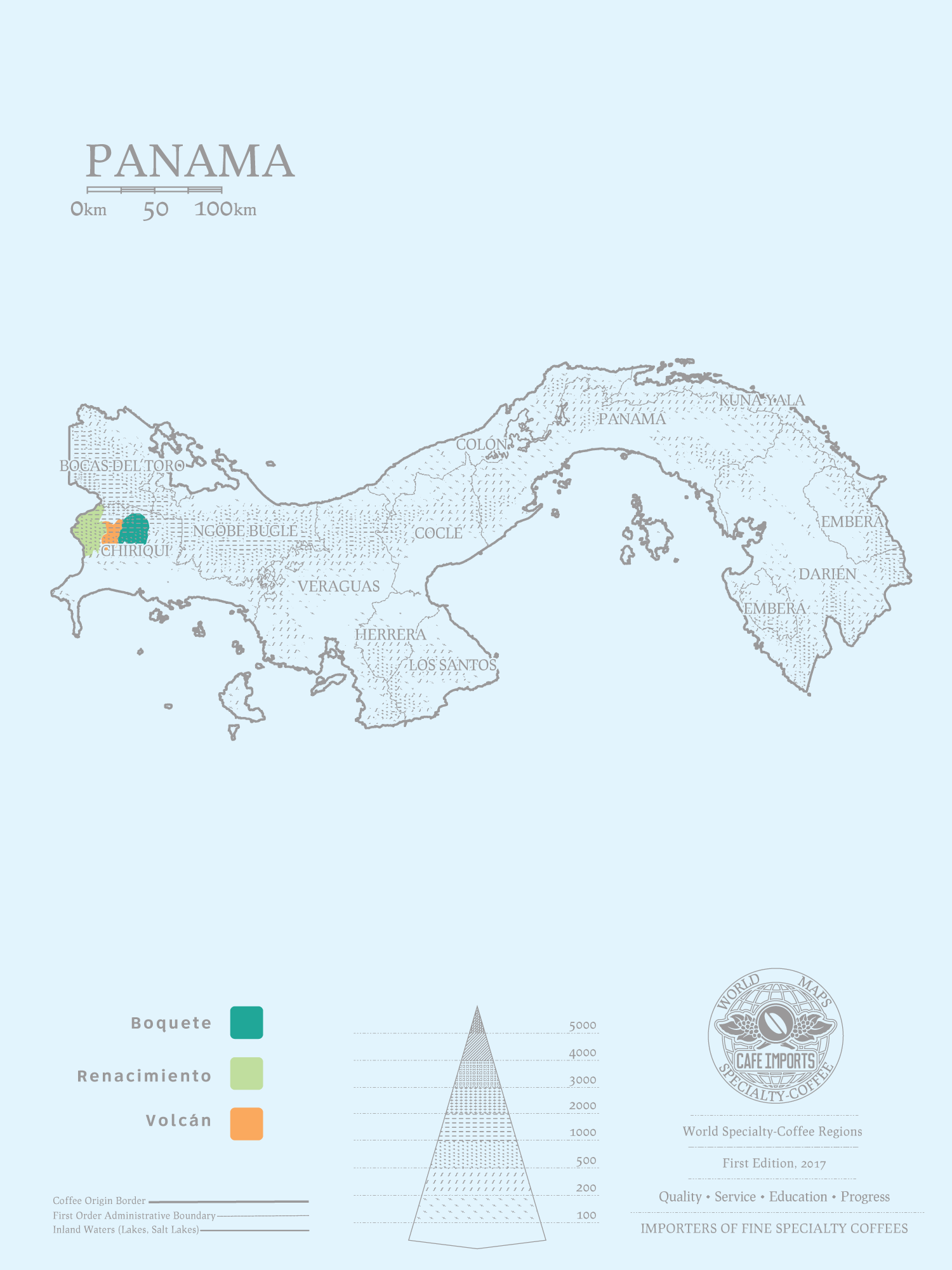
Panama Coffee Producing Regions Panama's terrain is undulating across the country, with interlacing valleys. Apart from the north and south coastal plains, most of the country is mountainous. The country is close to the equator and has a tropical maritime climate, humid during the day and cool at night, with an average annual temperature of 23-27 degrees Celsius. The year is divided into dry and rainy seasons, with an average annual rainfall of 1500-2500 millimeters. High-quality Panama coffee is mainly concentrated in the northwest, that is, the area near Costa Rica and close to the Pacific Ocean. Coffee produced in the Boquete coffee-producing region of Chiriqui Province is renowned.
【Boquete Coffee Producing Region】
Boquete has a growing elevation of 1400-1900 meters. It is located near the border between Panama and Costa Rica, adjacent to the famous Baru Volcano, with beautiful scenery, fertile and deep soil, and climatic and soil conditions very suitable for producing high-quality coffee.
Within the Boquete producing region, there are also many excellent estates. In addition to Hacienda La Esmeralda, Elida Estate, Kotowa Duncan Estate, and others also produce high-quality specialty coffee. This is not only due to Boquete's mild climate and the fertile volcanic ash soil of Baru Volcano, but also an important factor—the variable microclimates of the Boquete highlands.
【Volcan Coffee Producing Region】
When mentioning Panama coffee, the specialty regions most familiar to the public mostly come from Boquete, but in recent years coffee from the Volcan producing region has gradually emerged in the specialty market, and quite a few estates have entered the Best of Panama competition and even won championships. The average annual rainfall in the Volcan producing region is generally lower than in Boquete, and its geographical location on the western side of Baru Volcano gives coffee produced here stronger dried fruit flavors, sweetness, and aroma compared with the Boquete producing region.
The main growing elevation of the Volcan coffee producing region is 2000-3000 meters.
In the early days, most of the Volcan area grew economic crops such as fruits and vegetables, and only very few farmers grew coffee. The pioneer of coffee cultivation in the Volcan area was the Hartmann family, quite well known in Panama.
【RENACIMIENTO Coffee Producing Region】 The Renacimiento producing region is one of the producing regions in Chiriqui Province, with a main growing elevation of 1100-1500 meters. This producing region borders Costa Rica. Because the area itself is relatively small, it is not a major characteristic producing region for Panama coffee beans.
Specialty coffee emphasizes traceability. Being able to trace which estate and which plot the beans come from, or which cooperative or which farmer, is a pursuit of the taste of place. Only by personally traveling to the coffee origin and walking into the coffee estate is it possible to understand where that trace of coffee foundation, captivating flavor, and variable aroma actually comes from: microclimate? Variety? Processing method? Or the secret recipe of the coffee farmer?
Hacienda La Esmeralda, Panama
La Esmeralda Estate
Hacienda La Esmeralda is located in a corner of Baru Volcano, so Panama coffee beans produced in this area were mostly named after Baru Mountain before becoming famous. The surroundings of Boquete are beautiful, with many leisure hotels and vacation estates, even built along the important Rio Caldera.
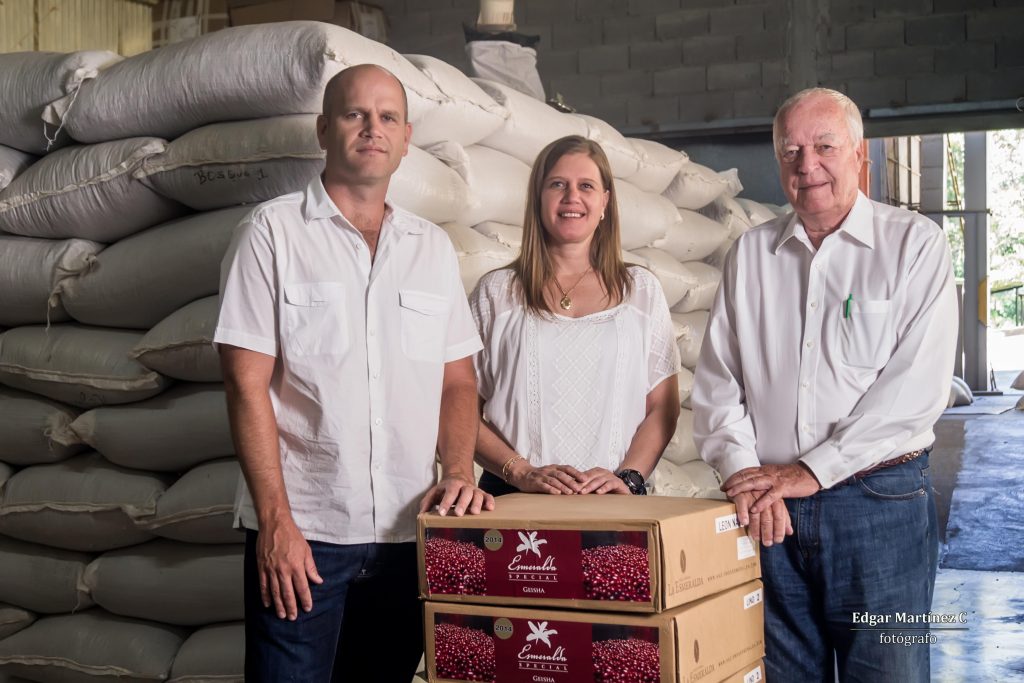
In 1964, American banker Rudolph Peterson moved to Panama after retirement and bought Hacienda La Esmeralda in Boquete, initially mainly operating a dairy business. In 1973, his son Price Peterson returned to Boquete to help his father manage the farm after obtaining a doctorate in neurochemistry in the United States. In 1987, the Caturra and Catuai coffee varieties were introduced, and in 1994 a washing station was established, since when the estate had its own coffee processing facilities. In 1996, it bought the nearby Jaramillo estate, which had a superior geographical environment and coffee varieties with outstanding flavor, and incorporated it into Hacienda La Esmeralda.
After Price took over, he divided the estate's planted areas into five brands for sale according to elevation, microclimate, cup performance, and planted variety. The Geisha variety covers three brands: Esmeralda Special, Private Collection, and Geisha1500. The Catuai variety has two brands: Diamond Mountain grows and Palmyra. 【Plot Division of Hacienda La Esmeralda】
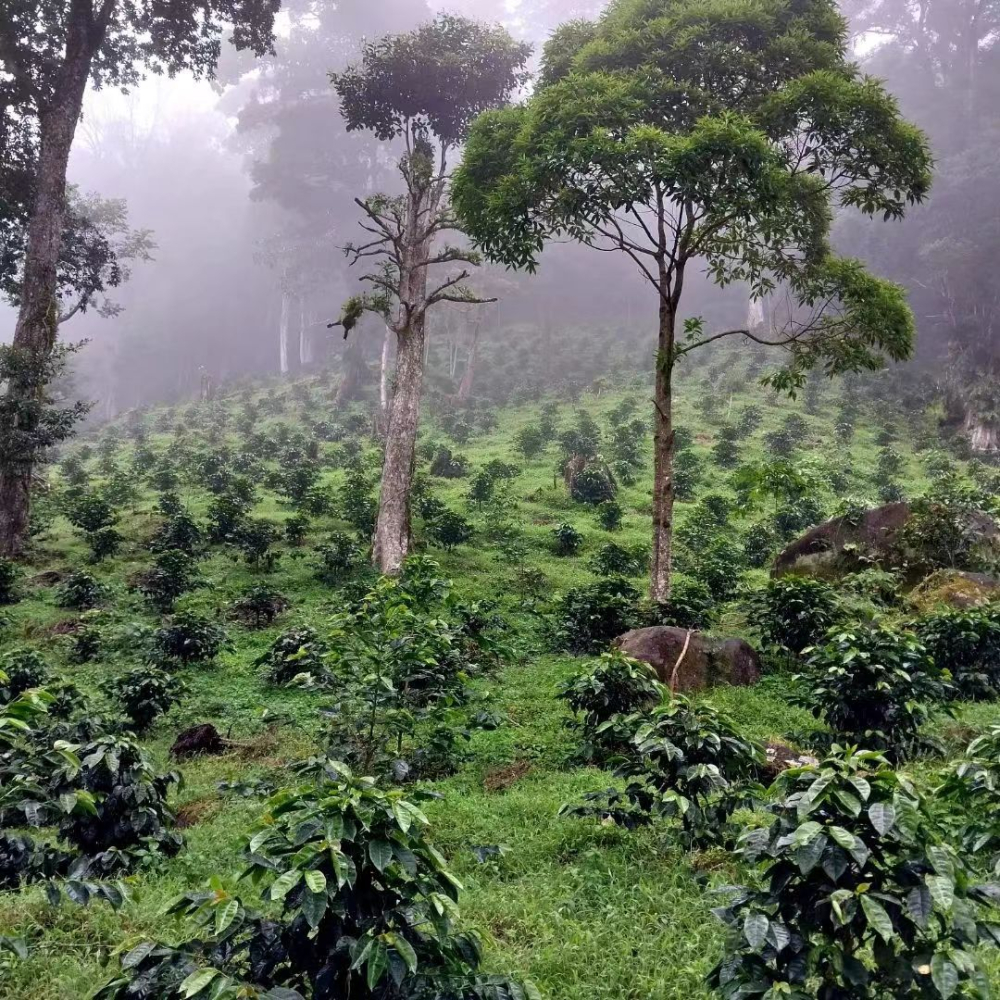
Hacienda La Esmeralda's Geisha is extremely finely divided by plot, mainly into three plots: Jaramillo, Canas Verdes, and El Velo. Each plot is further subdivided into smaller plots. High-quality Geisha mainly comes from the two plots Jaramillo and Canas Verdes.
Jaramillo has an annual rainfall of 4000 milliliters, an average daytime temperature of 19-25 degrees Celsius, an average nighttime temperature of 11-15 degrees Celsius, and an average elevation of 1600-1700 meters. The Jaramillo plot is subdivided into 5 small plots: Mario, Noria, Reina, Bosque, and Buenos Aires.
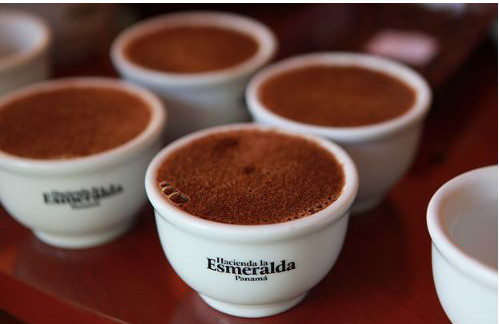
Canas Verdes has an annual rainfall of 3500 milliliters, an average daytime temperature of 16-23 degrees Celsius, an average nighttime temperature of 10-15 degrees Celsius, and an average elevation of 1600-1800 meters. Canas includes a total of 9 small plots: Lino, Coronado, Fundador, León, Montaa, Trapiche, Chinta, Cabaa, and Tumaco.
El Velo is the most recently purchased plot of Hacienda La Esmeralda, with an average elevation of 1700-1900 meters, an average annual rainfall of 4000 milliliters, an average daytime temperature of 16-25 degrees Celsius, and an average nighttime temperature of 11-16 degrees Celsius. In addition to growing Geisha and Catuai, this plot also has a small number of other introduced varieties, such as Laurina, Pacamara, Mocha, and SL28.
The entire area covers 50.25 hectares of coffee-growing land, of which the Geisha planting area is 37.9 hectares, divided into 7 detailed plots: Guabo, Portón, Durazno, Mural, Higo, Buena Vista, and guila.
【Esmeralda Special】
The Geisha coffee beans produced under Esmeralda Special are what is commonly called Red Label. They are selected from Geisha beans grown at an elevation of 1600-1800 meters, scoring above 90 points in cupping, and coming from the two producing areas Jaramillo and Canas Verdes.
In the independent auction held by Hacienda La Esmeralda itself, only the Geisha lots put up for bidding from the divided plots are auction Red Label. However, there are also non-auction Red Labels on the market now, which are in fact Geisha selected from the same plots that did not participate in the auction and flowed into the market. The variety quality is consistent, with only a difference in selling price.
In 2022, Hacienda La Esmeralda separated the auction lots from the Red Label and established an auction lot, so the current Red Label does not include auction lots. Pricing differs slightly according to the characteristics of each plot. Every year, Front Street selects the Front Street slow natural Red Label Geisha lot from the Mario plot, because the Geisha coffee from the Mario plot is precisely the plot where Hacienda La Esmeralda won the BOP championship in 2004. Front Street believes that the Geisha coffee from this plot performs extremely well.
Geisha coffee beans of this grade use natural or washed processing methods, and the flavor presents a special and bright floral aroma and citrus notes.
【Front Street Panama Hacienda La Esmeralda Red Label Geisha Coffee Beans】 Region: Boquete Estate: Hacienda La Esmeralda Elevation: 1700 meters Variety: Geisha Processing: Natural process Flavor: Citrus, mixed fruits, rose tea, honey
【Private Collection】
Private Collection, commonly known as Green Label, is not an independent competition lot, but a Geisha variety that does not participate in bidding after planting yet still has excellent quality. It uses micro-lots blended from beans grown at an elevation of 1600-1800 meters and coming from different plots such as Jaramillo and Canas Verdes. Because a blended-bean model is used and no detailed plot labeling is made, there are sometimes cases where Green Label Geisha and Red Label Geisha are highly similar in flavor, but the next release may change again. Although Green Label Geisha is not as high-grade as Red Label, it still carries the classic flavor of Geisha—floral aroma, fruity aroma, citrus acidity, and a rich, juicy mouthfeel. Green Label Geisha is likewise processed either washed or natural.
【Front Street Coffee (FrontStreet Coffee) · Panama Hacienda La Esmeralda Green Label Geisha Coffee Beans】
Region: Boquete
Estate: Hacienda La Esmeralda
Elevation: 1600-1800 meters Variety: Geisha
Processing: Washed process Flavor: Jasmine, citrus, honeydew melon, berries
【Geisha1500】
The Geisha1500 brand is the commonly seen Blue Label Geisha. It uses blended beans grown at an elevation of 1400-1500 meters and coming from three different plots: Jaramillo, Canas Verdes, and El Velo. The flavor is slightly floral, with fruity acidity and sweetness, and the mouthfeel is less rich. Blue Label Geisha is only washed processed. However, Hacienda La Esmeralda adjusted its brand positioning in 2021 and officially discontinued the Blue Label series.
【Front Street Panama Hacienda La Esmeralda Blue Label Geisha Coffee Beans】
Region: Boquete
Estate: Hacienda La Esmeralda
Elevation: 1500 meters Variety: Geisha
Processing: Washed process Flavor: Lemon, oolong tea, cane sugar, white peach
Front Street Coffee (FrontStreet Coffee) · Panama Butterfly In addition to launching several Geisha coffees from Hacienda La Esmeralda, Front Street Coffee (FrontStreet Coffee) also has a Panama coffee bean with particularly high cost performance and a very beautiful name—Front Street Panama Butterfly Coffee. It has 70% excellent Geisha pedigree and is composed of three varieties: Geisha, Caturra, and Catuai. It is planted in the Baru Volcano area of Boquete, grown at an elevation of 1600 meters in a volcanic zone, and the processing plant uses refined washed processing. Panama's special local microclimate gives this area abundant rainfall and large day-night temperature differences. Together with the volcanic rock soil unique to the volcanic area, as well as careful harvesting and refined processing, this Front Street Panama Butterfly Coffee performs quite excellently in body, acidity, and floral aroma.
【Front Street Panama Butterfly】 Region: Boquete Elevation: 1600 meters Variety: Geisha, Caturra, Catuai Processing: Washed process
Flavor: Floral aroma, citrus, black tea, classic Geisha
Elida Estate Elida is a famous Panama coffee estate with a hundred-year history and superior coffee quality, located in Panama's well-known specialty coffee producing region—Boquete. Last year, one of Elida's Geisha coffee beans won the championship in the Geisha processing group of the BOP competition. Front Street Coffee (FrontStreet Coffee) selected Elida Geisha from the same plot and same elevation for tasting. After comparison with Hacienda La Esmeralda's Geisha coffee beans, it was found that due to the different processing methods selected, the complexity of Front Street Elida Geisha is somewhat more intricate than that of Front Street Esmeralda Geisha.
Elida Estate has a total area of 65 hectares, more than half of which lies within the boundaries of Baru Volcano National Park. Only 30 hectares of the estate are used to plant coffee trees, while the rest remains primary forest. Coffee is grown at elevations from 1670 meters to 1850 meters, making it one of the two highest-elevation coffee estates in Panama (the other estate with an equal elevation is Carmen Estate in the Volcan Valley). In such a high-altitude environment, low temperatures delay the ripening period of coffee cherries, about a full month later than the normal ripening period. The fertile volcanic soil provides ample nutrients for the coffee, and together with the excellent microclimate brought by Baru Volcano, Elida Estate repeatedly achieves good results in cupping competitions.
【Front Street Panama Elida Estate Geisha Coffee Beans】 Region: Boquete Estate: Elida Estate Elevation: 1900 meters Variety: Geisha Processing: Anaerobic fermentation low-temperature slow natural
Flavor: Fermentation aroma, rose, berries, citrus, green tea, cream, nuts
Hartmann Estate
Hartmann Estate is located in the Volcan producing region and was founded in 1940. The most special thing about Hartmann Estate is its respect for the natural environment, preserving most of the primary forest, making it an academic cooperation partner of the Smithsonian Tropical Research Institute and other wildlife conservation organizations. Even the estate's trademark carries the words "Bird Friendly." This family business has a state-level cupping laboratory and sample roasting room, and cups each batch of coffee fruit with a rigorous attitude and strict standards, ensuring the stable quality of Hartmann Estate coffee and always pursuing improvement.
【Front Street Coffee (FrontStreet Coffee) · Panama Hartmann Estate Geisha Coffee Beans】
Region: Volcan Estate: Hartmann Estate Elevation: 1300-2000 meters Variety: Geisha Processing: Anaerobic natural
Flavor: Bergamot, pineapple juice, passion fruit, Earl Grey tea, blueberry, apricot
What parameters are used for pour-over Front Street Geisha coffee?
The flavor description of each Front Street coffee is based on freshly roasted beans. If the coffee beans are stored for more than a month, the aroma may have partially dissipated, and it is difficult to reproduce in brewing. Front Street deeply understands the importance of freshness, so it ensures that only coffee beans freshly roasted within 5 days are shipped, allowing everyone to enjoy the fullest tasting window upon receipt.
Geisha coffee's flavor is famous for its rich floral aroma and complex fruit notes. The Front Street roaster hopes to retain more of Geisha's high-quality acidity, so a medium-light roast is chosen (slight adjustments are made for different batches).
The pour-over parameters for Geisha coffee are: dripper: V60, water temperature: 91-92 degrees Celsius, coffee dose: 15 grams, coffee-to-water ratio: 1:16, grind size: fine granulated sugar size (80% of powder passing through a No. 20 sieve).
Three-pour extraction: First pour 15 grams of coffee powder into the dripper and tare the weight. For the first pour, add 30 grams of water for a 30-second bloom, and start timing at the same time. Throughout, pour with a small stream from the center point and begin spiraling outward, taking care to wet the entire coffee bed.
For the second pour, use a slightly larger stream to add 120 grams of water, with the aim of raising the entire coffee bed. The water column should be poured vertically and evenly. At this point the timer scale shows 150 grams, and the pour is finished in about 55 seconds.
When the liquid level drops to the halfway point, begin the third pour with a small stream in a small circle, adding 90 grams, trying to control the stream so it does not circle too widely, as this can easily disturb the coffee bed and cause under-extraction. The final total poured water is 240 grams, and the drip completion time is about 2 minutes 10 seconds. After removing the dripper, swirl the coffee liquid in the server to mix it evenly, and then it is ready for tasting.
The pour-over Panama washed Boquete Geisha coffee has a clear acidity of citrus, lemon, and bergamot, with a creamy smooth mouthfeel when swallowed, and a sweet finish of green tea and honey.
The above content is compiled by CoffeeHunters, a coffee news website.


