







To enjoy an outstanding cup of Blue Mountain coffee, good beans alone are not enough—the roasting plan, extraction parameters, and drinking method are equally key. This article focuses on Jamaican Blue Mountain No. 1 coffee beans. It first explains the origin and flavor characteristics of authentic Blue Mountain coffee, then introduces the specification standards of the NO.1 grade and the cultivation and processing details of Clifton Estate. Next, it analyzes Front Street Coffee's roasting approach and recommended tasting period. Finally, it provides a complete pour-over plan, including grind size, water temperature, dripper selection, coffee-to-water ratio, staged pouring technique, and total extraction time, to help you consistently brew a cup of Blue Mountain coffee with balanced acidity, sweetness, and bitterness and a clean mouthfeel.
For professional coffee knowledge exchange and more coffee bean information, please follow Coffee Workshop (WeChat public account: cafe_style).
For more specialty coffee beans, please add the private WeChat of Front Street Coffee: qjcoffeex.
True Blue Mountain coffee refers to coffee brewed from Typica coffee beans grown at altitudes between 910 and 1,700 meters in Jamaica's Blue Mountain range. Its flavor is rich and full-bodied, with distinct dark chocolate aromas, a soft citrus-like acidity, and a pleasant caramel sweetness. Acidity, sweetness, and bitterness are balanced, and it is clean on the palate with a solid body.
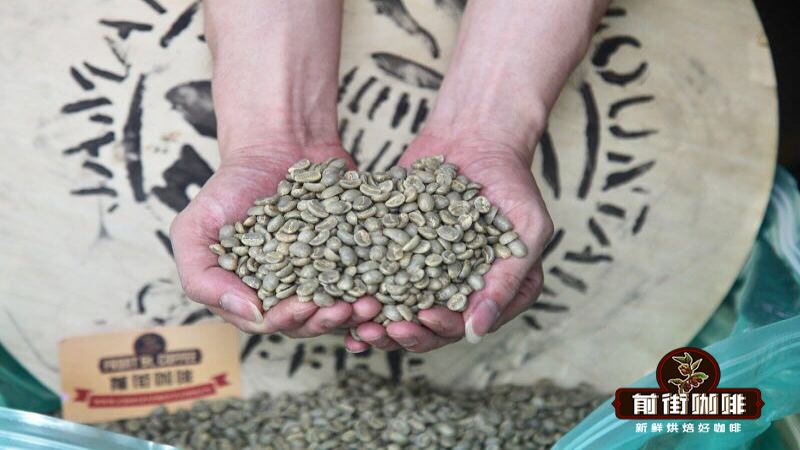
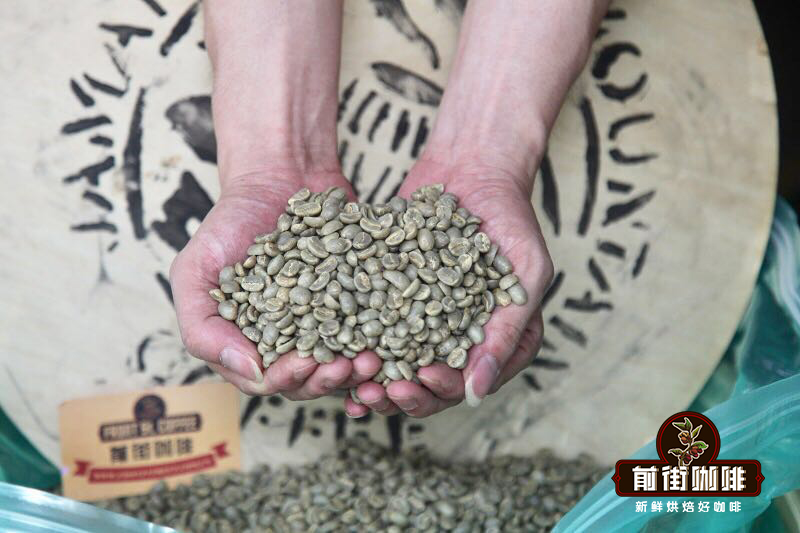
To make a delicious cup of Blue Mountain coffee, the starting point is selecting high-quality Blue Mountain coffee beans. At present, the most recognized top Blue Mountain grade is NO.1, commonly known as Blue Mountain No. 1. This grade has strict requirements for green beans: the size must fall between 17 and 18 screen sizes, and defective beans must not exceed 2%, so the beans in the whole batch look uniform and plump.
This strict grading system not only ensures the consistent quality of Blue Mountain No. 1 itself. When roasting Blue Mountain No. 1, Front Street Coffee also found that uniform bean size means more even heating during roasting, and the final cup tastes cleaner and fuller.
Of course, besides the bean's own quality, whether one understands this bean and can develop a suitable roasting plan also determines success. The Jamaican Blue Mountain No. 1 currently offered by Front Street Coffee comes from Clifton Estate, the oldest coffee-growing site in the Blue Mountain range.
Clifton Estate's Blue Mountain coffee is grown on slopes at an altitude of 1,310 meters, where the volcanic soil is fertile, the air is clean and pollution-free, and the climate is humid, with fog and rain throughout the year. Average rainfall is about 1,980 mm, and the temperature is around 27°C. The processing method is washed, with fermentation lasting 12–18 hours. After fermentation is complete, the beans are repeatedly moved through a water tank until the surface of the coffee beans is washed smooth and clean. This also makes Blue Mountain's steady and delicate acidity more prominent.
According to Front Street Coffee's observations, this Blue Mountain is a NO.1 bean above 17 screen size, with a defect rate below 3%, a moisture content of about 13%, and medium bean density, making it suitable for roasting with a steadily rising approach. Therefore, Front Street Coffee chose to develop for another 4 minutes after first crack and discharge at 201°C, reaching a medium-dark roast level.
This roast level allows Blue Mountain coffee to achieve a subtle and perfect balance among acidity, body, and aroma: the acidity is bright and refined, the texture is as smooth as velvet, the aroma has a slight penetrating quality, accompanied by floral, spicy, and caramel tones, and after swallowing, a hint of cocoa emerges in the finish.
Once roasted properly, it should be brewed while fresh. Coffee beans are at their best tasting period within 5–30 days after roasting is completed, and all Front Street Coffee beans are shipped within 5 days after roasting is completed. So when you receive the Blue Mountain No. 1 coffee beans sent by Front Street Coffee, you can usually open the bag and brew directly.
Now that everything is ready, let's start brewing. As roasting time increases, the internal structure of coffee beans becomes more porous, and flavor compounds dissolve faster. To avoid over-extraction, whether using pour-over drip or a French press immersion, Front Street Coffee recommends using a relatively lower water temperature and pairing it with a medium-coarse or coarser grind.
When brewing Blue Mountain No. 1, Front Street Coffee recommends a medium-coarse grind, roughly the coarseness of coarse granulated sugar, with a grinding standard of 70% passing through a Chinese No. 20 standard sieve; the water temperature is recommended to be controlled at 88–89°C.
For the dripper, you can use a short-rib KONO dripper with an immersion effect. Its characteristic is that the filter paper fits tightly against the dripper, allowing immersion-style extraction during pour-over, thereby enhancing the coffee's overall body. Use 15 g of coffee, with a coffee-to-water ratio of 1:15, meaning a total pouring volume of 225 g, using staged pouring.
The specific operation for staged pouring: first use water at 2 times the coffee dose for blooming, that is, 30 g of water to bloom for 30 seconds. The purpose of blooming is to let the coffee grounds release internal carbon dioxide, making subsequent extraction more stable. Then pour in a circular motion with a small stream, make one stage break at 125 g, then continue pouring until 225 g and stop. After the water in the dripper has dripped through, remove the dripper. Counting from the start of pouring, the total extraction time is about 2 minutes 10 seconds. Finally, pick up the whole cup of coffee and swirl it to mix, then pour it into a cup and taste.
Pour-over flavor of Jamaican Blue Mountain No. 1 coffee beans: rich dark chocolate and nutty flavors, a creamy and smooth mouthfeel, and balanced acidity, sweetness, and bitterness.
The above content is compiled by CoffeeHunters, a coffee news website.


