





Coffee-to-Water Ratio and Other Brewing Factors
Many coffee enthusiasts find their pour-over coffee lacks strength and flavor. While the coffee-to-water ratio is often blamed, other factors like extraction efficiency and bypass water also play significant roles. Low extraction efficiency means flavor compounds remain trapped in the grounds, resulting in a bland cup. Similarly, bypass water that avoids the coffee bed dilutes the final brew without extracting desirable flavors. This article examines these three elements to help you identify the root cause of weak pour-over coffee.
To brew a balanced cup with Front Street Yirgacheffe Gudingding, consider your pouring technique and dripper design. Water poured onto the dripper's walls may bypass the coffee bed, reducing extraction. Adjusting your pour to keep water centered and using a dripper with minimal bypass can enhance flavor. Additionally, ensuring proper grind size and water temperature supports optimal extraction. By addressing these details, you can achieve a richer, more satisfying pour-over without solely relying on the coffee-to-water ratio.
Many coffee enthusiasts encounter a situation where their pour-over coffee tastes weak and thin. People tend to attribute this to the coffee-to-water ratio right away, but in reality, far more factors influence coffee strength than just that. Low extraction efficiency and excessive bypass water can also prevent flavor compounds from being fully released, ultimately resulting in a bland cup. This article will analyze the issue from three angles—coffee-to-water ratio, extraction efficiency, and bypass water—and, combined with the characteristics of light-roasted beans, share the specific brewing parameters and pouring technique for Front Street Yirgacheffe Gudingding, helping everyone avoid the problem of weak flavor and brew a cup with balanced strength and rich layers.
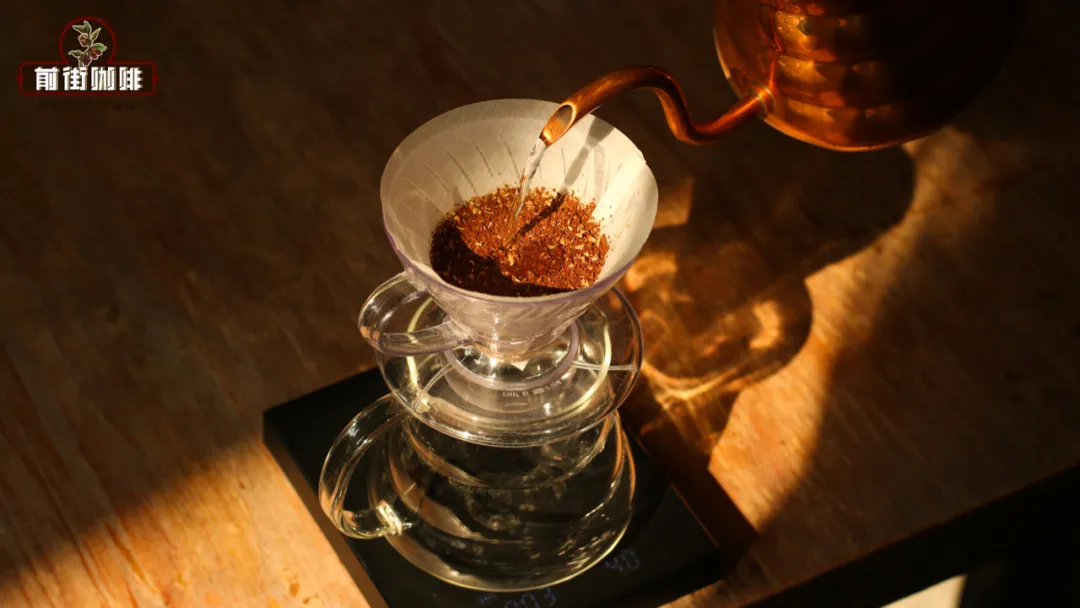
Objectively speaking, the coffee-to-water ratio is indeed one of the key variables determining coffee strength. Assuming the extraction yield remains stable, the less total water used during brewing, the higher the concentration of the coffee liquid, and the fuller it tastes; the more water used, the weaker it becomes. Therefore, adjusting the coffee-to-water ratio to control flavor intensity is indeed the most intuitive and effective approach. However—
There is a premise here that cannot be ignored: the extraction yield must remain constant. If the extraction efficiency during brewing is already less than ideal, then simply reducing the amount of water will not only fail to significantly increase concentration, but may actually further degrade the coffee's flavor.

Therefore, besides an improperly set coffee-to-water ratio, the cause of coffee not being strong enough may also be low extraction efficiency, which prevents flavor compounds in the coffee grounds from fully dissolving out—insufficient concentration naturally affects the overall taste. At this point, Front Street would love to just share the brewing parameters directly, but there is another situation that can also lead to bland coffee—too much bypass water.
So-called "bypass water" refers to water that does not participate in the extraction process. For example, when making an Americano, the water added to the espresso serves only to dilute the coffee liquid and does not participate in the extraction of the espresso—this portion of water is bypass water. However, the bypass water in an Americano is something we add intentionally. Beyond that, bypass water can also be produced passively. This is especially common in pour-over brewing. For instance, when using a dripper with diversion ribs, if water is poured onto the wall area not covered by coffee grounds, or if the water level rises above the coffee bed, bypass water easily occurs.
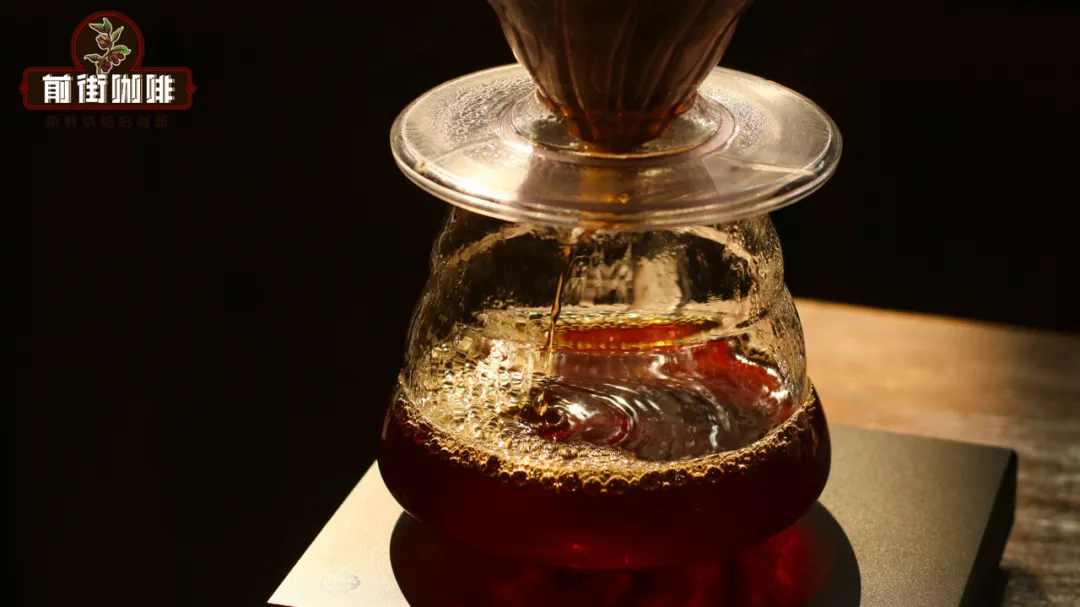
As Front Street has mentioned many times before, passively produced bypass water not only lowers coffee concentration but also interferes with the extraction process, reducing extraction efficiency. Therefore, in addition to the various brewing parameters, the pouring path and flow rate also deserve attention. So next, Front Street will share how to avoid brewing a bland cup of pour-over coffee.
Brewing Sharing
Light-roasted coffee beans are the hardest-hit area for this type of problem, so this time Front Street will again use light-roasted beans for the demonstration. We are using Front Street Yirgacheffe Gudingding from the Front Street bean list. This medium-light roasted bean has an excellent floral and fruity aroma, and the price is very affordable, making it ideal as an everyday staple bean. Because the roast level is relatively light and it is washed processed, Front Street has set the parameters with a slightly higher extraction efficiency, as follows: 15g dose, 1:15 coffee-to-water ratio, grind size of 75%–80% passing a No. 20 sieve (roughly the particle size of fine granulated sugar), brewing water temperature of 92°C, V60 dripper, and extraction time controlled between 2 minutes and 2 minutes 30 seconds.
Light-roasted coffee beans are denser, and the coffee grounds do not easily float up as the water level rises. Therefore, when brewing this type of bean, you can appropriately increase the number of pouring stages and reduce the water volume per stage—this prevents the water level from submerging the coffee grounds, thereby reducing the production of bypass water. At the same time, be careful not to pour water onto the edge area. Ensuring reasonable parameters will effectively prevent a bland taste. The pouring steps are not complicated: first, bloom with water at twice the dose; then divide the remaining water into 3–4 stages. Use a small stream and a spiral (mosquito-coil) motion for each stage. For the last two stages, you can focus the hot water in the center with a single-point pour or a small circle, appropriately reducing agitation to prevent over-extraction. The timing for each stage is to wait until the previous stage's hot water has completely drained before proceeding, repeating this until the target total water volume has been poured.
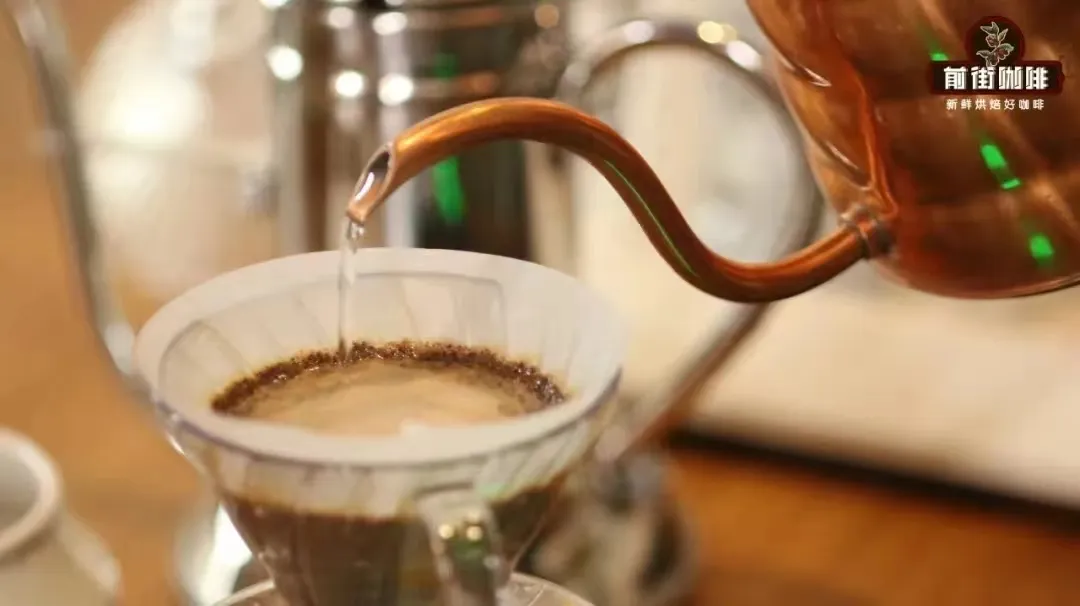
Brewed this way, Front Street Yirgacheffe Gudingding achieves a relatively full extraction, with moderate strength—neither too strong nor too weak—and just the right extraction yield. When drinking, you can perceive intense white floral, lemon, berry, and green tea flavors, with balanced acidity and sweetness, a light and smooth mouthfeel, and a long finish—a truly impressive performance. That wraps up everything Front Street is sharing this time. In summary, besides the coffee-to-water ratio, the causes of bland coffee may also be insufficient extraction efficiency or excessive bypass water. You can compare this against the parameters and pouring methods you are using, and make timely adjustments once you identify the problem—this way you can brew a cup of rich, satisfying coffee.
- END -
The above content is compiled by CoffeeHunters, a coffee news website.


