






How Does Diluted Espresso Change an Iced Drink Without Ice?
Order an iced Americano, latte or cappuccino without ice and the cup volume varies by shop: some fill it, some leave it seven-tenths full, some hand over half a cup. The difference comes from each shop's business philosophy and recipe ratios, not simply cost. The ratio of coffee to water or milk is set during preparation, so once ice is removed, the drink is no longer the recipe the shop intended.
Front Street, for example, builds an Americano at a 1:4 ratio, 40ml of espresso to 160ml of water, using its Classic Blend for crema and caramel notes or its Dark Cocoa Base Blend for nutty and chocolate aromas. Moving to 1:5 with 200ml of water thins the body. The coffee milk ratio latte follows the same logic, which is why topping up after removing ice changes concentration, taste and mouthfeel.
When ordering an iced espresso drink without ice at a coffee shop, some people receive a full cup, some get only a seven-tenths-full cup, or even a half cup. This difference in volume is not accidental, but is closely related to the shop's business philosophy, recipe ratios, ice quality, and the concentration of coffee beans and milk. Starting from Front Street Coffee's production practices, this article analyzes why iced coffee drinks such as Americanos, lattes, and cappuccinos end up with different volumes after the ice is removed, and how adding water or milk after removing ice affects the coffee's concentration, taste, and mouthfeel, helping coffee enthusiasts understand the logic of trade-offs behind a cup of coffee without ice.
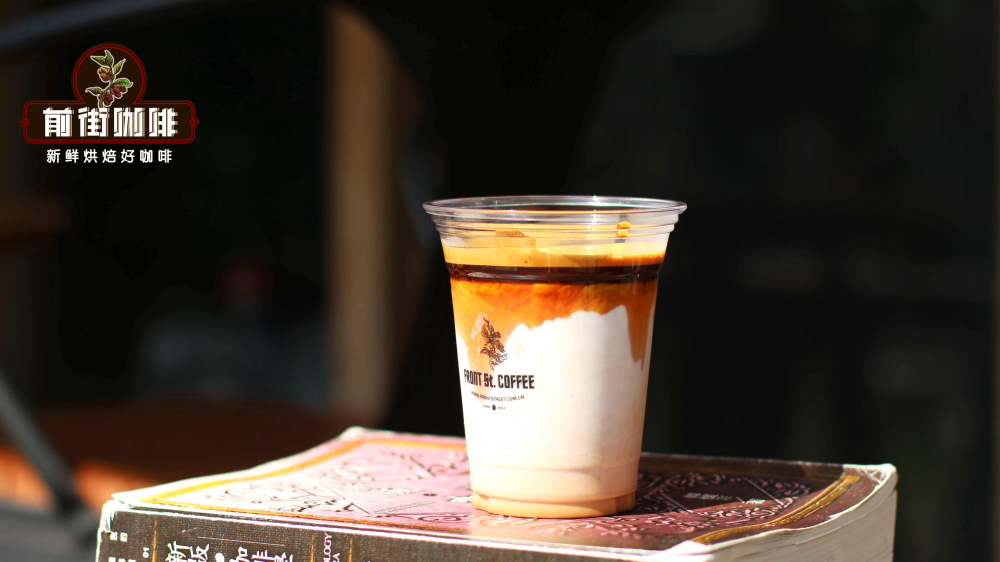
I believe many coffee enthusiasts have encountered this topic. Yesterday, a friend who was selecting coffee beans at the shop mentioned something to Front Street: he had ordered espresso drinks without ice at different coffee shops and found that the volumes he received varied greatly.
At some shops, the cup was still full after removing the ice; at others, it was only seven-tenths full; and at some, it was even just half a cup. He was very puzzled—how could there be such an obvious difference between coffee shops?
In the end, this difference mainly stems from each coffee shop's business philosophy—what kind of coffee they want to present to customers. Many shops do not fill the cup after removing ice, not simply to save costs, but because they want the coffee the customer drinks to reach an ideal state in taste and mouthfeel.
Whether it is an Americano or a latte, the ratio of coffee to milk or water during preparation is crucial. Once the ratio changes, the flavor and mouthfeel of the final product will change accordingly.
Take Americano as an example. Front Street often uses Front Street Classic Blend and Front Street Dark Cocoa Base Blend for production. Front Street Classic Blend provides rich crema and caramel notes, while Front Street Dark Cocoa Base Blend emphasizes nutty and chocolate aromas.

When making an Americano, Front Street uses a 1:4 ratio, that is, 40ml of espresso paired with 160ml of water. The coffee produced this way has a more solid mouthfeel and a stronger coffee flavor.
If the ratio is adjusted to 1:5, using 40ml of espresso with 200ml of water, by comparison, the body of this Americano will decrease, and the coffee flavor will no longer be as concentrated.
As you can see, just adding 40ml more water causes an obvious change in the coffee's taste and mouthfeel. The reason is that after the amount of water increases, coffee's proportion in the entire drink is lowered, the concentration is diluted, and the flavor is naturally affected. This rule applies to the vast majority of coffees, such as lattes and cappuccinos.
Iced coffee, on the other hand, is mostly adjusted from hot coffee. Taking espresso drinks as an example, iced drinks such as Americanos and lattes are made by adding ice to hot coffee and using the ice to cool it down, resulting in a cold cup of coffee.
Still taking Front Street's Americano as an example, the iced Americano made by Front Street still follows the original ratio, that is, coffee to water at 1:4, with 40ml of espresso paired with 160ml of room-temperature water, and then 100g of ice added.
Why 100g of ice? Because this amount can quickly bring down the coffee's temperature, and with more ice it can also slow the rate at which the coffee warms back up, preventing the ice from melting into water in large quantities within a short time and thereby over-diluting the coffee's concentration, taste, and mouthfeel.

After adding ice, the coffee's volume increases from the original 200ml to 300ml, which naturally requires a larger cup to hold it. This is also why iced coffee cups are usually larger than hot coffee cups.
When a customer asks for no ice, the amount of coffee liquid falls back to 200ml. If a 300ml cup is still used at this point, then after removing the ice it will only be seven-tenths full. Of course, the shop can also choose to continue adding water or milk to fill the cup, but as Front Street said earlier, any liquid added will dilute the coffee's flavor—after all, they will not add coffee to it. So Front Street believes that the final choice depends on the shop's business philosophy.
Reading this, many friends may ask: then why do some coffee shops' iced coffees end up only half a cup after the ice is removed?

This is related to the materials used by the shop, such as ice quality, coffee bean roast level, and milk richness. In the article "The Difference Between Ice and Ice," Front Street shared that the melting speed of ice is affected by temperature, size, and shape. If the ice a shop uses melts quickly, more ice is needed to cool the coffee and maintain a low temperature.
As a result, when a customer chooses no ice and the cup is not topped up, the coffee may occupy only half the cup because the cup is relatively large. The same principle applies to coffee bean roast level and milk concentration: when coffee beans are roasted lighter and the flavor is not rich enough, the amount of milk should be reduced accordingly; or when the milk is richer, the ratio can be increased and less milk used, in order to balance the taste...
These factors can all cause iced coffee to become half a cup after the ice is removed. So everyone can understand why some coffee shops give a full cup after removing ice, some seven-tenths full, and some only half a cup. This is closely tied to the coffee shop's business philosophy—what kind of coffee they actually want to give their customers.
The above content is compiled by CoffeeHunters, a coffee news website.


