







How Does Coffee Grind Level Differ in Cake and V60 Drippers?
Flat-bottom drippers such as cake and Origami models hold a thinner, more even coffee bed than a V60 cone, so water passes through each part of the grounds at a similar rate. That uniformity makes extraction more consistent and easier to manage, which is why the coffee grind level and pouring parameters still need adjusting to suit each dripper's flow rate.
A slower flow rate is typical of most flat-bottom drippers, so grind size, dose, water temperature and staged pouring all need tuning to the beans. In a tested recipe for an Ethiopian Hamasho on an Origami dripper, those settings are adjusted deliberately, and the resulting cup tends toward balance and a fuller, more full bodied coffee profile rather than the pronounced layering a V60 often shows.
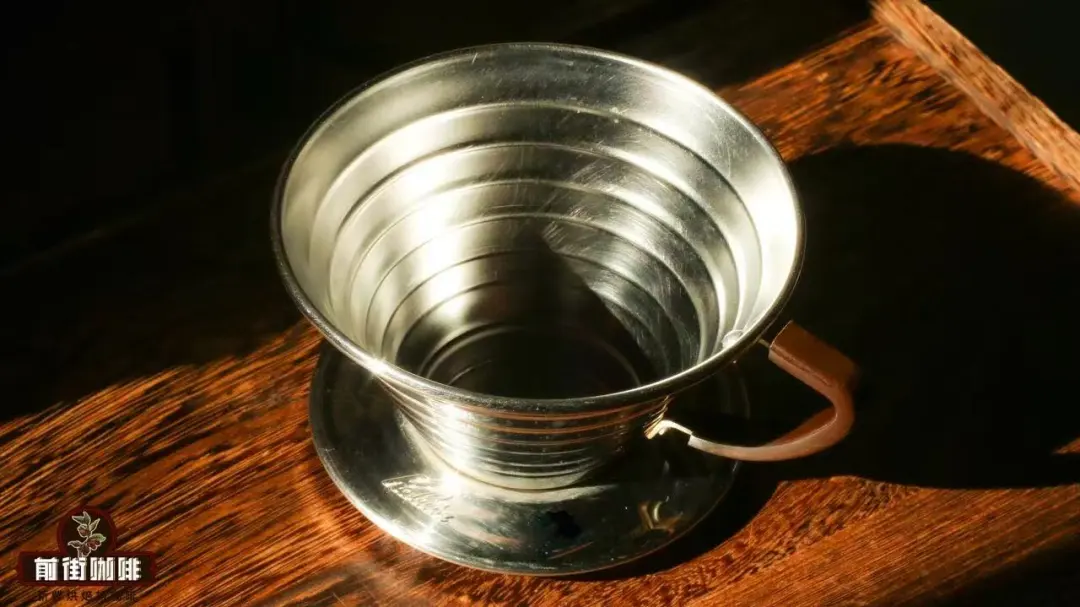
Among pour-over coffee equipment, conical drippers and flat-bottom drippers are two distinctly different choices. The cake dripper gets its name because its filter paper resembles baking paper, and its flat bottom brings extraction characteristics opposite to those of the V60: the coffee bed is thinner and more uniform in depth, so you don't need to deliberately control the pouring area, and even beginners can easily brew a balanced, full-bodied cup. Of course, the slower flow rate also requires us to make targeted adjustments to our parameters. In this article, Front Street will analyze the structural principles and flavor tendencies of the cake dripper, and share a specific brewing recipe using the Origami dripper for Ethiopian Hamasho, including coffee dose, water temperature, grind size, and staged pouring technique, to give you a comprehensive understanding of the pros and cons of flat-bottom drippers.
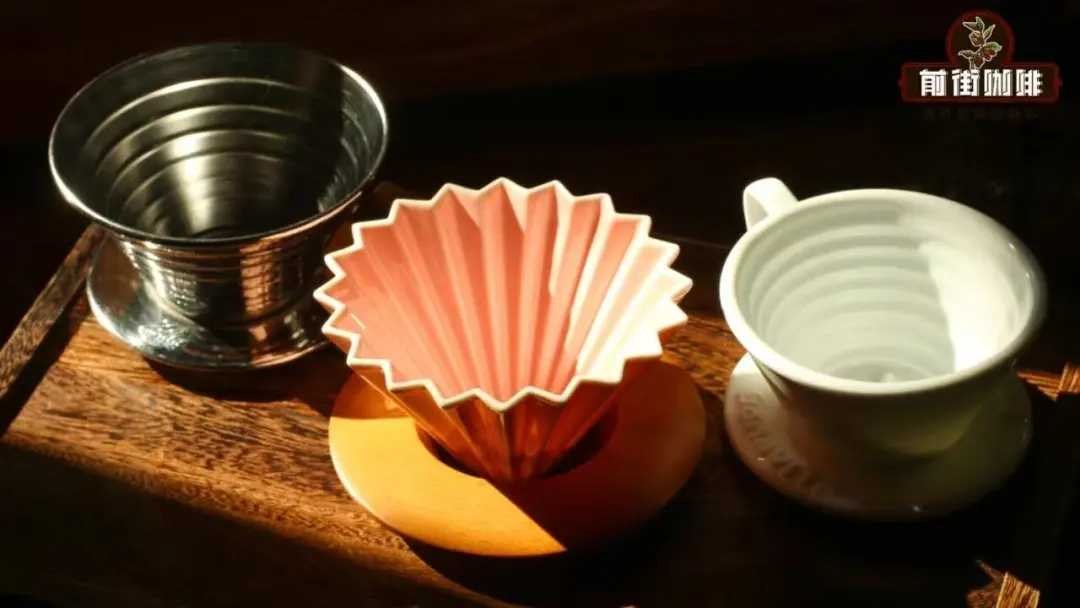
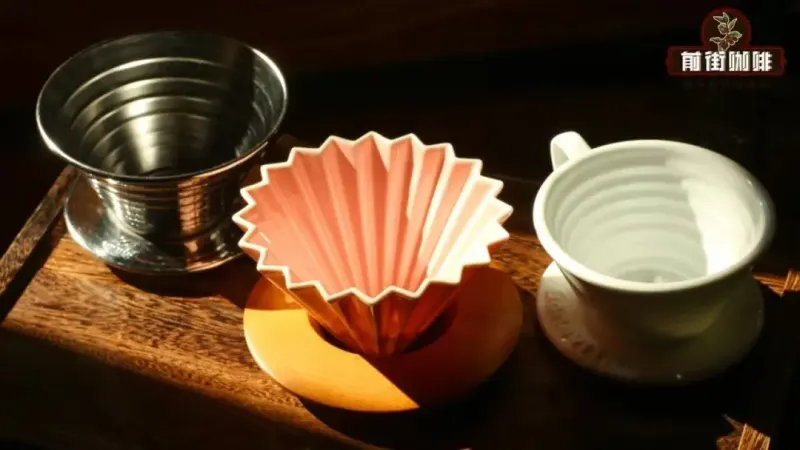
Where does the name "cake dripper" come from? It actually refers to a flat-bottom dripper with a level base; it's called a cake dripper because the matching filter paper is shaped much like the paper molds used when baking cakes.
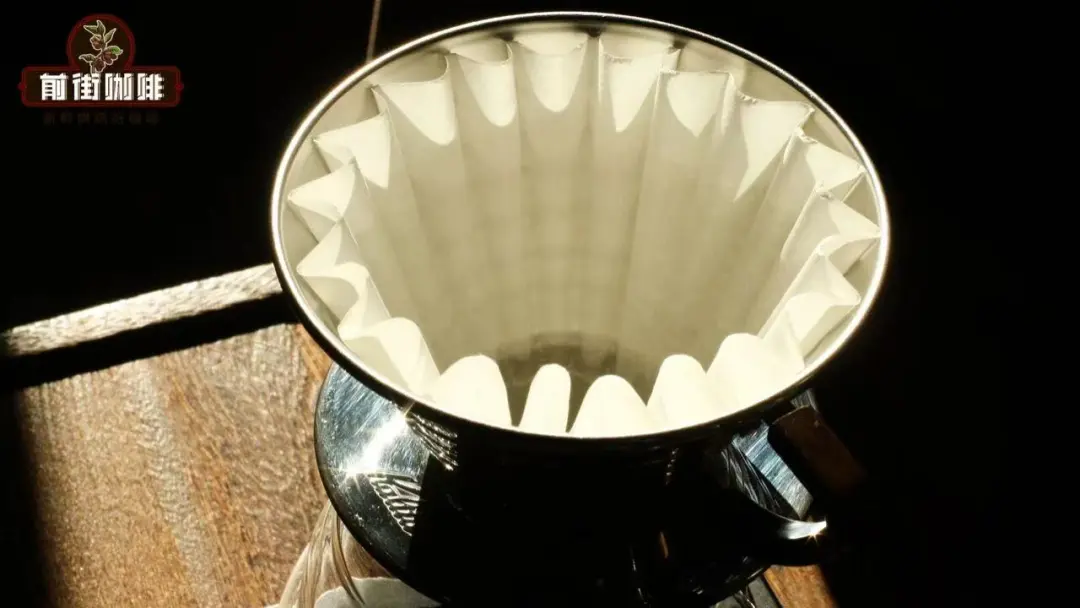
Because the bottom is flat, the coffee bed structure inside a cake dripper differs from that of conical and trapezoidal drippers. With the same dose, the coffee layer in a flat-bottom dripper is thinner, and the bed depth at the center and edges is essentially the same, so the water path through every part of the coffee grounds tends to be identical, which naturally improves extraction uniformity.
Also, since the bed depth is fairly even throughout, you don't need to constantly adjust the pouring point to ensure even extraction the way you do with a V60. This greatly lowers the difficulty of operation—even beginners who aren't yet skilled at controlling the pour can quite easily make a delicious cup of coffee.
So if you want to try a dripper with a style very different from the V60, the cake dripper category is worth considering. Besides being easy to use, the coffee it produces tends toward a more balanced flavor. Unlike conical drippers, cake drippers offer higher extraction uniformity, so the coffee may be less layered, but its balance and body will be more pronounced.
There is one thing to watch out for, though: most cake drippers on the market have a relatively slow flow rate, so when setting parameters, it's best to adjust accordingly based on the characteristics of the beans. Next, Front Street will explain the specific parameters and brewing technique Front Street habitually uses when brewing with a cake dripper.
Brewing Sharing There are many cake drippers to choose from, such as the Kalita Wave and the Origami dripper, both of which are quite good. This time Front Street will again use the Origami dripper for the demonstration—after all, its looks are really appealing. As for the beans, Front Street chose the newly added Front Street Ethiopian Hamasho from the latest bean list. The extraction parameters are as follows:
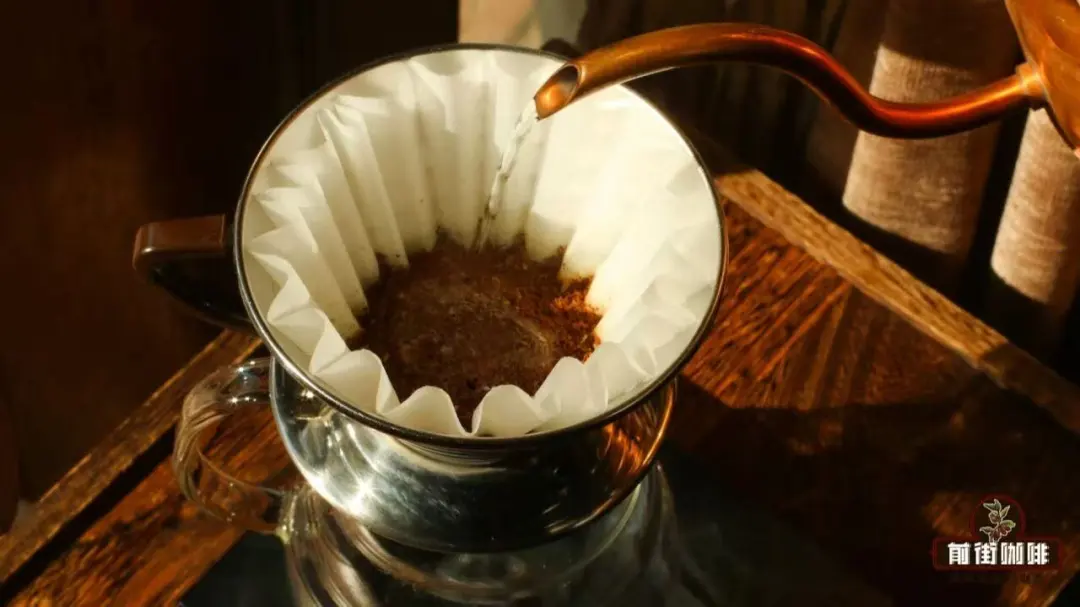
Dose: 15g Coffee-to-water ratio: 1:15 Grind size: Ek43 setting 10.5, 70%–75% passing a No. 20 sieve (slightly coarser than daily grinding) Water temperature: 92°C The blooming stage is the same as usual: use twice the coffee dose in water (30ml) and bloom for 30 seconds. After blooming is complete, pour the second and third stages with a medium flow along a "mosquito coil" path. The so-called "mosquito coil" means the pouring trajectory is like the spiral of a mosquito coil, going from the inside outward and then back inward, repeating until the target water amount is poured. The second stage pours 120ml, and the third stage pours 75ml.
Wait until the hot water you've poured has fully drained through before starting the third pour. After that, simply wait for the dripping to finish, then remove the dripper. Total extraction time is about 2 minutes 15 seconds.
It's easy to see that this brewing recipe is really very simple—you don't need to strictly control the pouring area, just go back and forth in circles. As Front Street said, a cake dripper combined with this pouring method lets you easily make a good cup of coffee. This cup of Hamasho drinks with balanced acidity and sweetness, a full mouthfeel, and rich layers of flavor, showing notes of berries, guava, florals, and peach—quite excellent~
That's all for this sharing from Front Street. If you'd also like to try a dripper other than the V60, a cake dripper might be a very good choice~
- END -
The above content is compiled by CoffeeHunters, a coffee news website.


