







How Does the Delivery Subsidy War Affect the Coffee Industry?
The delivery subsidy war between JD.com and Meituan has reached Starbucks. After stacking platform coupons, a breakfast combo that normally costs dozens of yuan dropped to just over ten yuan, and a single cup fell to as little as three-plus yuan. Consumers cleared pastry cases before closing time at multiple stores, while staff faced doubled order volumes and reported exhaustion.
The pattern behind the rush is simple: coupons like 25 off 60 or 45 off 60 pushed buyers who would not order several coffees a day toward baked goods priced at seventy or eighty yuan, now available for twenty or thirty. Platform subsidies drew traffic, but the strain landed on store employees, showing how delivery competition reshapes the wider coffee industry.
The delivery subsidy war between JD.com and Meituan unexpectedly spilled over to Starbucks—after stacking coupons, a breakfast combo that originally cost dozens of yuan could be had for just over ten yuan, and a cup of Starbucks for as little as three-plus yuan. Consumers rushed to snap up cakes and bread they normally wouldn't splurge on, causing food cases at multiple stores to be emptied ahead of schedule, with office workers exclaiming "a rare spectacle." Yet store employees were crying foul, as doubled order volumes left them exhausted. In this clash of titans between platforms, who benefits and who suffers? Front Street Coffee takes you through the coffee industry ecosystem behind this delivery melee.
▲
Click to follow | Daily specialty coffee culture magazine CoffeeWorkshop
Recently, the fierce battle between JD.com and Meituan in the food delivery arena has drawn massive attention, with related topics repeatedly hitting the trending charts and becoming an unavoidable hot topic in netizens' casual chats.
While watching this titan struggle, many delivery consumers noticed that to grab users' attention, the two platforms kept rolling out coupons with astonishing discounts. Starbucks, which people remember starting at twenty-plus yuan, was not spared either, as its delivery prices kept sliding.
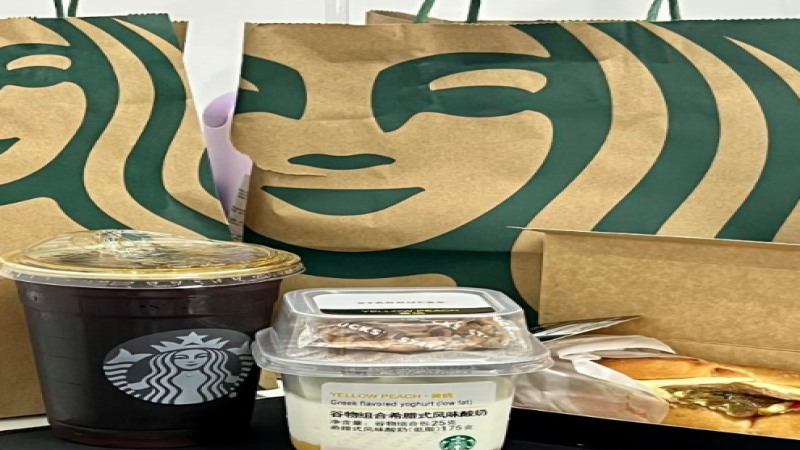
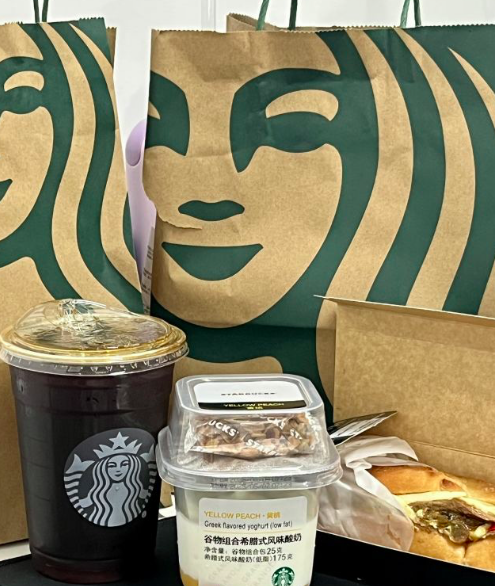
From order screenshots shared by users on social media, the once dozens-of-yuan "bread plus coffee" combo could be had for just over ten yuan after stacking platform-issued coupons. Some consumers even bought a Starbucks breakfast for just over three yuan, prompting sighs of "never in my life have I had Starbucks at this price."
However, not every delivery user can down several cups of coffee a day, so some Starbucks fans who snagged big coupons like "25 off 60" or "45 off 60" turned their attention to cakes and breads they normally found too pricey to buy. For twenty or thirty yuan, they could bring home baked goods originally priced at seventy or eighty yuan, saving them for breakfast or afternoon tea over the next few days.
Because of this, Starbucks bread, pastries, yogurt, and other food items recently became hot targets for delivery users to order, and many stores displayed the rare status of "no food available" before closing time, far exceeding office workers' expectations.
It should be noted that Starbucks' baked products are not cheaply priced compared with similar items on the market, so in the past, at the end of each business day, staff would more or less have to throw away a batch of food expiring that day. So when they saw the store's food case completely swept clean, many Starbucks employees marveled at how rare the sight was—"simply a 'spectacle'" and "haven't seen the pastry case this empty in a long time."
From consumers' standpoint, netizens of course delight in the JD.com and Meituan delivery subsidy war, even hoping the two sides will keep fighting longer—"JD and Meituan, you keep fighting," "JD and Meituan, please keep fighting, I beg you."
They said that driven by platform discounts and subsidy coupons, delivery prices for high-end brands like Starbucks and Peet's were "directly dragged down to Luckin's level," making many consumers willing to order and try drinks or food they normally wouldn't buy. Many felt that brands caught up in the delivery war not only saw sales surge and store revenue rise in the short term, but could also use the opportunity to lock in a large batch of new customers.
Yet for frontline store employees, they don't exactly wish the delivery war to continue. They said bluntly that since JD.com and Meituan started fighting, they've been plunged into deep misery, handling several times the usual number of orders every day.
Some said the surge in workload these days left them too exhausted to cope, joking that when delivery platforms battle like gods, it's they who suffer, desperately rushing out orders behind the bar.
Image source: Xiaohongshu
Disclaimer: Some images in this article are from the internet, and for some content such as images, we will respect the original author's copyright and note the source. However, due to the large volume, some images and texts may not have been credited in time; please forgive us. If the original author has any dispute, please contact the website to handle it, and once verified, we will correct it immediately. Compiled and edited by "CoffeeWorkshop"; please indicate the source when reposting. If there is infringement, please inform us for deletion. Thank you~!
The above content is compiled by CoffeeHunters, a coffee news website.


