







What's an espresso dose change of 0.5g really doing?
A 0.5g change in espresso dose measurably alters extraction. In tests at 19.5g, 20g and 20.5g, extraction time moved from 27s to 29s to 33s, while extraction yield dropped from 22.37% to 21.70% to 21.42%. Flavor and mouthfeel shifted noticeably, which is why many cafés re-weigh the dose instead of trusting the grinder setting.
Grinder dosing drifts because of retention in the discharge chute, static and wear; one machine used by Front Street Coffee fluctuates by roughly 0.3g to 0.5g after years of service. That margin matters little for pour-over, but coffee extracted in small concentrated amounts is sensitive to it, since a 58mm puck under about 9 bar sees the difference amplified across the whole shot.
Many espresso grinders come with a dosing function: set the target weight and it dispenses the grounds automatically, seemingly saving you the trouble of weighing. Yet plenty of cafés, including Front Street Coffee, still double-check the dose on a scale. The reason is that grinder dosing isn't always precise—affected by retention in the chute, static, and other factors, the actual output often deviates from the set value. So how much impact does a difference of a few tenths of a gram have on espresso? Front Street Coffee brewed two shots each at 19.5g, 20g, and 20.5g doses for comparison. The results showed that both extraction time and extraction yield changed with the dose, and the mouthfeel and flavor differed noticeably too. This article uses measured data to explain how fine-tuning the dose affects espresso extraction, and why cafés need to pay attention to these details in their output.
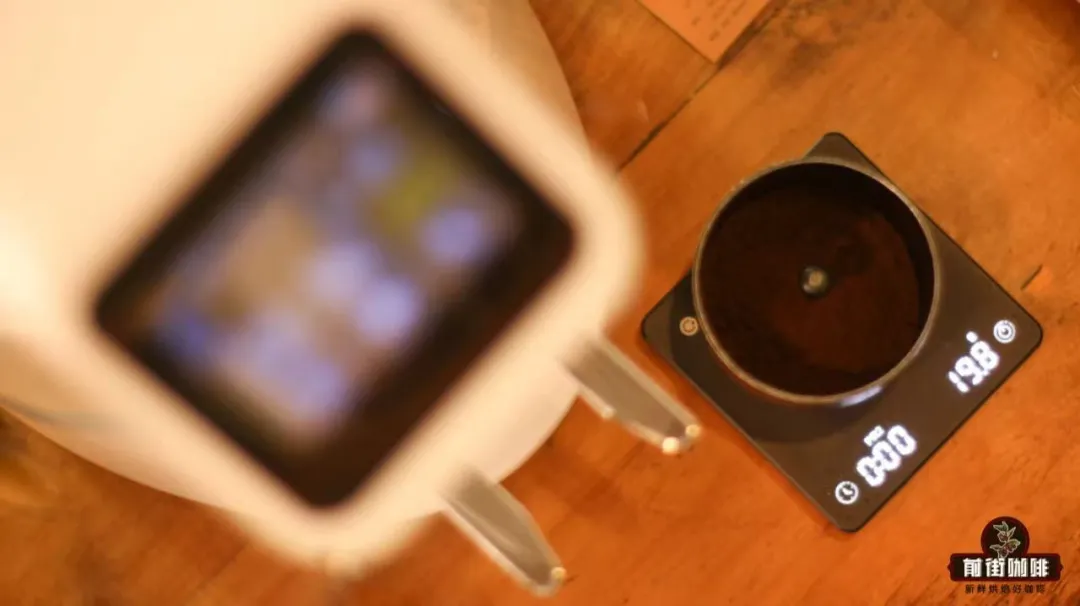
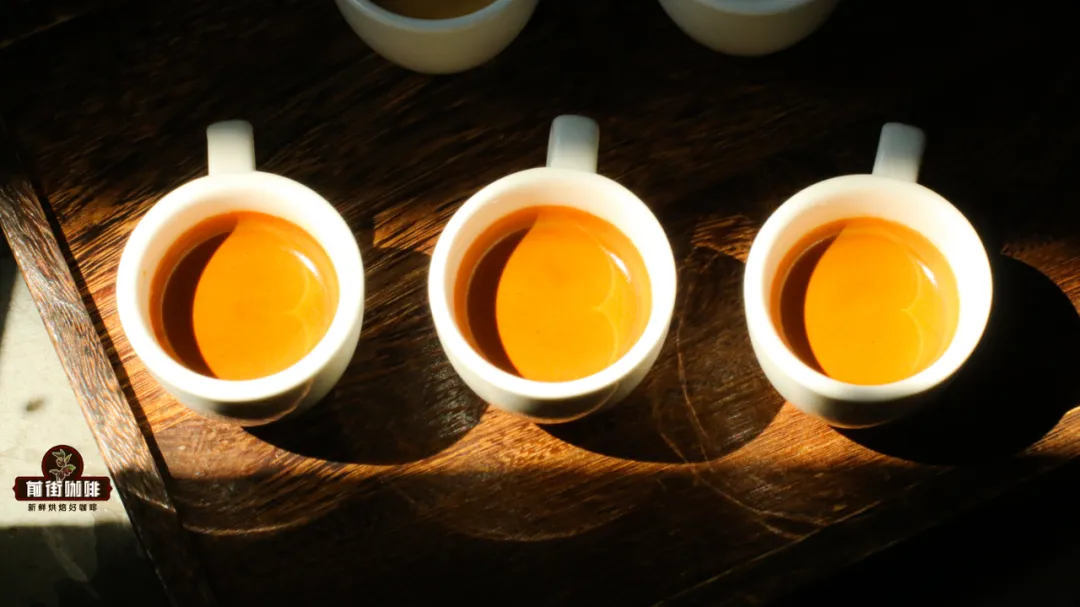
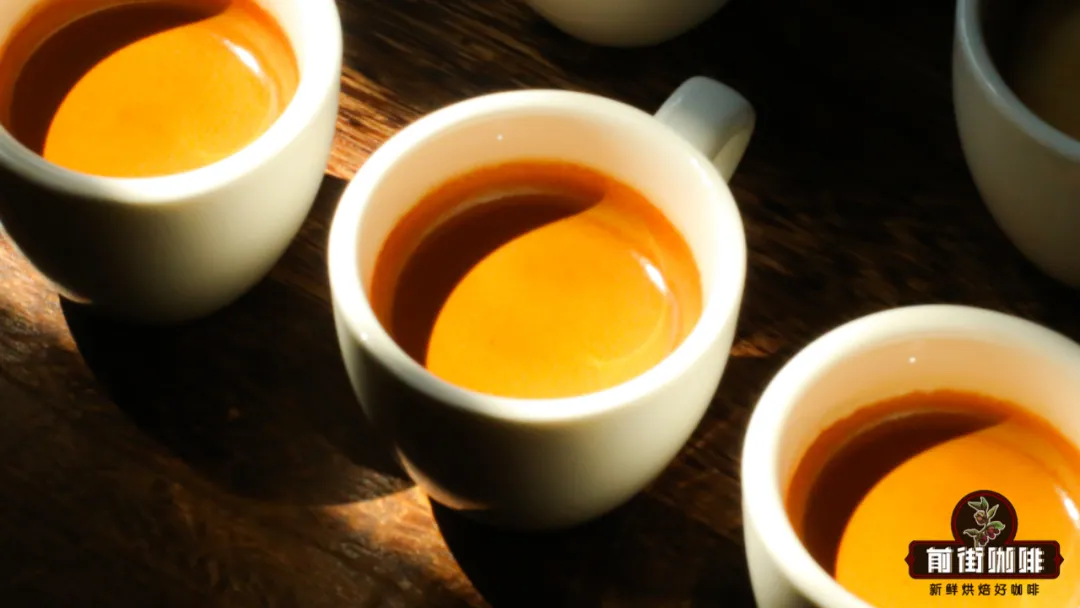

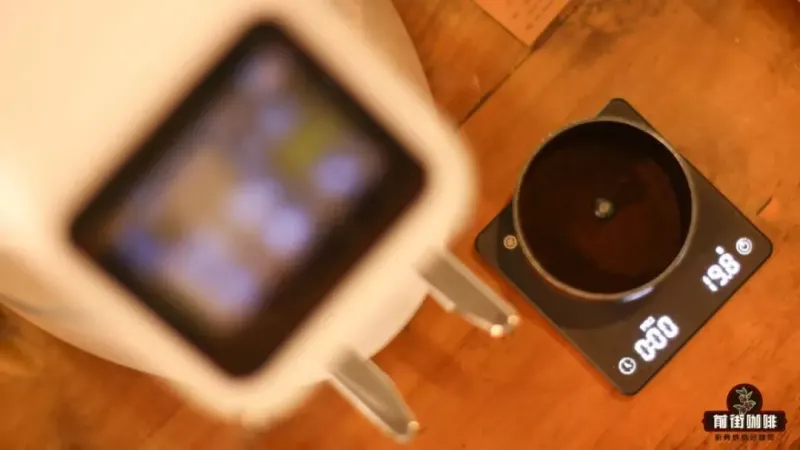
Most espresso grinders today come equipped with a dosing function—that is, you can preset the weight of coffee grounds to be ground. Set it to 20g, for example, and the machine dispenses that amount. It sounds convenient indeed, saving the step and time of weighing grounds each time.
However, many cafés like Front Street Coffee don't rely entirely on the grinder's dosing when serving; they also use a scale to confirm the dose. The logic isn't complicated: most grinders' dosing isn't accurate enough. Affected by the discharge chute, static, and other factors, the final dose often deviates from the set value. This deviation also varies with grinder quality and age—for instance, after years of use, Front Street's espresso grinder fluctuates by roughly 0.3g to 0.5g.
"Just a few tenths of a gram? What difference could that make?" That's the first reaction many friends have after hearing Front Street's explanation. Understandable—after all, for pour-over, siphon, and other brewing methods, that tiny gap really doesn't matter.
But for espresso, a difference of a few tenths of a gram is already quite critical. Even a mere 0.2g difference produces noticeably different coffee. The reason is that the espresso machine uses pressure to assist extraction.
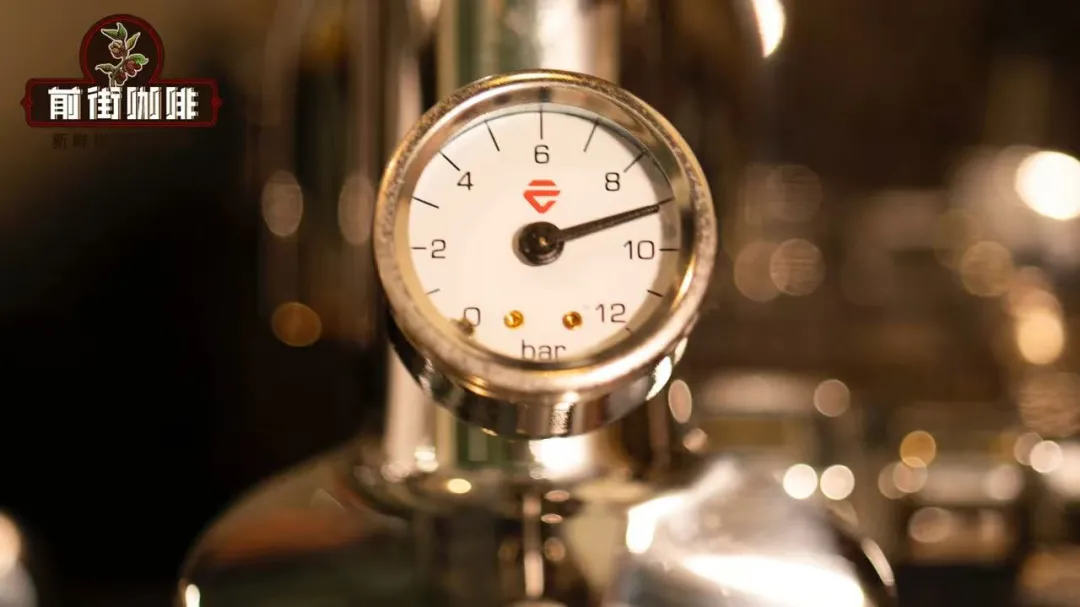
Typically, an espresso machine extracts at around 9 bar. For a puck 58mm in diameter, the force it endures during extraction approaches 240 kg (roughly equivalent to the body weight of three adults) . Under such high pressure, coffee substances dissolve rapidly in a very small amount of water in a short time—this is also why espresso machines can produce such concentrated shots.
But precisely because of this, espresso extraction is more sensitive: subtle changes in dose or grind will cause significant differences in extraction and flavor. Words alone may not be intuitive enough, so take a look at the comparison Front Street did below—with the data, you'll more clearly feel the impact of dose changes.
Front Street Coffee brewed two shots each at 19.5g, 20g, and 20.5g, controlling each shot's liquid weight at 38ml, then recorded the average extraction time and extraction yield for each group. The results are as follows:
Dose Used Extraction Time Extraction Yield 19.5g 27s 22.37% 20.0g 29s 21.70% 20.5g 33s 21.42%
As you can see, extraction time gradually lengthens as the dose increases. This is because the dose determines the thickness of the puck: the more grounds, the longer hot water takes to pass through the puck, and vice versa. Extraction yield, meanwhile, gradually decreases as the dose increases—because the dose changed while the liquid volume stayed fixed, the ratio shifted, and so did the extraction yield.
Through tasting, we can directly perceive the differences among the three. The flavor direction didn't change much, since they all used the Warm Sun blend, all showing whiskey notes, butter cookie, and a hint of berry. The most obvious differences were in mouthfeel and taste. The first shot (extracted with 19.5g dose) tasted thin, but with a distinct bitter finish; the second shot (extracted with 20g dose) had a moderate mouthfeel, balanced taste, and higher sweetness; while the third shot (extracted with 20.5g dose) had the fullest mouthfeel of the three, but fell short in flavor expression, with little finish.
The differences in mouthfeel and taste arise because the different doses changed the concentration and extraction yield. The middle shot tasted best because it was exactly the optimal parameter Front Street obtained this morning after dialing in the grinder. So you can see that even a few tenths of a gram of grounds can have a very noticeable impact on espresso extraction. The larger the dose difference, the greater the impact.
If you're making coffee at home for yourself, then of course do whatever makes you happy—no need to be too nitpicky, since it's for your own enjoyment. But if you're serving customers in a café, it's best to pay a bit more attention to details and be rigorous. Though customers won't know whether your parameters are correct, they can still tell whether it tastes good~
- END -
The above content is compiled by CoffeeHunters, a coffee news website.


