







Why does huila coffee stand out in specialty markets?
Huila has become a leading source of Colombian specialty coffee because of its geography. The region sits in a valley between the Eastern and Central Cordilleras, where volcanic soil, a mild climate and abundant water support coffee grown above 1,500 meters. That combination yields consistent quality, and the region has repeatedly won COE awards, drawing buyers looking for dependable lots.
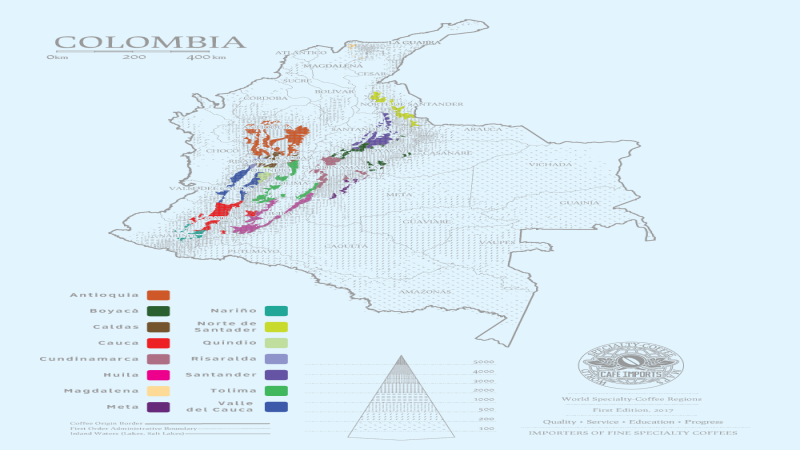
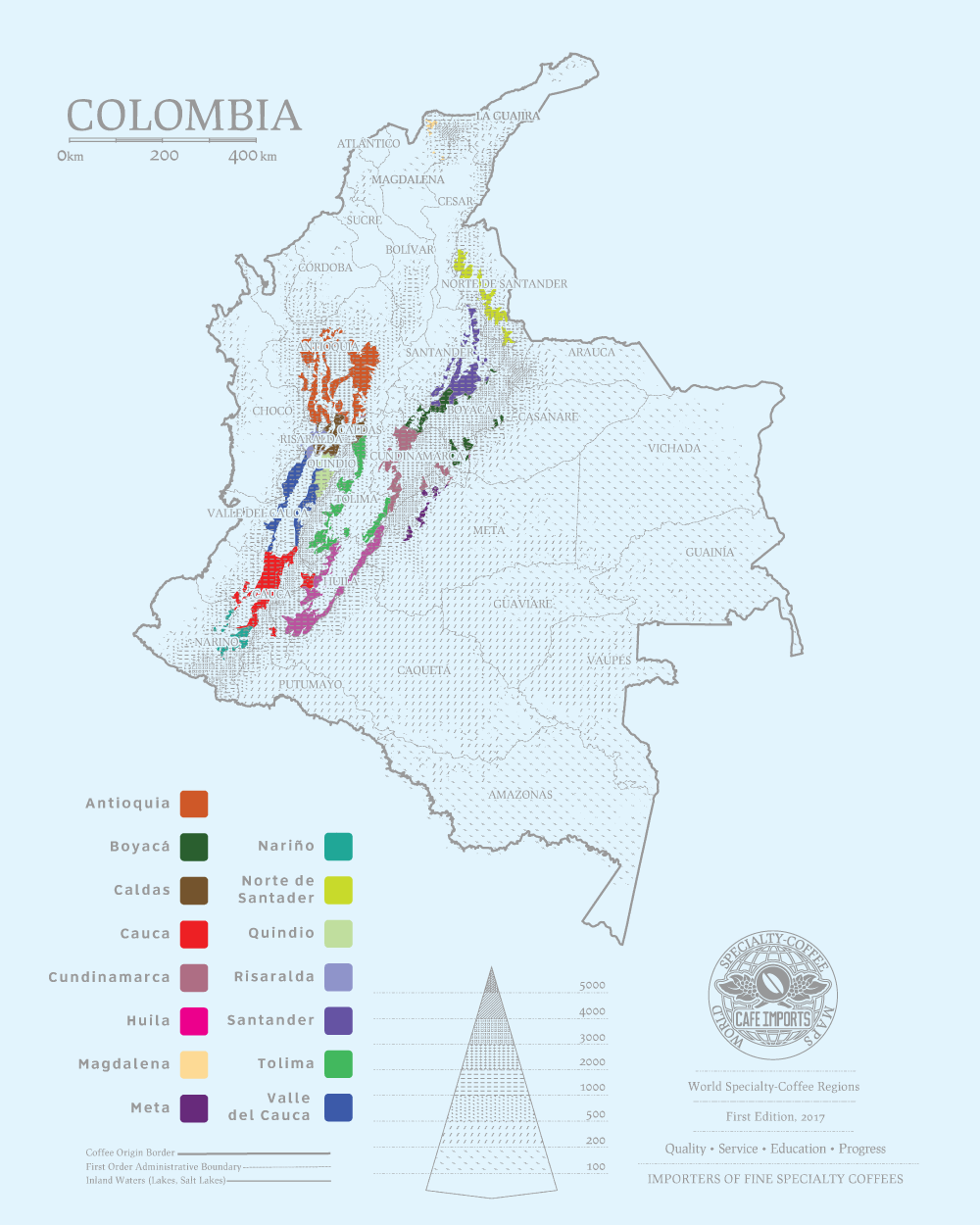
The cup profile behind huila coffee is nutty and chocolatey with caramel sweetness and pleasant fruit acidity, which is the colombian coffee taste many roasters look for. Colombia is the world's third-largest producer and splits its growing belt into 15 regions; the southwest core of Huila, Cauca and Narino now anchors the new coffee triangle. A washed Caturra from the region shows black chocolate and caramel notes.
Colombia, as the world's third-largest coffee-producing country, is home to 15 coffee regions, among which Huila has attracted considerable attention in the specialty coffee market in recent years. Huila is situated in a valley between the Eastern and Central Cordilleras, with volcanic soil, a mild climate, and abundant water resources. Coffee is grown at altitudes above 1,500 meters, yielding beans of consistent quality and full flavor. From an obscure agricultural region to the axis of the new coffee triangle, Huila has repeatedly won COE awards thanks to its high yields and outstanding quality, winning consumers over with nutty, chocolate, and caramel flavors and pleasant fruit acidity. Front Street Coffee's everyday beans series also includes a washed Caturra from this region, showcasing black chocolate and caramel notes.
Thanks to its complex terrain and diverse climate conditions, Colombia firmly holds the position of the world's third-largest coffee producer. The country's coffee-growing belt is mainly distributed along the western Andes, divided into 15 regions, each expressing a different character due to differences in terroir and processing methods.
Among these regions, the core zone for specialty coffee lies in the southwest, including Huila, Cauca, and Narino. In recent years, coffee beans from Huila have frequently appeared on the market. What exactly are the characteristics of this region? And why has it garnered such high attention?
Colombia straddles the equator, and its climate varies with elevation. Combined with its crisscrossing mountain ranges, the microclimates among the mountains provide diverse growing environments for coffee. As a result, coffee is harvested year-round in the country, with different regions ripening at different times.
Of course, this situation varies by region. The northern and southern regions experience only one rainy season and one dry season per year, corresponding to a single harvest season; while the central regions have two dry seasons and two rainy seasons a year, and therefore two harvest seasons, with considerable output. In the era before the concept of specialty coffee became widespread, coffee farmers prioritized yield in pursuit of higher returns. At that time, regions such as Quindio, Cauca Valley, and Cundinamarca in the central area formed the early Colombian coffee triangle.
For a long time, Huila was primarily agricultural, mainly growing crops such as grains, fruits, tobacco, and sugarcane. When coffee cultivation spread to the area, farmers gradually began planting coffee as well, but due to limited output, it remained little known. It was not until the concept of specialty coffee gradually emerged that some international coffee buyers came to Huila and discovered that the coffee here was superior in quality to that of the central and northern regions, and its yield was not low either, so they flocked to purchase it.
From then on, coffee prices in Huila continued to climb, even surpassing those of northern coffee. Farmers' incomes increased accordingly, and more and more locals devoted themselves to coffee cultivation. The government also began to attach importance to the development of the southern regions. Later, Huila, together with Cauca and Narino in the south, formed Colombia's new coffee triangle and frequently appeared on the Cup of Excellence (COE) lists.
Huila, also known as Huila (乌伊拉), is located in a valley between the Eastern Cordillera and the Central Cordillera, and its name comes from the nearby Huila Volcano. This volcano is the highest in Colombia, reaching an altitude of 5,365 meters, and it brings mineral-rich volcanic soil to the surrounding areas.
In addition, the region lies within a canyon surrounded by mountains on all sides. The valley is sheltered from cold winds while enjoying cool mountain breezes, with a mild climate and year-round temperatures maintained between 17-23ºC. This is also the source of Colombia's mother river, the Magdalena River, with abundant water resources. Coffee is mostly planted on hillsides above 1,500 meters. Such superior natural conditions give Huila coffee outstanding and consistent quality.
When speaking of the Huila region, one cannot fail to mention Pitalito in the southwest of the department, the most important coffee production center in the province. Local coffee farms average only 2 hectares in size, yet they have produced many renowned estates, such as El Diviso and El Rorble.
According to data from the National Federation of Coffee Growers of Colombia (FNC), the Huila region obtained official designation of origin certification in 2013 and currently accounts for about 18% of Colombia's total coffee production. Huila coffee is widely popular not only because of its considerable output, but also because of its excellent quality and its many awards in coffee competitions. Its full body, nutty, chocolate, and caramel flavors, along with pleasant fruit acidity, are deeply loved by consumers.
FrontStreet Coffee's everyday beans series also includes this renowned region. This entry-level selection of Huila coffee beans uses the Caturra variety and a washed processing method. When brewed, it presents black chocolate, nutty, and caramel flavors, with soft fruit acidity at lower temperatures, a clear sweet aftertaste, and an overall balanced performance.
To learn more about coffee origin information, please scan the QR code to follow: Coffee Review
Long-press the QR code to follow:
The above content is compiled by CoffeeHunters, a coffee news website.


