






How Does Moka Pot Crema Differ From Espresso Crema?
A moka pot cannot produce crema that matches an espresso machine in fineness or persistence, because the two devices work at fundamentally different pressures. The moka pot, invented in 1933 by Italian engineer Alfonso Bialetti, brews strong coffee through steam pressure but does not generate the fine, stable layer of bubbles an espresso machine extracts.
Coffee crema is a layer of tiny bubbles filled with carbon dioxide and the beans' own lipids, and forming it requires fresh medium-dark roasted beans plus pressure during extraction. The bialetti moka pot remains a convenient way to brew strong coffee, but if the goal is crema for latte art, expectations need adjusting.
Since its invention in 1933 by Italian engineer Alfonso Bialetti, the moka pot has become the入门首选 for many coffee lovers thanks to its compact convenience and ability to brew strong coffee. However, many people mistakenly believe that a moka pot can also extract a rich golden crema like an espresso machine, to use for latte art. In fact, the fundamental difference in pressure between the two determines that the crema produced by a moka pot cannot match that of an espresso machine in fineness or persistence. So, what exactly is coffee crema? Where does the extraction pressure difference lie between a moka pot and an espresso machine? And how can you get a richer crema with a moka pot? This article will answer each of these questions one by one.
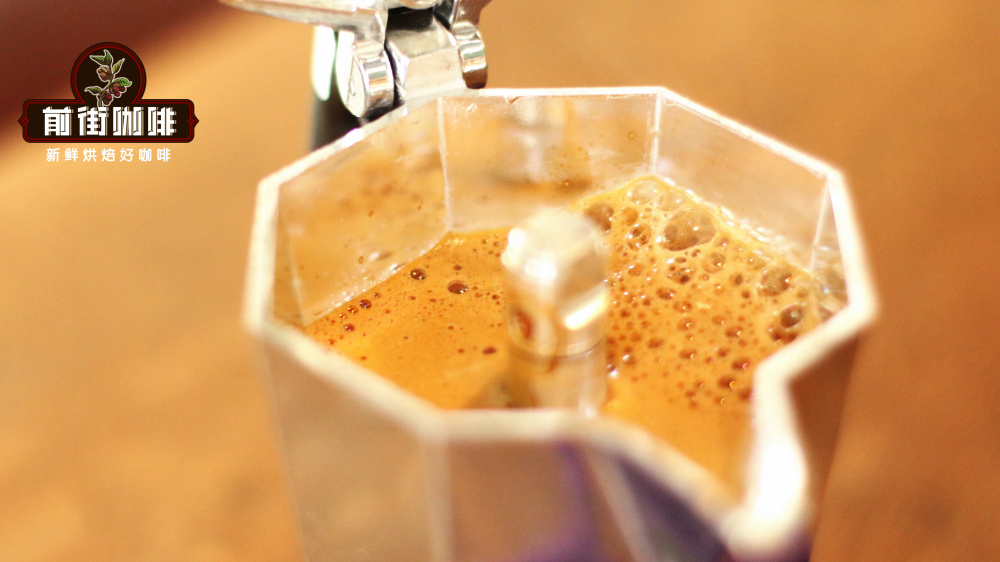
The moka pot was born in 1933, and its inventor was Italian engineer Alfonso Bialetti. Thanks to advantages such as portability, small size, and the ability to brew strong coffee, this pressure-based coffee device has made its way onto many people's shopping lists.
If what appeals to you is the moka pot's convenience and its ability to make strong coffee, then there is no problem at all in buying one. But if your original intention for buying it was to rely on the crema it extracts for latte art, then you need to think it over a bit more.
The reason is that the crema produced by a moka pot is quite different from what we usually call the layer of crema extracted by an espresso machine and floating on the surface of an espresso.
What exactly is coffee crema?
What the coffee world calls "crema" is often misunderstood as the broad category of water-insoluble fatty substances secreted by animals and plants. But in reality, coffee crema is a layer of tiny bubbles filled with carbon dioxide and the coffee beans' own lipids.
This layer of bubbles is fine and rich in texture, with a creamy, dense mouthfeel upon entry, so people borrowed the Spanish word "Crema," meaning "cream," to name it. It is precisely because of it that espresso has such a particularly distinctive recognizability. Later, when it was introduced domestically, due to the language barrier, everyone mistakenly thought it was a creamy fat, so they called it "crema."
To form this layer of crema, two conditions must be met: first, fresh medium-dark roasted coffee beans; second, pressure must be used during extraction. When coffee beans are heated, a large amount of carbon dioxide accumulates inside them, and it is released when they meet water during extraction. Therefore, the darker the roast, the more gas there is. At this point, you should try to avoid light roast beans, because the crema they release is limited. If home beginners are looking for better value, they can give priority to the Front Street Coffee espresso bean series, covering Front Street Black Cocoa Blend, Front Street Classic Blend, Front Street Commercial Blend, and Front Street Specialty Blend, all medium-dark roasts with caramelized aromas, making rich espresso with abundant crema.
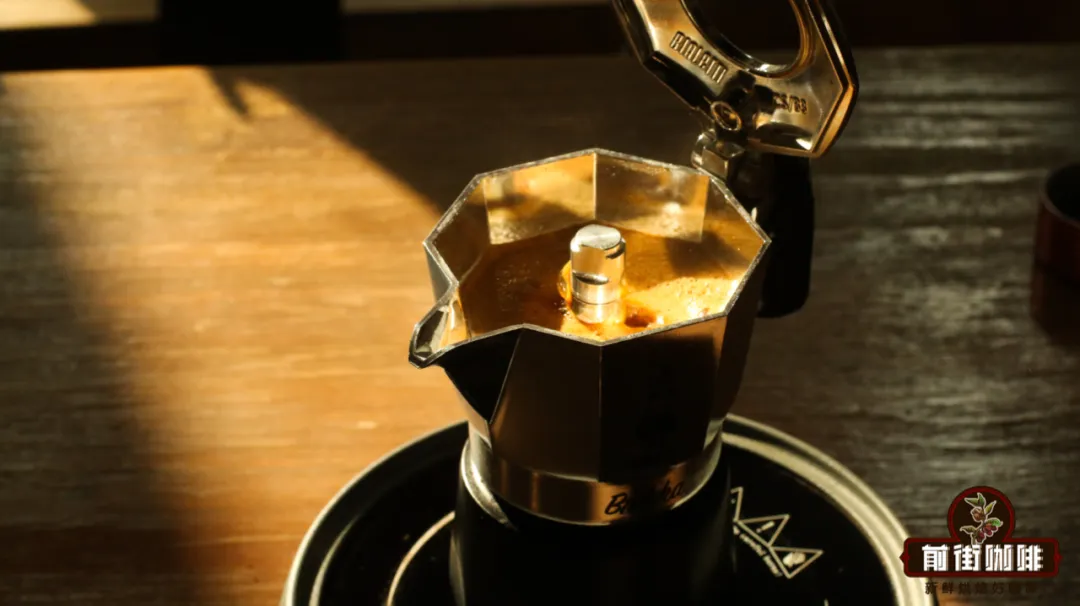
Under the combined action of pressure and high temperature, the lipids in the coffee grounds are broken down into extremely small particles, which then combine with carbon dioxide to form bubbles, ultimately producing the golden crema we see floating on the surface of the coffee.
Like espresso machines, moka pots use pressure-based extraction, so they can also extract similar substances. But it is only "similar"—it cannot achieve the fine, rich, and lasting crema of an espresso machine. Why? Because there is an essential difference between the two!
Where does the crema difference between moka pots and espresso machines lie?
This essential difference lies in the pressure used by the two. The pressure of an espresso machine is usually set at 9 bar, and if the resistance of the coffee puck is sufficient, the pressure may even continue to rise during extraction. It is precisely this high pressure that can stabilize the bubble structure, giving the crema a fuller aroma and longer persistence.
By contrast, a moka pot has only 2–3 bar of pressure, and the same is true for the double-valve version. Such pressure is not enough to extract bubbles with a stable structure, because the lipids in the coffee cannot be fully broken down by pressure and combined with carbon dioxide. Therefore, these "crema" produced by a moka pot are not only rough, but also dissipate rapidly within about two minutes, making them unsuitable for latte art.
For this reason, the crema extracted by a moka pot is considered by most people to be this "crema," not that "crema" (that is, the kind extracted by an espresso machine). But even so, many friends still want to extract rich crema with a moka pot, and this is actually not difficult. We just have to be clear about one thing: more crema is not always better!
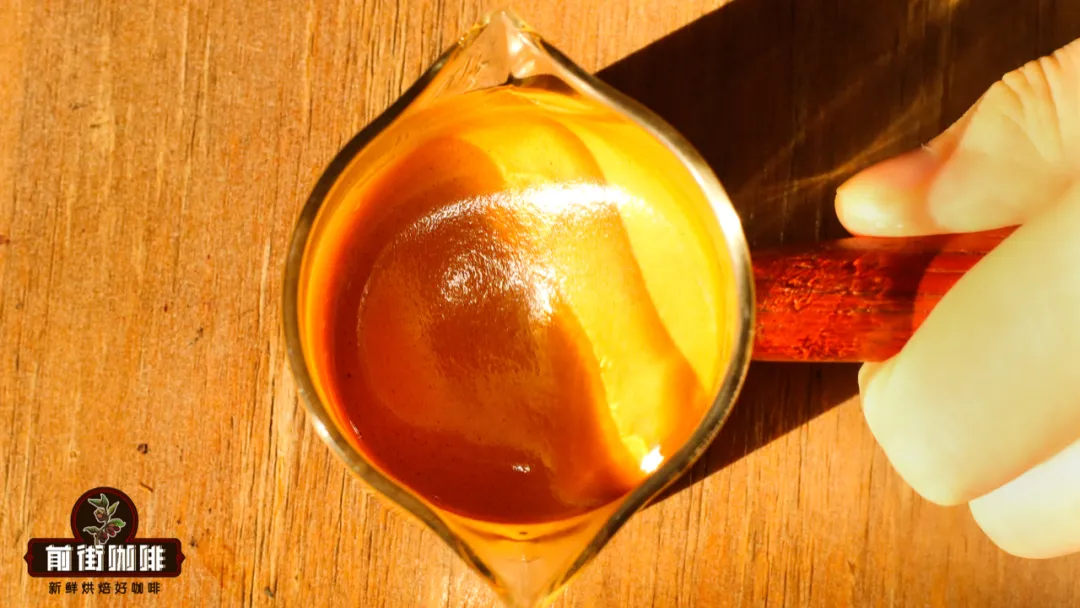
To extract rich crema with a moka pot, you only need to control the pressure during extraction and choose the right coffee beans. As mentioned earlier, the greater the pressure, the more abundant the crema can be; the more carbon dioxide in the coffee grounds, the more it promotes crema formation. For a detailed explanation, you can refer to Front Street Coffee's previous article on crema, so I will not repeat it here~
The above content is compiled by CoffeeHunters, a coffee news website.


