







Is weak cold brew about grind size or steeping method?
Weak cold brew usually traces back to extraction, not equipment. During long static steeping, the finest grounds absorb water first, sink, and clump into dense layers that block water from reaching the rest of the coffee. A higher coffee-to-water ratio alone will not fix that. Holding the grounds in a non-woven tea filter bag keeps them loose and exposed to water.
A comparison using light-roast and dark-roast beans tested whether tea-bag cold brewing actually raises concentration. By contrast, methods like making coffee in a pot rely on heat and shorter contact time, so the same grind logic does not transfer directly. For cold brew, the tea bag approach avoids buying a dedicated bottle and produces a stronger, more even steep.
Many people making cold brew coffee at home find that even when using a relatively high coffee-to-water ratio, the resulting brew still tastes disappointingly weak, leading them to wonder if they lack professional cold brew equipment. In reality, the problem usually lies in the extraction method. In this article, Front Street Coffee will analyze the root causes of weak cold brew and share a practical tip—using non-woven tea filter bags to hold the coffee grounds during steeping—so you can significantly boost cold brew concentration without buying a dedicated cold brew bottle. The article also includes a comparison experiment using light-roast and dark-roast beans to verify the actual effectiveness of tea-bag cold brewing, along with specific operational recommendations.
Recently, Front Street Coffee has received feedback from quite a few friends who say that when making cold brew coffee they've already used a relatively high coffee-to-water ratio, yet no matter how they adjust, the final drink still tastes weak. Some have started to suspect their equipment isn't up to the task and are considering buying a dedicated cold brew bottle. Don't rush to place that order just yet! Today, Front Street Coffee will teach you a simple method that lets you make a cup of cold brew coffee with ideal concentration without spending a lot of money on equipment. But before explaining the method, let Front Street Coffee first analyze why cold brew comes out so weak.
It's still a grind issue, but not entirely
Two months ago, Front Street Coffee mentioned that generally speaking, the finer the coffee grounds are ground, the larger the contact area with water, and the easier it is for water to extract flavor compounds. But cold brew is different—it involves long-term static steeping. While fine grinding can give the coffee strong extraction in the early stages, as time passes, the coffee grounds gradually absorb enough water and sink to the bottom.
The key point is that the finest particles are usually the first to become fully saturated with water; they quickly reach saturation and sink to the bottom. Then these fine particles cluster together, forming dense, water-impermeable clumps. The remaining grounds continue to sink and cover them, and after a while, water can no longer penetrate to the bottommost coffee grounds. Because the gaps are too narrow, water can only contact the surface of the lower layer of grounds, and extraction efficiency drops dramatically.
This situation is especially unfavorable for light-roast beans. Light-roast beans are denser and sink quickly, and fine grinding produces a large amount of fine particles. Even if you coarsen the grind, you may not be able to avoid brewing a pot of coffee with less-than-ideal concentration—unless you increase the amount of coffee and compensate through quantity.
So, if you want to avoid this problem, consider adding a small tool when making cold brew—a "non-woven tea filter bag." Yes, that means putting the coffee grounds into a tea bag and then steeping it.
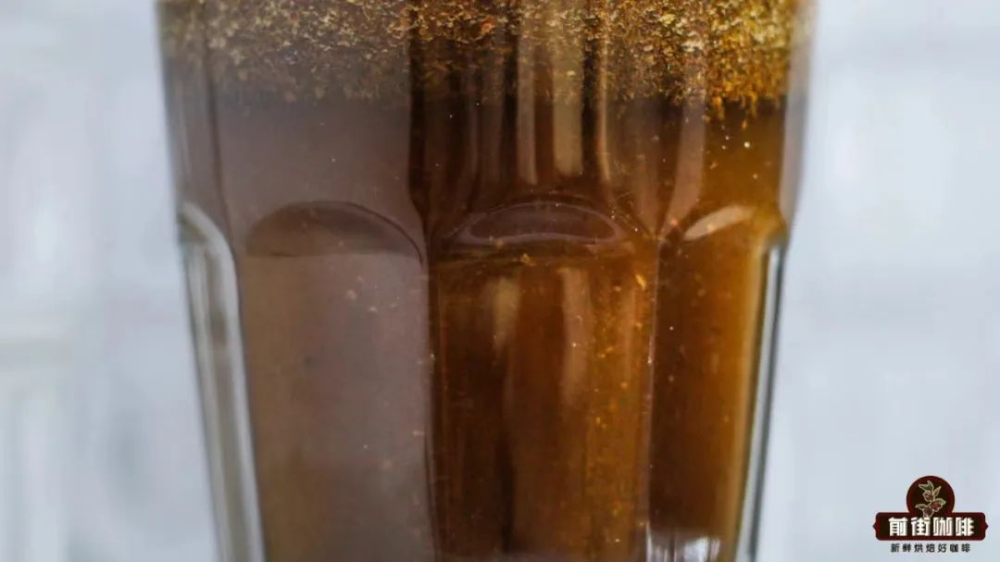
Brewing coffee with a tea bag? Is that really feasible?
Front Street Coffee previously shared that putting coffee grounds into a tea bag to steep can easily lead to under-extraction, but that referred to short steeping times. When the steeping time is extended, the tea bag actually brings quite a few advantages. Take a look at the experiment below from Front Street Coffee.
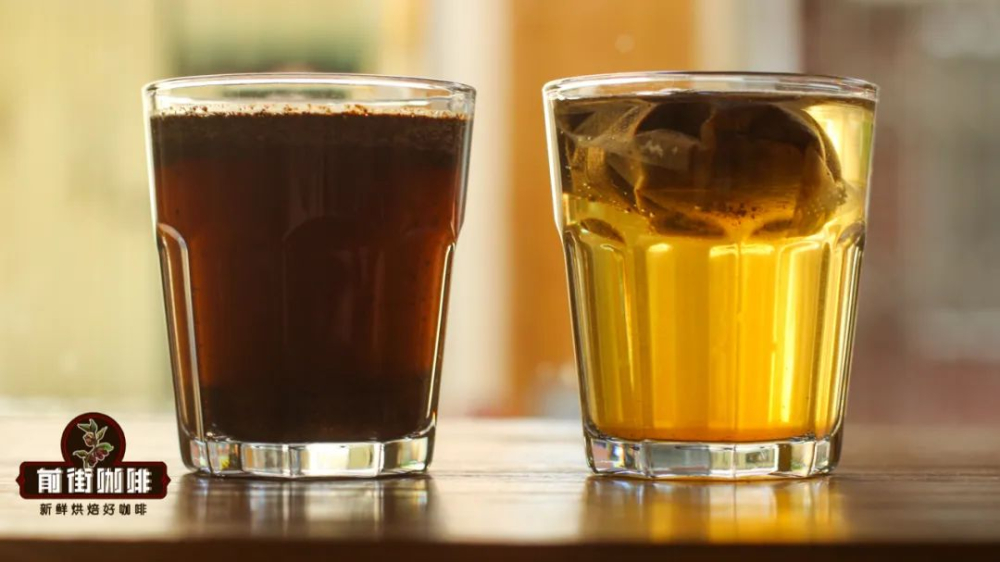
Front Street Coffee prepared two groups of coffee grounds: one light roast (Elida Catuai) and one dark roast (Golden Mandheling). Each group was divided into two cups—one with coffee grounds steeped directly in water, and the other with coffee grounds placed in a tea bag before steeping. The grind was one notch finer than a regular hot pour-over (Ek43 settings of 8.5 and 10.5 respectively), with an extraction time of 8 hours.
(Elida Catuai group)
(Dark-roast Golden Mandheling group)
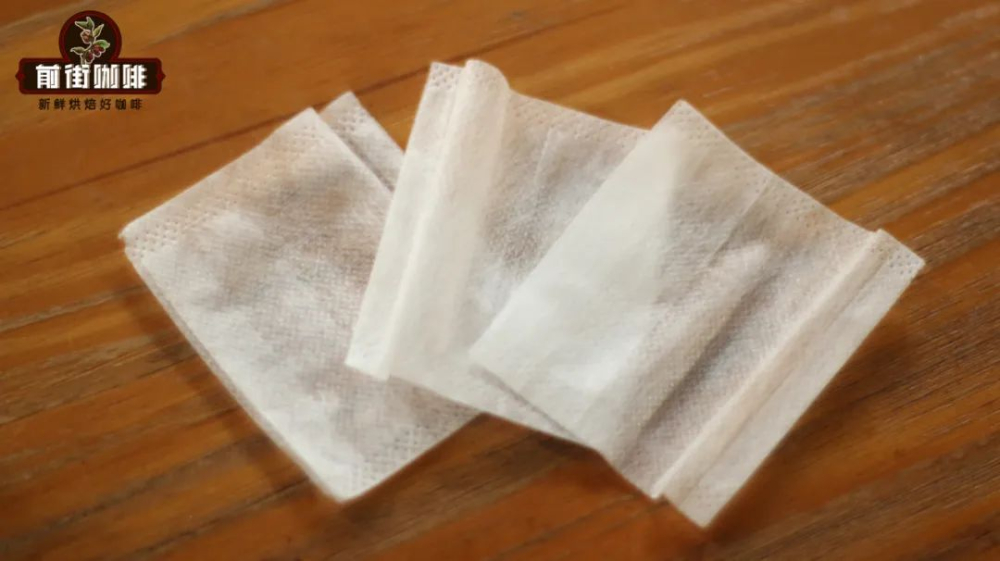
As you can see, regardless of the group, the cold brew made by steeping grounds directly in water has a darker color, while the tea-bag cold brew looks quite "pale."
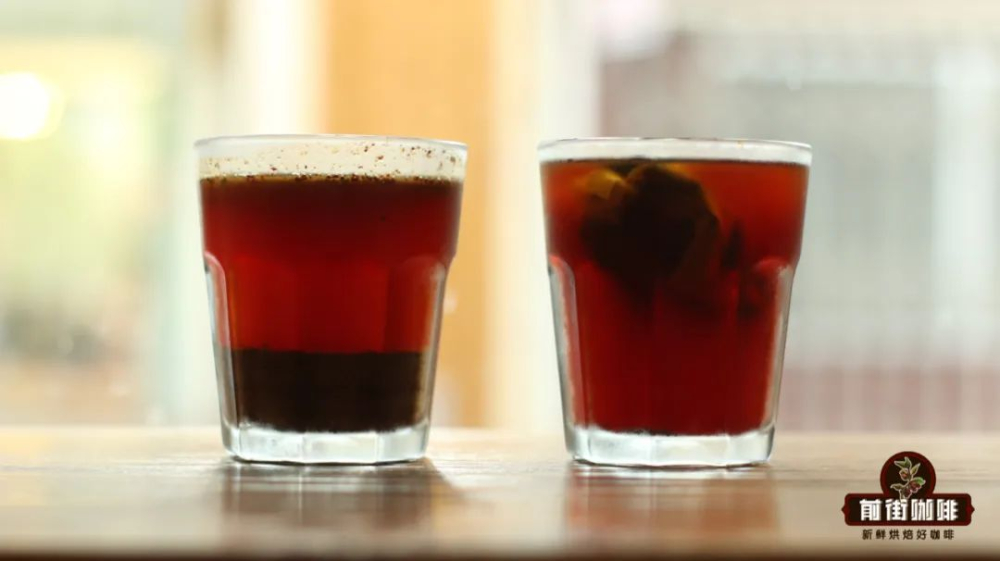
But after 8 hours, the tea-bag cold brew liquid actually became darker and more intense!
(Not very obvious with Golden Mandheling)
Filter out the two cups of cold brew made by direct steeping, then measure the concentration of all four cups of cold brew. The results show that regardless of the group, the coffee liquid steeped in tea bags has a higher concentration than that steeped directly.
(Using the Elida Catuai group as an example, left is direct steeping, right is tea-bag steeping)
Cupping also confirmed this. The two tea-bag cold brews were rich and full-bodied; the Elida Catuai gave off a sweet peachy flavor; the Golden Mandheling had no prominent bitterness, presenting a soft fruit acidity. Overall, while it had the richness of caramel and spice, the gentle acidity made the mouthfeel more lively and quite enjoyable.
Looking at the direct-steeping group, Elida, due to its high density, had all the coffee grounds piled at the bottom as mentioned earlier, so the water couldn't properly extract the flavors, making the whole cup weak and thin; Golden Mandheling performed slightly better due to the dark roast, but was still thinner compared to the tea-bag cold brew.
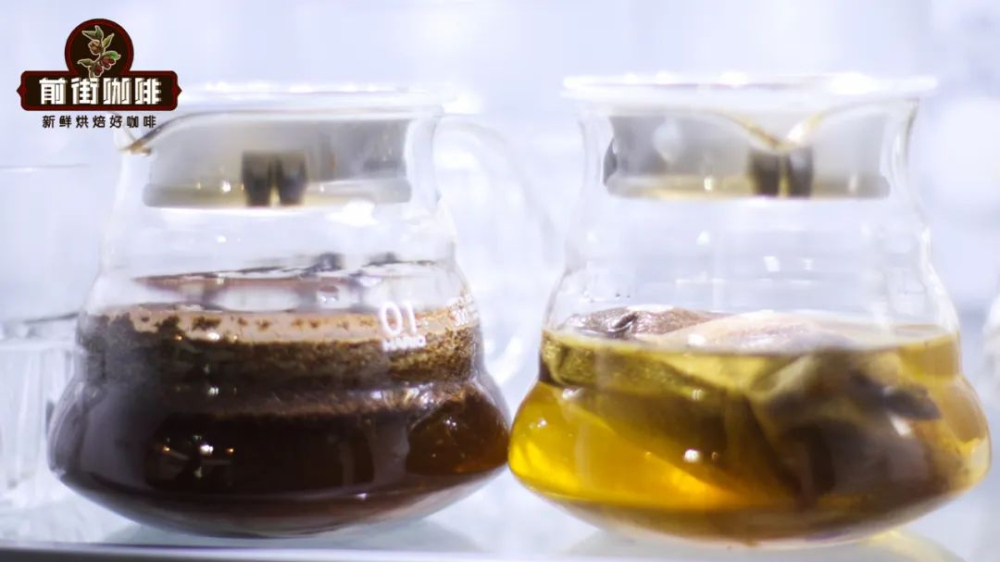
The principle behind why tea bags can brew delicious cold brew is actually quite simple: once the coffee grounds are gathered in the tea bag, the phenomenon of fine particles sinking to the bottom first no longer occurs. Water can only gradually penetrate from the outside inward, so the outer coffee grounds are inevitably saturated first, rather than all fine particles sinking simultaneously. Moreover, the extraction process is slower, so the inner coffee grounds don't quickly become saturated—as long as a small amount of grounds remains un-soaked, the entire tea bag can continue floating on the liquid surface. At this point, the grounds are continuously extracted by water, fine particles cannot clump together, and thus the gaps don't shrink and block flavor compounds from escaping.
Besides ensuring concentration, this method has another benefit—no! need! to! filter! out! grounds! Although a small amount of coffee grounds may pass through the tea bag into the coffee liquid during steeping, the particles are extremely fine and don't affect the overall mouthfeel. Moreover, these trace fine particles can add body to the coffee, which is a positive bonus.
In short, using tea bags to hold coffee grounds for making cold brew has quite a few advantages. When you find your cold brew is too weak, give this method a try. But remember, if you're steeping a large amount of grounds, be sure to divide them into multiple bags so the water can "spread the love equally" and extract the most substances in the shortest time.
(Front Street tip: It's best to buy tea bags with strings, as it makes removing the grounds much easier at the end)
- END - Front Street Coffee (FrontStreet Coffee)
No. 10 Baoqian Street, Yandun Road, Dongshankou, Yuexiu District, Guangzhou, Guangdong Province
The above content is compiled by CoffeeHunters, a coffee news website.


