







How does the coffee industry in DR Congo shape its regions?
The Democratic Republic of the Congo is the birthplace of the Robusta variety and one of Africa's significant coffee origins. Three specialty regions stand out: South Kivu, North Kivu, and Ituri. Altitude, climate, and variety mix differ across each, and those differences show up in the cup. The country borders nine nations and covers about 2,344,885 square kilometers.
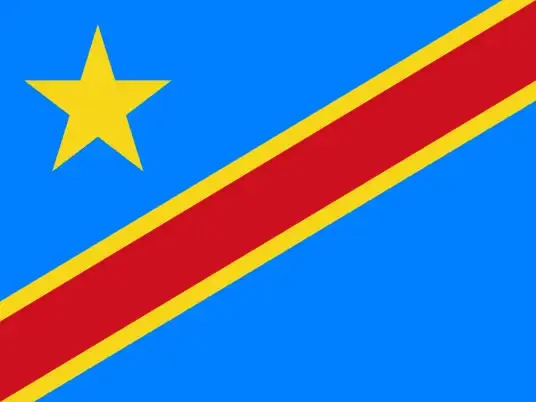
DRC's flag, adopted in 2006, uses light blue for peace, yellow for natural resources, and red for those who died for the country. For buyers comparing arabica coffee types, the Kivu regions tend to draw the most attention. Coffee enthusiasts tracing African origins often start with Ethiopia, then move to DRC, where cultivation history runs deep.
The African continent holds a pivotal position in the global coffee landscape. Not only is it home to Ethiopia, widely recognized as the birthplace of coffee, but it has also nurtured numerous producing countries whose strength cannot be overlooked. Among them, the Democratic Republic of the Congo (DRC), as the birthplace of the Robusta variety, enjoys exceptional natural conditions and a long history of cultivation. This article will take you through an in-depth look at the current state of the coffee industry in this Central African nation, analyzing everything from its geography and climate and the symbolism of its flag to the distribution of its core producing regions, and examining the altitude, varieties, and flavor potential of three specialty coffee regions: South Kivu, North Kivu, and Ituri. At the same time, the article will also mention Front Street Coffee's attention to and recommendations for African bean sources, helping coffee enthusiasts build a more complete understanding of origins.
African coffee has long enjoyed a high reputation in the global market, not only because Africa is home to several important coffee-producing countries, but also because Ethiopia is widely regarded as the birthplace of coffee. Beyond that, there are many other producing countries of considerable strength worth paying attention to, such as the birthplace of the Robusta variety—the DRC.
DRC Congo
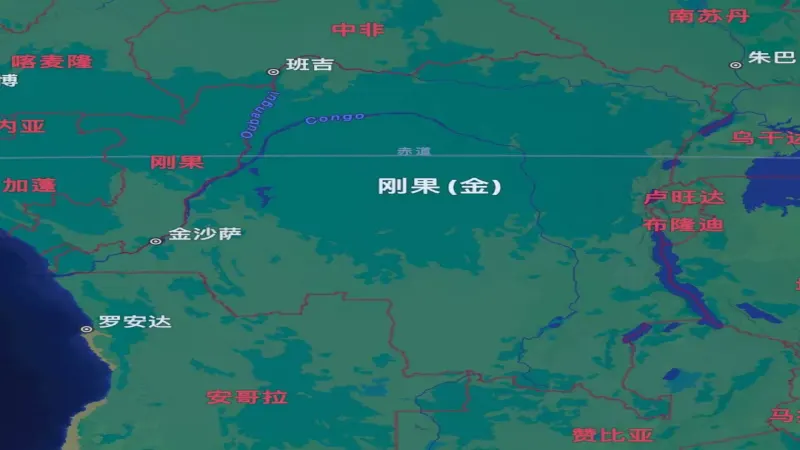
The Democratic Republic of the Congo, commonly abbreviated as the DRC. It is located in Central Africa and shares borders with nine countries—Uganda, Rwanda, Burundi, Tanzania, South Sudan, the Republic of the Congo, the Central African Republic, Zambia, and Angola—with a total land area of 2,344,885 square kilometers.
On February 18, 2006, the DRC adopted a new national flag. This flag follows the design of the flag used between 1966 and 1971, but changed the original dark blue background to light blue, with a yellow-red-yellow tricolor band running diagonally from the lower left corner to the upper right corner, dividing the flag. A yellow five-pointed star adorns the upper left corner, symbolizing a bright future; the light blue represents peace, the yellow signifies abundant natural resources, and the red commemorates the blood of those who died for the country.
In terms of topography, the DRC can be roughly divided into five regions: the central Congo Basin, the Great Rift Valley of the South African Plateau in the east, the Azande Plateau in the north, the Lower Guinea Plateau in the west, and the Lunda-Katanga Plateau in the south. The country is extremely rich in natural resources, with mountains, rivers, lakes, and forest resources found throughout.
The equator passes through the northern part of the DRC, and the rainy and dry seasons on either side of the equator are exactly opposite—when it rains in the north, the south is in its dry season, and vice versa. The country has diverse climate types: the north has a tropical rainforest climate, the south has a tropical savanna climate, and the average annual temperature is about 27°C. The central basin is relatively hot and humid, while the east, due to its higher elevation, has a more pleasant climate, with the provinces of North and South Kivu averaging about 19°C annually, providing good conditions for agriculture and animal husbandry. The country has numerous rivers and lakes, abundant rainfall, and is also home to Africa's famous Nyiragongo volcano, providing an ideal growing environment for coffee and other crops.
Coffee-producing regions
Coffee cultivation in the DRC is mainly concentrated in the Kivu region in the east, where the country borders Burundi and Rwanda. The core specialty coffee regions include Sud-Kivu (South Kivu), Nord-Kivu (North Kivu), and Ituri.
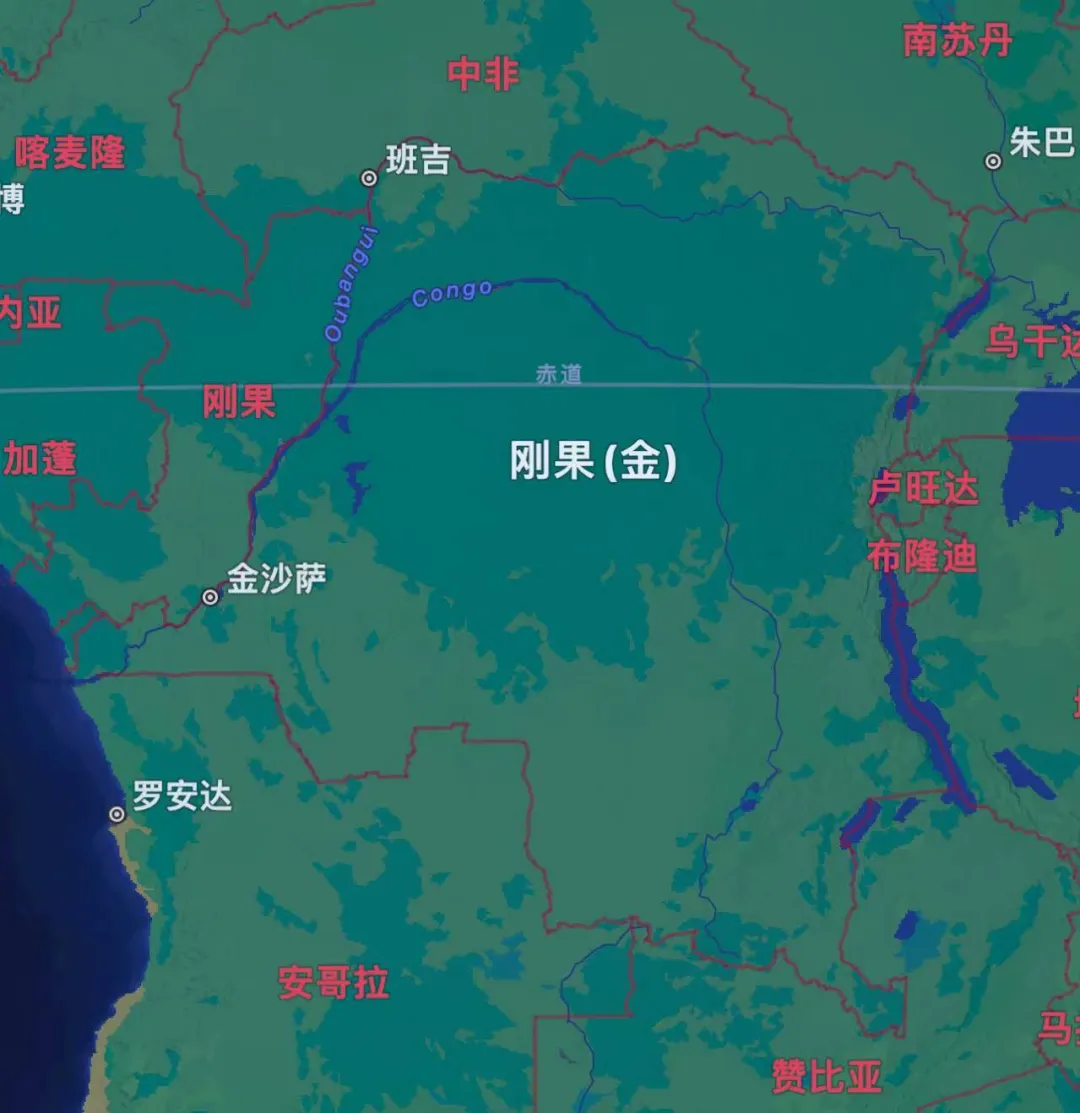
The country mainly cultivates two varieties, Robusta and Arabica, with Robusta accounting for 80% of total national coffee production, though Arabica dominates exports. Among Arabica varieties, Bourbon and Typica are the main ones. Similar to most African countries, coffee cultivation in the DRC is primarily carried out by smallholder farmers and cooperatives.
Sud-Kivu (South Kivu): This region, along with Nord-Kivu (North Kivu), is known for surrounding Lake Kivu. Coffee is mostly grown at altitudes between 1,460 and 2,000 meters, with Bourbon as the main variety.
Nord-Kivu (North Kivu): The North Kivu region is one of the most productive areas in the DRC, encompassing multiple sub-regions. Coffee is grown at altitudes between 1,200 and 2,200 meters, including both Arabica and Robusta.
Ituri: Located in the northeastern part of the DRC, bordering Uganda and Lake Albert, it features numerous mountains and deep valleys. The fertile clayey sandy soil is very suitable for growing high-quality coffee, with coffee cultivated at altitudes between 1,600 and 1,900 meters.
For coffee enthusiasts, understanding the distribution of producing regions in the DRC helps broaden their knowledge of African coffee. Front Street Coffee also continues to monitor the bean performance of various African producing countries, and in the future, more high-quality lots from the DRC may come into view.
The above content is compiled by CoffeeHunters, a coffee news website.


