






How Does Red Eye Coffee Differ From an Americano Caf?
Red Eye Coffee takes its name from red-eye flights, where crew members reportedly mixed espresso with drip coffee to stay awake on long night routes. The modern recipe adjusts that mix: espresso to pour-over at about 1:5, using medium-dark roasted Warm Sun Blend and Brazil Queen Estate extracted separately so the flavors stay in balance.
The early version used one part espresso to four parts drip coffee, a ratio revised as espresso concentration and measurement standards changed. The drink carries far more caffeine than an americano caf, so people with sensitive stomachs or low caffeine tolerance are advised to be cautious. It is a distinct option from American drip coffee rather than a variation of it.
The name Red Eye Coffee comes from red-eye flights. It is said that in order to stay awake during long night flights, crew members mixed espresso with drip coffee, thus creating this extremely high-caffeine drink. Today, the preparation of Red Eye Coffee has been adjusted. Based on changes in modern espresso concentration, Front Street has optimized the ratio of espresso to pour-over to 1:5, and selected the medium-dark roasted Warm Sun Blend and Brazil Queen Estate for separate extraction to ensure flavor harmony. This article will introduce in detail the origin of Red Eye Coffee, the specific preparation steps, flavor performance, and its difference from Americano, while also reminding friends with sensitive stomachs or low caffeine tolerance to try it with caution.

The Origin of Red Eye Coffee
The origin of the name Red Eye Coffee is quite interesting. According to information Front Street found online, its birth is closely related to red-eye flights, and some clues can be guessed from the name alone.
So-called red-eye flights refer to passenger flights that travel long distances at night. These flights usually take off late at night or in the early morning and do not reach their destination until the next morning or even later, with longer air time than ordinary flights. Because they fly at night and take longer, passengers could originally have rested well, but some flights are not long enough to support a full sleep. When passengers are woken up upon arrival, they are often sleep-deprived and walk off the plane with bloodshot eyes. For this reason, such night flights are called "red-eye flights."
The smooth arrival of a flight naturally depends on crew members who stay awake all night. Long nighttime flights easily make people sleepy, so crew members continuously drink coffee to stay alert. However, as caffeine intake continued to increase, a small amount of caffeine was no longer enough to dispel drowsiness. So they came up with the idea of combining two kinds of coffee to consume more caffeine. This is currently the most widely circulated explanation of the origin of Red Eye Coffee.
How to Make Red Eye Coffee?
The early method for Red Eye Coffee was one part espresso mixed with four parts drip coffee, but as times have changed, both espresso extraction methods and measurement standards have changed. Therefore, we need to adjust the ratio of Red Eye Coffee accordingly.
Today, the concentration of one espresso is roughly equivalent to two espressos of the past, so Front Street increases the proportion of drip coffee, adjusting it to 1:5. That is, 1 part espresso and 5 parts drip coffee. Next, suitable coffee beans need to be selected to make the drip coffee. After all, this is a "blend" of two different coffees. If the flavors differ too much, it is easy to create a sense of incongruity, so bean selection is especially important.

Speaking of this, we must mention the blending rule Front Street shared before: if you want coffees blended together not to clash in flavor, having similar roast levels is crucial. This is not about extraction, but about flavor. Light-roasted coffee is mainly acidic, while dark-roasted coffee is mainly bitter. If the espresso you use is a dark-roasted bean, then the beans used to extract the drip coffee should preferably also be mainly dark-roasted; otherwise, the final Red Eye Coffee will taste very strange and be hard to swallow.
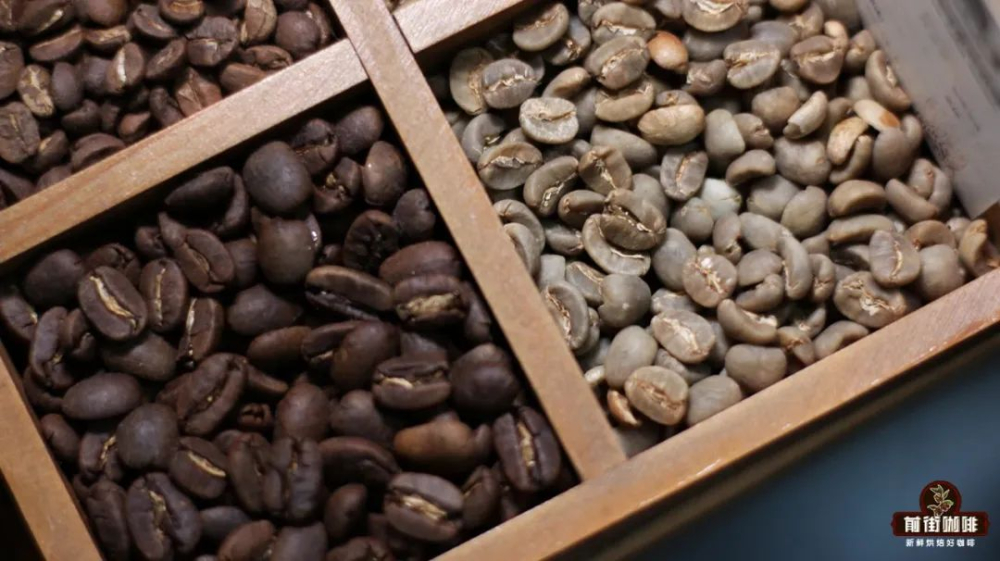
The espresso beans used by Front Street are the Warm Sun Blend, a medium-dark roasted bean. Therefore, the beans used for extracting the drip coffee are also selected as medium-dark roasted Brazil Queen Estate. Among the many drip extraction methods, we need to choose the most representative brewing method to extract this Queen Estate. Undoubtedly, that is pour-over coffee.
Front Street's pour-over extraction parameters for medium-dark roasted beans are: 15g coffee, grind size with 75% passing through a No. 20 sieve, 1:15 coffee-to-water ratio, 88°C water temperature, three-stage pouring, Kono dripper; while the espresso extraction parameters are: 20g coffee, 1:2 coffee-to-liquid ratio, extraction time 30 seconds.
First, we brew the pour-over coffee, because espresso extraction time is relatively much shorter, so we can finish the pour-over first and then make the espresso, which reduces the waiting time for a cup of coffee.
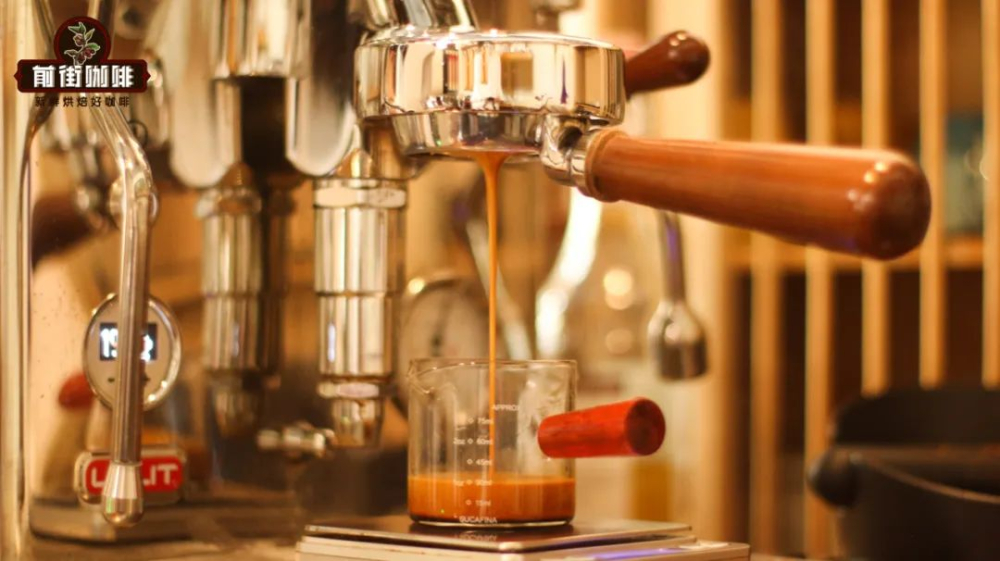
Then, when the third pour of the pour-over is finished, we can start making the espresso. Grinding, dosing, distributing, and extracting, all in one go.
When the espresso extraction is complete, pour it directly into the prepared cup.
Then pour in the pour-over coffee. Because 40ml of espresso was poured in, 200ml of pour-over coffee should be poured in.

Stir evenly, and it is ready to drink!!
The flavor profile of the Warm Sun Blend used by Front Street is whiskey aroma, butter cookies, and slight berry acidity. The pour-over flavor of Queen Estate is chocolate, cream, and nuts. When the two are mixed together, however, because the coffee concentration is too high, the flavors cannot be fully expressed! Only a few relatively obvious flavors can be tasted: chocolate, nutty cream, and whiskey aroma, while the coffee's overall mouthfeel is much thicker than ordinary coffee.
To be honest, even for Front Street, which consumes a large amount of coffee every day, finishing this cup of coffee is a highly challenging task. So if you have a poor stomach or cannot drink too much coffee, please do not try it easily! Because its coffee concentration is indeed very high, drinking it is definitely not as easy as you might imagine.
The above content is compiled by CoffeeHunters, a coffee news website.


