





What is Puerto Rican coffee and where does it grow?
Puerto Rican coffee comes from a self-governing U.S. territory in the eastern Greater Antilles, not an independent country. Spanish colonists introduced cultivation in the 18th century, and by the late 19th century the island produced as much as 30 million pounds a year, then ranked seventh among coffee producers. Output later fell after U.S. takeover, rising costs, typhoons and Brazilian competition.
Two hurricanes in 2017 destroyed nearly 90 percent of the plants, and the industry is still recovering. Around 4,000 farmers now grow roughly 3 million pounds of green beans annually, with Yauco standing out for quality. Plantings include arabica coffee plus Robusta and Liberica, and processing has widened from washed and sun-dried methods to experimental techniques.
Among the many coffee-producing islands in the Caribbean, Puerto Rico is a special case—it is not an independent country, but a self-governing territory of the United States. This island, located in the eastern part of the Greater Antilles, has a central mountain range running through it, volcanic terrain, and a tropical rainforest climate. Coffee cultivation was introduced by Spanish colonists as early as the 18th century. By the late 19th century, production reached as high as 30 million pounds, ranking it as the world's seventh-largest coffee producer. Subsequently, due to U.S. takeover, rising costs, typhoon damage, and Brazilian competition, the industry went through ups and downs, and in 2017 two hurricanes destroyed nearly 90% of the plants. Today, Puerto Rican coffee is gradually recovering, with particularly outstanding quality in the Yauco area. The island's approximately 4,000 coffee farmers produce 3 million pounds of green beans annually, with varieties including Arabica, Robusta, and Liberica, and processing methods expanding from traditional washed and sun-dried to experimental techniques. This article will guide you through this turbulent history and the current state of varieties.
The Caribbean is home to many islands whose soil and climate conditions are highly suitable for coffee cultivation, which is why several coffee-producing countries have emerged in the region, such as Jamaica, Cuba, and the Dominican Republic.
However, there is another place in the Caribbean that also grows coffee, and that is Puerto Rico. The full name of Puerto Rico is The Commonwealth of Puerto Rico; it is not an independent country, but a self-governing territory belonging to the United States.
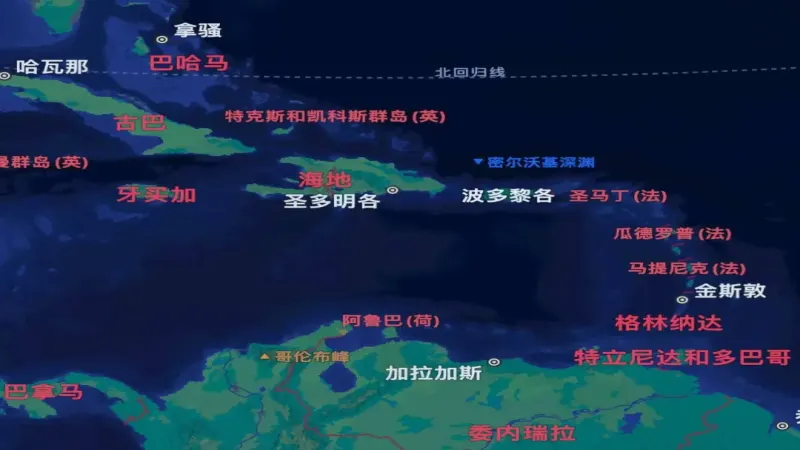
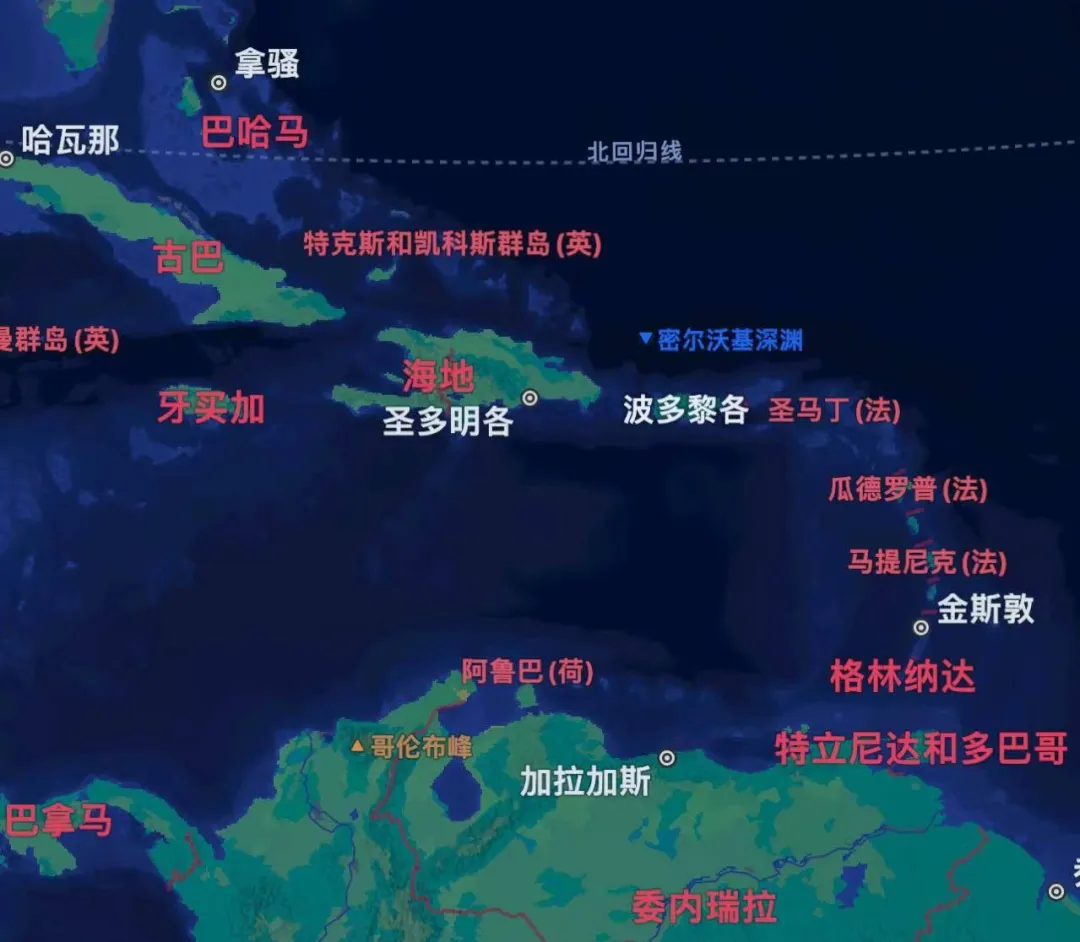
Puerto Rico is located in the eastern part of the Greater Antilles in the Caribbean, with the Atlantic Ocean to the north and the Caribbean Sea to the south. To the east, it faces the U.S. Virgin Islands and the British Virgin Islands across the sea, while to the west, it is separated from the Dominican Republic by the Mona Passage. The entire island covers an area of 9,104 square kilometers.
Puerto Rico's terrain is mainly mountainous and hilly, accounting for about three-quarters of the island. The central mountain range runs from east to west, with the terrain gradually descending from the center toward the surrounding areas, and coastal areas are plains. In addition, Puerto Rico is located in a volcanic zone, with a tropical rainforest climate and abundant rainfall. The average annual temperature is 28°C, which is ideal for coffee cultivation.
Puerto Rico's coffee cultivation history can be traced back to the 18th century, when Spanish colonists brought coffee seeds to the island and cultivated them as a cash crop.
By the late 19th century, Puerto Rico's coffee production had grown significantly, with annual green coffee bean production reaching 30 million pounds, and it once became the world's seventh-largest coffee producer.
However, the United States later seized the island from Spanish colonial rule and significantly raised the cost of coffee cultivation. According to statistics, more than 10,000 Puerto Rican farmers abandoned coffee cultivation, and many switched to growing cash crops such as sugarcane and pineapple. From then on, the island's coffee production continued to decline.
Nevertheless, some farmers persisted in growing coffee to supply the U.S. market. Between 1926 and 1928, Puerto Rico was hit by successive major typhoons, destroying large areas of coffee farmland and bankrupting many farmers. At the same time, Brazil's coffee production increased and was low-priced, gradually replacing Puerto Rico's position in the U.S. coffee market.
In 2017, Puerto Rico was again severely hit by two major hurricanes in succession, destroying about 90% of coffee plants; in 2020, the catastrophic Hurricane Isabell struck again, and the local coffee industry was seriously affected.
Currently, Puerto Rico's coffee fields are mainly concentrated in the southwestern mountainous areas, with the Yauco area producing the best quality. There are about 4,000 coffee farmers on the island, producing a total of about 3 million pounds (1.4 million kilograms) of green coffee beans annually, of which usually only 8% to 10% is exported, with the rest consumed on the island.
Puerto Rico's coffee industry is slowly recovering and receiving financial support from the United States. In addition to growing Arabica coffee, the island also cultivates Robusta and Liberica varieties. In the past, only traditional processing methods such as washed and sun-dried were used locally, but now some experimental processing methods are being introduced.
In addition, Puerto Rican coffee is gradually gaining recognition in the international market, and it is expected that Puerto Rican coffee beans will appear in more international settings in the future.
The above content is compiled by CoffeeHunters, a coffee news website.


