





How is the coffee industry handling Hong Kong's plastic ban?
Hong Kong began enforcing its first-phase plastic-free rules on April 22, World Earth Day, banning styrofoam tableware and single-use plastic utensils for takeaway food and drinks. McDonald's switched to paper cups, paper lids and paper straws across its stores. Customers report a strong paper taste, leakage and weaker lids, and staff say it is harder to identify orders, raising error rates.
During the six-month adaptation period, some McDonald's branches have quietly returned to plastic cup lids. The coffee industry now faces a practical trade-off, since a drink served in paper packaging changes how the product tastes and holds up. Operators are watching whether the government relaxes the rules or whether suppliers improve coating and lid design before the adaptation period ends.
On April 22, World Earth Day, Hong Kong officially launched its "plastic-free" policy, with the first phase banning the provision of styrofoam tableware and various single-use plastic utensils for takeaway food and beverages. Fast-food giant McDonald's was among the first to respond, fully switching to paper cup lids and paper straws. However, customers have complained about the strong paper taste, easy leakage and lack of durability, while staff also face difficulties in identifying items and rising error rates. During the six-month adaptation period, some stores have quietly switched back to plastic cup lids. How should the coffee industry balance the environmental trend with the consumer experience?
▲
Click to follow | Daily specialty coffee culture magazine Coffee Workshop
For Hong Kong residents, this year's World Earth Day may carry unusual significance—from this day on, Hong Kong has officially entered the "plastic-free" era, namely comprehensively reducing and gradually phasing out single-use plastic tableware and other products.
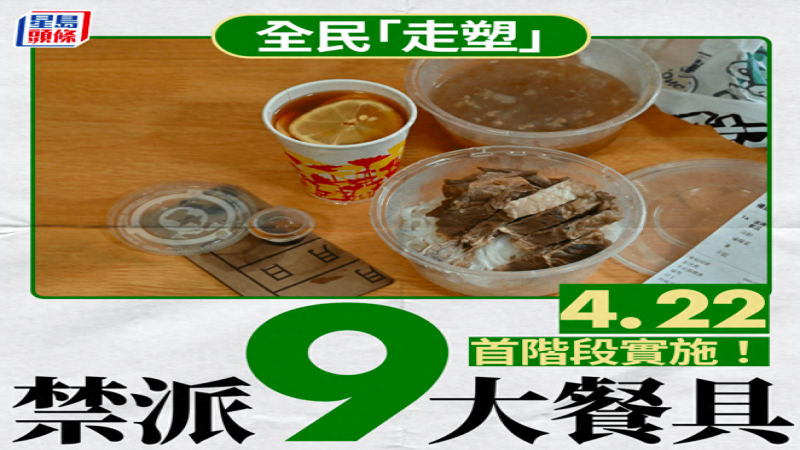
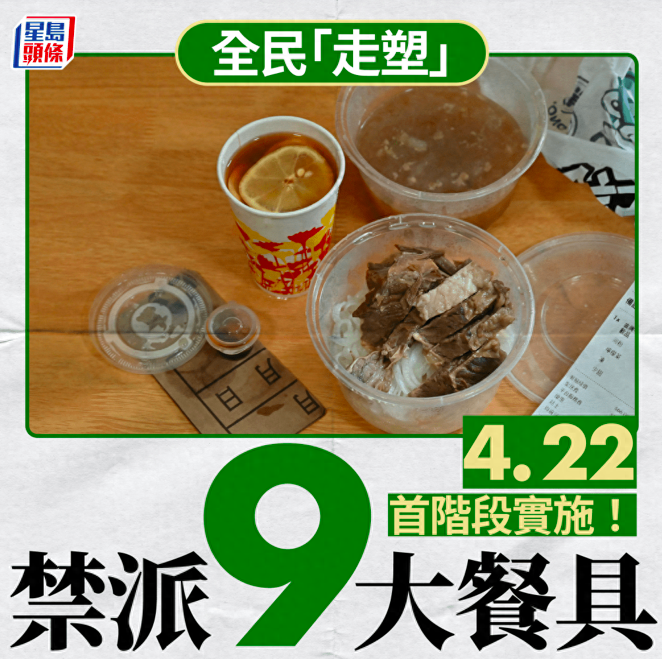
According to China News Service, Hong Kong began enforcing regulations controlling disposable plastic tableware and other plastic products on April 22. The new rules clearly state that from that day, food and beverage operators may not sell or provide to takeaway customers styrofoam tableware, plastic straws, stirrers, knives, forks, spoons and plastic plates.
(Image screenshot from Sing Tao Cantonese-Hong Kong Express)
As a major chain brand, McDonald's naturally follows the government's pace and launched "plastic-free" measures. Starting from the 22nd, regardless of cold or hot drinks, stores uniformly switched to paper takeaway cups and paper cup lids, and paper straws are provided if customers need straws. Some stores had already implemented the new rules before the 22nd to let staff and customers adapt in advance, and the takeaway packaging materials were replaced early.
However, consumers who have experienced the paper takeaway materials generally feel uncomfortable, with the most widely criticized issue being the distinctive smell of paper. Many people report that when drinks come into contact with paper containers for even a slightly longer time, the liquid picks up a strange taste that makes it hard to swallow. Even for dine-in, when they first receive a freshly made drink, they can smell the odor given off by the paper material, greatly affecting their mood.
Not only that, some customers also point out that these paper takeaway materials are neither moisture-resistant nor heat-resistant, and are highly prone to leaking when holding liquids. After cold drinks are uniformly switched to paper cups, both the inside and outside of the cup come into contact with moisture; over time the paper cup becomes soft and soggy, offering a very poor user experience, and liquid also flows out from the seams.
In addition, after repeated drinking, the drinking opening of the paper cup lid softens due to repeated contact with liquid; if paper straws are used instead, some consumers say the straws likewise become soft and cannot suck up liquid or small toppings such as pearls.
It is not only customers who are full of complaints about paper takeaway materials—McDonald's staff also have plenty to say. After all cold and hot drinks use the same paper cups, once the opaque lid is put on, it becomes difficult to distinguish the type of drink.
Although after switching to paper cup lids McDonald's introduced a new marking method, requiring staff to press marks on the paper lids according to regulations, in actual operation staff feedback that even with marks it is still not easy to identify, which to a certain extent drags down store output efficiency, and cases of delivering the wrong drink have also increased noticeably.
According to 2022 data from the Environmental Protection Department of the SAR government, Hong Kong discards as much as 227 tonnes of plastic and styrofoam tableware every day, exceeding 82,000 tonnes per year—an alarming figure. Therefore, in order to reduce the use of disposable plastic products and ease the pressure on landfills, "plastic-free" is imperative.
However, considering that the food and beverage industry may still have stocks of plastic tableware and that consumers also need time to adapt, this "plastic-free" measure has set a six-month adaptation period, allowing businesses to use up regulated plastic inventory as soon as possible and purchase suitable alternative tableware. During this period, the Environmental Protection Department will focus on publicity and education; after the adaptation period ends, enforcement action may be taken against businesses that still have not gone "plastic-free."
For this reason, during the adaptation period food and beverage businesses may still use some plastic products as takeaway packaging. After listening to customer feedback, some McDonald's stores have switched the takeaway cup lids back to the previous plastic cup lids to avoid problems such as liquid leakage. It is just that these brown cup lids will probably still be replaced by white paper lids before long.
Image source: Internet
Disclaimer: Some images in this article are from the Internet, and for some website content such as images, we will respect the original author's copyright and indicate the source, but due to the large quantity, a few images and texts may not have been credited in time; please forgive us. If the original author has any dispute, they may contact the website for handling, and once verified we will correct it immediately. Compiled and edited by "Coffee Workshop"; please indicate the source when reposting. If there is any infringement, please inform us for deletion. Thank you~!
The above content is compiled by CoffeeHunters, a coffee news website.


