







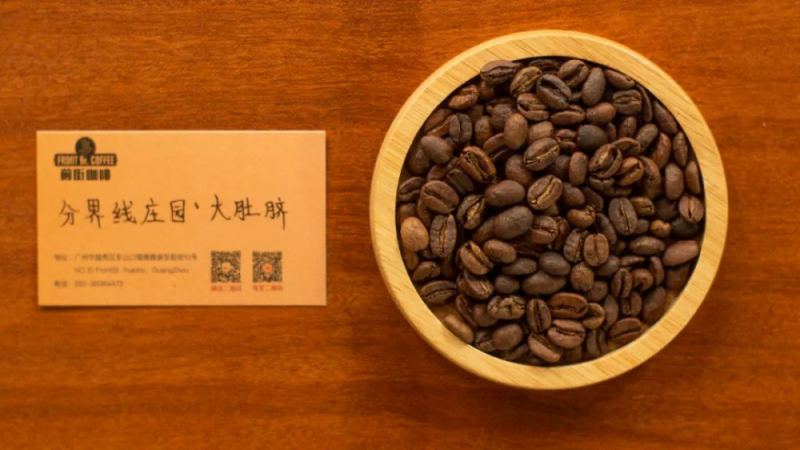
What makes the Ombligon coffee farm variety special?
Ombligon is a rare Arabica variety grown at Finca El Diviso in Colombia's Huila region, at roughly 1,700 meters. Its fruit looks like a papaya with a small ring at the bottom, which gave the variety its name. The coffee farm uses a thermal shock process with hot water flotation, sealed fermentation and yeast activated by sugar solution, producing notes of grape, orange, blueberry and pineapple juice.
Genetic research links Ombligon to Ethiopian landraces, though it developed as a unique variety through natural mutation in Colombia. It reached wider attention at the 2023 WBC finals and appeared again among top finishers at the Chicago WBrC. The variety grows for flavor between 1,600 and 1,800 meters, and the farm currently supplies it under a double anaerobic natural process.
At the 2023 WBC finals and on the stage of the Chicago WBrC, a Colombian coffee variety named "Ombligon" made frequent appearances, drawing industry attention. It comes from Finca El Diviso in the Huila region, and its fruit resembles a papaya with a small ring at the bottom — hence the name. Genetic research shows it is related to Ethiopian landraces, yet it is a unique variety formed through natural mutation in Colombia. Finca El Diviso has tailored a processing protocol for Ombligon that includes hot water flotation, sealed fermentation, and sugar-solution-activated yeast — known in the industry as "thermal shock fermentation" — allowing this bean to display layered fruit flavors reminiscent of grapes, oranges, blueberries, and pineapple juice. In this article, Front Street Coffee will walk you through the varietal characteristics, estate background, processing details, and pour-over recommendations for Ombligon.
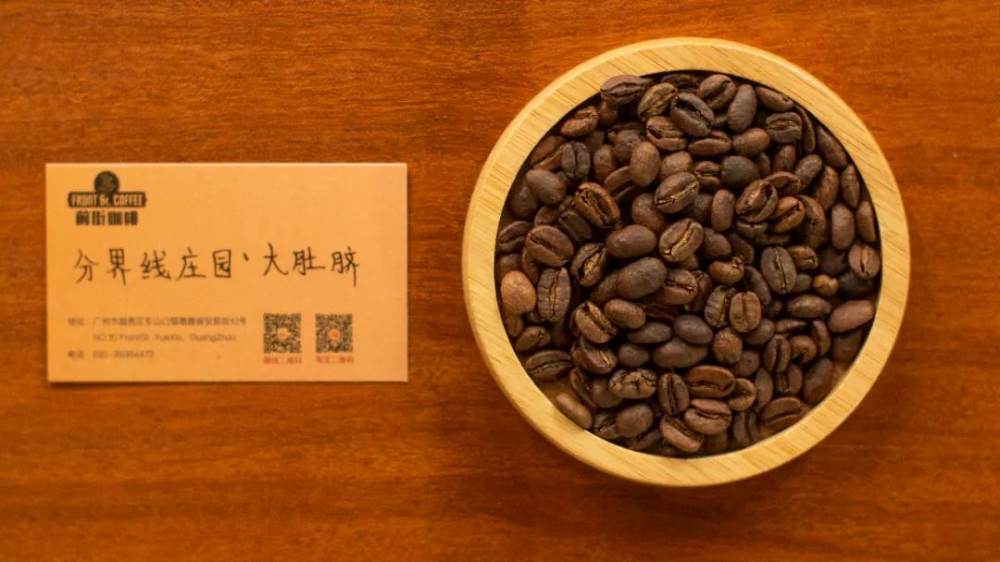
Front Street Coffee:Colombia · Finca El Diviso Ombligon
Region: Huila
Estate: Finca El Diviso
Altitude: 1,700 meters
Process: Double Anaerobic Natural
Variety: Ombligon
Flavor: Grape, orange, blueberry, pineapple juice, spice, fermented winey notes
At the 2022 World Barista Championship, Australian competitor Anthony Douglas chose a Sidra coffee produced by Finca El Diviso in the Huila Department of Colombia and ultimately won the championship, making both the estate and the name Sidra widely remembered in the industry. In the past two years, a new variety cultivated by the estate called "Ombligon" has also won favor among an increasing number of competitors.
Ombligon coffee first came into the public eye at the 2023 WBC finals — Australian competitor Jack Simpson, who placed third at the time, chose this bean and fully showcased its abundant juiciness through three distinctly styled beverages. And in the recently concluded Chicago WBrC finals, two of the top six finalists also chose Ombligon from Finca El Diviso in Colombia as their competition bean.
Ombligon
Like many rare Arabica varieties, the origins of Ombligon remain uncertain to this day. When asking local coffee farmers, most replies say it belongs to an Ethiopian variety. Currently, Ombligon is grown only in the Huila region of southwestern Colombia, where it performs best in flavor at altitudes between 1,600 and 1,800 meters.
"Ombligon" comes from Spanish and can be translated into Chinese as "big belly" or "big navel." The coffee fruit of this variety has a very unique shape, appearing close to a papaya, with large beans and a bottom that protrudes outward and is surrounded by a small ring, looking just like a navel. Although coffee fruit with a protruding bottom is not uncommon among many varieties, farmers still named it after this characteristic.
According to genetic testing results from the World Coffee Research Institute, Ombligon has a certain genetic relationship with Ethiopian landraces, and is therefore judged to be a variety formed after Ethiopian landraces underwent natural mutation in Colombia. Growers have also noticed that among native Colombian coffee varieties, Ombligon shares a high degree of similarity with Caturra — both have broad leaves, dense fruiting, vertically growing branches, and high yield, and both have strong resistance to leaf rust.
Finca El Diviso
Finca El Diviso is located in Pitalito, Huila. Estate owner Jose Uribe Lasso began growing coffee in 1996. To escape the noise of the city, he moved from Nariño to Pitalito in Huila, and in early 2000 bought El Diviso, thus opening the chapter of Finca El Diviso.
The reason for choosing the Huila region is that it has fertile volcanic soil and rich, diverse ecological conditions, which filled estate owner Jose with confidence — as long as it is managed with care, coffee and indeed any crop can find an ideal growing environment. Today, Finca El Diviso is managed jointly by three brothers: the eldest, Jhoan, is in charge of cultivation management, Nestor oversees the estate's overall operations, and the youngest, Adrian, handles various marketing and sales affairs.
Finca El Diviso has always taken as its mission the cultivation of rare bean varieties that are relatively uncommon on the market. In addition to the already familiar Sidra and Ombligon, the estate currently also grows rare varieties such as Pink Bourbon, Papayo, Tabi, Chiroso, and Bourbon Aji, as well as some novel categories produced by natural mutation. In addition, the estate owner is also keen to explore different types of innovative processing methods, allowing coffee cherries to present diverse and complex flavor characteristics.
Processing method for Ombligon coffee
When deciding how to process the coffee fruit, the owner of Finca El Diviso considered that Ombligon's greatest flavor highlight lies in its diverse and complex juiciness, and compared the flavor performance of different post-processing batches. He found that, compared with other varieties, subjecting the coffee cherries to a certain degree of fermentation before the natural process better showcases Ombligon's clear and lasting fruit aroma.
After ripe Ombligon coffee cherries are harvested, they are first floated in hot water (50-60°C) to remove underripe green fruits and impurities, while also allowing denser fruits to soak in the hot water for about 25 minutes. After flotation is completed, manual selection is carried out to remove defective fruits missed during flotation. Then, these fresh fruits are placed into sealed fermentation tanks and left to rest for 24 hours to enhance mouthfeel and sweetness, while also collecting the fermentation liquid exuded by the coffee.
Next, based on the actual number of fresh fruits in the batch, the estate owner adds sugar water to prepare a sufficient amount of fermentation liquid, using the sugar solution to activate brewer's yeast. The activated yeast is added to the fermentation liquid and mixed evenly, then poured into fermentation tanks to soak and ferment together with the coffee cherries for 72 hours. During this period, the fermentation liquid is recirculated every 4 hours, and the pH value is monitored in real time to ensure it never falls below 3.8.
After the coffee fruit fermentation is complete, it is removed and placed into the estate's custom drying box to dehydrate for 12 hours. The entire process does not rely on an external heat source, and drying is achieved entirely through the coffee fruit's own heat via circulating airflow. It is then transferred to raised drying beds and continues drying for about 15 days.
Front Street Coffee pour-over recommendations Dripper: V60 Water temperature: 91–93 °C Dose: 15g Coffee-to-water ratio: 1:15 Grind size: fine granulated sugar coarseness (80% passing a No. 20 sieve)
For brewing, the Front Street Coffee barista is accustomed to using a three-pour method: the first pour is 30 grams of water for a 30-second bloom, then pour 95 grams (the scale shows about 125 grams), finishing the pour in about 1 minute. When the water level drops to 2/3 of the coffee bed, pour the remaining 100 grams (the scale shows about 225 grams), finishing the pour in about 1 minute 35 seconds. The drip finishes in about 2 minutes; remove the dripper and extraction is complete.
Brewed flavor: At high temperature there is fruit acidity like blackcurrant and Kyoho grape, accompanied by the delicate sweetness of orange; held in the mouth it is like ripe pineapple juice, and after swallowing there is a clear berry and black tea finish. When sipped at medium to low temperature, it is a bright citrus profile with a slight fermented winey aroma, with very rich layers.
- END - Front Street Coffee
No. 10 Bao'an Qian Street, Yandun Road, Dongshankou, Yuexiu District, Guangzhou, Guangdong Province

The above content is compiled by CoffeeHunters, a coffee news website.


