





Why Does Yirgacheffe Coffee Taste of Jasmine and Citrus?
Yirgacheffe is a coffee region in southern Ethiopia that was split off from Sidamo because of its distinct floral aroma and citrus notes. Kochere, a well-known sub-region within Yirgacheffe, uses a cooperative model and advanced washing equipment to produce a clean, sweet cup with jasmine and tropical fruit flavors.
Ethiopia is the birthplace of coffee and holds roughly 10,000 to 15,000 varieties, most of them never formally identified. Coffee grows mainly in the fertile southern highlands, where mild conditions and elevations near 3,000 meters give the trees the slow ripening that concentrates flavor.
Ethiopia, as the birthplace of coffee, is home to tens of thousands of wild heirloom varieties that have never been formally identified, and its southern growing regions—with high altitudes and fertile soil—nurture countless specialty coffees. Yirgacheffe is one of its shining jewels, having become its own region apart from Sidamo thanks to its distinctive floral aroma and citrus notes. Kochere, a well-known sub-region of Yirgacheffe, uses a cooperative model and advanced washing equipment to present a clean, sweet, and richly layered cup profile. This article takes you deeper into the terroir and variety characteristics of Kochere washed coffee beans, and shares Front Street Coffee's brewing recommendations, so you can experience the interwoven jasmine florals and tropical fruit flavors.
When it comes to coffee, Ethiopia is a name you can't avoid. This country not only has a long-standing coffee culture but is also widely recognized as the birthplace of coffee. It is said that there are about 10,000 to 15,000 coffee varieties growing within Ethiopia, yet the vast majority of them have not yet undergone formal genetic identification.
Coffee cultivation in Ethiopia
Ethiopia is located in northeastern Africa, bordered by Djibouti, Somalia, Sudan, South Sudan, Kenya, and Eritrea. Its territory is dominated by mountains and plateaus, with the Ethiopian Highlands occupying most of the central and western areas—about two-thirds of the country's land area. The East African Rift Valley runs through the entire country from north to south, with an average altitude of nearly 3,000 meters. Thanks to the high altitude, the local climate is mild, with an average annual temperature of about 16°C, and the year is broadly divided into a dry season and a rainy season. Coffee is mainly grown in the southern region, where the soil is fertile; it can be said that Ethiopia's natural conditions provide a uniquely advantageous foundation for coffee cultivation.
The Yirgacheffe Region
Ethiopia has no shortage of well-known coffee-producing regions, such as Sidamo, Jima, and Harrar. Guji and Yirgacheffe were originally both included in the Sidamo region, but later, because of their distinctive flavors, they became independent coffee regions.
Yirgacheffe was originally part of the Sidamo region. Because the coffee beans produced around the town of Yirgacheffe have a distinctive floral aroma and citrus flavor, it was separated out and became a world-famous coffee region in Ethiopia. The region sits at an altitude of 1,700 to 2,100 meters, making it one of the highest coffee-growing regions in the world. Combined with fertile soil, abundant water resources, and a suitable climate, the coffee produced there has unique citrus and floral notes.
The Kochere Sub-region
Yirgacheffe itself is a small town with a population of about 20,000. The three nearby well-known small producing areas—Wenago, Kochere, and Gelena Abaya—are also classified within the Yirgacheffe area because the coffee they produce has flavors not very different from Yirgacheffe's.
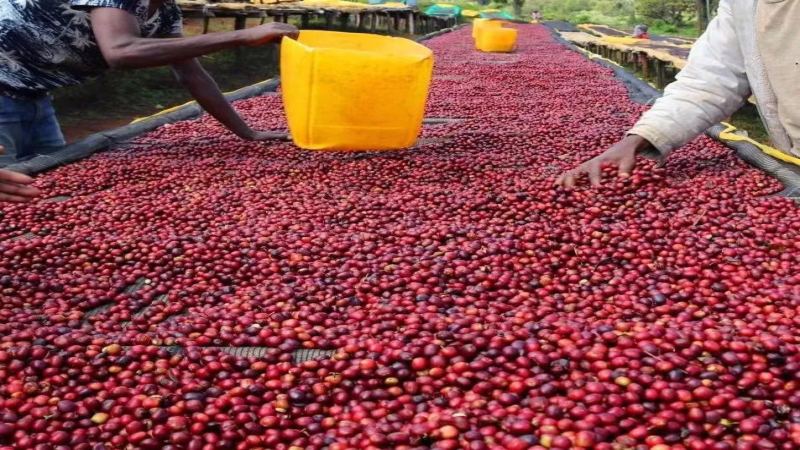
Coffee production in the Kochere area mainly consists of local smallholder farmers delivering their lots to cooperatives for centralized processing. The area relies on coffee cultivation as its pillar, and coffee is also the main source of local income. Because the producing area is relatively famous, income levels are better than in other Ethiopian villages, which has made it possible to introduce advanced processing equipment. With the support of good equipment, the washed coffee produced in this area performs at a high level, with complex notes of sweetness and citrus, clean and sweet.
Heirloom
When looking at information on some Ethiopian coffee beans, the variety column often shows "Heirloom." In Chinese, Heirloom is translated as native species or heirloom. This is because Ethiopia has tens of thousands of coffee varieties, and many smallholder farmers do not know exactly what varieties they are growing, so coffee varieties harvested as a mix are now collectively referred to as Heirloom.
Front Street Coffee Ethiopia Yirgacheffe Kochere Coffee Beans Region: Yirgacheffe Farm/Processing Station: Alim Processing Station Altitude: 1,650-1,800 meters Variety: Heirloom Processing Method: Washed Flavor: Jasmine, Lemon, Citrus, Tropical Fruit
Front Street Coffee currently has coffee beans from Kochere, Yirgacheffe, using a washed process and a light roast. Front Street uses a V60 dripper, brewing with a 1:15 coffee-to-water ratio and a water temperature of 92°C. You can smell the jasmine aroma, and on the palate it presents tropical-fruit-like sweetness and acidity, accompanied by lemon and citrus flavors, with an overall relatively smooth mouthfeel.
The above content is compiled by CoffeeHunters, a coffee news website.


