








What Is the Piccolo Coffee Ratio Compared With a Cortado?
A Cortado is espresso cut with a roughly equal amount of hot milk, a 1:1 ratio that softens the espresso without burying its flavor. It comes from the Basque region of Spain and is served in a small cup of about 100 ml, often with no milk foam or only a very thin layer.
A Piccolo, by contrast, is usually built on a ristretto shot with a smaller proportion of steamed milk, so it tastes sweeter and more coffee-forward. The word Cortado comes from the Spanish cortar, meaning to cut. As the drink spread to Portugal, Cuba and beyond, it also produced variations such as Gibraltar coffee.
Among the wide variety of espresso milk coffees, the Cortado is a rather obscure presence—it is made simply by mixing espresso and hot milk in proportion, a method that is simple yet delivers outstanding flavor. This drink, originating from the Basque region of Spain, uses a 1:1 ratio of coffee to milk, reducing the heaviness of the espresso while preserving its rich coffee aroma, and is popular in Spain, Portugal, Cuba, and beyond. As it spread, it was continually adapted in different countries, also giving rise to classic variations such as Gibraltar coffee. This article takes you through the origins of the Cortado, its traditional preparation, its evolution across different regions, and how it differs from the Piccolo coffee, which looks similar and is likewise served in a small cup.

Steamed milk is one of the most common partners in specialty coffee beverages. And there is an espresso drink with a rather tongue-twisting name whose method is simply to add milk to espresso in proportion—the Cortado. This drink is rarely seen in domestic cafés, yet it is quite popular in Spain, Portugal, Cuba, and other places.
The word "Cortado" comes from the Spanish "cortar," meaning "to cut" or "to break." In the coffee world, the Cortado is a distinctive milk coffee originating from the Basque region of Spain. Unlike milk coffees such as the latte and cappuccino, the espresso and hot milk used to make a Cortado are in a 1:1 ratio, meaning the drink is half coffee and half milk.

In Spain, the most traditional Cortado has three notable characteristics: an extremely small cup size (about 100ml), a 1:1 (or 1:0.5) ratio of espresso to hot milk, and no steamed milk foam or only an extremely thin layer. Such a small cup size means it can be finished in two or three sips—it is a miniaturized espresso drink. The Cortado adds only a small amount of milk, which weakens the heaviness of the espresso without losing too much coffee intensity, resulting in a more balanced, sweeter taste, with a coffee aroma richer than that of milk coffees like lattes and cappuccinos.
Because it is easy to make and its flavor is widely appreciated, the Cortado quickly became the first choice of many coffee lovers in Spain and, leveraging geographical advantages, spread rapidly to neighboring countries and around the world. For this very reason, the Cortado's recipe has been continually "reinvented" to suit local dietary tastes.
In Saudi Arabia, for example, the Cortado is understood as an espresso with a little milk added, with no strict attention to ratio, served both hot and cold; in Costa Rica, it is made from a single shot of espresso with 1 ounce of hot milk, making it a small-volume coffee; Italians, who prefer a "stronger" taste, favor making it with a single shot of espresso plus milk, served in a 50ml coffee cup.

When the Cortado reached Malaysia, with its more diverse food culture, its recipe took on even more possibilities. Some cafés mix cream and milk in equal proportions before adding a double espresso; some switch to a double Ristretto; some use an amount of milk close to that of a flat white; and some even make it macchiato-style. As a result, the local Cortado ranges in cup size from 3 ounces to over a dozen ounces.
Speaking of innovative Cortado recipes, Front Street Coffee must mention one of its classic variations—the "Gibraltar," born in 2005 at Blue Bottle Coffee in San Francisco. It typically combines steamed milk at twice the volume of the espresso (80ml) with a double shot of espresso (40ml), and is served in a Gibraltar glass with a 130ml capacity, thicker walls, and a shorter ridge. For this reason, after the third wave of specialty coffee, the Cortado is often associated with this glass. (ps: the Gibraltar glass, a glass produced by the American company Libbey)
By now, everyone should understand that the traditional Cortado is simply a blend of steamed milk and espresso, with no other ingredients added for flavor. With a 1:1 milk-to-coffee ratio, it delivers a fuller coffee taste. But if you are not used to such a strong flavor, you can try the Cuban version of the Cortado, called "Cortadito." It adds a spoonful of sugar or a little condensed milk to a dark-roasted espresso base for sweetness, and finally pours in steamed milk foam, yielding a drink with balanced milk and coffee and a fuller sweetness.
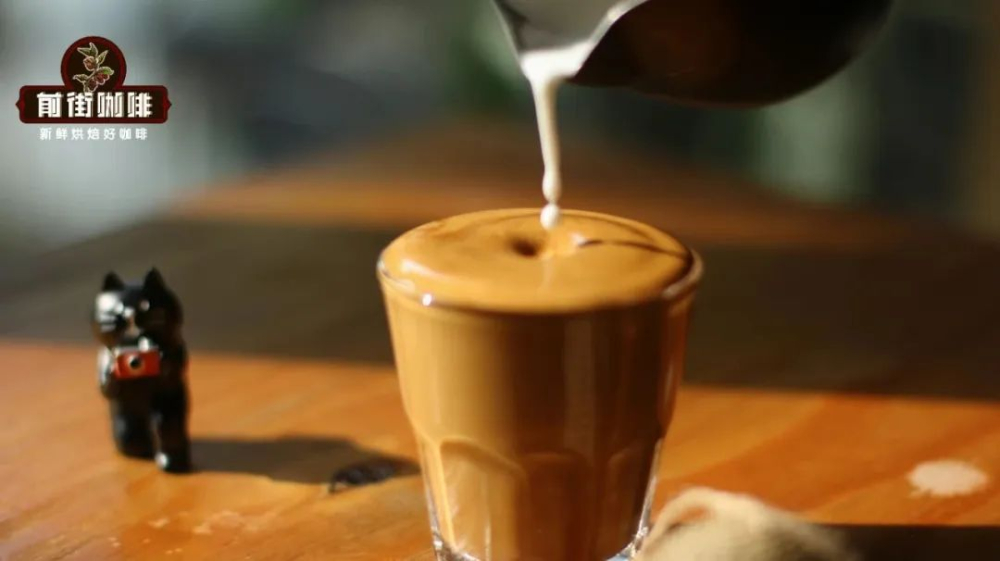
Since the Cortado does not necessarily pursue appearance or style, but rather relative harmony among flavors, it is usually not decorated with elaborate latte art like lattes and cappuccinos (some coffee shops even make it with hot milk alone, making latte art even less possible). At the same time, because of its small cup size, the Cortado is often confused in appearance with other coffee-forward milk coffees, such as the Piccolo.
(The picture shows a Piccolo coffee)
Front Street Coffee will take out two glasses, both with a 100ml capacity, to make a Cortado and a Piccolo Latte for comparison. The Warm Sun blend coffee beans are used, with today's extraction parameters being 20g of coffee grounds extracted for 28 seconds to yield 40g of coffee liquid.
The Cortado is simply made with a double shot of espresso (40ml) plus hot milk with an ultra-thin milk foam (60ml). Poured into the coffee cup, the 40ml of espresso already takes up more than a third of the capacity. As mentioned earlier, the traditional Cortado pursues balance in flavor, so Front Street Coffee won't make things hard for itself by attempting latte art, and will simply pour and integrate!
The Piccolo, on the other hand, uses a single shot of espresso (20ml), combined with about 60–75ml of steamed milk with thin foam (less than 0.5cm thick), and finally finished with a nice latte art pattern.
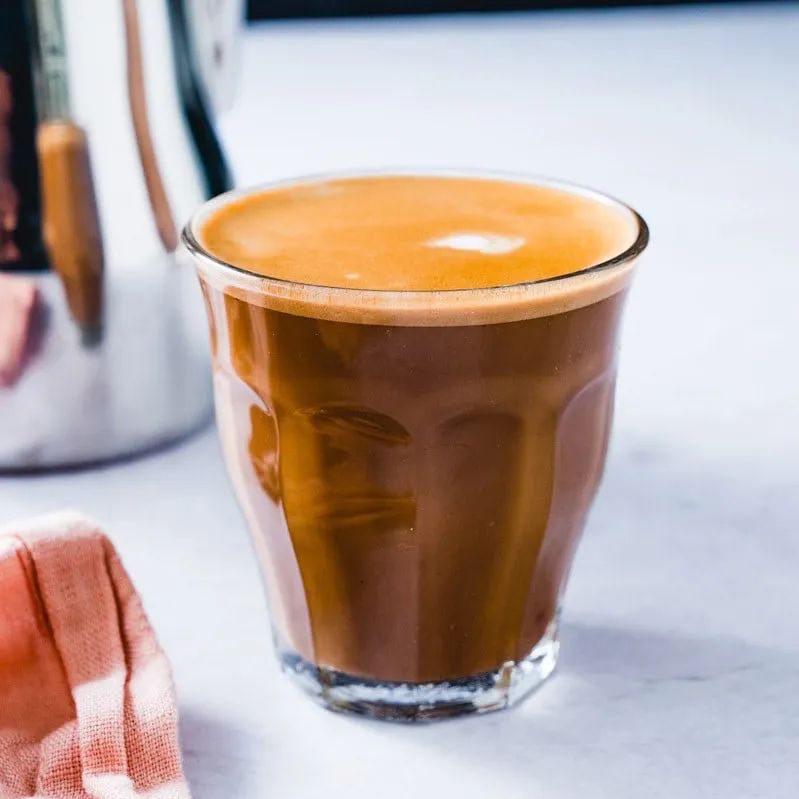
In terms of color, the Cortado made with a 1:1 ratio of double espresso to milk is noticeably darker, with the golden crema on top fully preserved. In a tasting comparison, the Cortado brings out more of the Warm Sun coffee beans' wine-like aroma, and with the 1:1 milk ratio it drinks more like an espresso with milk added, smooth with a hint of the milk's fresh sweetness. The Piccolo coffee is more like a butter cookie, with a higher proportion of steamed milk foam bringing a creamier, smoother mouthfeel, and by comparison its coffee flavor is less substantial than that of the Cortado.
If you want a drink in which milk and coffee complement each other, and you are looking for a specialty coffee with a richer coffee flavor and a simpler method of preparation, why not give this Cortado from Spain a try~
- END - FrontStreet Coffee
No. 10, Bao'an Qian Street, Yandun Road, Dongshankou, Yuexiu District, Guangzhou, Guangdong Province
The above content is compiled by CoffeeHunters, a coffee news website.


