





How Do Arabica Coffee Hybrids Such as Catimor Differ?
Arabica coffee is one of the two commercially dominant species, alongside Robusta, and breeders have crossed the two to carry Robusta's disease resistance into Arabica lines. The Timor Hybrid, Catimor, and Castillo came out of that work. This analysis traces where each variety originated and what it brings to the cup, ending with a look at Yunnan small-bean Catimor.
Robusta began in the Congo region of West Africa and holds roughly 2.7 to 4 percent caffeine, about twice Arabica's level, with strong heat tolerance and cross-pollination. Coffee trees of the two species differ genetically as well, since Arabica self-pollinates. That divide explains why hybrids matter to growers: they combine Robusta's resilience with Arabica's cup profile.
The coffee world is mainly divided into three major varieties: Arabica, Robusta, and Liberica, with the first two dominating commercial cultivation. Robusta originated in the Congo region of West Africa, has strong adaptability, high caffeine content, a full-bodied flavor, and rich oils, and is commonly used in espresso blends and instant coffee. To incorporate its disease-resistant genes, coffee breeders have crossed Robusta with Arabica, giving rise to a series of varieties such as Timor Hybrid, Catimor, and Castillo. This article will analyze the origins and characteristics of these varieties one by one, and introduce Front Street Coffee's Yunnan small-bean Catimor, guiding you through the complete chain from variety to cup.
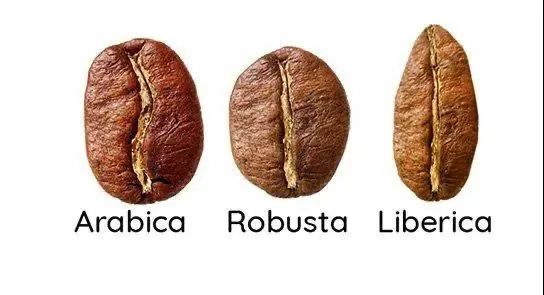
In today's coffee market, the main cultivated varieties in circulation can be grouped into three major categories: Arabica, Robusta, and Liberica. Among them, the most widely commercially cultivated and best known are Arabica and Robusta.
Robusta
Robusta originated in the Congo region of West Africa. Although people often compare it with Arabica, from a genetic sequence perspective, the two actually belong to different species. Robusta was originally classified under the Canephora species (also known as the Congo species). However, within Canephora, only Robusta achieved large-scale commercialization and widespread recognition, and over time, Robusta became the general name for the entire species group.
The global coffee-growing belt lies in the equatorial region between the Tropic of Cancer and the Tropic of Capricorn, and Robusta is no exception. However, its requirements for the growing environment are far less strict than those of Arabica—it can flower and bear fruit normally at lower altitudes, has strong heat tolerance, and performs quite well in disease resistance. Robusta grows quickly and has a stronger tolerance for extreme climates. At present, Vietnam, Brazil, India, and other countries all have large-scale cultivation.
The caffeine content of Robusta ranges from 2.7% to 4%, about twice that of Arabica. Caffeine is a natural insecticidal component produced by the plant itself and can help the plant resist attacks from some insects. In addition, Robusta is cross-pollinated, while Arabica is self-pollinated. The difference in pollination method directly relates to genetic differences.
Generally speaking, varieties obtained through cross-pollination have higher genetic diversity. Offspring produced through cross-pollination inherit the genetic traits of both parents at the same time, and thus may develop new traits that help the plant survive in changing environments. In contrast, self-pollinated Arabica tends to become genetically uniform over long-term propagation and is overall more fragile. Once it encounters diseases such as leaf rust or berry disease, coffee trees with a single genetic makeup may be destroyed in entire plots. Robusta's advantage lies precisely in its ability to adapt to the environment through constantly changing genes.
Robusta has higher contents of caffeine, amino acids, and chlorogenic acid than Arabica, and chlorogenic acid is the source of bitterness. Therefore, Robusta has a fuller and deeper taste, with flavor notes leaning toward walnut, nuts, and grains, while also being extremely rich in oils. For this reason, Robusta is rarely used as a single-origin pour-over and appears more often in espresso blends or instant products. If you prefer rich oils and a heavy mouthfeel, you can choose Front Street Classic Blend and Front Street Commercial Blend; both products include a small amount of Robusta.
As the coffee industry continues to develop, varieties have undergone continuous transplantation, mutation, and hybridization, giving rise to many new types. Robusta can also be crossed with Arabica so that the offspring obtain Robusta's resistance genes. Timor (locally called Tim Tim in Indonesia), Catimor, Castillo, and others are the products of this kind of hybridization.

In 1920, Timor Hybrid appeared on the island of East Timor. This was a natural hybrid of Arabica and Robusta, belonging to the Arabica coffee plant but carrying Robusta's disease-resistance genes. Later, the Timor variety was crossed with Caturra, giving rise to the first generation of F1 hybrid variety group, which is today's Catimor. In 1961, the Colombian research center launched a study on leaf-rust-resistant varieties such as Caturra and Timor Hybrid. After 23 years of effort, it successfully developed six varieties including Castillo, and began large-scale promotion and planting in 2005.
Front Street also has a Yunnan small-bean Catimor coffee bean, processed by washing. When tasting, you can perceive melon and fruit aromas. Because the roast level is set to medium, Front Street Yunnan small-bean has a slight plum acidity and cocoa flavor, with a mouthfeel close to black tea and an overall balanced performance.
In addition to being used as a pour-over single origin, Front Street Yunnan small-bean is also included in espresso formulas thanks to its mild taste. Beginners may want to try Front Street Dark Cocoa Basic Blend, which combines the creamy peanut aroma of Brazil with the slight acidity and tea-like quality of Yunnan small-bean, making it balanced overall with a fresh, fragrant finish.
The above content is compiled by CoffeeHunters, a coffee news website.


