







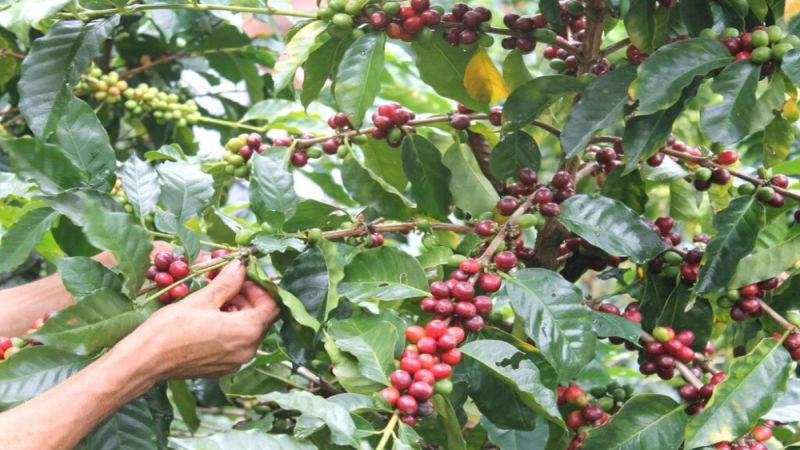
Why Does Vietnam Coffee Production Rely on Robusta?
Vietnam is the second-largest coffee producer in the world, and its industry has moved through French colonial planting, wartime interruption, economic reform, production surges, and price collapses. The Central Highlands, Southern Vietnam, and Northern Vietnam each bring different altitude, varieties, and harvest timing, and the country's output is dominated by Robusta rather than Arabica.
Coffee reached Vietnam through the French in 1867 and was first run as plantations, reaching commercial scale only around 1910. After the war, roughly 20,000 hectares produced 5,000 to 7,000 tons, then planted area grew 25-fold and national production 100-fold over 25 years, helped by the 1986 reform policy. Vietnamese Robusta also appears in Front Street Coffee's espresso blend with Mandheling and Cerrado.
Vietnam is the world's second-largest coffee producer. Its coffee industry, introduced during the French colonial period, has gone through a tortuous history of wartime interruption, economic reform, surges in production, and price collapses. This article systematically sorts out the development trajectory of Vietnamese coffee, explains in detail the altitude, bean varieties, and harvest characteristics of the three major producing regions—the Central Highlands, Southern Vietnam, and Northern Vietnam—and analyzes the reasons behind Vietnam's quality profile, which is dominated by Robusta. At the same time, Front Street Coffee's classic espresso blend also uses Vietnamese Robusta beans, combining with Indonesian Mandheling and Brazilian Cerrado to present a rich chocolate and nutty flavor.
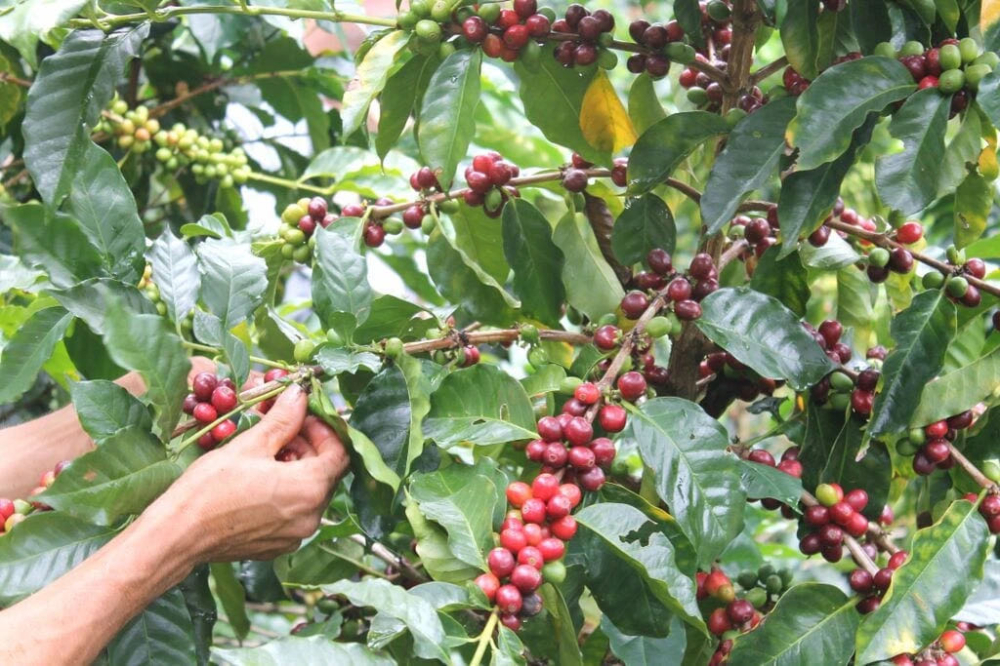
Vietnam is located at the southeastern end of the Indochinese Peninsula in Southeast Asia, bordering China, Laos, and Cambodia to the north, and facing the South China Sea to the southeast. The country's outline is long and narrow, forming an S shape. The terrain slopes from northwest to southeast, with about three-quarters of the territory consisting of mountains and plateaus. The Truong Son Range runs through the central region from north to south. The entire country of Vietnam lies south of the Tropic of Cancer and has a tropical monsoon climate. The north has four distinct seasons, with average temperatures in most areas between 23°C and 25°C. The south is divided into a rainy season (May to September) and a dry season (October to April of the following year), with average temperatures in most areas between 26°C and 27°C. The national average annual rainfall is about 1,500 to 2,000 millimeters.
Coffee was introduced to Vietnam by the French in 1867 and was initially operated in the form of plantations. It was not until 1910 that it began to take shape on a commercial scale. During the Vietnam War, coffee cultivation came to a standstill for a time, and after the war the coffee industry moved toward corporate-style operations. At that time, about 20,000 hectares of land contributed 5,000 to 7,000 tons of coffee beans. Over the following 25 years, the planted area expanded 25-fold, and total national production increased 100-fold. This leap was mainly due to the reform and opening-up policy introduced in 1986, which allowed private enterprises to engage in the production of commercial crops.
Entering the early 1990s, a large number of new companies emerged in Vietnam, many of them specializing in large-scale coffee production. Between 1994 and 1998, international coffee prices rose, and Vietnam's industry focused on increasing output. From 1996 to 2000, Vietnam's coffee production climbed sharply, causing a significant impact on the global price system. Vietnam thus rose to become the world's second-largest coffee producer, leading to global oversupply and a collapse in coffee prices. However, the current international coffee market has shifted to supply falling short of demand, and Vietnam is also planning to expand its coffee planting area.
Because it has long been oriented toward volume, the local focus has been on quantity rather than quality. Therefore, Vietnam mainly produces Robusta, with only a small amount of Arabica grown in a few areas. The producing regions can be divided into three major sections: the Central Highlands, Southern Vietnam, and Northern Vietnam.
Central Highlands
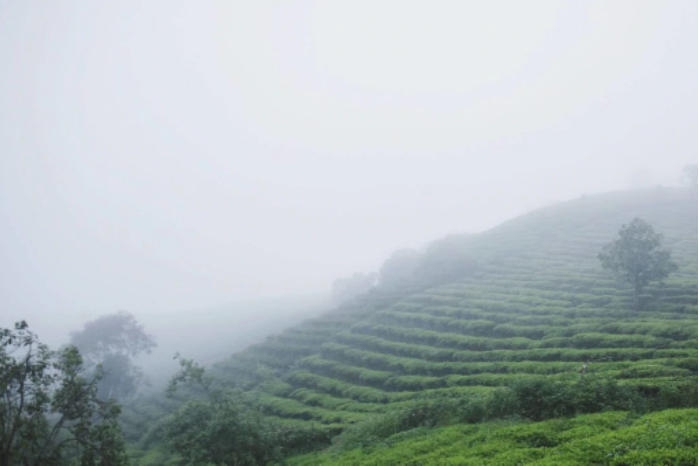
The Central Highlands is made up of a series of highlands, covering provinces such as Dak Lak, Lam Dong, Gia Lai, and Kon Tum. This region mainly grows Robusta (Xanh Lun), with a small amount of Arabica as well, and Robusta production accounts for about 70% of the national total. The growing altitude ranges from 600 to 1,000 meters, and the harvest period lasts from November to March of the following year.
Southern Vietnam
Coffee cultivation in Southern Vietnam is concentrated around Dong Nai Province, northeast of Ho Chi Minh City, and is likewise dominated by the Robusta TR series. This area has attracted many coffee giants to set up factories, and Nestlé has built a factory here. The altitude range is 200 to 800 meters, and the harvest season is from November to March of the following year.
Arabica is mainly distributed in Son La, Thanh Hoa, Quang Tri, and other places in Northern Vietnam, near Hanoi. This region has a higher altitude and is suitable for Arabica cultivation, with altitudes ranging from 800 to 1,600 meters. The harvest period is likewise from November to March of the following year, and it mainly grows Bourbon, Catimor, and the Robusta TR series. Arabica accounts for only 3% to 5% of Vietnam's total coffee production, but Vietnam still ranks as the world's fifteenth-largest Arabica producer, which shows just how huge its total coffee production is.
Vietnam's coffee grading method is relatively simple, with grades determined by the number of defective beans contained in 300 grams of green coffee beans.
Front Street's classic espresso blend also uses coffee beans produced in Vietnam, pairing Indonesian Mandheling, Brazilian Cerrado, and Vietnamese Robusta. After medium-dark roasting, the espresso presents a rich mouthfeel with chocolate and nutty flavors, and the sweetness becomes even more prominent after adding milk.
For professional coffee knowledge exchange and more coffee bean information, please follow Coffee Workshop (WeChat public account: cafe_style)
For more specialty coffee beans, please add the private WeChat of Front Street Coffee (FrontStreet Coffee), WeChat ID: qjcoffeex
The above content is compiled by CoffeeHunters, a coffee news website.


