








How is coffee development changing in Nepal?
Nepal's National Tea and Coffee Development Board raised the minimum purchase price for coffee cherries and parchment beans by 5 to 30 rupees per kilogram. Grade A cherries now fetch 100 rupees per kilogram and Grade B 90 rupees, a system officials say guarantees growers roughly a 20 percent profit margin. Grade A must be certified organic and grown above 800 meters.
Commercial coffee cultivation arrived late in Nepal; the Nepal Coffee Company was set up in 1983 to 1984 so farmers could process and dry centrally for export. Government support has since helped the planted area and output recover, and export volume has grown more than 10 percent year on year. The new floor prices aim to keep that momentum with growers.
Nepal's National Tea and Coffee Development Board recently announced an increase in the minimum purchase price for coffee cherries and parchment beans, with hikes ranging from 5 to 30 rupees per kilogram, aimed at giving growers a more reasonable profit margin. Under the new pricing system, Grade A cherries are priced at 100 rupees/kg and Grade B at 90 rupees/kg, which officials say guarantees a profit margin of about 20%. As a landlocked country on the southern slope of the Himalayas, Nepal started commercial coffee cultivation relatively late, but in recent years, with government support, its cultivation area and production have gradually recovered, and export volume has grown by more than 10% year-on-year. This article will review the details of this price adjustment, the history of coffee cultivation and the distribution of producing regions in Nepal, as well as the latest production, sales and export data.

Nepal's National Tea and Coffee Development Board (NTCDB) recently announced that it will raise the minimum purchase price of coffee cherries and parchment beans by 5 to 30 rupees per kilogram, equivalent to 0.0375 to 0.225 US dollars, in order to increase the income of local coffee growers.
After the price adjustment, the purchase price of Grade A coffee cherries has been set at 100 rupees per kilogram (about 0.75 US dollars). According to Nepali standards, Grade A cherries must be certified organic and come from growing areas at an altitude above 800 meters. The purchase price of Grade B coffee cherries is 90 rupees per kilogram, and this grade does not require organic certification. Nepal's National Tea and Coffee Development Board points out that the new pricing system can provide growers with a profit guarantee of about 20%.
Nepal is located in South Asia and is a landlocked mountainous country, situated on the southern side of the Himalayas, bordering China to the north and India on the other three sides. The country mainly produces tea, rice, tobacco and other crops. The coffee industry is a relatively new field in Nepal. According to Nepal's National Tea and Coffee Development Board (NTCDB), coffee was not cultivated on a commercial scale until the 1980s to 1990s.
Between 1983 and 1984, the Nepal Coffee Company (NeCCo) was established, allowing local farmers to carry out centralized processing and drying for export, which also helped increase production. Entering the early 21st century, more and more farmers devoted themselves to coffee cultivation, and Nepal's Ministry of Agriculture subsequently launched a coffee development plan to provide local producers with technical and financial support.
The Kavrepalanchok district in eastern Nepal is the country's largest coffee-producing area, with a cultivation area of 273 hectares and output exceeding 32 tons. The second-largest producing area is Gulmi district in western Nepal, with a cultivation area of 231 hectares and an output of 27 tons of coffee. What is grown locally is basically all Arabica, with common varieties including Bourbon, Pacamara, Typica and others.
Most farmers use the washed processing method, but more and more producers are experimenting with natural and honey processing techniques. In recent years, anaerobic fermentation has also gradually become popular locally.
According to an NTCDB report, Nepal's coffee production in the 2021/22 harvest season was 354.9 tons, down from the record 530 tons set in 2018/19, but the latest data for 2022/23 rebounded to 394 tons, an increase of nearly 40 tons over the previous year. In terms of cultivation area, it also expanded by more than 300 hectares over the previous year, reaching 3,655 hectares.
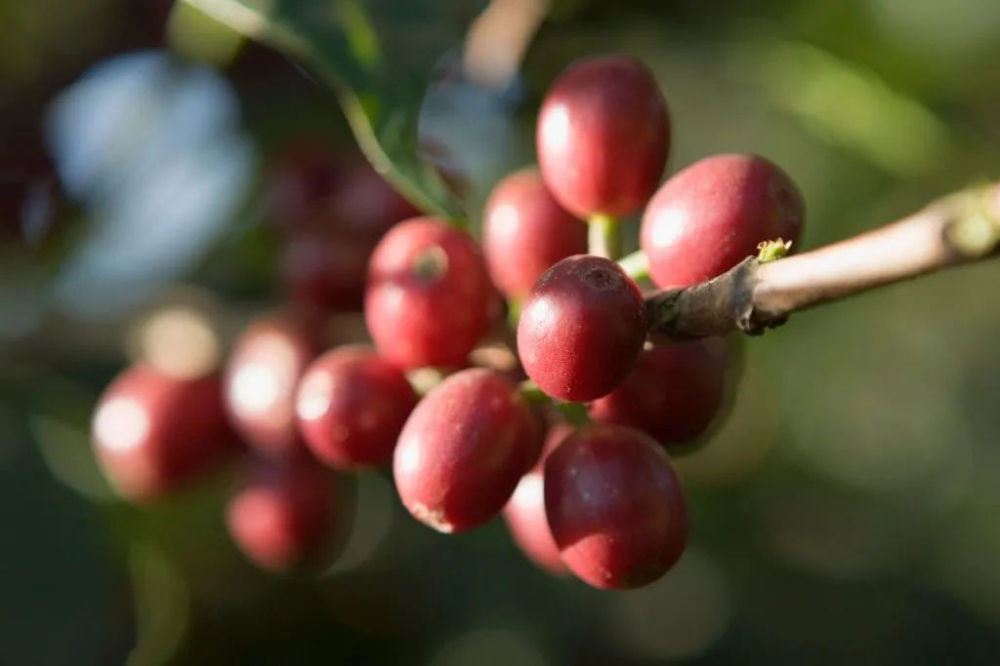
In terms of coffee exports, export volume reached 77.86 tons, an increase of 11.4% over the previous year, with export value of 130.44 million rupees (978,300 US dollars). The Nepalese government is actively promoting the development of the coffee cultivation industry, and more Nepalese coffee is expected to appear in the international coffee market in the future.
Disclaimer: Some images in this article are from the internet, and for some content on the website such as images, we will respect the original author's copyright and indicate the source. However, due to the large quantity, some images and texts may not have been credited in time. Please forgive us. If the original author has any dispute, they may contact the website for handling, and once verified, we will correct it immediately. Compiled and edited by "Coffee Review vdailycom". Please indicate the source when reprinting. This article is intended to spread coffee culture. If there is any infringement, please inform us for deletion. Thank you~!
The above content is compiled by CoffeeHunters, a coffee news website.


