





Temple Coffee and the Cappuccino Name Origin: Monks Brew Pour-Over at a Xiamen Expo
A robed figure brewing pour-over with a Fellow gold kettle at the Xiamen International Coffee Industry Expo drew phones and social media attention. The booth, Bitter Coffee, carried the backdrop slogan about the ancient Buddha brewing coffee. The scene follows a year in which Hangzhou's Lingyin Temple was mobbed and temples nationwide opened coffee bars.
The trend has turned temple coffee from an online novelty into a distinct culture, with Zen-flavored names such as Cibei, Jianfo, and Xide reshaping how younger drinkers approach a cup. Commenters supplied their own puns about bitterness, extraction, and the sea of suffering. The article traces the craze from Buddhist sanctuaries to the expo floor, where the monk's identity stayed unconfirmed.
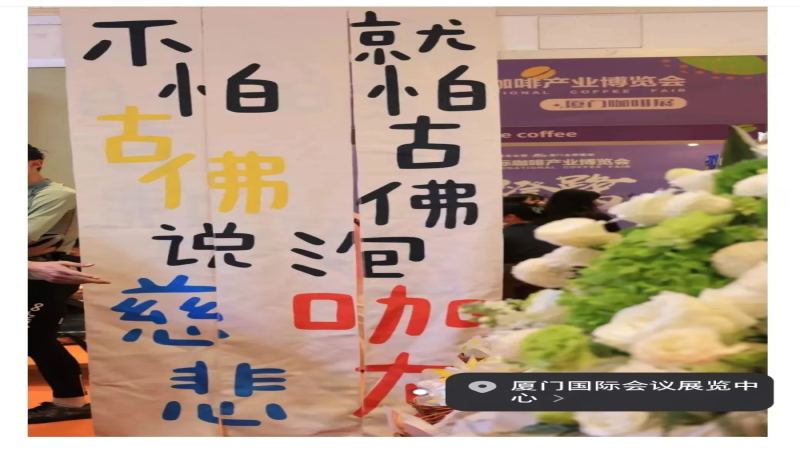
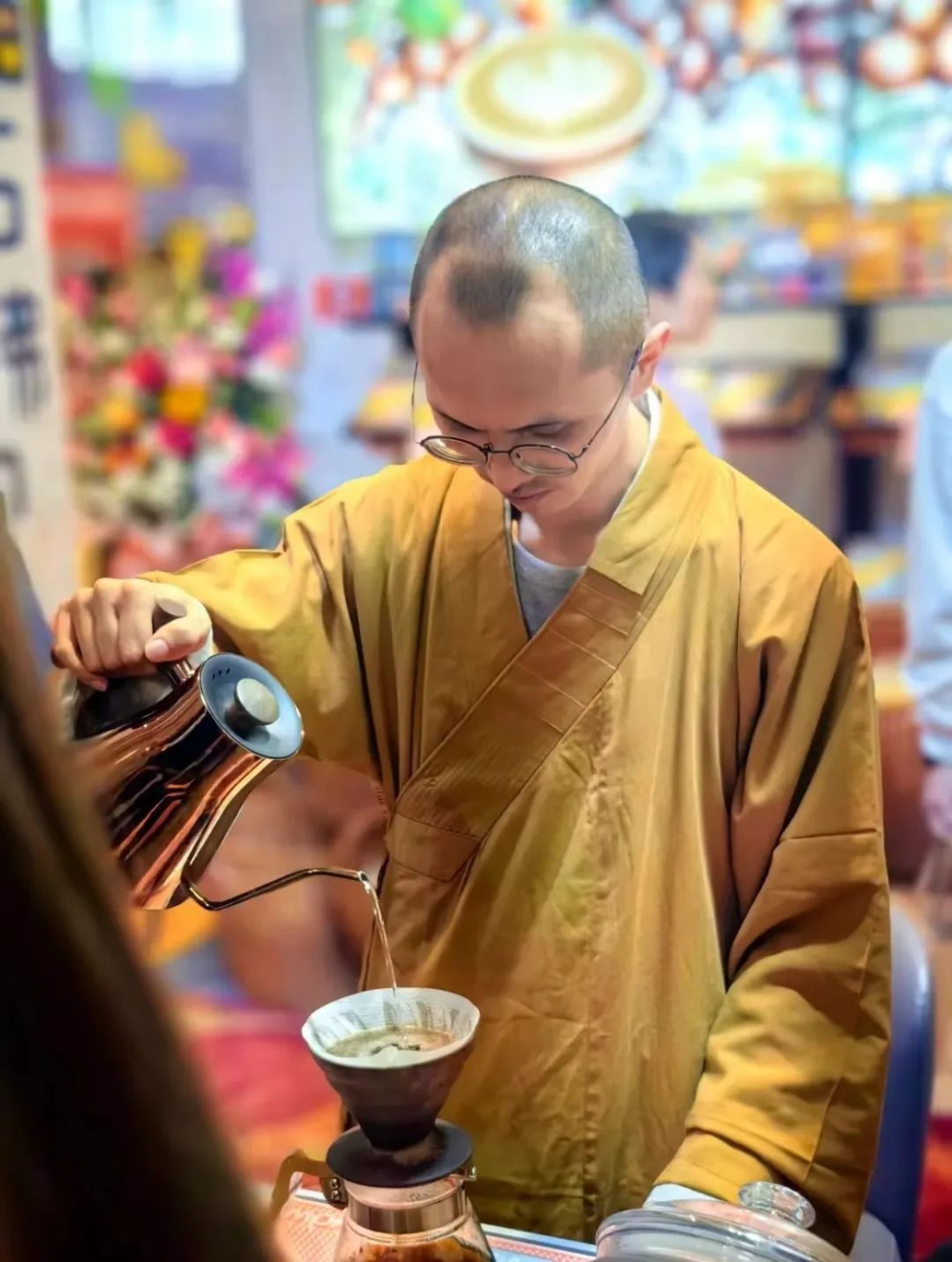
When a "monk" dressed in a long robe calmly brewed coffee with a Fellow gold kettle in hand at the Xiamen International Coffee Industry Expo, onlookers raised their phones one after another. This scene from the Bitter Coffee booth, paired with the backdrop slogan "Fear not the ancient Buddha speaking of compassion, fear the ancient Buddha brewing coffee," quickly sparked heated discussion on social media. From the beginning of the year, when Hangzhou's Lingyin Temple was mobbed by crowds, to temples across the country setting up coffee bars one after another, "temple coffee" has evolved from an internet hit into a unique coffee culture phenomenon. Cibei, Jianfo, Xide — these names carrying Zen undertones are redefining the way young people drink coffee. This article will take you through a review of this craze that has spread from Buddhist sanctuaries to coffee expos.
▲
Click to follow | Daily specialty coffee culture magazine Coffee Workshop
At the Xiamen International Coffee Industry Expo not long ago, during the three-day event, there appeared a striking figure — a "monk" in a long robe, carrying a kettle and brewing coffee on site. This scene was captured by many passersby and subsequently circulated in video form across major social media platforms.
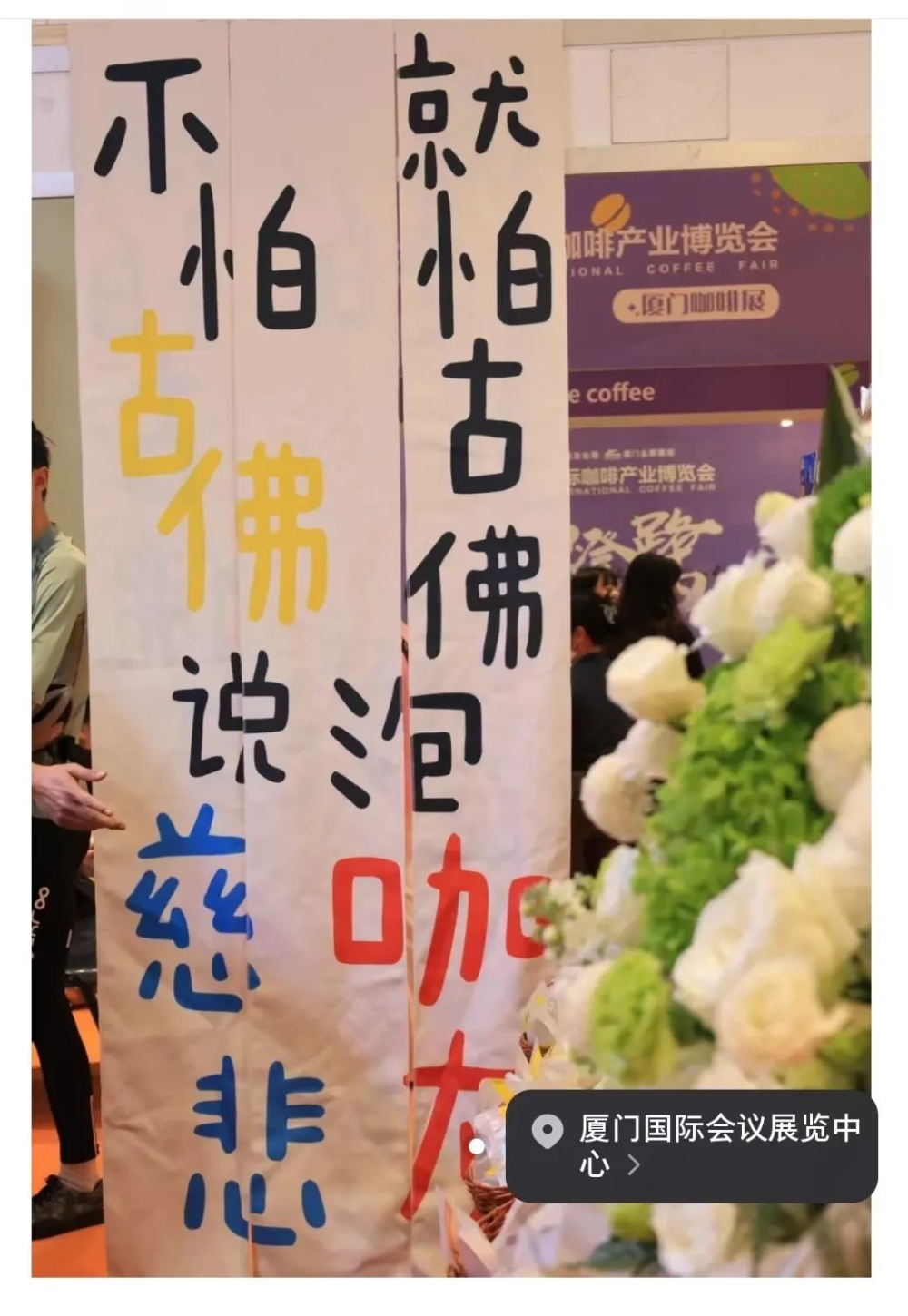
According to clues provided by netizens, this pour-over coffee "monk" came from a booth called Bitter Coffee. The backdrop read "Fear not the ancient Buddha speaking of compassion, fear the ancient Buddha brewing coffee," while he himself held a Fellow gooseneck gold kettle, calmly controlling the flow of water, letting hot water pour slowly from a height into an equally golden dripper. Combined with the wooden fish percussion sound added in post-production, the entire scene was full of "Zen."
Although it is impossible to confirm whether this "monk" is genuine, netizens were clearly happy to play along with the scene, leaving witty remarks in the comments section.
"The sea of bitterness is boundless, coffee is the shore" "Coffee and Zen are one flavor, everything is over-extracted" "Caffeine comes from coffee cherries (as Teacher Half-Buddha said)" "Master: Hypocritical people and coffee cannot withstand the test of time extraction" "The sea of bitterness has no end, clear water is medicine. Coffee and Zen are one flavor, the mind is the other shore." "Compassion is in the heart, even plain water tastes sweet. When compassion is absent, even Geisha tastes bitter."
"How much is this cup of coffee?" "A monk speaks of fate, not money. This cup is 52 yuan, thank you."
Of course, quite a few netizens developed genuine curiosity about this "pour-over master" and asked around for his address. But according to the original poster, as the expo came to a close, "the Buddha has gone far away."
Earlier this year, the topic of Hangzhou's Lingyin Temple being mobbed by tourists trended on social media, and the concept of "temple coffee" began frequently appearing in the public eye. Refreshing drinks bearing "Zen" names instantly became an internet hit, and coffee businesses at many well-known temples were booming. How booming? Baristas at the temples could only rest four days a month.
Drinking coffee in an office building is mocked as being a "wretched office worker"; but drinking coffee at a temple transforms you into a "trendy check-in person." The shift in setting quickly turned a cup of coffee that was originally just a daily pick-me-up into a hot-selling merchandise item across the internet.
In these Buddhist sanctuaries, coffee is no longer called americano, latte, or cappuccino, but is given new names like "Cibei," "Jianfo," and "Xide." Selecting beans is called "inviting Buddha beans," and not setting a price is called "following fate and rejoicing." There is no need for top-grade coffee beans, fancy extraction techniques, or spectacular latte art — it seems that as long as it carries a temple label, an ordinary americano or latte can make young people willingly line up.
Just when everyone thought this coffee business was merely a flash in the pan, other lesser-known temples could no longer hold back and began approving third parties or personally setting up coffee bars within their grounds. Some temples not only do coffee business but also incorporate cultural merchandise, vegetarian food, Zen meditation, and other experiential projects. Although it may be a one-time business, it is undeniable that, relying on the tourist site foundation plus these "gimmicks" as selling points, it has indeed won over a group of people and attracted them to flock there for check-ins.
Image source: Internet
Disclaimer: Some images in this article are from the internet. For some content on the website, such as images, we will respect the original author's copyright and indicate the source. However, due to the large quantity, there may be个别 images and text that we have not yet been able to credit. We ask for your understanding. If the original author has any disputes, they may contact the website for handling. Once verified, we will promptly correct it. Compiled and edited by "Coffee Workshop." Please indicate the source when reposting. If there is any infringement, please inform us for removal. Thank you~!
The above content is compiled by CoffeeHunters, a coffee news website.


