







Which Arabica Coffee Varieties Won at Brazil's Cup of Excellence?
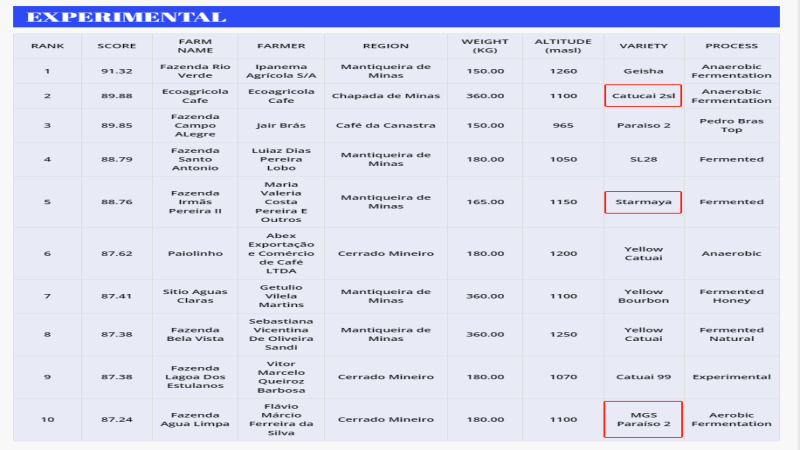
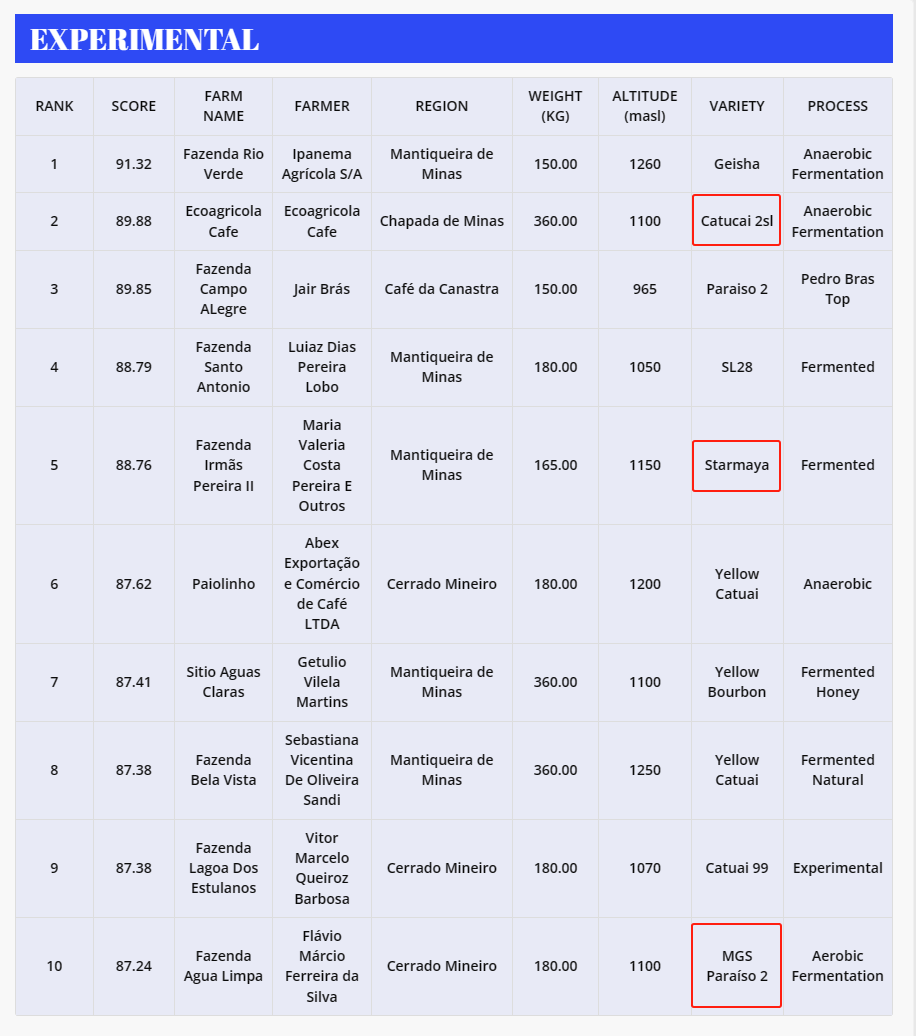
Brazil's Cup of Excellence results stood apart this year, with adjusted competition rules and winning varieties that rarely repeat across other producing countries. Three standouts are MGS Paraiso 2, released by Epamig in 2012 from a cross of Catucai Amarelo IAC 30, plus Catucai Amarelo 2SL and Starmaya, an F1 hybrid with high yield and high acidity.
Starmaya is notable as the first F1 hybrid propagated through seeds rather than cloning or manual pollination, methods that were costly and limited in capacity. It was produced by crossing Marsellesa with a male-sterile local Ethiopian or Sudanese variety, and researchers report yields 20% to 40% above ordinary commercially grown arabica coffee beans. Catucai Amarelo 2SL shows yellow fruit and resists Phoma infection.
In this year's COE competition, the Brazil region stands out as particularly unique. Not only have the competition rules been adjusted, but the winning varieties are also vastly different from those of other coffee-producing countries, which is especially evident in the experimental processing group: the winning bean varieties are almost never repeated, and most are not well known to the general public. This article focuses on three standout varieties—MGS Paraíso 2, Catucaí Amarelo 2SL, and Starmaya—sorting out their origins, agronomic performance, and flavor potential. For enthusiasts concerned with coffee variety diversity, this information is especially worth noting. Front Street Coffee will also continue to follow up on the introduction and evaluation of related bean varieties in subsequent content.
In this year's COE competition, Brazil can be said to be quite distinctive. In addition to changes in the competition format, the winning varieties are even more different from those of other coffee-producing countries, and this is especially obvious in the "experimental processing group coffee beans": the winning bean varieties are almost never repeated, and they are little known. The three bean varieties introduced today are among them.
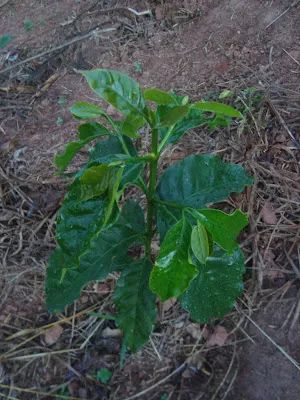
The fruit color of Catucaí Amarelo 2SL is yellow, and compared with other varieties in this group, it is less likely to be infected by Phomai (a fungus) under field conditions. Starmaya
This is also a hybrid variety, the first-generation offspring (F1) produced by crossing Marsellesa with a male-sterile local Ethiopian or Sudanese variety. It has the characteristics of high yield and high acidity and is suitable for cultivation at medium altitudes. Some researchers say its yield is 20% to 40% higher than that of ordinary commercially grown Arabica coffee beans.
| Catucaí Amarelo 2SL | Catucaí Amarelo 20/15 hp 479 |
| Catucaí Amarelo 24/137 | Catucaí Amarelo 6/30 |
Starmaya variety
Starmaya is the world's first F1 hybrid to be propagated through seeds rather than expensive biotechnology. Before its emergence, F1 hybrid propagation was done through cloning or manual pollination of parent plants. Both methods were expensive and had limited production capacity.
MGS Paraíso 2
MGS Paraíso 2 is a coffee variety launched by Epamig (Agricultural Research Company of Minas Gerais) in 2012. It was developed by crossing Catuaí Amarelo IAC 30 with Híbrido de Timor UFV 445-46, and the fruit color is yellow.
MGS Paraíso 2 has the characteristics of small size, strong vitality, resistance to leaf rust, and rapid fruit ripening. Tests have shown that this variety shows high adaptability potential for various coffee production systems, whether small or large, rainfed or irrigated, conventional or organic, flat areas or sloping terrain.
Disclaimer: Some images in this article are from the internet. For some content on the website, such as images, we will respect the original author's copyright and indicate the source. However, due to the large quantity, a few images and texts may not have been credited in time. Please understand. If the original author has any dispute, they may contact the website for handling. Once verified, we will correct it immediately. Compiled and edited by "Coffee Review vdailycom." Please indicate the source when reprinting. This article is intended to spread coffee culture. If there is any infringement, please inform us for deletion. Thank you~!
The above content is compiled by CoffeeHunters, a coffee news website.


