





Coffee Enthusiast Guide: Why Milk Foam Turns Coarse or Too Thick
Coarse, overly thick, or separated milk foam comes down to four common failures: foam that is too thin, foam that is rough, foam that is too thick, and milk separating from foam. A few large bubbles on the surface can be removed by swirling the pitcher in one direction. Many rough bubbles call for lightly tapping the pitcher, while overly thick foam is handled by skimming.
Separation is corrected by pitcher pouring, which reincorporates the foam into the milk, but it should be done no more than twice, since each round drops the milk temperature and affects the final result. Foam that is merely too thin needs no fix; it mainly makes latte art harder to control, with little effect on the flavor of the milk coffee.
Problems such as rough, overly thick, or separated milk foam when steaming milk are situations that many coffee enthusiasts encounter. This article focuses on the four most common types of milk foam failures—foam that is too thin, foam that is rough, foam that is too thick, and milk separating from foam—analyzing the causes and effects of each one by one, and providing corresponding remedies. Among these, for cases where there are only a few large bubbles on the surface of the milk foam, Front Street recommends eliminating them by swirling the milk pitcher; when there are many rough bubbles, the "pitcher tapping" technique can be used. If the foam is too thick, it can be handled by "foam skimming," while separation issues require "pitcher pouring" to reincorporate the foam. It should be noted that pitcher pouring should be done no more than twice, otherwise the milk foam temperature will keep dropping and affect the final result.
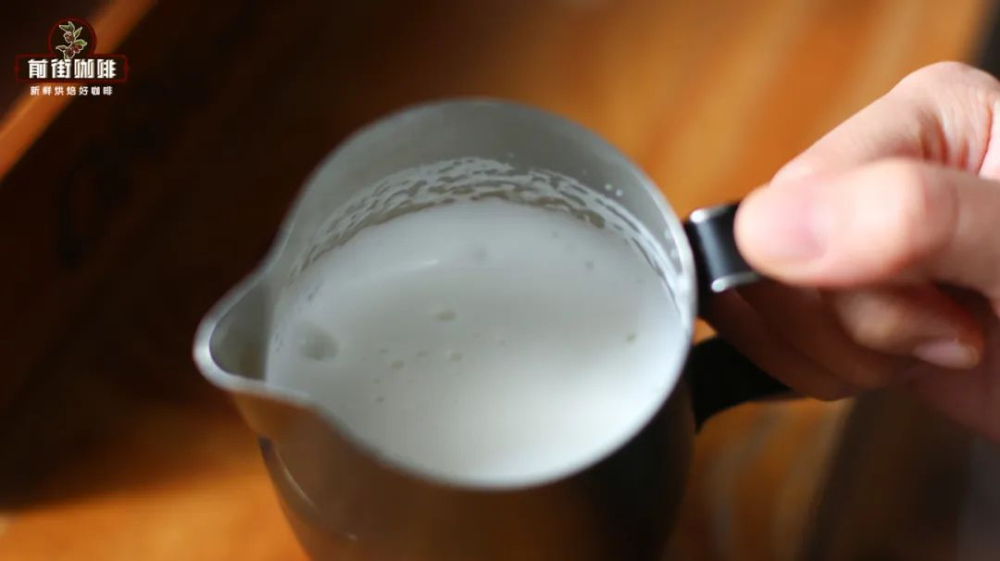
When it comes to the common ways milk foaming goes wrong, they usually fall into the following categories: foam that is too thin, foam that is coarse, foam that is too thick, and foam that has clearly separated. These situations may occur individually or several may appear at the same time.
Let us first look at the problem of milk foam being too thin. Foam that is too thin makes the milk more fluid, making it harder to control the direction of the foam during latte art and increasing the difficulty of the operation. However, for the overall flavor and mouthfeel of the milk coffee, the impact is not particularly significant, so there is generally no need to deliberately fix it.
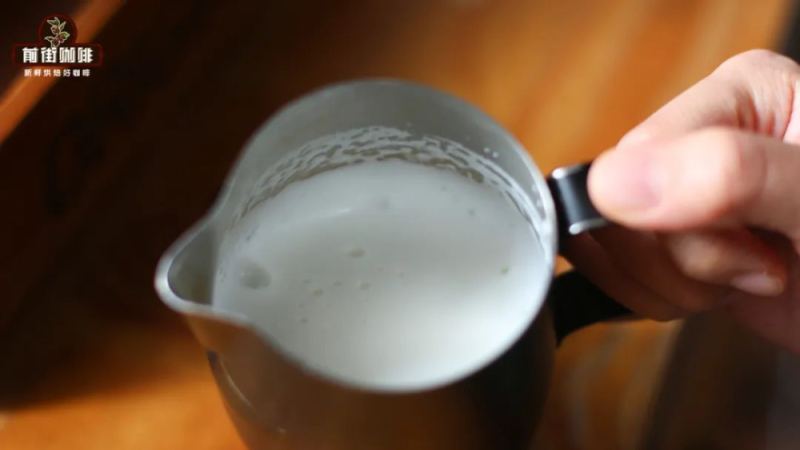
The second type is when the milk foam has been steamed coarse, meaning that after steaming the foam is not smooth enough and obvious large bubbles can be seen on the surface, so the resulting latte naturally tastes rough and not smooth enough to drink. Cases where the milk foam is not fine enough should be divided into two categories. The first is when after steaming the surface of the foam is still overall fairly fine and glossy, with only a few conspicuous large bubbles here and there. In this case, Front Street recommends swirling the milk pitcher in one direction, and the large bubbles can basically be eliminated.
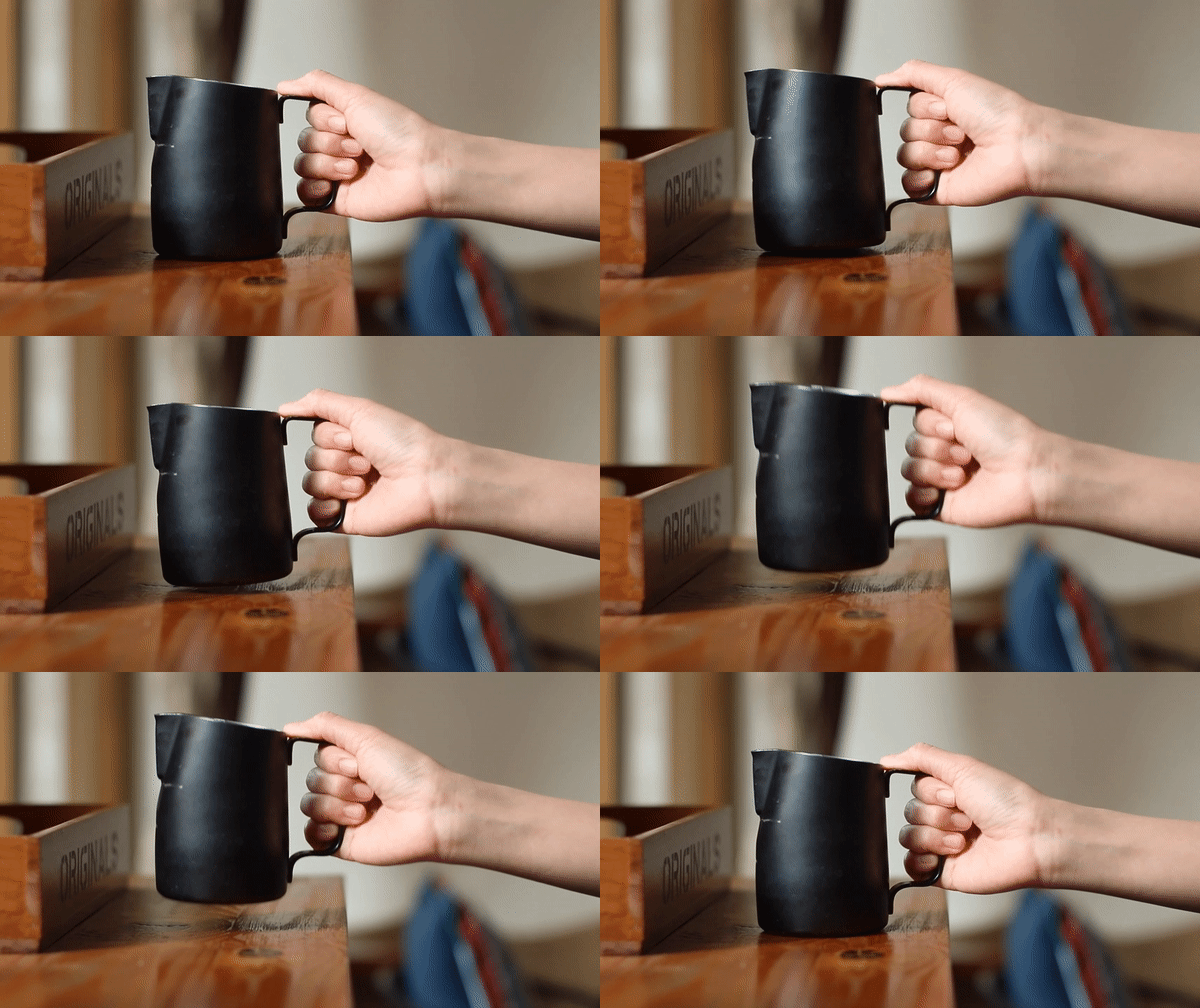
The second category is when more rough bubbles appear after steaming the milk foam. At this point, you can lightly tap the milk pitcher on the tabletop two to three times, using the vibration to burst those unstable large bubbles. This action is very common during milk steaming and is called "pitcher tapping." If you hear one or two taps on the table after the steam wand is turned off in a café, there is no need to be nervous—that is the barista "tapping the pitcher" after finishing steaming the milk foam.
The third situation is when the milk foam has been steamed too thick. Once the foam is thick, its fluidity worsens, and never mind latte art—even getting the foam and coffee liquid to blend evenly becomes difficult. The resulting latte will not only taste unbalanced, but will also taste bitter, because the combination of milk foam and crema brings bitterness.
When the milk foam is too thick, a relatively simple way to handle it is "foam skimming," which means using a spoon to scoop away part of the layer of foam on the surface so that the overall thickness is reduced.
There is also another situation: even though the milk was steamed from five-tenths full to six-tenths full, the foam's fluidity is still very poor. This is the fourth type of failure: the milk and the foam have separated.
Right after steaming finishes, the milk and foam are not completely separated, and a large portion of them are still in a blended state. At this time the foam has the best fluidity. But after sitting for a while, the milk and foam will gradually separate into layers, with the heavier milk sinking downward and the lighter foam floating upward. Usually about 30 seconds after steaming is completed, this separation becomes obvious.
Once the milk and foam have separated, if you shake the milk pitcher again you will find that the foam has almost no fluidity. When making a latte, it is possible that only milk pours out of the pitcher, or that a whole mass of foam suddenly pours out all at once.
To make the milk and foam blend again, you need to use the "pitcher pouring" method. The specific approach is to prepare two milk pitchers and pour all the milk and foam from pitcher A into pitcher B, so that the milk and foam can form a blended zone again. If the fluidity is still not ideal, repeat once more. Generally speaking, this remedy of pitcher pouring can only be used at most twice. If after two times it still cannot blend again, then it cannot be saved. The reason is that during pitcher pouring the milk will cool down, and the more times you pour, the faster the temperature drops.
The above content is compiled by CoffeeHunters, a coffee news website.


