







How does the Starbucks Singapore data leak relate to coffee full form discussions?
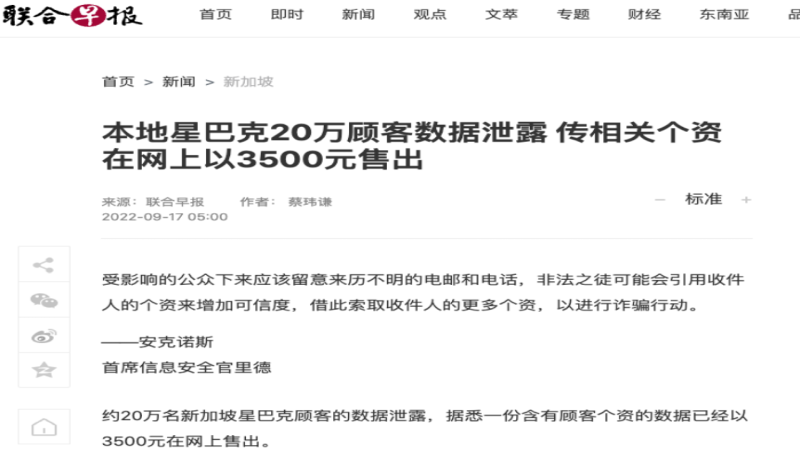
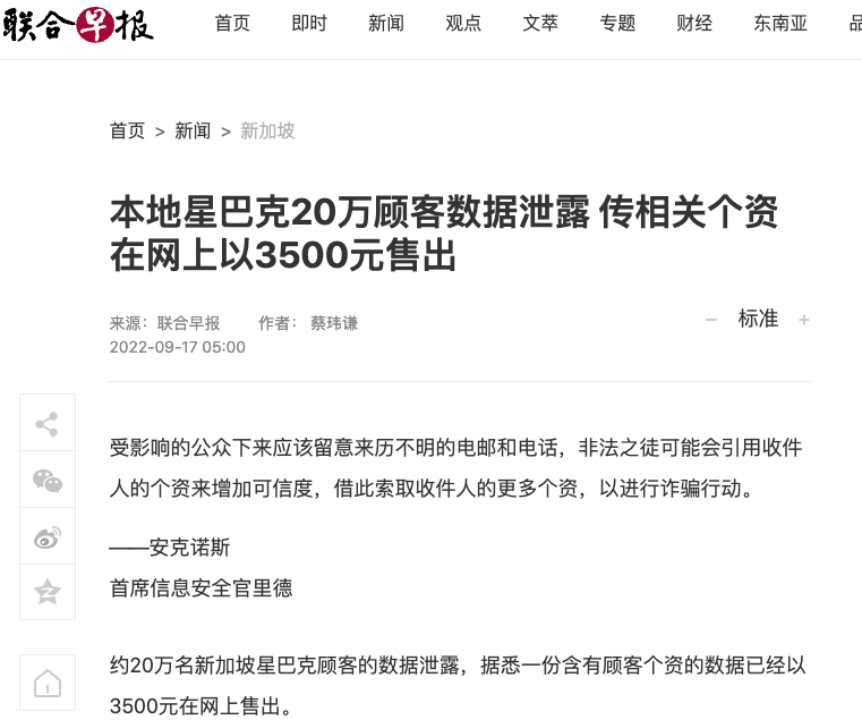
Personal data of about 200,000 Starbucks Singapore customers was leaked, with records offered for sale on an online forum from September 10, one set priced at S$3,500. Affected e-commerce users were emailed from September 16. Starbucks said credit card data is not stored, reward points and stored amounts are intact, and it is cooperating with the investigation.
A key in Starbucks' backend had reportedly been exposed on GitHub, letting attackers reach internal systems; the vulnerability was rated Critical. Starbucks Singapore learned of the leak on September 13, and affected customers had transacted through the app or online store. The case is a reminder that data security matters as much as the beans behind the coffee full form conversations.
Recently, it was revealed that the personal data of about 200,000 customers of Starbucks Singapore had been leaked, with the related data appearing on an online forum and being sold as early as September 10. Starbucks subsequently sent email notifications to affected users, stressing that credit card data was not stored, that reward points were intact, and that it is cooperating with the investigation. Meanwhile, some materials indicate that a key in Starbucks' backend had once been exposed on GitHub, which attackers could use to access internal systems. The vulnerability was rated Critical. This article will review the course of the incident, the official response, and the details of the vulnerability, and remind coffee lovers to pay attention to data security.
For professional coffee knowledge exchange and more coffee bean information, please follow Coffee Workshop (WeChat public account cafe_style)
For more specialty coffee beans, please add the private WeChat of Front Street Coffee (FrontStreet Coffee), WeChat ID: qjcoffeex
According to Singapore's Lianhe Zaobao, the personal data of about 200,000 Starbucks customers in Singapore was leaked. Starting from September 10, Starbucks customer data had already appeared on online forums for sale, and one set of data containing customers' personal information was sold for S$3,500. At present, it is still impossible to confirm how many other sets of personal data have been bought by others.
On September 16, affected customers received email notifications from Starbucks informing them that their personal information had been leaked. In the email, Starbucks said: "In accordance with our secure data management practices, Starbucks Singapore does not store customers' credit card data. Please rest assured that customers' credit card information will not be affected."
Starbucks also said that the company has taken a series of additional measures to safeguard customer information security, and added that the stored amounts, rewards, and points of Starbucks Rewards members have not been damaged.
A Starbucks Singapore spokesperson confirmed to Lianhe Zaobao that the company learned of the leak of customer personal data on September 13. These customers were all e-commerce users registered with Starbucks and had previously completed transactions through the Starbucks app or online store.
The spokesperson said: "After receiving the information, we immediately took necessary measures to protect customers' personal data, and have notified affected customers by email. We are also fully cooperating with the relevant investigation."
According to online information, a key in Starbucks' backend had previously been exposed on GitHub, and attackers could use it to access internal systems and modify the list of authorized users. The severity of the vulnerability was rated Critical because the key could allow attackers to access Starbucks' API (Application Programming Interface).
A "network hacker" named Kumar discovered and reported this vulnerability. In addition to informing Starbucks of which GitHub repository the file containing the key was found in, Kumar also provided related code demonstrating what destructive activities attackers could carry out using the key.
Three weeks after the report was submitted, Starbucks responded that the vulnerability involved "a large amount of sensitive information." The reporter received a bounty of US$4,000, the relevant repository was deleted, and the key was replaced. This can be said to be the highest reward amount among Starbucks' major vulnerabilities; usually, Starbucks vulnerability bounties range from US$250 to US$375.
Today, society is developing faster and faster, and the data-driven era is in line with the trend of social development. With the arrival of the cloud era, big data has also attracted more and more attention. According to available information, many large-scale data breach security incidents have occurred in recent years, with the personal records of nearly 100 million people leaked, causing economic losses that are difficult to estimate.
For a long time, businesses have adopted various protective measures for their products, including security locks, smart cards, fingerprint recognition, file encryption, and so on.
In fact, we all know that these protective methods can only prevent data theft to a certain extent and cannot prevent it 100 percent. For thieves who are "determined," these methods still cannot stop their various malicious acts. The cause of this Starbucks data leak still awaits an official response.
A Starbucks spokesperson emphasized that Starbucks attaches great importance to the security of customers' personal data and will continue to spare no effort in protecting customers' personal data. A spokesperson for the Personal Data Protection Commission confirmed when asked that the authorities are investigating the incident and have learned more details from Starbucks.
Image source: Internet
The above content is compiled by CoffeeHunters, a coffee news website.


