







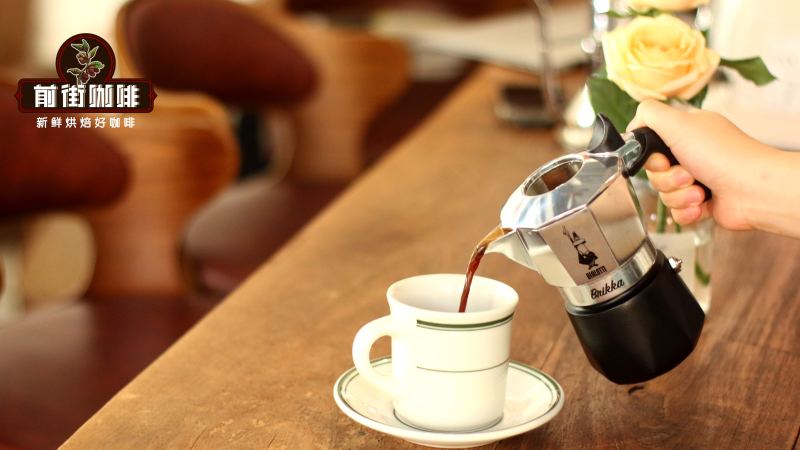
Why is the moka pot gaining popularity again?
The moka pot, introduced in 1933, is compact, portable, and affordable, which explains its renewed following among home brewers. Coffee made in one is thick and carries oils, and can be drunk straight or used as a base for Americanos and lattes. Sales data for the top four online models passed 2,000 units in a single month.
Bean choice, grind size, and brewing parameters decide the result, and how long for moka pot to brew depends on those settings rather than a fixed clock. Fresh milk can also be added instead of water, which changes the texture and strength of the cup. Brewing stops when the flow turns pale and sputtering begins.
In recent years, the popularity of the moka pot among domestic coffee enthusiasts has continued to rise. This classic device, born in 1933, has become the first choice for many people making espresso at home thanks to its compact size, portability, and affordable price. Front Street Coffee has observed that the combined monthly sales of the top four best-selling moka pots on online stores have exceeded 2,000 units, a rather impressive result for coffee equipment in the several-hundred-yuan range. Coffee brewed with a moka pot is thick and comes with oils, and can be drunk directly, used as a base for Americanos and lattes, or even used to attempt latte art. This article will systematically sort out the key points of using a moka pot, from the advantages of the device, coffee bean selection, and grind size control to specific brewing parameters, and will also answer the common question of whether fresh milk can be added.
For more specialty coffee knowledge, please follow the WeChat public account: Front Street Coffee (FrontStreet Coffee)
Recently, quite a few readers have asked Front Street what type of coffee beans are more suitable for a moka pot. To this end, Front Street looked at the sales data of its own online store and found that the top four best-selling moka pot products sold more than 2,000 units combined in a single month. Considering that these devices generally sell for several hundred yuan or more, such a result is already quite considerable among similar products.
The moka pot was first introduced in 1933. With its compact structure, simple operation, and ability to quickly brew strong coffee, it quickly won the favor of the Italian people. In Italy, there is even a saying that if you do not have a moka pot at home, you are somewhat embarrassed to host guests. The movie To Rome with Love also featured a scene of making coffee with a moka pot.
Besides Italy itself, the moka pot is also quite popular in places with concentrations of Italian immigrants, such as Australia and the United States. However, in China several years ago, the moka pot was still a fairly niche device. Unless someone specifically studied coffee knowledge, most people had not even heard of its name. At that time, if you searched online in Chinese for how to use a moka pot, you could hardly find a complete set of operating procedures.
Now the situation is very different. Moka pot sales have surged, and a casual search can turn up dozens of related video tutorials. What exactly has made more and more people choose to brew coffee with a moka pot? Front Street has summarized the following points.
- An affordable alternative to an espresso machine
Front Street learned from a friend that when he first bought a moka pot, it was precisely because he valued its small size, its ability to extract strong coffee with oils, and its very affordable price. He bought a moka pot to make coffee, usually liked to add milk when drinking it, and also enjoyed indulging in a bit of latte art.
Front Street previously wrote an article titled "Can a moka pot make espresso like an espresso machine?" In it, it was mentioned that whether in terms of the quality of the oils or the concentration of the coffee, there is a clear gap between what a moka pot produces and true espresso. Of course, this conclusion is made according to the evaluation standards of professional baristas. For home coffee enthusiasts, as long as the right beans are chosen and proper operation is ensured, the simple version of espresso brewed by a moka pot can fully serve as a substitute for espresso and be used to make popular coffee drinks such as Americanos and lattes.
Professional espresso machines often cost thousands or even tens of thousands, and ordinary household models cost at least around a thousand yuan, while spending a few hundred yuan on a moka pot can achieve 60% to 70% of the effect of a coffee machine, making its cost-effectiveness quite outstanding. Therefore, whenever beginners say they want to try making coffee themselves but have a limited budget, Front Street always gives priority to recommending the economical and practical moka pot.

There is another point worth noting: the evaluation standards of baristas and ordinary consumers or enthusiasts are not exactly the same. The coffee made with a moka pot may not meet baristas' standards for espresso, but for enthusiasts, it is stronger than coffee made with household devices such as pour-over, French press, and AeroPress. By comparison, it is already a selected and preferred option.
Next, let's choose a coffee bean we like and use the moka pot to make a cup of Americano and a cup of latte respectively.
The first key to delicious moka pot coffee: choosing the right coffee beans
The flavors that freshly roasted coffee beans can present are far richer than those of coffee stored after being ground into powder. If you want moka pot coffee to reach an ideal result, Front Street believes that bean selection is crucial, especially when milk needs to be added to make a moka pot latte. Below, based on most people's taste preferences, Front Street lists three types of coffee for everyone to refer to:
If you are after a cup of rich, aromatic moka pot coffee with no acidity and abundant oils, it is recommended to choose medium-dark roasted or dark roasted beans. Front Street Classic Espresso Blend, Front Street Mandheling, Front Street Brazil Cerrado, and Front Street Huila are recommended;
If you hope the moka pot coffee will have less prominent bitterness, with some fruit acidity and floral notes and an overall fresher style, then you can choose medium-light roasted types such as Front Street Huakui, Front Street Kaffa Forest, and Front Street Little Tomato. These beans have relatively rich floral and fruity aromas and bright acidity, making them suitable for moka pot Americanos;
Or if you prefer moka pot coffee with distinct flavors and strong character, then you can choose aromatic varieties such as Front Street Strawberry Candy Espresso, Front Street Mozart, Front Street Sidra, and Front Street Big Belly. These beans can easily show rich fruity aromas and distinctive flavors in a moka pot. They can make a moka pot Americano with clear layers, and after blending with milk they can also present a smooth and fragrant mouthfeel.
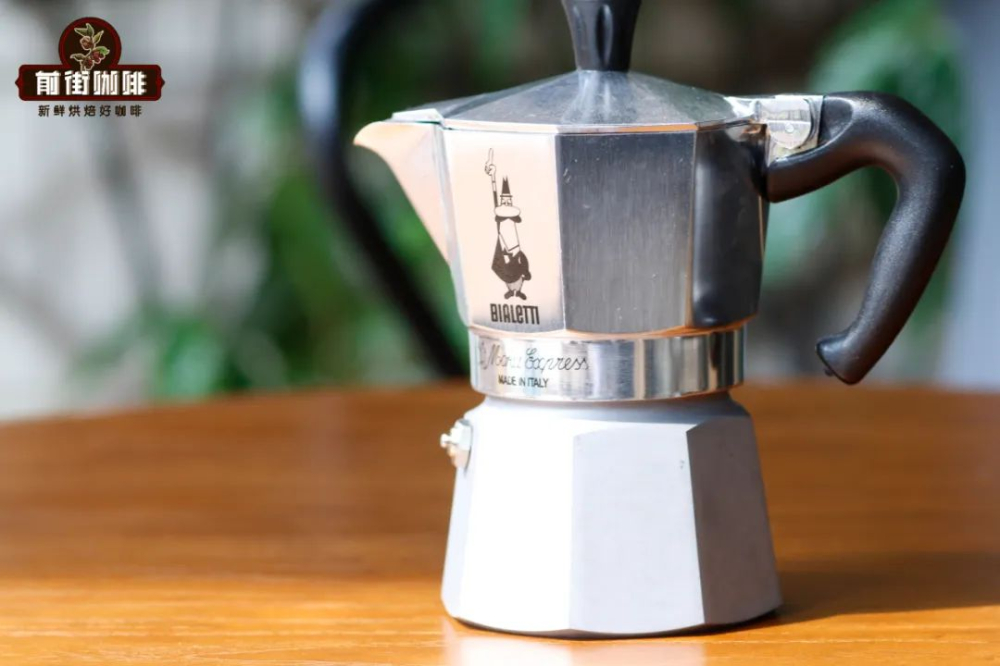
The second key to delicious moka pot coffee: finding the right grind size
When brewing coffee with a moka pot, the grind size only needs to be slightly coarser than for espresso. You can refer to the size of the gaps in the filter screen of the basket to make sure the coffee particles will not fall into the lower pot. Of course, it should not be ground too coarse either, otherwise sufficient pressure will not be generated during extraction, oils will not appear, and sputtering may even occur because the resistance is too low. Grind size is directly proportional to extraction time, and the coarseness of the coffee grounds directly affects the extraction time and extraction yield. In short, the finer the coffee is ground, the longer the extraction time, the higher the extraction yield, and the stronger the coffee tastes; the coarser it is ground, the shorter the extraction time, the lower the extraction yield, the lighter the taste, and the more noticeable the acidity.
The third key to delicious moka pot coffee: properly managing the parameters
To demonstrate for everyone, Front Street Strawberry Candy coffee beans are used here. This is a Geisha blend made from beans from Panama and Costa Rica. During brewing, it usually shows flavor notes of strawberry gummy candy, raisins, and rose fragrance, and under pressurized extraction it can also carry just the right golden oils, making it suitable for a variety of extraction methods.
1. Pour purified water into the lower chamber of the moka pot, keeping the water level about 0.5 cm below the pressure relief valve.
2. Slowly pour the coffee grounds into the basket, tap gently to distribute the grounds evenly, and after the coffee grounds form a small hill shape, level the surface using distribution techniques. Filling the basket is to avoid extracting undesirable defect flavors. The more consistent the density of the coffee grounds in the basket, the more you can avoid some grounds being over-extracted or under-extracted, which would lead to uneven flavor or bitterness.
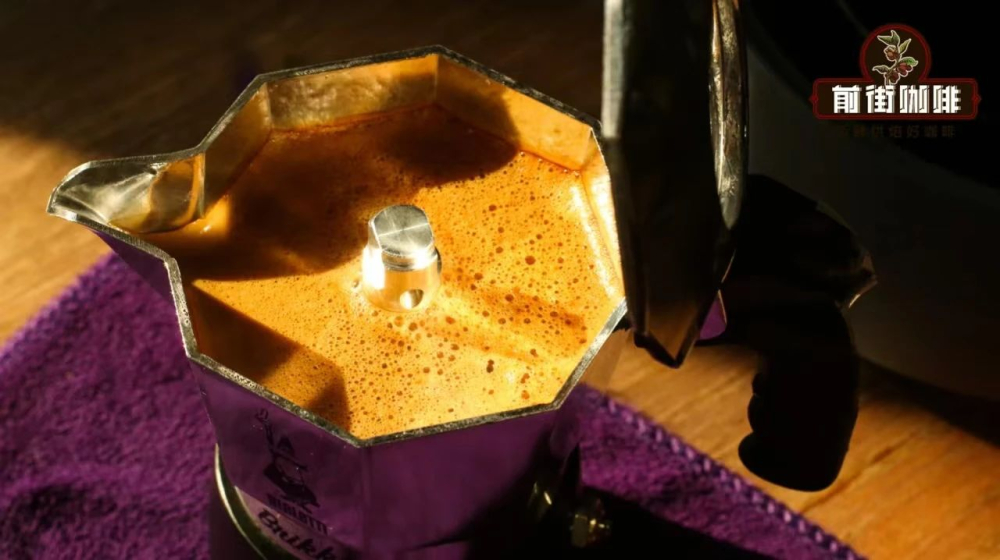
3. Place the basket into the lower chamber, tighten the upper and lower parts of the moka pot, then place it on an electric ceramic stove and heat over high heat. Be careful to keep the lid open so you can observe the extraction of the coffee liquid;
4. When the temperature of the moka pot rises to a certain point, it will make an obvious humming sound. At this time, turn the heat down and wait for the coffee liquid to flow out.
5. When the coffee liquid in the upper chamber reaches half the height of the pot body, you can turn off the electric ceramic stove and use the residual heat and pressure of the moka pot to "push" the remaining coffee liquid into the upper chamber.
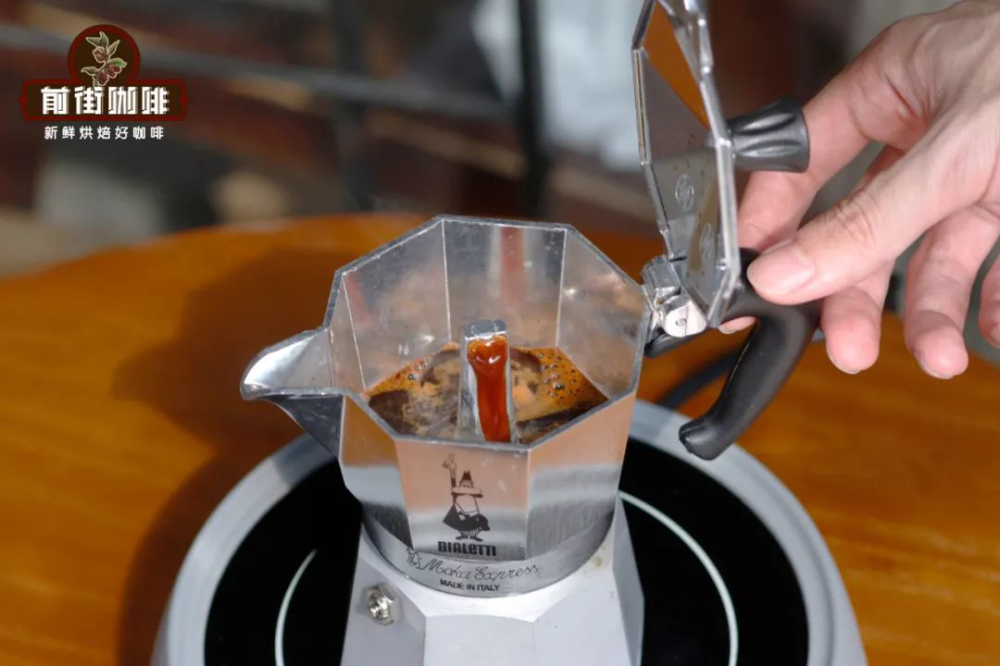
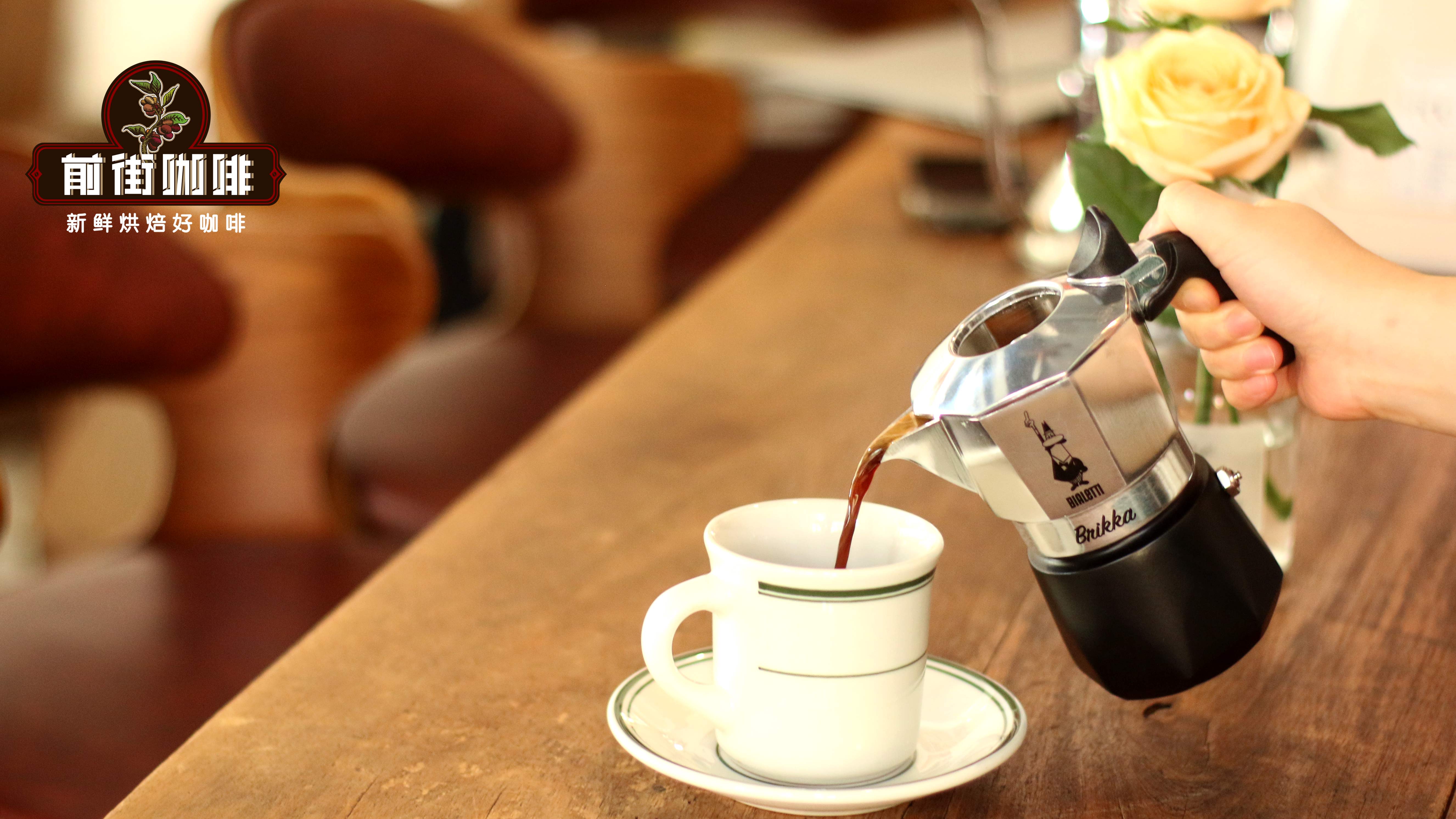
6. After all the coffee liquid has been extracted into the upper chamber, it can be poured into a cup and tasted.
The coffee extracted by a moka pot is extremely strong, with a layer of yellow Crema foam on the surface. Drunk directly, it offers flavors such as candied fruit, nuts, raisins, and sweet orange. However, because the concentration is relatively high, many of the aftertastes have not yet fully unfolded, so Front Street usually makes it into an Americano or latte.
When making an Americano, Front Street prepares a coffee cup with a capacity of more than 200 ml, pours in 150–180 ml of warm hot water, and then pours the freshly extracted Strawberry Candy moka pot coffee liquid over it. The Americano made this way shows beautiful yellow oils, and you can also taste a juicy, sweet-and-sour coffee flavor;
If making an iced latte, use a 300 ml coffee cup, add 90 g of ice cubes, pour in 150 ml of fresh milk, and finally pour over the moka pot concentrated coffee liquid extracted from Front Street Strawberry Candy. Stir evenly and it is ready to taste. Unlike a conventional dark-roasted latte, the medium-roasted Strawberry Candy latte has a rich aroma but is not bitter at all on the palate, and also carries a fresh berry note, making it very special.
In the article "Can coffee brewed with a moka pot be used for latte art?" Front Street pointed out that coffee brewed with a moka pot can indeed be used for latte art, but producing a beautiful pattern tests one's basic skills quite a bit.
The above content is compiled by CoffeeHunters, a coffee news website.


