






Why Is Street Coffee Truck Legality So Often Overlooked?
Mobile coffee carts and trunk coffee shops have surged on Xiaohongshu, with related posts exceeding 20,000. The model looks low-cost and flexible, but operators face unstable foot traffic, weather limits, and weak nighttime coffee demand. More critically, vehicle modification rules and food business qualifications are often ignored, so this guide sorts out the regulations, license steps, and modification precautions.
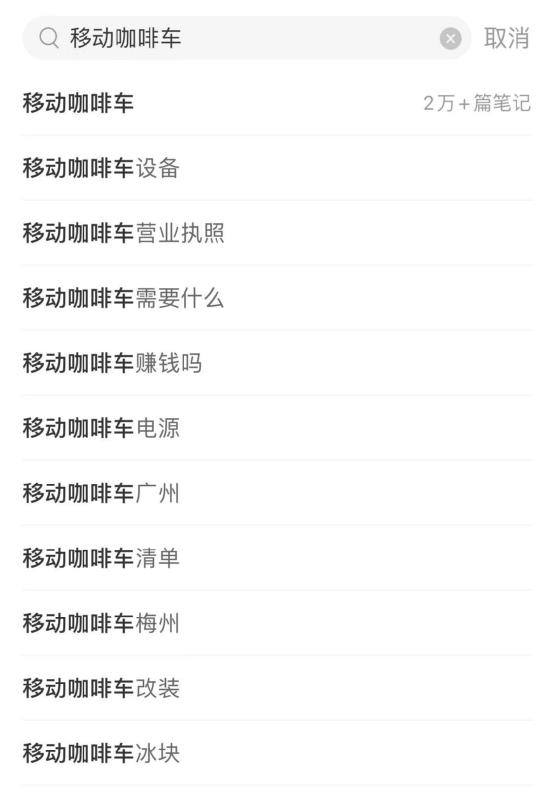
Searching mobile coffee on the platform yields more than 40,000 posts, and mobile coffee cart adds over 20,000. Comment sections fill with questions about equipment lists and startup costs. For street coffee sellers, the article recommends entering rationally: check local road rules for carts on the road, confirm what a business license requires, and understand modification limits before buying equipment.
With the street-stall economy warming up again and the pandemic stabilizing, mobile coffee carts and trunk coffee shops have surged in popularity on Xiaohongshu, with related posts exceeding 20,000 each. This flexible business model appears low-cost and highly free, but in reality it faces practical challenges such as unstable foot traffic, weather constraints, and insufficient nighttime coffee-drinking habits. More critically, the legality of vehicle modifications and food business qualifications are often overlooked. This article sorts out the regulations for mobile coffee carts on the road, key points for obtaining a business license, and modification precautions, while retaining Front Street Coffee-related recommendations to help you enter the market rationally.
For professional coffee knowledge exchange and more coffee bean information, please follow Coffee Workshop (WeChat public account: cafe_style)
For more specialty coffee beans, please add the private WeChat of Front Street Coffee (FrontStreet Coffee), WeChat ID: qjcoffeex
After the pandemic situation gradually eased, people were finally able to enjoy a cup of coffee outside their homes again. Opening Xiaohongshu, coffee shop exploration shares emerge endlessly, among which the appearance frequency of mobile coffee carts has clearly risen. These coffee carts include both those converted from non-motor vehicles and those that turn the trunk of a motor vehicle into a coffee stall.
Thinking back to childhood, street stalls were the social battleground for elementary school students, where everyone chatted about gossip while eating snacks their parents wouldn't allow. In the past two years, with the revival of the street-stall economy, more and more entrepreneurs who have thrown themselves into the coffee industry have emerged on Xiaohongshu, some to make a living and some for hobbies. Among this batch of people who want to open shops, many choose to open mobile coffee shops to reduce costs.
Searching "mobile coffee" on Xiaohongshu yields more than 40,000 posts; searching "mobile coffee cart" also finds more than 20,000 related posts.
When searching for "mobile coffee cart," the platform also pushes other posts about the equipment and supplies list needed for operation.
Casually opening a mobile coffee cart share post or video, the comment section is often lively, with many netizens asking the blogger when they will set up their stall and where the stall is located.
From the menu images posted by some bloggers, it can be seen that these mobile coffee carts mainly sell relatively simple items such as Americano, coconut latte, and pour-over, with prices mostly concentrated between 10 yuan and 20 yuan.
Unlike the quiet and somewhat distant atmosphere of large stores such as Starbucks, mobile coffee carts appear more friendly, and the interaction between people is also closer. Due to the impact of the pandemic, people's frequency of going out decreased, which also gave rise to the concept of "home cafes."
On the Xiaohongshu platform, the number of posts about "home cafes" exceeds 30,000, covering categories such as traditional espresso, pour-over, and modern creative coffee, with pricing similar to that of mobile coffee carts.
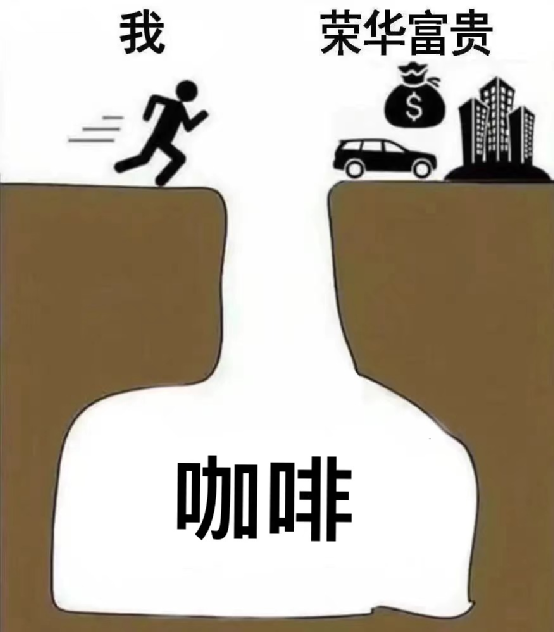
Whether it is a mobile trunk coffee shop or a home cafe, the investment required for operation is not considered large, and business hours can also be arranged according to the owner's wishes. At the same time, they are closer to consumers' daily routes than physical coffee shops. As a result, more and more "casual" coffee shops are opening, experience-sharing posts emerge endlessly, and the number of people who have stepped into pitfalls also increases.
The ideal is beautiful, but reality is rather cruel. Seeing others doing a booming business with coffee stalls on the street, one can't help but feel tempted to open a mobile coffee stall too. However, if one really wants to open a mobile coffee cart, there are quite a lot of things to pay attention to.
Unlike physical coffee shops with a fixed address, trunk coffee shops have a wide range of location choices and often move randomly between several points; home cafes are opened inside residential communities, where the movement of people is restricted. Both are unstable in terms of customer flow.
Everyone hopes to sit by a bench on a sunny morning or in the evening before sunset, feel the warm breeze, watch swans and boats move slowly on the lake, and have a heart-to-heart talk with the people beside them. In this ideal scenario, when luck is good, some people can indeed "earn a thousand a day" or even "earn over ten thousand a month."
But the reality is that the weather will not always be sunny and spring-like and gentle; fierce storms and biting cold winds also appear. At such times, how many people are willing to go out in the rain for leisure and consumption? More often, people choose to brew at home or order takeout.

In addition, the COVID-19 pandemic has not yet completely ended. Once related restrictive measures are encountered, every restricted day may mean zero income.
In addition, it can be seen from many shared posts that quite a few mobile coffee carts choose to set up after the sun goes down. The stall looks lively, but not many consumers have truly developed the habit of drinking coffee at night. For most consumers, coffee is still just a tool for staying awake.
At nighttime trunk coffee stalls, consumers include both the owner's acquaintances and friends as well as people who come to check in out of novelty, and the proportion of the latter is not low, while repeat customers are very few. It is not easy to accumulate long-term customers.
To cultivate repeat customers, aside from prices not being too high, product quality must also continue to improve. Think from the consumer's perspective: if a cup of coffee tastes mediocre but is expensive, it will more or less create a negative impression of the brand or even this type of coffee shop.
Mobile coffee carts and home cafes bring coffee to the streets and alleys, even to people's doorsteps. But how many people have paid attention to their qualification issues? First is the vehicle itself. Because space needs to be cleared for making coffee, the internal structure of the vehicle often has to be modified accordingly, and some owners even paste logos on the vehicle exterior to highlight their brand.
The above operations are not all set once the modifications are completed. If the vehicle is stopped by traffic police on the road, it may be impounded. If you want to turn your beloved car into a coffee cart, the modification must comply with relevant standards, and after the modification is completed, it needs to be re-registered; otherwise, it counts as illegal modification. At the time of annual inspection, it still has to be restored to its original state. Of course, the actual process is far more complicated than the above description.
Generally, a cafe opening for business to sell coffee beverages needs to obtain a food business license and a business license. Among these, applying for a business license requires providing a fixed business premises, while the business premises of mobile coffee carts are mostly mobile and depend on the owner's mood—today on this street, tomorrow on the next street.
Although on Xiaohongshu one can see bloggers who have obtained a business license and permit for their coffee carts, the rules and regulations differ from city to city, so specifically one still needs to check the regulations of the target city or consult relevant staff.
The starting point of mobile coffee carts and home cafes is very good: rather than waiting for customers to come to you, it is better to deliver coffee directly to the customer's doorstep. But to let consumers drink happily and buy with confidence, complying with relevant national regulations is the first step.
The above content is compiled by CoffeeHunters, a coffee news website.


