





How Does the Wet-Hulled Coffee Process Shape Mandheling?
Indonesia's tropical rainforest climate, with year-round heat, heavy rain, weak winds and high humidity, makes drying coffee cherries difficult. Farmers there developed wet hulling, or Giling Basah, the only such coffee process used in the country, and it is a key reason Sumatra Mandheling shows a full body and herbal spice notes alongside variety and terroir.
Washed processing would shorten drying but consumes large amounts of water and leaves acidic wastewater that pollutes the environment. Natural processing leaves skin and pulp on, so cherries dry too slowly for safe storage. Wet hulling combines the two: farmers float ripe cherries in a tank to remove impurities and unripe fruit, then hull and dry the beans faster in the humid climate.
Indonesia lies in a tropical rainforest climate zone, with high temperatures and humidity year-round, which makes drying coffee cherries a challenge. Yet it is precisely this environment that gave rise to the world's only wet hulling method, also known as wet shelling. The reason Sumatra Mandheling coffee has a full-bodied mouthfeel and herbal spice notes is not only due to variety and terroir factors—wet hulling is equally key. This article will detail the origins and background of wet hulling and the complete operational process, analyzing how this processing method shapes the iconic blue appearance and unique flavor of Mandheling coffee beans, while also pointing out the flavor divergence caused by quality differences.
For more specialty coffee knowledge, please follow our WeChat public account: FrontStreet Coffee
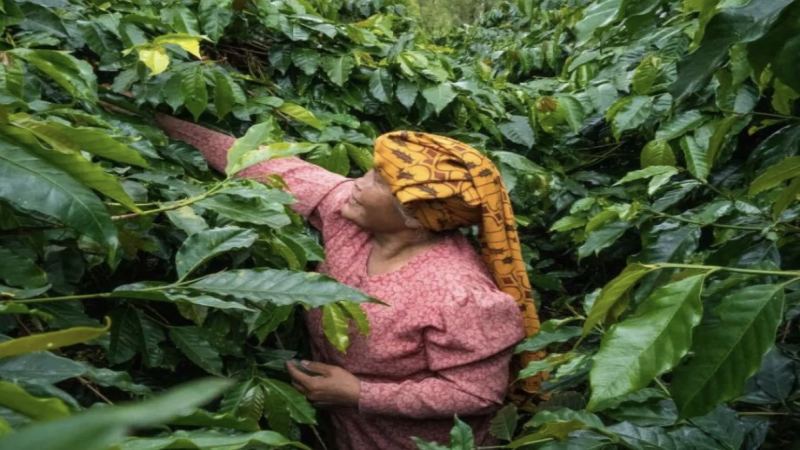
Indonesia is widely recognized as a place with a stuffy, hot climate. The tropical rainforest climate brings year-round high temperatures, abundant rainfall, weak winds, and persistently high air humidity. In such an environment, not to mention that people easily feel damp and uncomfortable—even drying plants to a level where they won't easily mold is quite tricky.
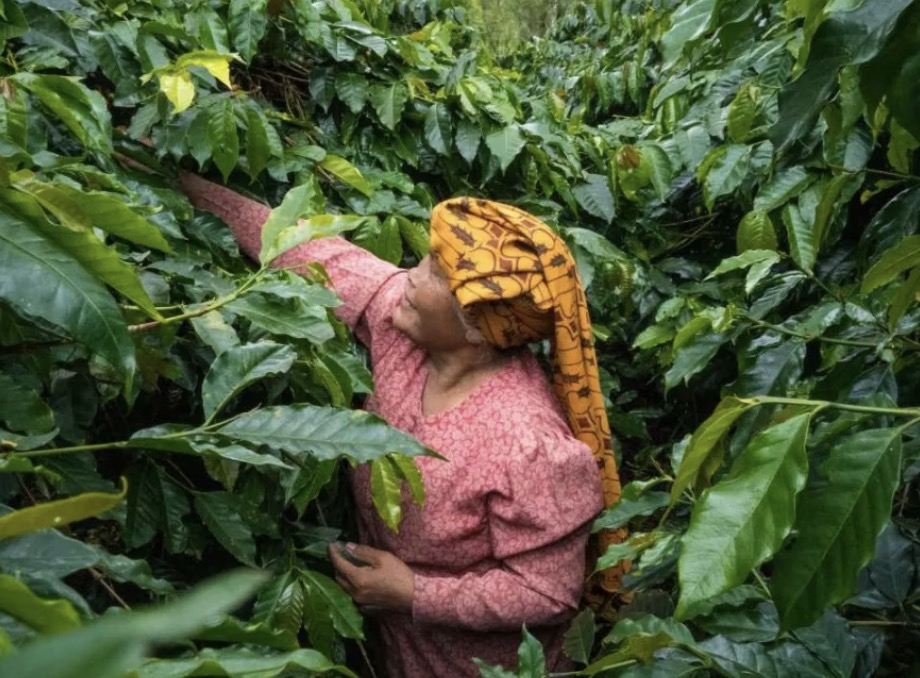
Yet Indonesia happens to be a major coffee-producing country, especially the Mandheling coffee grown in the Sumatra region, which has always attracted global attention in the coffee market. For this reason, Indonesians have put a great deal of thought into how to speed up the drying of Mandheling coffee and prevent mold during the drying period.
If one followed the traditional washed processing approach—first fermenting in a water tank, then removing the pulp and mucilage—it could indeed shorten the drying time, but this method is not environmentally friendly: it not only consumes huge amounts of water, but the acidic wastewater after fermentation also pollutes the environment.
If one switched to the natural processing method, keeping the skin and pulp and drying directly, it would be difficult to dry the coffee cherries to a state suitable for storage. So Indonesians came up with a clever solution: combining the two processing methods and inventing the wet hulling method, also called wet shelling, used only in Indonesia.
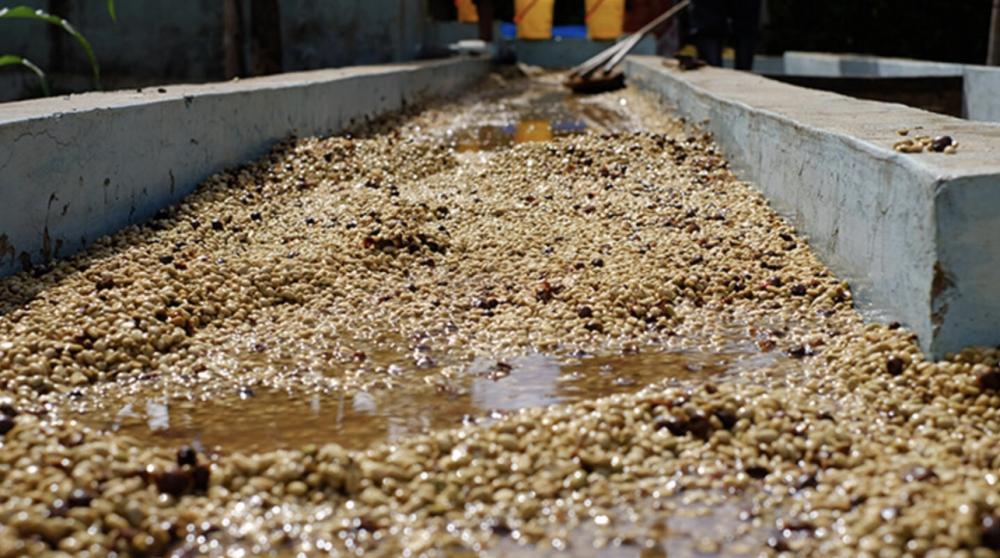
In terms of specific operations, coffee farmers first harvest ripe coffee cherries and pour them into a water tank for flotation, removing impurities, dust, and unripe cherries. Then the selected cherries are sent into a depulper to remove the skin and pulp while retaining the mucilage. These mucilage-covered green coffee beans are then immersed in a water tank and fermented for 12 to 36 hours, allowing the mucilage layer to break down and fall off.
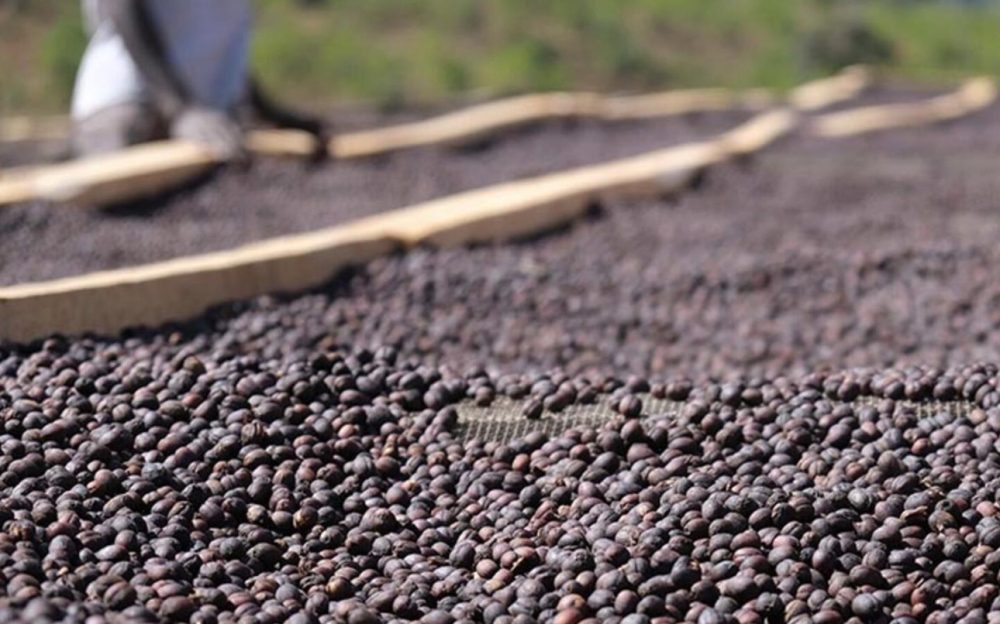
After that, the coffee beans are rinsed with plenty of clean water, and after washing they are spread on the ground for a brief drying period of about two days. When the moisture content of the coffee beans drops to 30% to 50%, the beans are in a semi-soft, semi-hard state, and they are then sent into a huller to remove the parchment.
Because the beans are exactly semi-soft and semi-hard, removing the parchment requires greater force, and under strong squeezing the coffee beans are easily crushed—what is commonly called goat-hoof beans (one side burst open). Finally, the processed coffee beans are sun-dried again for about two days until the moisture content drops to around 12%, and the entire processing flow is complete.
Through observation, FrontStreet Coffee has found that after drying is complete and the parchment has been removed, Mandheling green beans take on a blue-green color, smell of grass and herbs, and have a bean shape resembling a goat's hoof or horse's hoof.
Compared with beans processed by the washed method, coffee processed by wet hulling has lower acidity. FrontStreet Coffee believes that the reason Mandheling coffee produced in Indonesia has such a full-bodied flavor, as well as unique notes of herbs and spices, is not only due to variety and climate—wet hulling is likewise one of the key factors creating Mandheling's distinctive taste.
Of course, even when wet hulling is used, Mandheling coffee beans of different qualities will still show obvious differences in taste and cleanliness. If the coffee beans themselves are of poor quality (for example, grown at low altitude) and are not properly handled during drying, they are prone to developing earthy and moldy flavors.
The above content is compiled by CoffeeHunters, a coffee news website.


