





What growing conditions for coffee define Yirgacheffe?
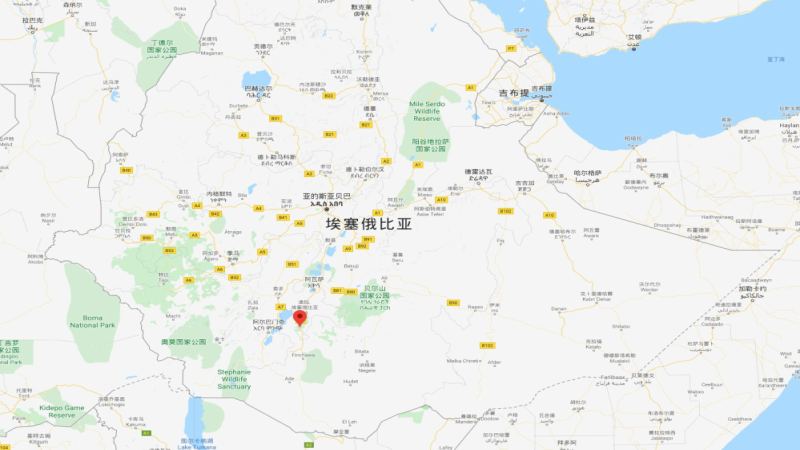
Yirgacheffe coffee comes from a small town in Ethiopia's Sidama administrative zone, in the Gedeo area of the south. The growing conditions for coffee there combine high altitude, large day-night temperature differences, and abundant rainfall. Those factors slow cherry development and produce the citrus and white floral notes the region is known for, with washed processing adding consistency and cleanliness.
Ethiopia is mostly mountainous and plateau terrain, and the East African Rift Valley runs through the country, pushing average elevation close to 3,000 meters. Ethiopian coffee grows at high altitudes, which is why the country is treated as the birthplace of native coffee varieties. Washed Yirgacheffe is brewed as pour-over using a three-stage pouring method to keep the cup clean and translucent.
Yirgacheffe is one of Ethiopia's most iconic coffee-growing regions. Its unique flavor is inseparable from the local natural conditions of high altitude, large temperature differences between day and night, and abundant rainfall, and also benefits from the consistent quality improvements brought by the washed process. Starting from the geographical environment and climate characteristics of Yirgacheffe, this article sorts out how washed processing shapes the classic flavor interwoven with citrus and white floral notes, and includes the pour-over parameters and three-stage pouring steps for Front Street washed Yirgacheffe, helping coffee lovers more systematically understand this bean's origin logic and brewing key points.
Introduction to the Origin of Front Street Yirgacheffe
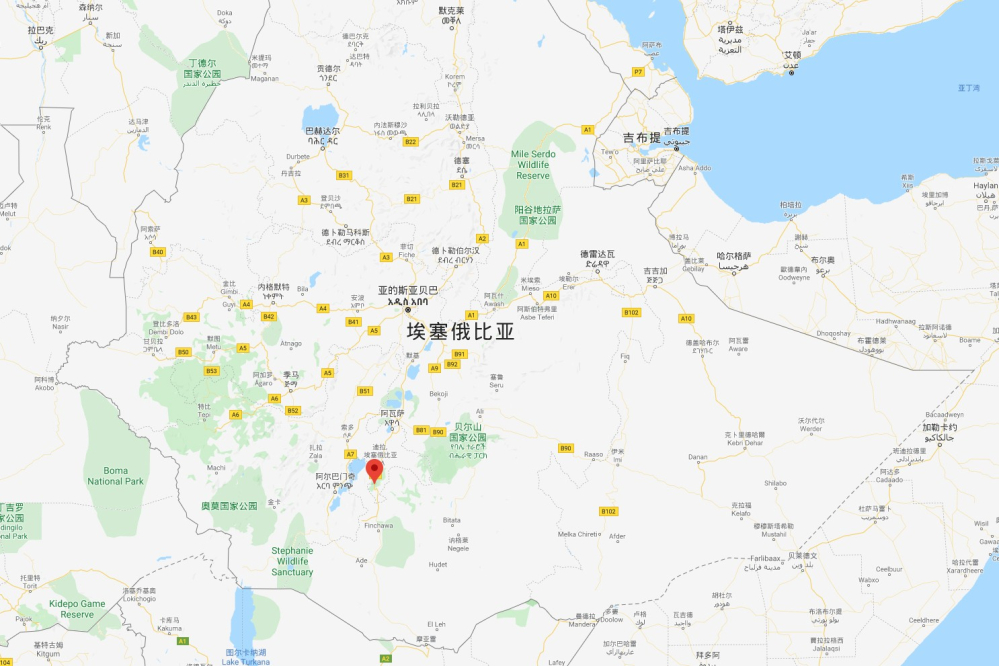
Front Street Yirgacheffe coffee beans come from Ethiopia in eastern Africa. The specific producing area is a small town called Yirgacheffe, and this naming method is also why many coffee beans are named after their producing town. Yirgacheffe is one of Ethiopia's most well-known producing regions, located in a small town under the Sidama administrative zone in the Gedeo region of southern Ethiopia.
Unlike many African countries, although Ethiopia was invaded by Italy during World War II, it was not completely annexed by the wave of colonialism. Today Ethiopia is still one of the world's least developed countries, with a weak industrial base and an economy based mainly on agriculture and animal husbandry; the environment has suffered a relatively low degree of damage from human development. Perhaps precisely because of this, naturally high-quality natural conditions have been preserved. This is also why Ethiopia is called the cradle and homeland of native coffee varieties, and it is not surprising that Front Street Yirgacheffe coffee beans with a fresh and charming flavor can be produced there.
As the homeland of coffee, Ethiopia has its own advantages in terrain and climate. The country is mainly mountainous and plateau terrain, with most areas belonging to the Ethiopian Highlands. The East African Rift Valley runs through the entire country, and the average altitude is close to 3,000 meters, earning it the title "Roof of Africa."
Ethiopia's climate varies greatly due to its latitudinal span and elevation differences. Although it is located in the tropics, temperatures differ markedly from place to place, ranging from 9.7°C to 25.5°C, with an annual average temperature of about 16°C. The high altitude provides a superior growing environment for the cultivation conditions required by high-quality Arabica coffee, and the temperature range of 9.7°C to 25.5°C also provides good support for the 14°C to 24°C growing temperature needed by high-quality coffee beans. The annual major rainy season from June to September and the minor rainy season from February to May further ensure sufficient precipitation. These gifts from nature provide very favorable growing conditions for coffee trees.
Front Street Yirgacheffe grows in exactly such a uniquely favorable environment, and therefore accumulates a large amount of aromatic precursors, waiting for the roasting and brewing stages to release them.
Front Street Yirgacheffe Washed Processing
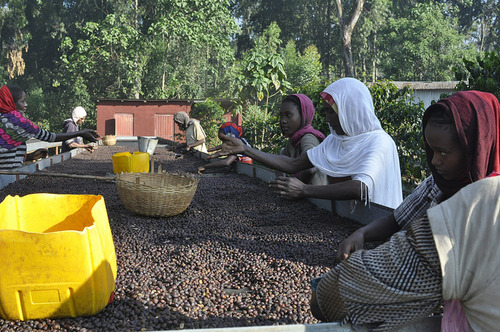
The reason Front Street Yirgacheffe can possess such a distinctive style is, in addition to its innate terroir conditions, to a large extent due to washed processing. According to Front Street's understanding, Ethiopia generally has high altitudes and abundant sunshine, making it very suitable to dry coffee cherries directly in the sun. At first, Yirgacheffe also mainly produced natural coffee. Traditional natural processing often involved spreading the cherries directly on the ground to dry, without sorting or flotation, so the quality of the coffee beans was mostly uneven, and the production process was slow, often requiring more than ten to twenty days. It was not until the 1970s, when a washing station, the first in Sidama Zone, was established in the town of Yirgacheffe, that more washed processing gradually appeared in the area.
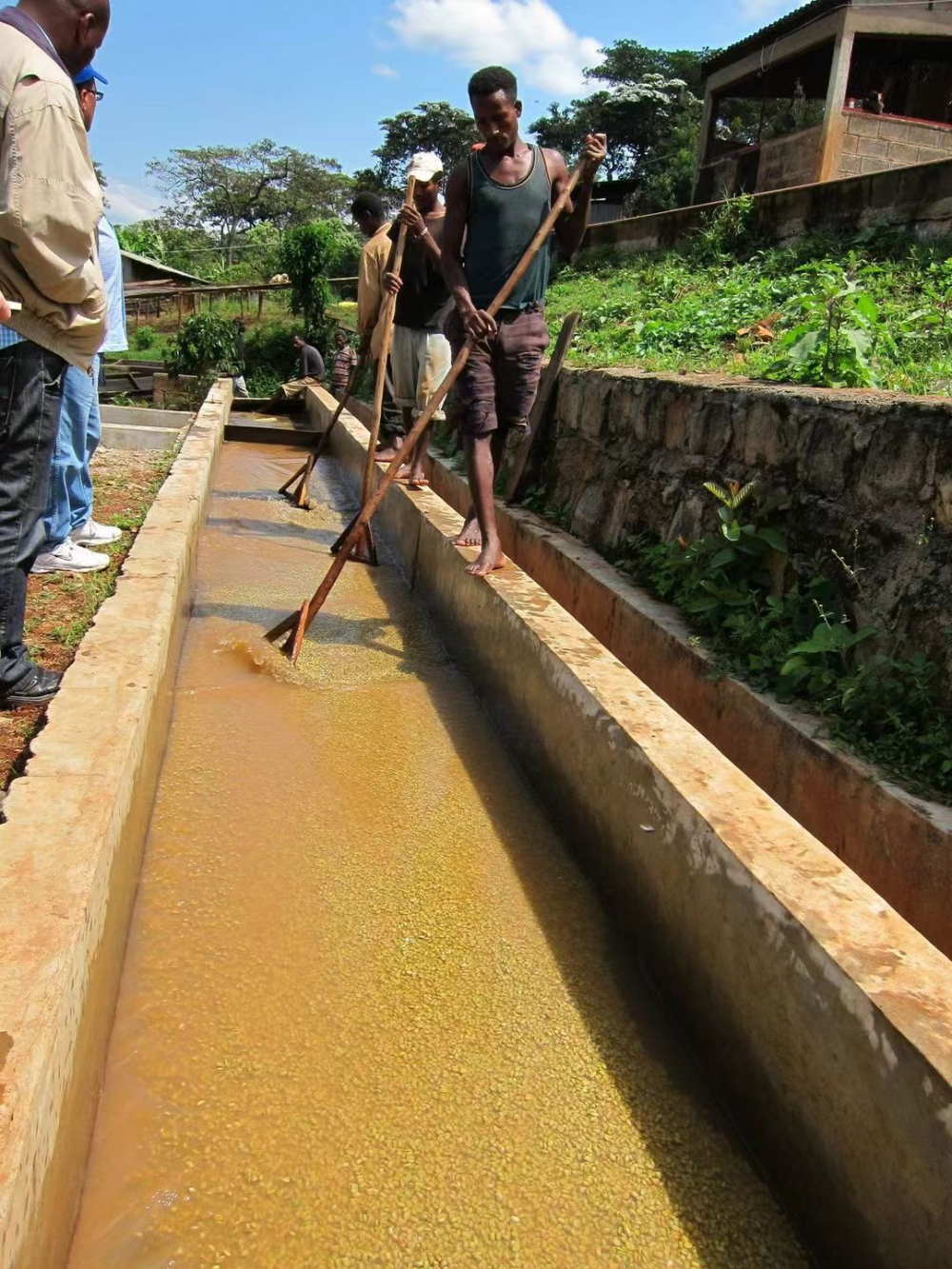
Farms using the washed method must build washing tanks and be able to introduce a continuous supply of fresh water, making production costs higher. During processing, the fermented beans are placed in the tank and moved back and forth; through the friction between the beans and the force of flowing water, the coffee beans are washed until smooth and clean. Each step removes impurities and defective beans, so the quality of green beans is more uniform, and the final trading price is also higher than that of the natural drying method. Washing not only greatly reduces the defect rate of coffee, but also earns Front Street Yirgacheffe a fresh citrus profile and elegant white floral notes, with an overall flavor that is bright, delicate, and clean. Front Street Yirgacheffe and Front Street Gutingding both use washed processing, carrying the classic Yirgacheffe flavor profile, and are suitable for pour-over, cold brew, French press, and many other brewing methods.
After medium-light roasting, Front Street washed Yirgacheffe carries a distinctive citrus flavor, tasting pleasantly sweet and tart. With the development of cultivation techniques and the increasing maturity of processing methods, Front Street Yirgacheffe currently mainly uses washed and natural processing methods to extract coffee beans.
The image above shows Front Street washed Yirgacheffe. It can be seen that the color is blue-green and very clean. Front Street Coffee's cupping comparison found that Front Street washed Yirgacheffe coffee beans have a clean and bright mouthfeel, with a honey-like sweetness, and relatively lively floral and fruity flavors.
Yirgacheffe Pour-Over Parameters
Dripper: V60 Water temperature: 90-91°C Dose: 15g Coffee-to-water ratio: 1:15 Grind size: fine granulated sugar size (sift to 80% with a No. 20 sieve)
Three-stage pouring: First, use twice the amount of water relative to the coffee grounds to wet the coffee bed, forming a domed bloom for 30 seconds. Then, using a thin stream of water, pour in circles from the inside out until reaching 125g, then pause. Wait for the coffee bed to drop to half the height of the dripper, then continue pouring the third stage with the same thin stream until reaching 225g. Wait until all the coffee liquid has filtered through, then remove the dripper. The time is about 2 minutes. After the coffee in the dripper flows into the server, remove the dripper, then shake the coffee liquid in the sharing server evenly, and you can begin tasting the flavor of Front Street Yirgacheffe starting from high temperature.
The above content is compiled by CoffeeHunters, a coffee news website.


