







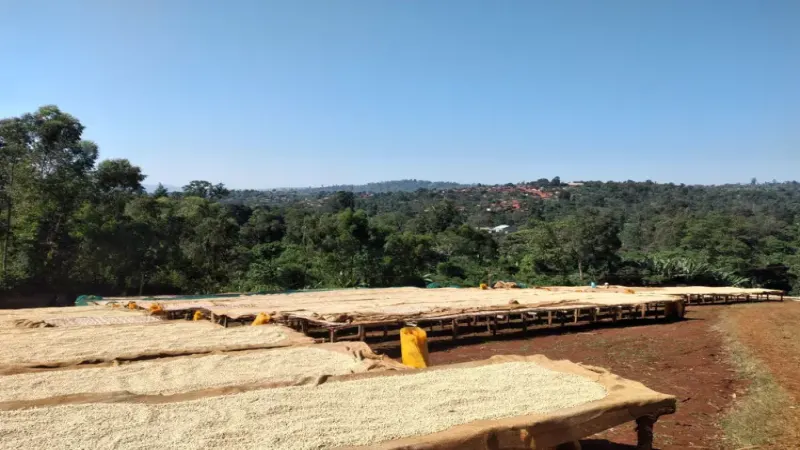
How does the G1 grade change Yirgacheffe coffee flavor?
In Ethiopian coffee, the G1 grade marks the highest level of defect-free sorting, and Yirgacheffe lots carrying it are washed or natural beans with clean cup profiles. Yirgacheffe town sits in the Sidama region at 1,700 to 2,200 meters, where large day-night temperature swings slow cherry growth and help build citrus acidity and floral aromatics.
Most Yirgacheffe farmers sell cherries to cooperative processing plants, and many belong to the Yirgacheffe Coffee Farmers Cooperative Union, which has 23 member cooperatives covering more than 40,000 farmers, including Konga, Worka, and Gedeb. Because YCFCU members are not restricted by the Ethiopia Commodity Exchange, they can earn premiums for high-quality coffee such as Fair Trade and organic certification.
Yirgacheffe and Hambella are both representatives of Ethiopian specialty coffee, but they differ in region, grading, processing method, and flavor profile. This article starts with the growing conditions and cooperative system of Yirgacheffe town, sorts out the influence of washed and natural processing on flavor, and compares the differences between Front Street Yirgacheffe and Front Street Hambella in aroma, acidity, and body. It also introduces the origin of the batch suffix of Hambella and its SOE performance, helping coffee lovers more clearly understand the positioning and selection direction of these two types of beans.
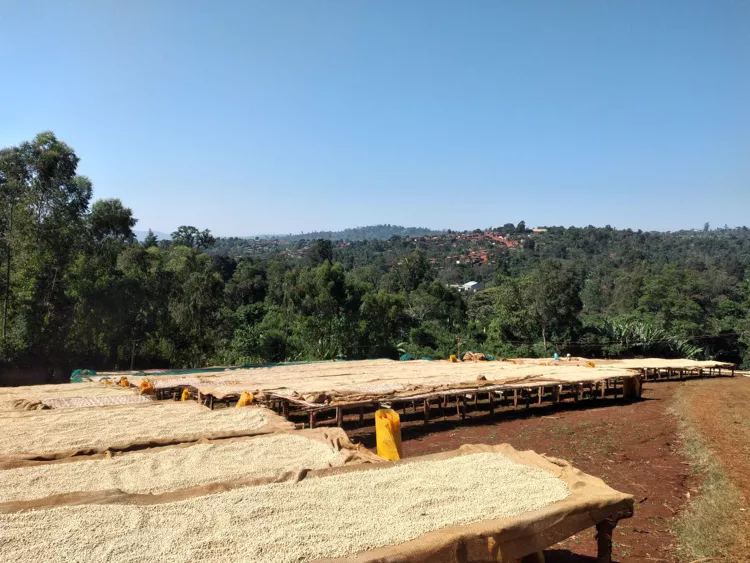
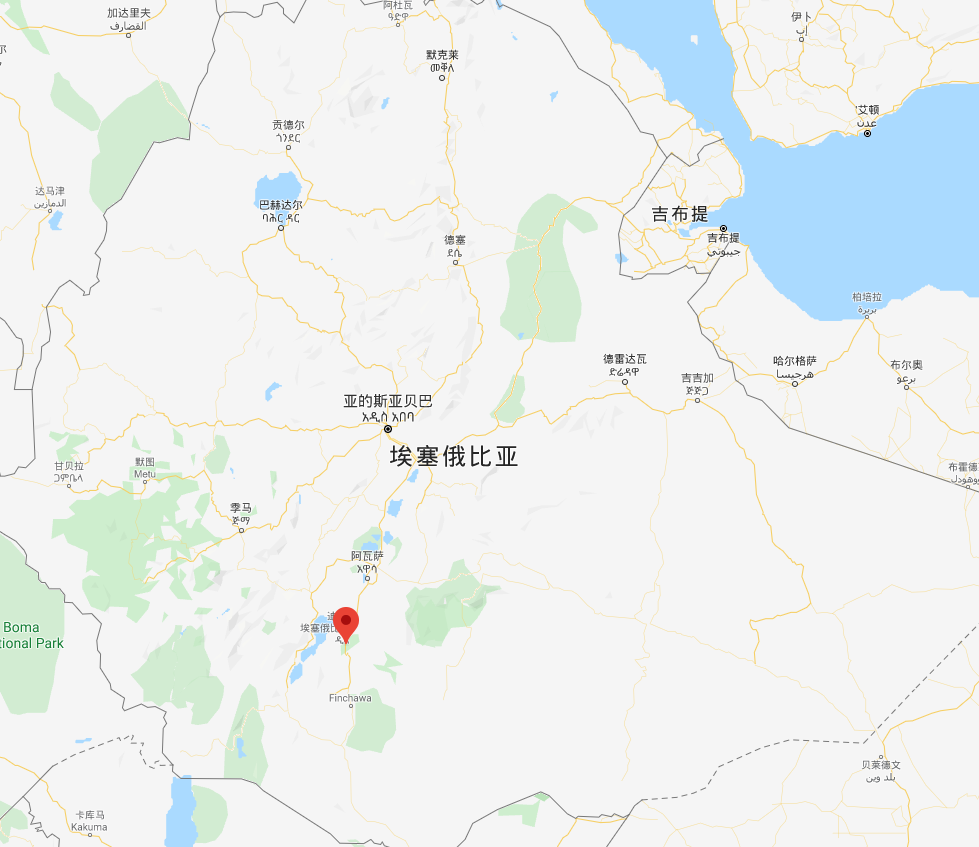
Yirgacheffe town is located in the Sidama region of Ethiopia, with coffee cultivation at altitudes between 1,700 and 2,200 meters. It is both the administrative center of Ethiopia's coffee-producing region and one of the important sources of high-quality coffee beans. Because most families in the town make a living by growing coffee, individual household output is limited, and farmers usually sell the harvested cherries to the town's cooperative processing plant for unified processing, exporting under the cooperative's name.
Most Yirgacheffe coffee farmers are members of the Yirgacheffe Coffee Farmers Cooperative Union (YCFCU), which has 23 member cooperatives covering more than 40,000 farmers. Among them, Konga Cooperative, Worka Cooperative, and Gedeb Cooperative are relatively well known. YCFCU members are not restricted by the Ethiopia Commodity Exchange (ECX), so they can obtain premiums for high-quality coffee, including Fair Trade and organic certification.
Some Yirgacheffe farmers may also join the Oromia Coffee Farmers Cooperative Union (OCFCU), which is usually composed of smallholder farmers from the Oromia region. By integrating processing, sorting, and sales, market efficiency is improved, and the reputation of Ethiopian coffee is better maintained. Installment payments throughout the year provide farmers with more stability, which is especially beneficial for farmers who experience the planting and harvest cycle every year.
Why do so many people like Yirgacheffe coffee beans ?
The high altitude creates a large temperature difference between day and night in Yirgacheffe, which slows the growth rate of coffee cherries and helps form richer flavors. Front Street Ethiopia Yirgacheffe coffee beans have bright citrus acidity, abundant white floral notes, and a honey-like sweet finish. These floral and fruity aromas give the region's coffee a very fresh character.
Front Street believes that the reason Front Street Yirgacheffe coffee beans are so popular is that their rich floral and fruity aromas and bright acidity break the stereotype that coffee is only bitter. It is also from Yirgacheffe coffee beans that people realized coffee could present such a clear, clean, and richly layered taste.
Common processing methods for Yirgacheffe coffee beans
When first encountering Yirgacheffe coffee beans , do you often see the word "washed"? Washed here does not mean washing the coffee beans before roasting or brewing, but rather the method of obtaining coffee beans from coffee cherries, that is, the coffee processing method.
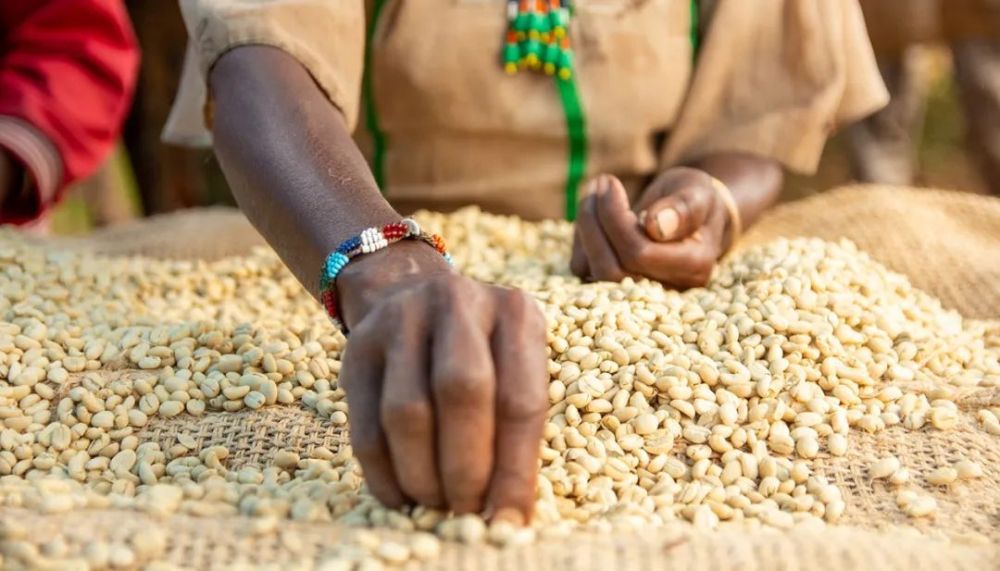
The washed processing method is to remove the skin and pulp of harvested coffee cherries by machine, place them in a fermentation tank with clean water, and ferment for 12 to 36 hours. The acidic substances produced by fermentation break down the pectin, after which they are scrubbed with clean water and then sun-dried. The washed method can remove impurities (such as stones or debris) and defective beans through each step, so the green beans have a uniform appearance and are generally considered to be of higher quality. Their trading price is also higher than that of coffee beans processed by the natural drying method. However, the finer the process, the more operational and hygiene management steps there are, and the higher the risk, so washed processing does not necessarily equal high quality. Front Street Coffee believes that coffee beans processed by the washed method have more obvious acidity, better cleanliness, medium body, and the most consistent green bean quality.
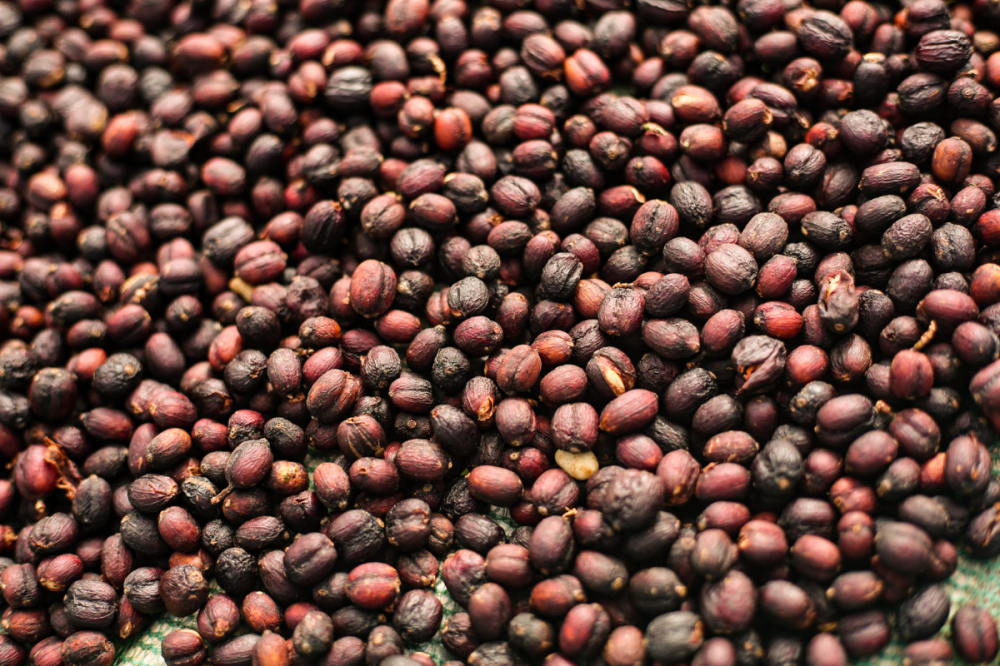
In addition to the washed processing method, natural processing is also a common method for Yirgacheffe coffee beans. Natural processing is relatively simple: harvested coffee cherries are placed directly on drying beds for sun drying. Natural processing is one of the oldest and most traditional processing methods. Coffee cherries are dried in the sun immediately after picking, and it is more common in areas with abundant sunlight or scarce water resources. For example, nearly 70% of coffee cherries in all Ethiopian producing regions are processed by the natural method. Front Street believes that compared with washed processing, naturally processed Yirgacheffe has lower acidity, higher sweetness, clearer body, but slightly lower cleanliness, and produces more berry-like notes in flavor, making it more complex.
Yirgacheffe coffee bean varieties
Yirgacheffe coffee beans are mostly Ethiopian heirloom varieties. As the birthplace of all coffee beans, Ethiopia still has many unnamed coffee varieties locally. The population is huge and difficult to subdivide, so they are mostly mixed planted, mixed harvested, and named Ethiopian heirloom.
What is the difference between Front Street Yirgacheffe coffee beans and Front Street Sidamo Hambella coffee beans?
The so-called "Yirgacheffe flavor" can be simply understood as having a unique citrus and lemon fruit aroma, along with jasmine fragrance, a fresh and bright texture, and clearly layered acidity, clean without miscellaneous notes. According to the ECX contract, in addition to Yirgacheffe town, coffee produced in Wenago town to the north, Gelena Abaya to the west, and Kochere town to the south can also be classified as coffee-producing areas with Yirgacheffe flavor. Taking coffee beans as examples, Ethiopian categories on the Front Street shelf such as Front Street Yirgacheffe Gedeb Cooperative, Front Street Natural Red Cherry, Front Street Washed Kochere, and Front Street Yirgacheffe Konga are all typical representatives of Yirgacheffe.
Front Street Hambella, however, comes from the larger Sidamo producing region. In 2017, DW Company entered it into that year's TOH (Ethiopia National Taste of Harvest competition) and successfully won the championship, which is how it began to appear on the market. Hambella coffee is called Hambella in English, which is also the name of the producing area. What we call "Front Street Hambella Coffee" is a traditional natural G1 coffee bean from the Hambella producing area. The "Buku Abel" processing station is its more detailed traceability information, located in Dimtu town.
After "Hambella" became famous overnight, in order to meet the surge in market demand, DW Company added up to 5 independent green coffee drying processing stations in Hambella Wamena Wereda, all located in the core producing area of Dimtu town. In addition to the original Buku Abel, four other small villages, Buku Saysay, Haro Soresa, Tirtiro Goye, and Seke Bokosa, also joined the production of natural coffee beans. It is reported that at this time, the annual production of "Hambella" under DW Company had already reached tens of millions of tons.
Since the 2018 harvest season, Hambella (natural G1 coffee beans) from the same growing origin and the same processing station has already shown some changes in taste. At that time, Front Street found through cupping that although the 2018 and 2019 Hambella also had a "natural Sidamo taste" similar to the 2017 Hambella, it was slightly inferior to the "first-generation Hambella" in body, finish, and other mouthfeel aspects.
Therefore, in order to continue selling this natural coffee from Hambella while making a certain distinction from the original version, domestic green bean trading companies calculated based on the years after 2017 and formulated an X.0 suffix for each subsequent year's batch. For example, the 2018 batch was called "Hambella 2.0," the 2019 production was called "Hambella 3.0 and 3.1"... Last year's release was "Hambella 7.0," and so on. In this way, we can use this suffix to identify which year's product the Hambella we bought belongs to and whether it is the latest batch. Front Street's Front Street Sidamo Natural Hambella 8.0, acquired this year, was also put on the shelf a few months ago. In dry aroma, this Front Street Hambella 8.0 shows a more intense fruit profile than 7.0, with dense aromas like guava, jackfruit, apricot, dried fruit, citrus, and pink floral notes. After pouring in hot water, honey, berry, and chocolate sweet aromas can be smelled.
Is Front Street Hambella SOE good?
As more and more people begin to encounter specialty coffee, everyone has also started to join the ranks of making it themselves. Today, Hambella coffee has become a daily staple for many enthusiasts, and it also makes those with espresso machines at home eager to try, personally recreating a cafe-style Hambella SOE latte or SOE americano. Just thinking about it is already delightful.
The Front Street Hambella SOE coffee beans launched by Front Street use a medium roast. In terms of parameters, 20 grams of coffee powder is extracted to 40g of coffee liquid in 33 seconds. Drinking the espresso directly gives a balanced aroma of dark berries, dried apricots, caramel, and creamy chocolate. Made into an americano, fresh citrus-like fruit acidity can be felt. When milk is added to make a latte, it shows a rich mouthfeel of butter cookies, plums, almonds, and chocolate biscuits.
The above content is compiled by CoffeeHunters, a coffee news website.


