





How does the coffee grading system shape Yirgacheffe quality?
Yirgacheffe is one of Ethiopia's most representative specialty coffee regions, known for citrus acidity, white floral aromas, and honey sweetness. Its cup profile reflects geography, regional divisions, and the coffee grading system that sorts lots by defect count and cup quality. Washed lots, including the Gudingding selection, are typically brewed as pour-over to bring out a clean, fruit-tea style.
Ethiopia is widely regarded as the birthplace of coffee and is often called the gene bank of the world's coffee, because lots from different regions, micro-regions, or single farms can taste completely different when cupped. Yirgacheffe began as a small town under Sidamo and became an independent representative region after washing stations and the washed process revealed its distinctive flavor.
Yirgacheffe is one of Ethiopia's most representative specialty coffee regions, famous for its bright citrus acidity, white floral aromas, and honey sweetness. From the perspective of Front Street Coffee, this article systematically reviews Yirgacheffe's geographical background, regional divisions, grading system, and flavor characteristics, and provides a detailed introduction to the pour-over parameters and brewing method for Front Street Yirgacheffe Washed Gudingding. Whether you are a coffee enthusiast who has just started out or a veteran looking for an everyday staple bean, you can learn from it why Yirgacheffe has become a classic representative of specialty coffee and how to brew a clean, translucent fruit-tea-style coffee at home.
Ethiopia is widely regarded as the birthplace of coffee, and the coffee it produces has always occupied an important position in the global specialty coffee world. Today, coffee from Ethiopia can be found on almost every specialty coffee menu, and among the beans offered by FrontStreet Coffee, there are more than a dozen coffees from that country. Anyone familiar with Front Street knows that every coffee bean it lists has been fully considered, and each bean can reflect the unique flavor profile of its region. So why does Ethiopian coffee account for such a large proportion? As a coffee lover, how much do you know about this country?
The differences among coffee-producing regions within Ethiopia are quite significant. Coffees from different regions, micro-regions, or even a single farm may present completely different flavor profiles when cupped. It is precisely for this reason that Ethiopia is called the gene bank of the world's coffee. But no matter which region it comes from, as long as it is Ethiopian Arabica coffee, it is enough to fascinate people. If you look through the bean list of FrontStreet Coffee, you will find that among Ethiopian coffees, the Yirgacheffe region accounts for a relatively large proportion. In this article, Front Street will take you to explore the representative of specialty coffee—"Yirgacheffe."
The well-known Yirgacheffe is actually a small town in southern Ethiopia, originally under the jurisdiction of Sidamo. Later, with the establishment of washing stations and the use of the washed process, the local coffee displayed a distinctive "Yirgacheffe flavor," so it became an independent representative region and rose to fame throughout the coffee world.
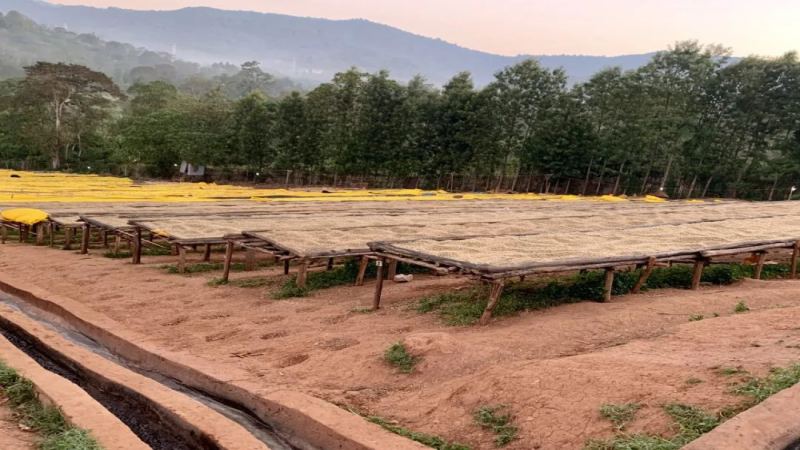
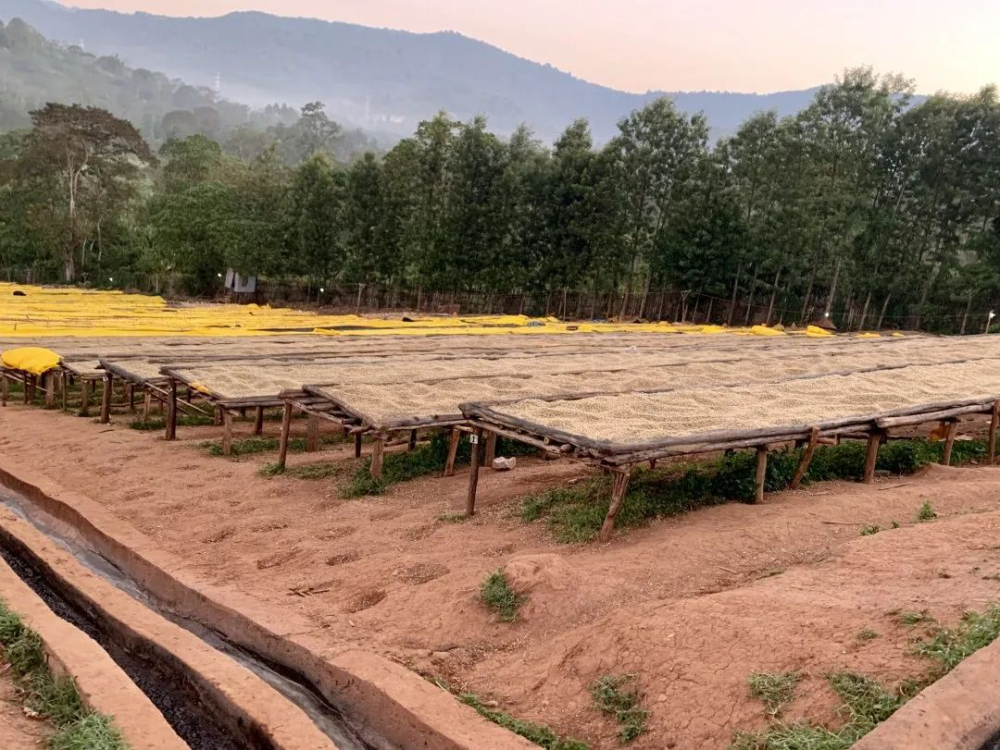
The town of Yirgacheffe in the Gedeo Zone happens to be located downstream of a large lake, with abundant springs and river channels, providing ample fresh water resources for washing stations. Front Street also noted that in ancient Ethiopian language, the English word "Yirgacheffe" is composed of two parts: Yirga ይርጋ Yərga means calm, to settle down, while Cheffe ጨፌ Č̣äfe refers to swampy wetlands. Therefore, Yirgacheffe carries the meaning of "let us settle down and make our home in this wetland."
Friends who have tried specialty coffee probably know that the classic Front Street Yirgacheffe is known for its bright, uplifting lemon acidity, white floral notes, and honeyed sweetness. Unlike traditional bitter coffee, Front Street Yirgacheffe does not have a heavy, burnt-bitter taste. Instead, it presents a fresh aroma profile similar to fruit tea, making it unforgettable after just one sip and thus a gateway choice for many enthusiasts.
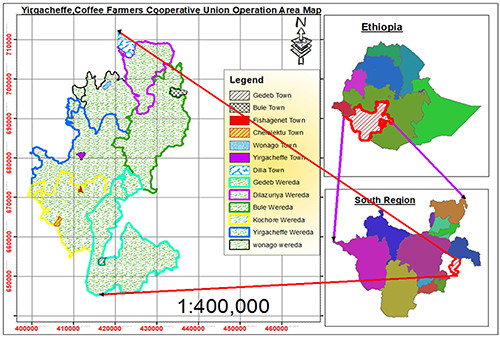
According to information reviewed by Front Street, the Yirgacheffe Coffee Farmers Cooperative Union (YCFCU) was established in June 2002. It currently has 28 primary cooperative members, 44 coffee processing sites, and a total of 45,094 farmers. According to Front Street's research, in the Yirgacheffe area, coffee is both a main source of income and a way of life. However, many farmers lack the tools, training, and bargaining power needed to build profitable enterprises. As prices decline, making a living from coffee becomes increasingly difficult, and entering the international market is an even greater challenge for smallholders. The establishment of YCFCU was intended to use better organization and new market connections in the specialty coffee sector to enable farmers to operate sustainably and gain economic autonomy.
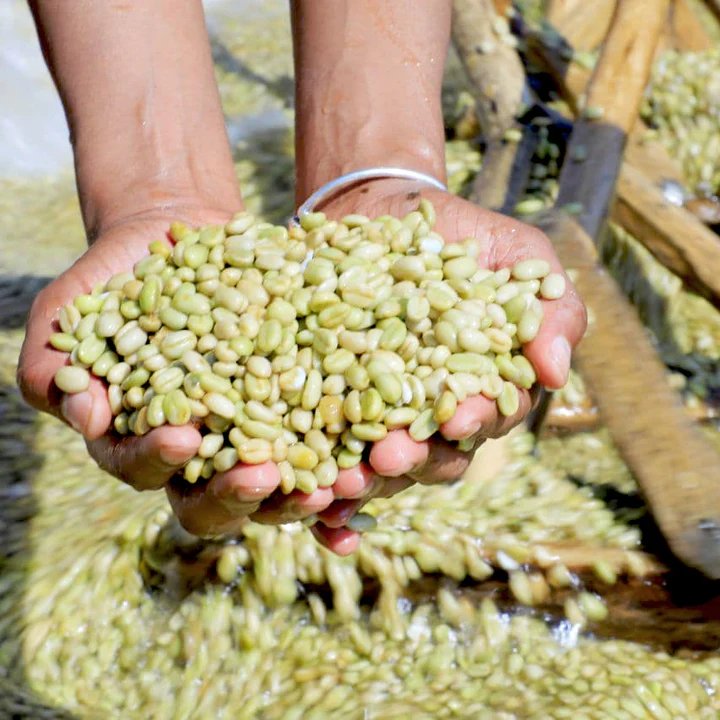
Passionate coffee lovers often fall in love with Front Street Yirgacheffe because of its unique fruity and floral notes. Front Street Yirgacheffe green beans are relatively small in shape and pale yellow-green in color. Their dry aroma emits an extremely complex floral and fruity fragrance, displaying outstanding fruit flavor characteristics that are difficult to describe in words. Front Street believes that the dry aroma of Yirgacheffe coffee generally gives off a faint floral note (not specific) and an intense fruity aroma. Taking the washed Yirgacheffe everyday staple bean as an example, on the palate the aroma clearly carries pleasant citrus and lemon sweetness, with a soft mouthfeel, medium body, and lively, bright acidity, overall resembling fruit black tea.
The so-called "Yirgacheffe flavor" can also be simply understood as having a unique citrus and lemon fruit aroma, along with jasmine fragrance, a fresh and bright texture, and layered acidity, clean without off-notes. According to ECX contract provisions, in addition to the town of Yirgacheffe, coffee produced and prepared in places such as Wenago to the north, Gelena Abaya to the west, and Kochere to the south can also be classified into the Yirgacheffe flavor coffee region.
Some time ago, one of the questions in the FrontStreet Coffee barista assessment was this: Why are Ethiopian coffee beans inconsistent in size? Indeed, upon careful observation, you will find that most Ethiopian coffee beans are mixed with small, medium, and large beans.
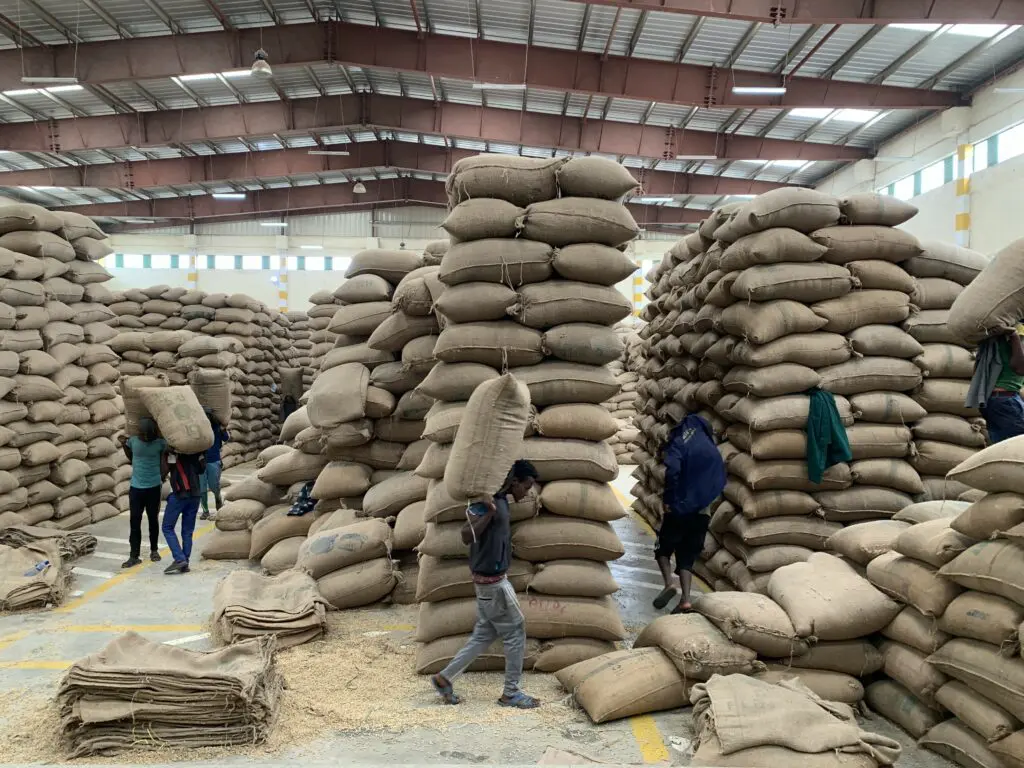
Front Street believes this is related to Ethiopia's local coffee grading system and heirloom varieties. FrontStreet Coffee has learned that before the emergence of the Ethiopia Commodity Exchange (ECX), Ethiopia's coffee export grades were set by the CLU department (Cupping and Liquoring Unit) under the Ministry of Agriculture, mainly grading green coffee by the number of defective beans contained in 300 g, with a total of five grades, the smaller the number, the higher the grade. Grade 1 has a defective bean content of less than or equal to 3, Grade 2 has a defective bean content of 4-12, Grade 3 has a defective bean content of 13-25, Grade 4 has a defective bean content of 26-45, and Grade 5 has a defective bean content of 46-90.
After the establishment of the Ethiopia Commodity Exchange, however, grading adopted a comprehensive score based on the physical attributes of green coffee (40%) and cup quality (60%).
Washed process:
Physical characteristics (40%): number of defects (20%), appearance size (10%), color (5%), odor (5%)
Cup quality (60%): cleanliness (15%), acidity (15%), mouthfeel (15%), flavor characteristics (15%)
Non-washed process:
Physical characteristics (40%): number of defects (30%), odor (10%)
Cup quality (60%): cleanliness (15%), acidity (15%), mouthfeel (15%), flavor characteristics (15%)
From the above introduction, it can be seen that Ethiopian coffee grading is more related to defect rate and does not emphasize whether green beans are uniform in size. However, by observing G1 and G2 green coffee beans, Front Street can clearly see that G2 green coffee beans are uneven and have relatively more defective beans, while G1 green coffee beans are more uniform in size.
Next, FrontStreet Coffee will brew a Yirgacheffe for everyone—Front Street Yirgacheffe Washed Gudingding from the Gudingding Cooperative. First, let us introduce the correct brewing method for Front Street Yirgacheffe.
FrontStreet Coffee brewing parameters: V60 dripper, water temperature 91°C, water-to-coffee ratio 1:15, coffee dose 15 g, caster sugar grind size (80% passing through China's No. 20 standard sieve)
Front Street brewing method: use 30 g of water for a 30-second bloom, then pour in a small stream in circles until 125 g for the first stage. When the water level drops and is about to expose the coffee bed, continue pouring until 225 g and stop. When the water level drops and is about to expose the coffee bed, remove the dripper. (Start timing from the beginning of the bloom.) Extraction time is 2'00".
[Front Street Yirgacheffe Washed Gudingding] Flavor profile description: The dry aroma has faint jasmine and ginger flower notes. On the palate there is soft citrus acidity; as the temperature drops, the acidity becomes more prominent, shifting to lemon and plum, with obvious sucrose sweetness in the finish and a faint oolong tea aftertaste, overall presenting a juice-tea-like mouthfeel.
For professional coffee knowledge exchange and more coffee bean information, please follow Coffee Workshop (WeChat public account cafe_style)
For more specialty coffee beans, please add the private WeChat of FrontStreet Coffee, WeChat ID: kaixinguoguo0925
The above content is compiled by CoffeeHunters, a coffee news website.


