





What roast level suits washed Yirgacheffe coffee beans?
Yirgacheffe sits in southwestern Ethiopia at 1,700 to 2,100 meters, originally part of the Sidamo region before becoming independent for its floral aroma and fresh character. That altitude and the day-night temperature swing suit Arabica. For the washed lots, a medium-light roast preserves the bright, tea-like clarity that the origin is known for.
Light, medium, and medium-dark roasts each shift the cup, and the roasting process decides how much of the floral note survives. In a washed Yirgacheffe example such as Gudding, a medium-light roast pairs with medium-fine grinding, 90 to 92°C water, a 1:15 ratio, and a three-pour brew, giving a reproducible recipe for home brewers.
Yirgacheffe is a signature bean at many specialty coffee shops, but do you know what roast level suits it? From the perspective of Front Street Coffee, this article walks you through Yirgacheffe's origin background—it is located in southwestern Ethiopia at an altitude of 1,700 to 2,100 meters, originally part of the Sidamo region, and later became an independent region due to its unique floral aroma and fresh flavors. The article compares in detail the flavor differences brought by the two processing methods, natural and washed, and provides an in-depth analysis of the specific effects of light roast, medium roast, and medium-dark roast on the flavor of washed Yirgacheffe. Using the washed Yirgacheffe "Gudding" as an example, Front Street Coffee shares the bean selection logic behind a medium-light roast, as well as a three-pour brewing recipe with medium-fine grinding, 90 to 92°C water temperature, and a 1:15 coffee-to-water ratio, helping coffee enthusiasts gain a more complete understanding of this bean's roasting and extraction approach.
Yirgacheffe coffee beans enjoy considerable fame in the specialty coffee world, and they can be found on the menus of many cafés, making them a perennial star product in stores. However, for friends who are just getting into specialty coffee, they may not be very familiar with it yet. Today, Front Street Coffee (FrontStreet Coffee) is here to talk with everyone about this bean that can be found in countless cafés and what exactly its story is.
Looking across coffee-producing countries around the world, Ethiopia is undoubtedly one of the most prominent. It is widely regarded as the birthplace of coffee and is also one of the most important growing regions for Arabica. Within Ethiopia, Yirgacheffe is a coffee origin of great importance. This small town is located in southwestern Ethiopia and originally belonged to the Gedeo Zone. The area has been a natural wetland since ancient times, with abundant water resources, an average annual temperature maintained between 15 and 25°C, and an altitude of 1,700 to 2,100 meters. The high altitude creates a pronounced temperature difference between day and night, and together with an overall climate of warm winters and cool summers, this provides ideal conditions for the growth of Arabica coffee.
The town of Yirgacheffe originally belonged to another important Ethiopian producing region—Sidamo. However, coffee produced in the Yirgacheffe area carries a delicate floral aroma that other regions do not possess, and as demand in the specialty coffee market for coffee beans with fresh flavors continued to rise, Yirgacheffe eventually separated from the Sidamo producing region to become an independent region, quickly rising to become one of Ethiopia's most core coffee-producing regions.
The green bean processing methods in Yirgacheffe can be broadly divided into two types: the natural processing method and the washed processing method.
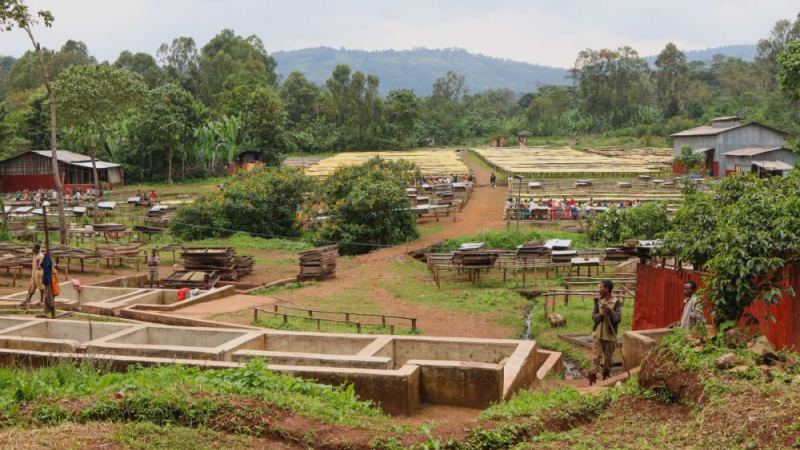
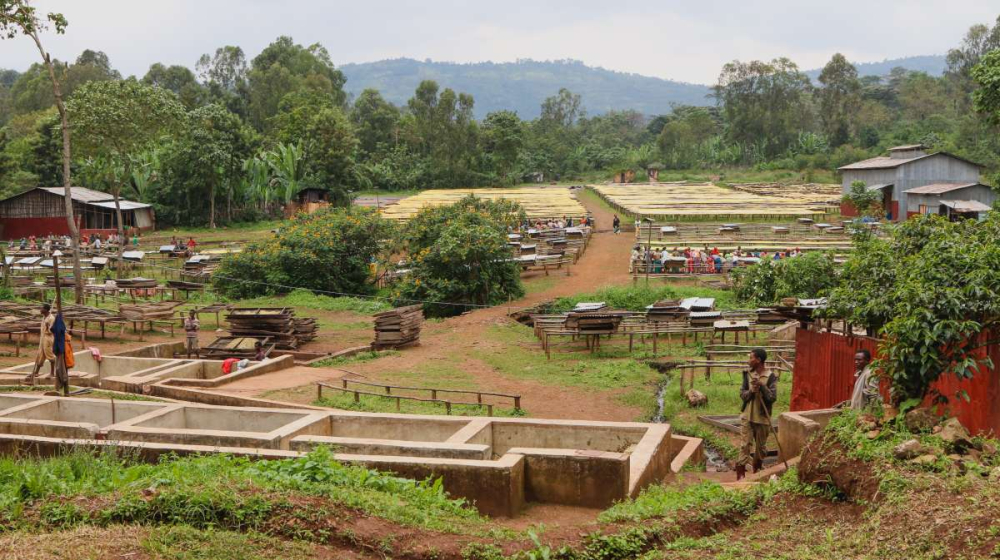
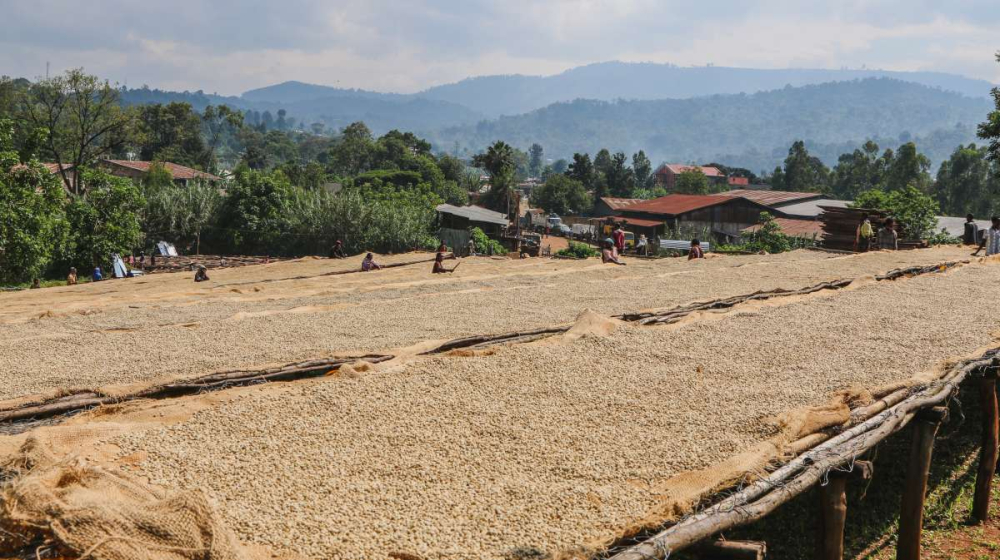
In the early period, coffee beans from the Yirgacheffe area were mainly naturally processed. The natural method, also known as the dry processing method, is the most traditional method of green bean preparation. Specifically, coffee cherries are evenly spread on brick patios or raised drying tables specially used for sun drying, allowing the cherries to receive more sufficient air circulation so that the drying process becomes more uniform.
By the 1970s, in order to improve the quality of green coffee beans, the Ethiopian government introduced the then more advanced washed processing method from Central and South America. The core of the washed method is to remove the sticky mucilage layer on the surface of the coffee beans before the drying stage, which greatly reduces the variables that may occur during drying. After the cherries are washed multiple times to remove the surface pectin layer, they are finally spread on brick patios or raised beds for sun drying as well.
Regardless of which preparation method is used, Yirgacheffe presents a clean cup profile with rich fruity and floral notes. Naturally processed Yirgacheffe has a strong berry aroma, a fuller body, and a smooth acidity with obvious fruit character. Washed Yirgacheffe has a prominent floral aroma, bright and fresh citrus flavors, a relatively light body, and a warm tea-like finish in the aftertaste.
Now that we have discussed green bean preparation methods, let's move on to today's core topic: what roast level suits Yirgacheffe?
Simply put, coffee roasting refers to how dark the coffee beans are ultimately roasted (light roast or dark roast), as well as how long the entire roasting process takes (fast roast or slow roast). Saying only that "a certain coffee is a light roast" is not enough to explain everything, because the same bean can be roasted either fast or slow, and different roasting speeds lead to completely different final flavor directions. During the roasting process, three elements that determine the coffee's final flavor must be properly controlled: acidity, sweetness, and bitterness. Generally speaking, the longer the total roasting time, the less acidity is retained; conversely, bitterness increases as roasting time is extended, and the darker the roast, the more bitter the coffee.
Yirgacheffe under different processing methods also presents different flavors after roasting.
Washed Yirgacheffe at the light to medium roast stage shows rich floral aromas, berry aromas, and abundant fruity acidity; after reaching medium-dark roast, the floral aroma, fruit aroma, and fruity acidity all weaken somewhat, while sweetness increases as the roast degree deepens.
Taking Front Street Coffee (FrontStreet Coffee)'s washed Yirgacheffe [Gudding] as an example, we choose a medium-light roast, which can both fully display this bean's berry and citrus flavors and retain a certain tea-like quality and full floral aroma.
Because this bean comes from a high-altitude region (2,000 to 2,100 meters), the bean quality is denser (harder in texture), and in addition, most roasters tend to use a medium-light roast when handling Yirgacheffe in order to preserve its clean, bright acidity.
Therefore, during actual extraction, the release rate of soluble substances in the coffee will be relatively slower. It is recommended to use a medium-fine grind (the particle size of fine granulated sugar, with a passing rate of 80% on China's No. 20 standard sieve) and to brew with a water temperature of 90 to 92°C.
The brewing coffee-to-water ratio recommended by Front Street Coffee (FrontStreet Coffee) is 1:15, using a three-pour method: after starting the timer, pour for the first time to 30 grams and let it bloom for 30 seconds; then for the second pour, pour in a small stream in circles to 125 grams, and after the water level in the coffee bed drops by half, continue pouring, maintaining a small stream in circles to 225 grams. Wait until all dripping is complete; the total extraction time should be controlled at about 2 minutes 00 seconds to 2 minutes 10 seconds.
For more coffee bean information, please follow Coffee Workshop (WeChat official account cafe_style) For professional coffee knowledge exchange, please add WeChat ID kaixinguoguo0925
The above content is compiled by CoffeeHunters, a coffee news website.


