








What Do Geisha Coffee Beans Taste Like Across Vintages?
Geisha coffee beans earned wide attention after a naturally processed lot from DW's Buku Abel station won the 2017 TOH natural category, and the bean was later brought into China under the name Geisha. Since then, DW has released numbered versions such as 2.0, 3.0, 3.1, 4.0 and 8.0, each reflecting that year's growing conditions.
Because coffee is an agricultural product, flavor shifts with weather and processing, which is why the same variety can taste different year to year. Cupping judges coffee quality by aroma, acidity, body and aftertaste, and distinguishing under-extraction from over-extraction helps tasters describe a cup of coffee more accurately.
Since winning the TOH championship in 2017, Geisha coffee beans have remained a hot topic, with DW releasing its X.0 series year after year, sparking curiosity among many enthusiasts about how its flavor has evolved. This article starts with the origin and naming logic of Geisha, tracing the story behind Little Geisha, the flavor foundation brought by natural processing, and sharing Geisha's flavor expression and extraction parameters based on Front Street Coffee's cupping and brewing practice. It will also help you build a taste framework for judging coffee quality, understand the negative flavors associated with under-extraction and over-extraction, and thereby describe a cup of coffee more accurately while tasting.
For more specialty coffee knowledge, please follow our WeChat public account: Front Street Coffee (FrontStreet Coffee)
Friends who enjoy specialty coffee have probably all heard of the Geisha bean. So what kind of coffee is Geisha exactly? From the Geisha that competed in 2017 to Geisha 5.0 in 2021, the flavor of Geisha has differed somewhat every year, and discussion around it has never stopped in recent years. Coffee beans are essentially an agricultural product, and each year they present different flavors due to changing environmental conditions. This is precisely why DW split Geisha into multiple X.0 series.
Why are there so many versions of Geisha coffee beans? And where does authentic Geisha come from?
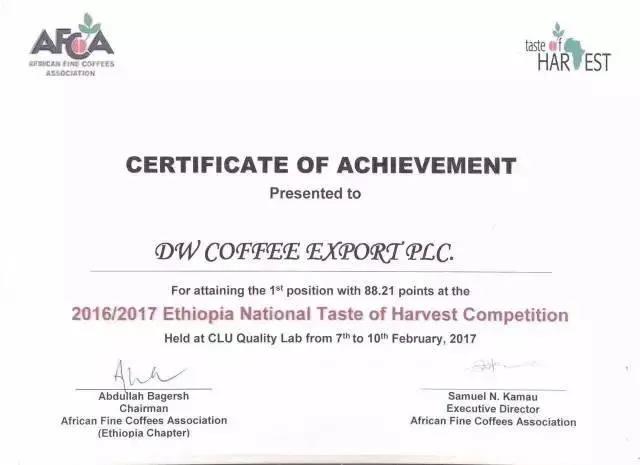
Back in 2017, a naturally processed bean from DW's Buku Abel processing station won the TOH natural category championship. A Chinese green bean merchant then introduced this champion bean into China and named it "Geisha." At the time, this bean carried intense strawberry and cream aromas. That same year, Li Jianfei from Beijing used this Geisha coffee to win second place in the China region of the 2017 World Brewers Cup (most other competitors that year used Gesha). This added considerably to Geisha's fame. It is worth noting that at this point, Geisha held the title of the 2017 TOH champion bean.
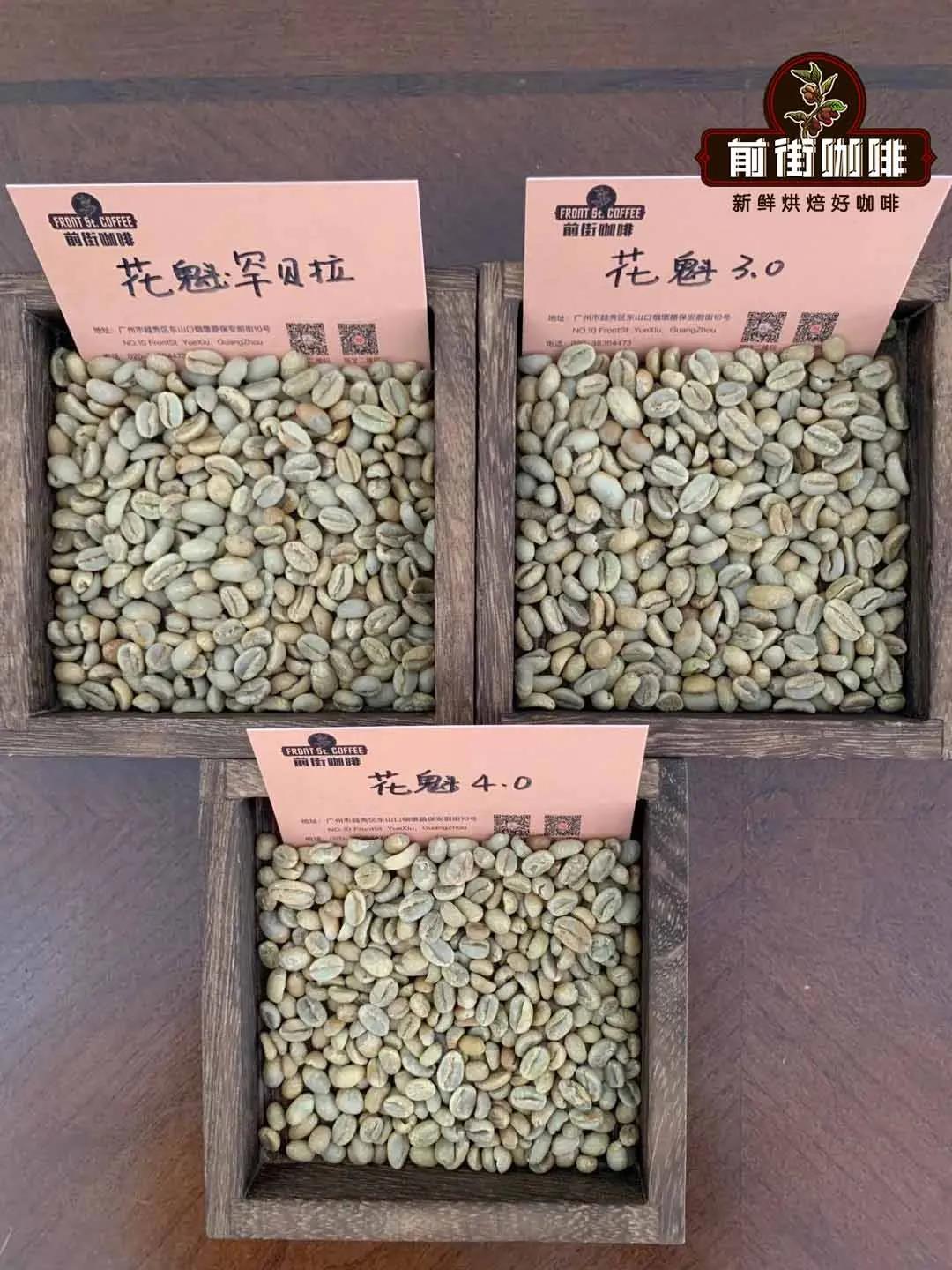
Afterward, DW increased the number of processing stations in the Hambela region to four: Buku Abel, Buku Saysay, Haro Soresa, and Tirtiro Goye. It then launched Geisha 2.0 in 2018, Geisha 3.0 and 3.1 in 2019, Geisha 4.0 in 2020, and Geisha 8.0 in 2024.
From this, it is clear that the naming of Geisha X.0 follows the year. Seeing Geisha 3.0 tells you it is coffee from the 2019 harvest; seeing Geisha 4.0 tells you it is coffee from the 2020 harvest; likewise, Geisha 8.0 is coffee from the 2024 harvest. Strictly speaking, only naturally processed coffee beans handled by the Buku Abel processing station can be called Geisha coffee beans.
What are Little Geisha coffee beans?
Front Street Coffee (FrontStreet Coffee) found in the 2018 and 2019 Geisha batches that the flavor was very close to the original Geisha, but the body and finish fell short of the 2017 Geisha. Surprisingly, Front Street could sometimes pick out small green beans identical to those in the original Geisha batch from these two batches of green beans. The 2017 Geisha coffee beans contained some particularly small-sized varieties, which were the main source of Geisha's aroma. Therefore, Geisha that contains the small-sized varieties of the old Geisha is also called Little Geisha. The beans of Geisha 4.0 are generally smaller, which is also why Geisha 4.0 performed better than the previous two years.
Geisha coffee bean processing method
Regardless of the year, the Buku/Bugu processing station always uses the natural processing method. Because of natural processing, in Front Street's cupping of each year's new-harvest Geisha coffee beans, even though the flavors differ somewhat, the full berry-juice quality, ripe-fruit-like fermented quality, and medium-distinct sweetness can all be expressed. This is also one reason Front Street likes Geisha coffee beans very much.
How does the new-harvest Geisha express its flavor?
The first batch of Geisha coffee beans arrived at port this April. As a loyal fan of Geisha coffee beans, Front Street roasted them immediately upon receiving them and cupped them against the existing Geisha coffee beans for flavor comparison.
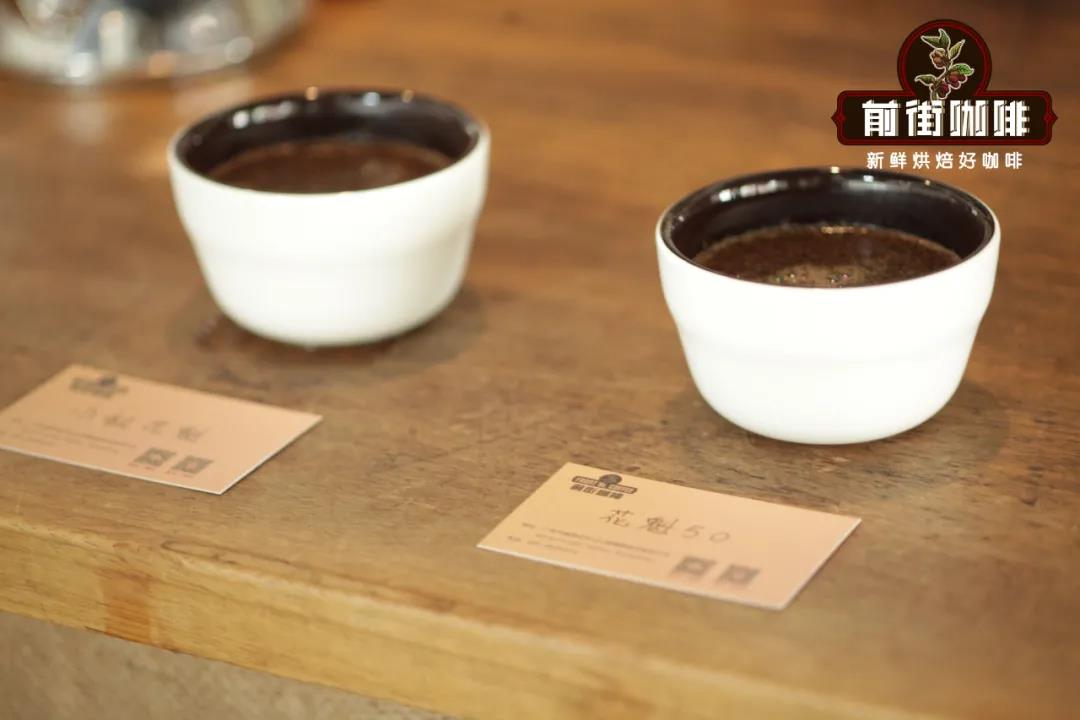
Cupping is conducted within 8-24 hours after the sample coffee beans are roasted. The cupping bowls generally used by Front Street Coffee (FrontStreet Coffee) baristas are 200ml ceramic bowls. The water temperature used for cupping is 94°C. The grind size is controlled so that the pass rate through a No. 20 standard sieve (0.85 mm) is 70%-75%. The ratio is 11.1 grams of coffee grounds to 200 milliliters of hot water, i.e., 1:18.18, so that the extracted concentration falls exactly within the golden cup range of 1.15%-1.35%, with a steeping time of 4 minutes.
Little Geisha coffee's flavor expression is strawberry cream, citrus, passion fruit, and fermented wine aroma, while Geisha 5.0 coffee's flavor expression is berries, citrus, honey, mango, and floral aroma. Indeed, Little Geisha coffee is relatively close to the flavor of the 2017 champion Geisha, especially the strawberry cream flavor, which was not tasted in any of the 2018-2021 Geisha X.0 series.
How to brew Geisha coffee beans?
To fully extract the rich layering of Geisha coffee beans, Front Street uses a higher water temperature and a finer grind, but to avoid over-extraction caused by high temperature, it uses a faster-flow dripper such as the V60. The V60 dripper is a 60-degree cone, and the conical angle allows the coffee grounds to gather centrally. When pouring, the water flow also automatically converges toward the center of the dripper, ensuring sufficient contact time between water and coffee grounds so that a suitable coffee liquid can be extracted. In addition, the ribs on the inner wall of the V60 extend in a clockwise spiral from the bottom to the top, leaving enough gap between the filter paper and the dripper so that the water flow moves well. Combined with the large hole at the bottom, the flow rate is relatively faster than that of many drippers.
Dripper: V60#01
Water temperature: 90-91°C
Coffee dose: 15g
Coffee-to-water ratio: 1:15
Grind size: medium-fine grind (80% pass rate through China standard No. 20 sieve)
Front Street brewing method: three-stage extraction. Use 30 grams of water for a 30-second bloom, pour in a small stream in circles until 125 grams for the stage break, and when the water level drops and is about to expose the coffee bed, continue pouring until 225 grams and stop. When the water level drops and is about to expose the coffee bed, remove the dripper. (Start timing from the beginning of the bloom.) The extraction time is about 2 minutes.
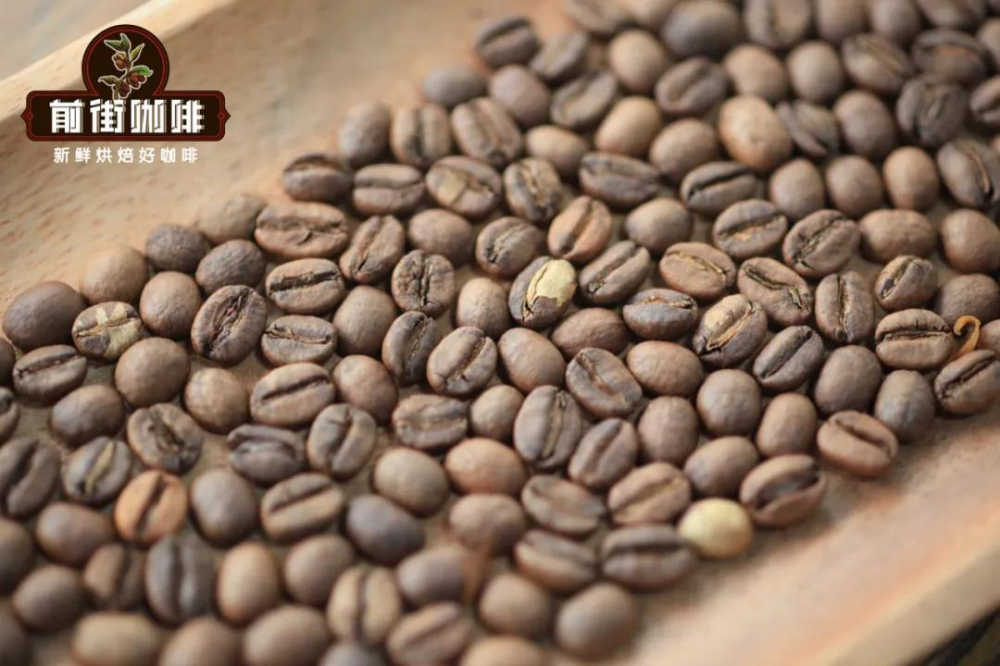
Front Street Geisha: floral aroma, the sweet-tartness of berries, citrus, and plum, mango juice, honey, with a finish of black tea's sweet fragrance.
How to judge whether a cup of coffee is good or bad?
Whether coffee tastes good depends largely on personal preference. For example, once when Front Street was sharing a tasting coffee with many customers at the shop, some customers found the same coffee so sour their teeth chattered, while others found it full of sweetness and very delicious. From their perspectives, the flavors they judged were all correct. This is the difference threshold in taste between people.
Although you may not like sour coffee, acidity like citric acid, passion fruit acidity, and grape acidity are all positive flavors; the same goes for bitterness. Some bitterness like dark chocolate is also a positive flavor. (Anyone who has eaten pure dark chocolate knows that bitterness is no ordinary bitterness.)
So what are negative flavors? Generally speaking, they are unpleasant tastes, such as strong acidity, strong bitterness, sharp acidity, burnt bitterness, astringent acidity, astringent bitterness, and a long bitter finish. Some non-taste negative sensations include hollowness, blandness, rough mouthfeel, and a short finish.
These negative flavor expressions can stem from coffee bean quality, roasting quality, or brewing issues. Only by choosing a reliable coffee brand can you basically avoid problems with coffee bean quality and roasting. What remains are the negative flavors caused by brewing issues.
Brewing issues can be roughly categorized into under-extraction and over-extraction. For example, under-extraction can cause negative expressions such as strong acidity, sharp acidity, astringent acidity, mild saltiness, a thin mouthfeel, wateriness, and a short finish. Over-extraction can cause burnt bitterness, astringent bitterness, a long bitter finish, a rough mouthfeel, and so on. Therefore, as long as we can distinguish these flavors in coffee, we can infer from these negative flavors what caused them during brewing, thereby judging the coffee's extraction condition by taste.
Under-extraction generally means that sweet and bitter substances have not been extracted, resulting in obvious acidity or even a sharp, stimulating sourness. If it is a strong sourness, it may be caused by too little water. The appearance of sharp acidity and other stimulating sensations, wateriness, and a thin mouthfeel may be caused by a coarser grind combined with fast pouring, leading to a short extraction time.
If you happen to taste a faint saltiness, that is also a sign of under-extraction. Under normal circumstances, saltiness is rarely tasted in coffee because it is masked by acidity and sweetness. But in under-extracted coffee, because the sweetness that would mask it is missing, the saltiness is exposed. This usually appears in under-extracted coffees with不明显 acidity.
Under-extracted coffee also often shows a short finish. Generally, the finish is provided by the middle and later stages of the coffee. If this part is missing, the coffee's finish will be short.
Under what circumstances is under-extraction likely to occur?
When we clearly perceive that the coffee is under-extracted, the first things we usually think of are problems such as too coarse a grind, too low a water temperature, too large a coffee-to-water ratio, and too short contact time between grounds and water, which lead to a low flavor concentration in the coffee. In fact, high concentration is also one expression of under-extraction. For example, some friends are used to brewing more coffee grounds with less water, extracting only the first half of the flavors while the second half remains in the grounds. Combined with a relatively high concentration, the first sip is often both strong and sour.
When channeling occurs in the coffee bed during pour-over, that is, when the water level is too high during pouring, breaking through the coffee bed wall or overflowing the coffee wall, water flows away along the guiding ribs at the edge of the dripper. The portion of coffee liquid that falls into the server this way is certainly under-extracted. The bloom stage is meant to prepare the coffee for flavor extraction. Therefore, an uneven bloom pour easily leads to different dissolution rates in local areas of coffee grounds, and unwetted particles need more time to fully release their flavor.
How do you identify over-extraction?
Over-extraction occurs because too much coffee material is extracted, causing some less pleasant bitterness to be extracted into the coffee as well. For example, astringent bitterness caused by too fine a grind or too long a steeping time is not just bitterness; it gives the entire mouth a rough sensation. This is because over-extracted coffee contains relatively more polyphenols, which bind with proteins in saliva to create a rough feeling. Too high a water temperature easily gives coffee a burnt bitter taste. This bitterness is very stimulating and lingers in the mouth. From Front Street's experience, this kind of taste is most likely caused by too many fines or too thin a water stream leading to too long a steeping time, or by too high a water temperature. The solution is to coarsen the grind or lower the water temperature.
Of course, under normal circumstances, properly extracted coffee will show fruit-like acidity, such as the lively acidity of lemon and citrus, or a balanced sweet-tart fruit profile like strawberry and plum. Then there is a full sweetness, like honey or fructose. A moderate concentration shows clear flavors and rich layering. And a lasting finish, generally expressed as light floral notes and a tea-like quality.
The above content is compiled by CoffeeHunters, a coffee news website.


