








In the scorching summer, iced coffee becomes a lifesaver for many. But did you know? Cold brew coffee actually encompasses three distinct methods: ice drip, iced, and cold brew. Their flavor profiles, brewing principles, and suitable occasions are vastly different. This article will delve into the differences between ice drip coffee and cold brew coffee, detailing Front Street Coffee's ice drip brewing parameters—including 60 grams of coffee grounds, a 1:10 coffee-to-water ratio, a grind size with 85% passing through a Chinese standard No. 20 sieve, and an extraction time of 6 to 8 hours. It will also share methods for iced Americano and cold brew coffee, and recommend several coffee beans suitable for making ice drip, including Front Street Mozart, Front Street Kenya Little Tomato, and Front Street PWN Golden Mandheling, helping you find the summer iced coffee solution that best suits your taste.

For more specialty coffee knowledge, please follow: Frontsteet Coffee
In the height of summer, cicadas chirp incessantly outside the window. Guangzhou's summer is truly unbearable, sometimes stuffy as a steamer, sometimes scorching as an oven, and occasionally a scalding shower. At times like this, if there's a cold drink at hand, one feels instantly rescued from the ordeal. Recently, many customers visiting FrontStreet Coffee stores have asked: Do you have cold brew coffee?
However, you may not be aware that cold brew coffee can actually be divided into three categories: ice drip coffee, iced coffee, and cold brew coffee. What exactly are the differences between these three methods? Let FrontStreet Coffee explain them one by one.
Ice Drip Coffee
What is ice drip coffee? Simply put, it is an extraction method where ice water slowly drips through a layer of coffee grounds to obtain coffee liquid. Legend has it that ice drip coffee originated from the Dutch, but it has been popular in Japan for hundreds of years. It also has several aliases, such as "Kyoto Coffee" and "Japanese-style slow-drip." In South Korea, almost every cafe features ice drip coffee, and many well-known ice drip equipment brands come from Japan and South Korea.
The advantages of ice drip coffee are: ① Through cold water drip filtration, the coffee grounds can be fully saturated, resulting in a smooth and rounded coffee liquid without any astringency. The disadvantage is that the drip speed is difficult to control, with the ideal rhythm typically being 7 drops every 10 seconds.
[FrontStreet Coffee Ice Drip Coffee Making Method]
Coffee grounds: 60 grams
Coffee-to-water ratio: 1:10
Grind size: 85% passing through Chinese standard No. 20 sieve
Time: 6 to 8 hours
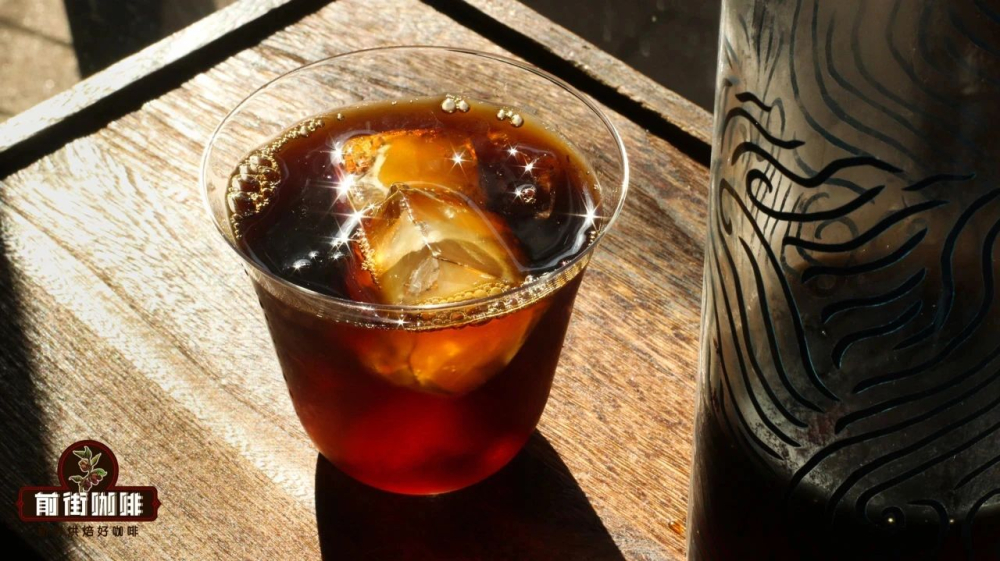
1. Place a circular filter paper at the bottom of the powder cup, moisten it with water to adhere to the cup wall, then pour in 60g of ground coffee (FrontStreet Coffee uses a Chinese standard No. 20 sieve with a 58% passing rate, slightly coarser than pour-over grind). Gently shake to level the surface of the coffee grounds, or use the weight of the tamper to lightly press for a more even surface.
2. Cover the coffee grounds with another piece of filter paper. The tension of the filter paper helps water droplets spread evenly over the surface for extraction; without it, prolonged dripping would create a depression in the coffee bed.
3. Perform a "pre-infusion" with ice water, evenly moistening the entire coffee bed. This step is similar to the blooming phase in pour-over coffee, enhancing extraction efficiency and consistency of the final product.
4. Fill the server with a 1:1 mixture of ice and water, and adjust the valve to a speed of about 7 drops every 10 seconds.
5. After brewing, pour the coffee liquid into a sealed glass bottle and refrigerate overnight to allow oxidation and full integration of flavors, resulting in a smoother and more enjoyable taste.
So, what kind of coffee beans are better for making ice drip coffee? Front Street has several coffee beans commonly used for ice drip that we'd like to share.
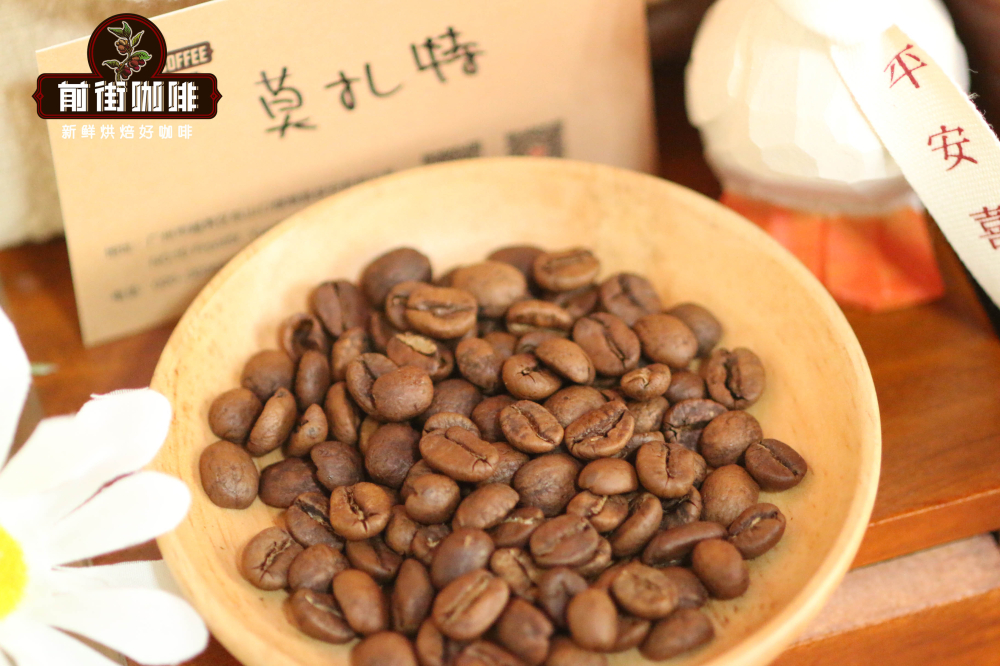
Dark Berry Type : Front Street Costa Rica Canet Musician Series Mozart 60g
Front Street Mozart uses an anaerobic honey process and has a very unique raisin aroma. When used for ice drip coffee, it exhibits distinct blueberry, black grape, and wine-fermented flavors, with a refreshing mouthfeel and a long finish.
Refreshing and Clean Type : Front Street Kenya Little Tomato 60g
Front Street Kenya Asali has very lively acidity, performing like a glass of juice. When made into ice drip coffee, it carries the fresh notes of cherry tomatoes and grapefruit, with a crisp and light acidity on the palate, especially suitable for summer enjoyment.
Rich and Sweet Type : Front Street Indonesia PWN Golden Mandheling 60g
Few shops use dark-roasted beans for ice drip coffee. Those who haven't tried it might think dark-roasted beans would make a bitter ice drip, but that's not the case. Following Front Street's ice drip method, after refrigerating for 24 hours and then adding ice cubes, Front Street PWN Golden Mandheling ice drip coffee presents a sweet taste with a hint of chocolate bitterness, very clear overall, and a rich fermented sensation that is incredibly comforting.
Iced Coffee
Iced coffee is what we commonly call iced Americano, and the method is very straightforward and quick—simply mixing espresso with ice water. The principle of making espresso is: using nearly 9 to 10 atmospheres of pressure to force hot water close to boiling through finely ground coffee.
Its advantage: iced Americano is indeed convenient and quick. But there are also shortcomings: first, you need a machine capable of extracting espresso; second, the taste tends to dilute as the ice melts.
[FrontStreet Coffee Iced Americano Making Method]
FrontStreet Coffee stores use their own blend, Front Street Sunflower Warm Sun espresso blend, which contains 70% Front Street Honduras Sherry and 30% Front Street Yirgacheffe Natural Red Cherry.
Take 20 grams of coffee, extract 40 grams of espresso in 27 seconds.
After extracting the espresso, place ice and water in a cup, then pour the espresso into the ice water to complete.
Cold Brew Coffee
Cold brew coffee, or Cold Brew Coffee, is conceptually similar to cold-brewed tea: a large amount of coffee grounds is directly soaked in water and then refrigerated for a long period at low temperature, allowing the coffee grounds to slowly release flavors in a cold environment. The process takes about 8 to 12 hours, hence it is also called "ice-brewed coffee."
This cold brew method can fully amplify the various flavors and aromas of coffee while reducing acidity, resulting in a cleaner and purer taste. Cold brew coffee is characterized by tasting better the colder it is; even adding ice cubes directly won't dilute the flavor.
The advantage of cold brew coffee is: due to low-temperature extraction, impurities and bitterness in the coffee beans are less likely to be released. The disadvantage is also obvious: the production cycle is relatively long.
[FrontStreet Coffee Cold Brew Coffee Making Method]
Using 50 grams of coffee as a baseline, for grind size, because the water temperature contacting the coffee grounds is lower than in regular pour-over coffee, choose a slightly finer setting than pour-over, i.e., a 65% passing rate through a standard No. 20 sieve. Place the coffee grounds in a glass bottle, add 400 ml of room temperature water and 100 grams of hard ice cubes (total ice-water mixture 500 grams), with a coffee-to-water ratio of 1:10. Then use a stirring rod to mix the coffee grounds and water thoroughly, seal, and refrigerate.
After resting in the refrigerator for 12 to 24 hours, filter out the coffee grounds with filter paper to obtain clean coffee liquid, then pour into a clean sealed bottle and continue refrigerating for about 4 hours before drinking.
Although low-temperature extraction makes it less likely to release impurities and bitterness from the coffee beans, the extraction time is long and it is an immersion method. To avoid the final coffee liquid being too strong, it is recommended to use a coarser grind size.
So which coffee beans are suitable for making cold brew coffee? Of course there are. FrontStreet Coffee recommends Front Street Honduras Sherry, which produces cold brew coffee with a rich wine aroma, full vanilla creaminess, and a chocolate cocoa mouthfeel.
For more specialty coffee beans, please follow: FrontStreet Coffee
The above content is compiled by CoffeeHunters, a coffee news website.


