






How long does a moka pot take to brew, and why does it turn bitter?
A moka pot pushes hot water up through the grounds with steam pressure, producing coffee roughly twice as concentrated as drip, near a 1:7 ratio instead of 1:16. Bitterness usually comes from over-extraction: too fine a grind or heat left on too long. Grinding one step coarser than espresso, starting with hot water, and cutting the heat when the flow sputters all keep the cup smoother.
Invented in 1933 by Italian engineer Alfonso Bialetti, the moka pot remains a standard Italian kitchen tool. Its sealed lower chamber builds pressure that drives water into the upper chamber. Cooling the base on a cold towel stops extraction fast. Darker roasts such as Golden Mandheling suit this method, since they hold up to pressure brewing without turning harsh.
The moka pot is a classic Italian home brewing device that, thanks to its pressure principle, can brew coffee about twice as concentrated as regular coffee. In this article, Front Street will start with the history and working principle of the moka pot, analyze the root cause of bitter coffee—over-extraction—and offer practical tips for avoiding bitterness, such as coarser grinding, cooling the pot on a cold towel, and filling it with hot water. Then we'll walk through the complete brewing process in six steps, covering details like coffee dose and water volume, heat control, and judging readiness by sound. Finally, we'll share key points on cleaning and maintaining the moka pot and advice on choosing roast levels, recommending Front Street's dark-roast Golden Mandheling to help you easily brew a rich, smooth moka coffee that isn't bitter.

For many coffee lovers, in addition to pour-over gear at home, they often add all kinds of brewing devices~ This time, Front Street will explain the use of the moka pot in detail for everyone.
As usual, let's first talk about the origin of this pot: the moka pot was born in 1933, and its inventor was Italian engineer Alfonso Bialetti. It is small, affordable, requires almost no special maintenance in daily use, and brews conveniently and quickly. It is a classic Italian home brewing device, said to be a must-have in kitchens in every household there.
Strictly speaking, a moka pot is like a miniature espresso machine, and its extraction process is quite fascinating. The water inside the pot is heated in a nearly sealed space, thus building up considerable steam pressure, and it is this pressure that pushes the hot water up into the upper chamber to complete extraction. With this pressure-based brewing technique, you can get extremely concentrated coffee—usually more than twice as strong as regular coffee, with a coffee-to-water ratio of about 1:7 (the coffee-to-water ratio for general brewing is about 1:16).
So, how can you make coffee brewed with a moka pot less likely to taste bitter?
Bitterness is a common challenge faced by many brewing methods, and the most common culprit is over-extraction—that is, the coffee grounds come into contact with too much hot water, or the brewing time drags on too long, ultimately ruining the flavor.
1. The grind should be one step coarser than for an espresso machine.
2. Gently shake the filter basket so the coffee grounds are distributed more evenly and level.
3. When the coffee liquid rises to about 80% of the spout (with a color close to golden honey), immediately remove it from the heat source and place the pot directly on a cold towel. Rapid cooling can effectively stop over-extracted, bitter liquid from continuing to mix into the coffee~
4. Add hot water to the pot; this can shorten the heating time of the moka pot on the stove.
Next, Front Street will take you step by step to brew a pot of moka coffee.
Step one: Taking a four-cup moka pot as an example, you need to grind about 18 grams of coffee. The most suitable grind for a moka pot is medium to medium-fine—coarser than for an espresso machine, but a bit finer than for a drip coffee maker.
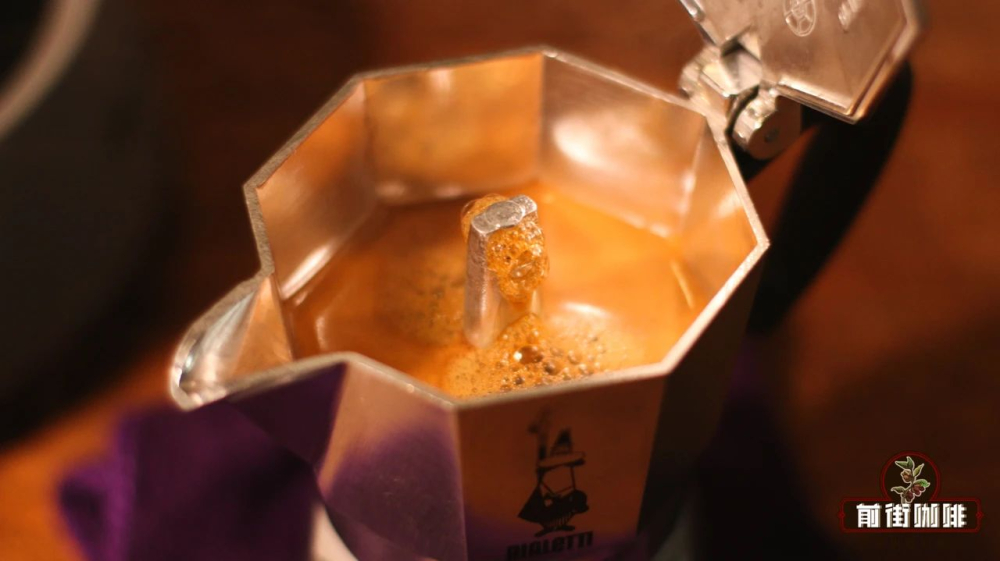
Step two: Pour clean water into the lower chamber until the water level is level with the valve, about 250 grams of water, then place the funnel (the container that holds the coffee grounds) into the lower chamber.
Step three: Put the ground coffee into the funnel, then wipe the edge of the funnel clean.
Step four: Screw the top and bottom of the moka pot tightly together.
Step five: Place the moka pot on the stove and heat over medium heat. If you are using a gas stove, be careful that the flame does not extend beyond the bottom of the pot, to avoid burning the handle.
Step six: When the water in the lower chamber is close to boiling, the pressure will steadily push the coffee liquid up into the upper chamber. There is no fixed time to turn off the heat with a moka pot; as soon as you hear a "hiss" or "gurgling" sound, it means extraction is complete. At this point, immediately remove the pot from the heat source, and after all the coffee has flowed into the upper chamber, carefully pour it out—a fragrant, rich cup of moka coffee is ready~
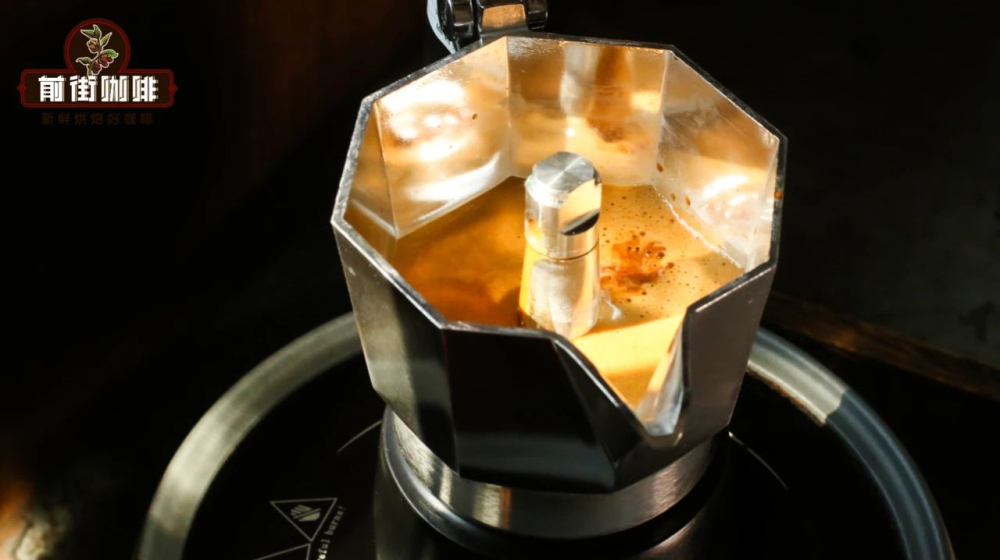
Daily maintenance of the moka pot is also worry-free: simply disassemble the parts, rinse them clean with water, and dry them with a towel.
In addition, when brewing coffee with a moka pot, choosing the roast level you like is also very important.
Many people are used to pairing moka pots with darker-roasted coffee beans. Dark or medium-dark roasted beans are usually used for espresso-style drinks because their flavor is full and deep enough to withstand the test of pressure extraction.
Here we recommend Front Street's dark-roast Golden Mandheling, rich, smooth, and mellow. The moka pot itself is often called a "stovetop espresso machine," and medium to dark roasted beans better highlight its extraction style, bringing rich chocolate and nutty flavors, with low acidity and a heavy mouthfeel. However, a reminder: light-roasted beans have bright, prominent acidity and are prone to uneven extraction in a moka pot, so it's best to avoid them.
The above content is compiled by CoffeeHunters, a coffee news website.


