





Where Did the Cappuccino Name Come From?
A flat white uses a double espresso and fine microfoam in a smaller cup, sitting between a latte and a cappuccino with less milk and more coffee. It emerged after World War II, when Italian migrants brought espresso culture to Australia and New Zealand, and both countries still claim it. Starbucks launched it in the US in 2015, translating it as furuibai in China.
The three drinks differ mainly in coffee volume, milk volume, and foam texture. A flat white's milk-to-coffee ratio is close to a cappuccino but stronger than a latte, and the foam is finer. The cappuccino name origin traces to the drink's resemblance to the brown hooded robes of Capuchin monks, a link to the cappuccino's long European history.
Flat white is a drink with less milk and more coffee, typically made with a double espresso and fine microfoam, falling between a latte and a cappuccino. It originated during World War II when Italian immigrants brought espresso culture to Australia and New Zealand, and the two countries still argue over who invented it first. In 2015, Starbucks launched the flat white in the United States, and in the same year it entered mainland China, translated as "馥芮白." This article explains in detail how it differs from a latte and a cappuccino, and shares Front Street Coffee's flat white recipe, including blend bean selection, extraction parameters, and milk frothing techniques.
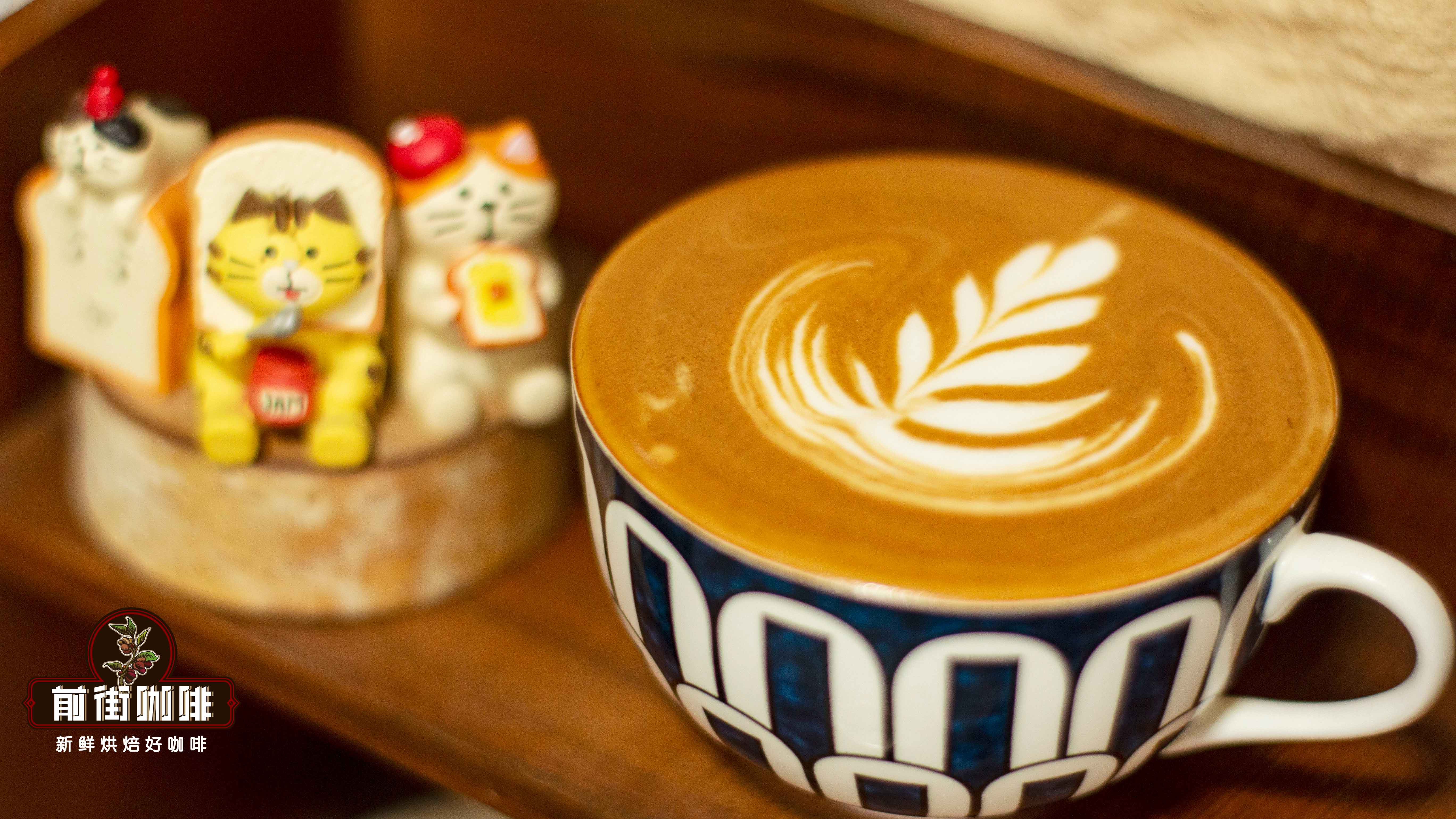
You may already be familiar with lattes and cappuccinos, but what about the flat white (馥芮白)? Put simply, it belongs to the category of drinks with less milk and a higher proportion of coffee. When making it, two shots of espresso are used, complemented by fine-textured micro foam, and the overall style can be seen as a variation between a latte and a cappuccino.
Where exactly do the differences lie? Let's continue reading.
You've had lattes and cappuccinos, but do you know about the flat white?
Regarding the birth of the flat white, the widely circulated account is that during World War II, a large number of Italians migrated from Europe to Australia and New Zealand, two neutral countries, and espresso culture took root in the Australia-New Zealand region along with them.
If you ask whether Australia or New Zealand is the birthplace, both sides still hold their own views and refuse to give way. Some say the drink had already appeared in Sydney in the 1980s, while others say Melbourne had an early version in 1970. New Zealand, for its part, emphasizes that it was not until the late 1980s in Wellington that it evolved into the flat white familiar to the public today.
The core differences among these three drinks—latte, cappuccino, and flat white—are reflected in the amount of coffee used, the amount of milk used, and the coarseness of the milk foam. Not to mention that ordinary customers find it hard to tell them apart; even baristas may not be able to grasp the subtle distinctions precisely.
In terms of the milk-to-coffee ratio, the flat white is quite close to the cappuccino, while being slightly stronger than the latte. The key point of divergence between the two lies in the milk foam: cappuccino uses dry foam (coarse foam), while flat white uses fine microfoam, so the mouthfeel leans more toward a latte.
Coffee enthusiasts in Taiwan once drew a coffee ratio chart, but the "white coffee" labeled in the chart actually contains no milk foam.
In January 2015, Starbucks began selling the flat white in the U.S. market and offered different cup sizes. In September of the same year, this drink also appeared on Starbucks menus in mainland China, with the rather elegant Chinese name "馥芮白." The explanation on the Shanghai Starbucks official website was: "Made with ristretto, using less water to extract the coffee, while steaming milk until the foam is dense and smooth."

While adding the flat white to its menu, Starbucks in the United States removed the classic espresso drink "cappuccino," which had been sold at Starbucks in the United States for more than thirty years. At present, many coffee shops in Taiwan abbreviate flat white as "fresh milk espresso" or "white coffee." If the flat white lands in Taiwan in the future, it will surely make many coffee fans eagerly await it.
Do you feel like having a flat white now?
The flat white produced by Front Street uses its own house-roasted "Front Street Sunflower Warm Sun Blend." This blend consists of 70% Honduras Sherry coffee beans and 30% Yirgacheffe sun-dried Red Cherry coffee beans. The Sherry beans bring whisky aromas, vanilla, and creamy notes, while the Red Cherry contributes tropical fruit character and a fermented quality, giving the whole cup a rich yet gentle flavor layering. When making the flat white, Front Street insists on these characteristics: a small cup size, thin milk foam, and a base of double ristretto espresso.
Since the vast majority of espresso drinks in stores use Espresso as the base, the baristas at FrontStreet Coffee use standard-extraction Espresso as a reference before opening. Each coffee bean has slight differences in its extraction recipe, and this recipe is adjusted daily by the barista before opening based on the Warm Sun Blend used in the store. Front Street's Espresso extraction parameters are: 20 grams of coffee grounds extracted into 40 grams of coffee liquid, taking 28–30 seconds. Ristretto, meanwhile, without changing the grind size or dose, also uses 20 grams of coffee grounds, extracting 27 grams of coffee liquid in 20–25 seconds. In terms of flavor, it presents a more intense berry acidity, whisky aroma, and caramel notes.
Pour the extracted coffee liquid into a pre-prepared cup with a capacity of about 200ml, then measure 150ml of milk into a milk pitcher and steam it. When steaming the milk, the amount of air introduced should be less than when making a latte, and the foam layer should be thinner and denser, with the temperature best maintained at 55–60°C, so it feels more comfortable when drinking. Finally, evenly integrate the steamed milk into the coffee liquid; latte art is optional.
Front Street's flat white exudes aromas of vanilla, cream, chocolate milk, and whisky cordial chocolate, interwoven with the sweet-and-sour notes of berries. It is smooth, fragrant, and mellow on the palate, with a long finish.
The above content is compiled by CoffeeHunters, a coffee news website.


